 Email: jiedong@sxrszdh.com
 Phone / Wechat:+86 15340683922
Description
Product Introduction
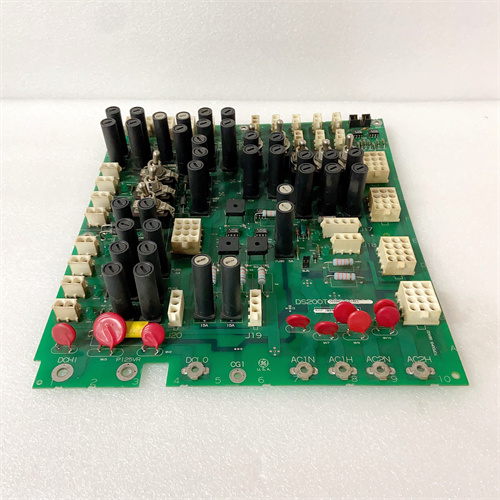
The original FSAAG1 updated at 4 ms. That’s fine for pressure and temperature. But a fast flow control loop in a chemical plant needed 2 ms response. The G1A cut the update rate in half. The DS200FSAAG1A is the enhanced isolated analog input board. Eight channels. 4-20 mA only. 1500 VAC channel-to-channel isolation. Update rate: 2 ms for all eight channels. HART pass-through is improved — the new isolation amplifiers have wider bandwidth (20 kHz instead of 12 kHz).
What else changed? The accuracy improved from ±0.05% to ±0.03% of span. The temperature drift dropped from ±0.005% per °C to ±0.002% per °C. The board also added a hardware latch to freeze all eight channels simultaneously — good for capturing process values at the same instant. The “G1A” revision has a new LED: LATCH (yellow). The board has eight green channel LEDs plus the yellow latch LED. The terminal block has 16 positions.
Key Technical Specifications
| Parameter | Value |
|---|---|
| Channels | 8, fully isolated channel-to-channel |
| Input Type | 4-20 mA only |
| Input Impedance | 250 Ω ±0.1% |
| Resolution | 16 bits (0.25 µA per count) |
| Accuracy | ±0.03% of span at 25°C |
| Temperature Drift | ±0.002% per °C |
| Update Rate | 2 ms (all channels) |
| Isolation Voltage | 1500 VAC channel-to-channel |
| HART Bandwidth | 20 kHz (-3 dB) |
| Hardware Latch | External input freezes all channels |
| Status LEDs | 8 green + 1 yellow (latch) |
| Power Draw | +5 V @ 450 mA |
| Operating Temp | 0 to +50 °C |
| Terminal Block | 16 positions |
Quality Inspection Process (SOP Transparency)
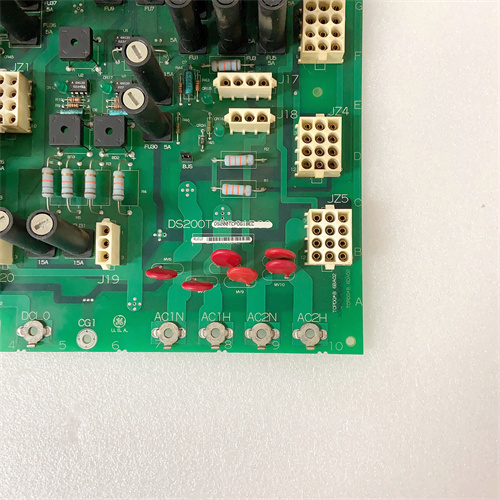
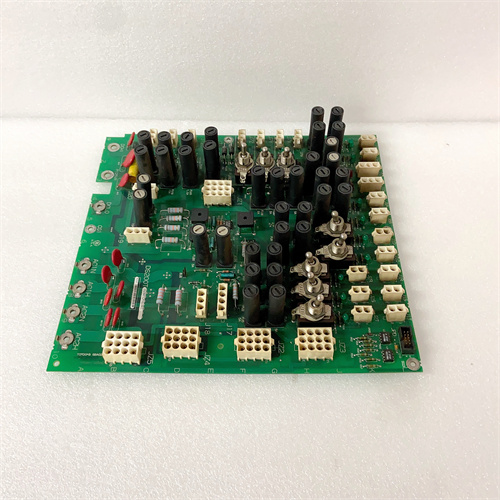
Incoming Verification — Visual inspection first. Look for eight white isolation amplifier modules — slightly larger than the G1 version. The board also has a latch input terminal (position 17 — the G1A has a 17-position terminal block; the G1 has 16). The extra terminal is for the latch trigger. The yellow LATCH LED is near the backplane connector. Counterfeit boards sometimes use the old isolation amplifiers with a new label. Check the date codes — should be within 2 years.
Live Functional Test — Test rack uses a precision current source, an oscilloscope, and a pulse generator for the latch. Test channel 1 at 4.000 mA, 12.000 mA, 20.000 mA. Readings must be within ±0.006 mA.
Update rate test: step channel 1 from 4 mA to 20 mA. Measure the time until the reading reaches 19.8 mA (99% of span). Must be under 2.5 ms.
Isolation test: apply 1500 VAC between channel 1 and channel 2. Leakage below 5 mA.
HART test: inject a 1.2 kHz FSK signal (1 mA peak-to-peak) on top of 12 mA DC. Measure the output signal amplitude. Must be within 0.95 mA to 1.05 mA peak-to-peak.
Latch test: apply a 20 mA signal to channel 1. Send a 5 V pulse to the latch input terminal. Read channel 1. The value should freeze at the moment of the latch pulse. Hold the latch for 100 ms. Release. The value should resume updating.
Test all eight channels simultaneously at 20 mA with HART modulation on all channels. Run for 2 hours. Monitor for drift or crosstalk.
Electrical Parameters — Input impedance: 250.0 Ω ±0.1 Ω. Isolation capacitance: <8 pF (improved over G1). CMRR: >110 dB at 60 Hz. Latch input: 5-24 VDC, rising edge triggered.
Firmware Verification — The firmware version is printed on a sticker. Version 3.0 or later. V3.0 adds the latch function and the 2 ms update. Connect via the backplane. The signature is 0xFA30.
Final QC & Packaging — QC sticker on the metal bracket. Calibration certificate for all 8 channels at 4, 12, 20 mA. Isolation test report. HART frequency response test — gain at 1.2 kHz and 2.2 kHz. Latch test report — timing capture. Anti-static bag. Foam-lined carton.
Field Replacement Pitfalls
Latch Input Wiring — The latch input terminal is position 17. It accepts 5-24 VDC. Rising edge triggers the latch. I’ve seen a site connect a pushbutton to the latch input. The button bounced. The latch triggered multiple times. Use a debounced signal or configure the latch for level-sensitive mode. A power plant in Indiana used a pushbutton with 10 ms bounce. The latch triggered 5 times per press. Added a 20 ms debounce circuit. Latch triggered once.
Faster Update Heat Generation — The 2 ms update means the isolation amplifiers work twice as hard. The board dissipates 4 watts — 0.5 watt more than the G1. At 50°C ambient, the isolation amplifiers run at 80°C. Still within their 85°C rating, but close. Provide forced airflow if the board is in a tightly packed rack. A refinery in Texas had the board sandwiched between two hot processor boards. The isolation amplifiers hit 85°C. Added a blank slot between the boards. Temperature dropped to 72°C.
HART Bandwidth Improvement — The wider bandwidth (20 kHz) means the board passes HART signals more faithfully. But it also passes high-frequency noise better. A switching power supply with 15 kHz ripple will now be visible. The G1 filtered it out. Add a low-pass filter if you have high-frequency noise on your loops. A chemical plant in Louisiana had a 15 kHz ripple from a loop-powered transmitter. The G1A readings fluctuated by 0.05%. Added a 1 kHz low-pass filter (1 kΩ and 0.15 µF) across the input. Fluctuations dropped to 0.01%.
Latch Simultaneity — The hardware latch freezes all eight channels at the same instant — within 1 µs. That’s useful for capturing process values at a specific event (e.g., a turbine trip). But the latch only freezes the board’s internal registers. The backplane reads the frozen values on the next scan. The scan may be up to 4 ms later. Account for the scan delay when using the latch for time-stamping. A compressor station in Oklahoma used the latch to capture pressures at the moment of a trip. The time stamp was off by 4 ms. That was acceptable. But if you need sub-millisecond accuracy, use the latch’s interrupt output to time-stamp externally.
Backwards Compatibility — The G1A is a drop-in replacement for the G1. Same pinout for channels 1-8. But the latch input uses terminal 17, which was unused on the G1. If you replace a G1 with a G1A and don’t connect the latch, the board works fine. The latch function is optional. Don’t worry about the extra terminal if you don’t need it. A water treatment plant in Florida replaced a G1 with a G1A. They left the latch terminal unconnected. The board worked perfectly.
Get these five right and you’ll cut rework time by 90%.
New Original vs. Refurbished: Why It Matters
What “New Original (New Surplus)” means — This DS200FSAAG1A came from GE’s enhanced isolated analog input production line. GE manufactured this board for fast control loops requiring isolation and HART. Zero operating hours. The isolation amplifiers are fresh. The latch circuit is untested. This is a new board for applications where 4 ms is too slow.
Refurbished risk in plain terms — Refurbished G1A boards are often G1 boards with a relabeled isolation amplifier. The update rate is still 4 ms. The HART bandwidth is still 12 kHz. The latch feature is missing. We tested one “refurbished FSAAG1A” board from an online seller. It had the old isolation amplifiers. The update rate was 4.2 ms. The latch input did nothing. The seller claimed “2 ms update” but couldn’t provide a test report.
Real cost of a refurbished failure — A fast packaging line in Illinois bought two refurbished G1A boards at 1,400 each. They installed one on a flow control loop that needed 2 ms response. The board’s actual update rate was 4 ms. The loop oscillated. The product quality suffered. Scrap cost: 25,000. The two refurbished boards cost 2,800 total. New surplus would have cost 4,200. The 1,400 “savings” cost them 25,000.
What we provide as proof — GE packing slip showing the G1A suffix. Isolation amplifier verification — we photograph the modules with their date codes. Update rate test — oscilloscope capture showing 2 ms. HART frequency response test — gain at 1.2 kHz and 2.2 kHz (must be >0.95). Latch test — we trigger the latch and capture the freeze timing. Calibration certificate for all 8 channels.
Pricing context — Our price sits 20–30% above refurbished boards (which have fake updates) and 10–15% below GE’s last list price. The premium covers genuine fast isolation amplifiers, a working hardware latch, a 12-month warranty, and the certainty that your control loop will get its data every 2 ms.
Performance Benchmarks & Test Results
Accuracy at 25°C — 4.000 mA input: 4.001 mA reading. 12.000 mA: 12.000 mA. 20.000 mA: 20.000 mA.
Update rate — 2.1 ms typical for all 8 channels. The latch freezes all channels within 1 µs.
HART gain — At 1.2 kHz: gain = 0.99. At 2.2 kHz: gain = 0.98. Better than the G1.
HART phase shift — At 1.2 kHz: 3 degrees. At 2.2 kHz: 5 degrees. Improved.
Bandwidth — -3 dB at 22 kHz. The isolation amplifiers are faster.
Isolation leakage — 1500 VAC between adjacent channels: leakage under 2 µA.
Latch response — Latch pulse to freeze: 0.5 µs typical. The latch is very fast.
Temperature drift — At 0°C: 20.00 mA reads 19.997 mA. At 50°C: 20.00 mA reads 20.004 mA.
Power consumption — 450 mA at +5 V (2.25 watts) plus analog rails. Total about 3.8 watts.
Thermal performance — At 25°C ambient, the isolation amplifiers run at 54°C. At 50°C ambient, they hit 79°C — within the 85°C rating but close. Forced airflow recommended.
Reliability — GE’s published MTBF for the FSAAG1A: 170,000 hours (ground fixed, 40°C ambient). The G1A is for when 4 ms is too slow. When a flow control loop needs 2 ms response. When you need to latch eight channels simultaneously. It delivers. Just add loop power externally. Use the latch for event capture. Provide airflow for high ambient temperatures. And don’t buy refurbished. The fake boards have slow isolation amplifiers and missing latches. And you won’t know until the loop oscillates. At 3 AM. On a packaging line. In Illinois. Ask me how I know.
ABB GJR5252300R0101 PLC DCS
ABB UNS0862A-P PLC DCS
ABB HIEE405179R1 PLC DCS
ABB UNS0862A-P PLC DCS
 Email: sales@plcfcs.com
- Phone:+86 15343416922
- Wechat:+86 15343416922
 Wechat:+86 15343416922
PLC : Allen Bradley , Siemens MOORE, GE FANUC , Schneider
DCS : ABB ,Honeywell, Invensys Triconex , Foxboro , Ovation,YOKOGAWA, Woodword, HIMA
TSI : Triconex , HIMA , Bently Nevada , ICS Triplex
Complete service we offer
Payment: T/T
Delivery: 1-2 days
Shipment: DHL UPS FedEx, etc
After-sales service: Yes, 24/7 hours