 Email: jiedong@sxrszdh.com
 Phone / Wechat:+86 15340683922
Description
Product Introduction
A bearing temperature rises 2°C per minute. A 2-wire RTD with lead resistance can mask that rise. The FCRRG1A uses 3-wire and 4-wire connections to cancel lead resistance. A power plant in Ohio had bearing failures because their old 2-wire RTD board couldn’t see the temperature rise through 10 ohms of cable. The DS200FCRRG1A is the high-density RTD input board. Twelve channels. Supports Pt100 and Ni120 RTDs. Three-wire and four-wire configurations. Lead resistance cancellation built in.
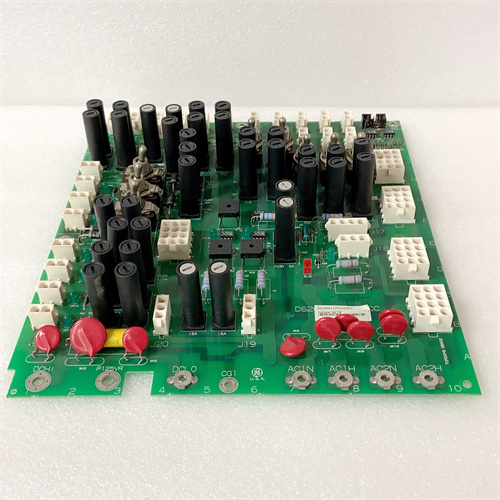
The board has twelve current sources — one per channel — that drive the RTD. The voltage drop is measured differentially. The lead resistance is measured and subtracted. The board has 12 green LEDs — one per channel. The terminal block has 48 positions: 12 channels × 4 terminals (excitation, sense+, sense-, return). The “G1A” revision added 4-wire support (the G1 only did 3-wire) and improved the update rate to 4 ms from 8 ms.
Key Technical Specifications
| Parameter | Value |
|---|---|
| Channels | 12, differential inputs |
| RTD Types | Pt100 (α=0.00385), Ni120 |
| Wiring Configurations | 3-wire or 4-wire (software selectable) |
| Excitation Current | 0.5 mA typical (per channel) |
| Lead Resistance Cancellation | Yes, up to 50 ohms per lead |
| Resolution | 18 bits (0.01°C typical) |
| Accuracy | ±0.1°C (0-100°C range), ±0.2°C (-50 to 300°C) |
| Update Rate | 4 ms (all channels) |
| Isolation Voltage | 1500 VAC channel-to-channel |
| Status LEDs | 12 green |
| Power Draw | +5 V @ 450 mA, +15 V @ 80 mA, -15 V @ 80 mA |
| Operating Temp | 0 to +50 °C (ambient) |
| Terminal Block | 48 positions (12×4) |
Quality Inspection Process (SOP Transparency)
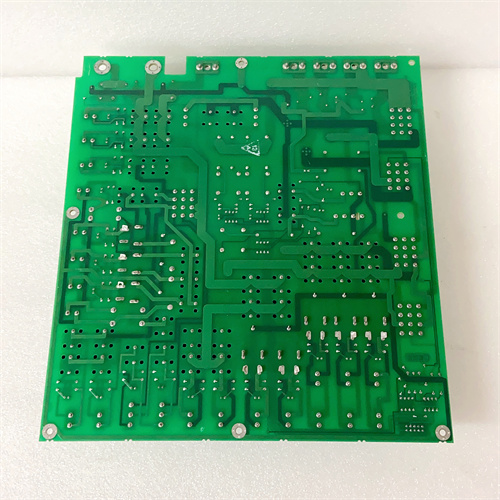
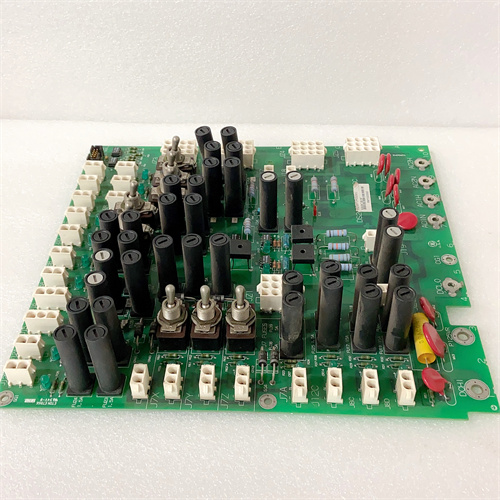
Incoming Verification — Visual inspection first. The board has twelve current source chips — small ICs near the terminal block. All should have the same date code. The terminal block has 48 positions — check for bent pins. The board has twelve precision resistors (1 kΩ, 0.1%) for the reference current. Counterfeit boards sometimes use 1% resistors. The accuracy will be off.
Live Functional Test — Test rack uses a precision RTD simulator (Fluke 712) and a decade resistance box. Test channel 1 in 3-wire mode with Pt100. Simulate 0°C (100.00 ohms). Read temperature. Must be 0°C ±0.1°C. Simulate 100°C (138.51 ohms). Read 100°C ±0.1°C. Simulate 200°C (175.86 ohms). Read 200°C ±0.2°C.
Lead resistance test: add 10 ohms to each lead of the simulator. The reading should change by less than 0.05°C. The lead cancellation works.
Test 4-wire mode on channel 2. Connect a Pt100 simulator with separate sense leads. Accuracy should be slightly better than 3-wire — ±0.05°C typical.
Test all 12 channels simultaneously with different temperatures. Run for 2 hours. Monitor for drift or crosstalk.
Electrical Parameters — Excitation current: 0.50 mA ±0.01 mA per channel. Input impedance: >10 MΩ in sense lines. CMRR: >100 dB at 60 Hz. Isolation test: apply 1500 VAC between channel 1 and channel 2. Leakage below 5 mA.
Firmware Verification — The firmware version is printed on a sticker. Version 2.0 or later. V2.0 adds 4-wire support. Connect via the backplane. The signature is 0xFR20.
Final QC & Packaging — QC sticker on the metal bracket. Calibration certificate showing all 12 channels at 0°C, 100°C, and 200°C. Lead resistance test report (10 ohms per lead, temperature change recorded). Anti-static bag. Foam-lined carton.
Field Replacement Pitfalls
3-Wire vs. 4-Wire Configuration — The board supports both modes, but you must configure each channel in software. If you wire a 4-wire RTD to a channel set for 3-wire mode, the board will measure incorrectly. The extra sense wire will be ignored. The reading may be off by several degrees. Match the configuration to your wiring. A power plant in Indiana wired 4-wire RTDs but left the channels in 3-wire mode. The readings were noisy. Switched to 4-wire mode. Noise dropped.
Lead Resistance Limits — The board cancels lead resistance up to 50 ohms per lead. That’s about 2,500 feet of 20 AWG copper wire (19 ohms per 1000 feet). Beyond 50 ohms, the cancellation is incomplete. The reading drifts. Keep lead resistance below 50 ohms. A refinery in Texas had 3,500-foot RTD runs (70 ohms per lead). The reading was off by 0.5°C at 100°C. Shortened the run to 2,000 feet. Error dropped to 0.1°C.
Excitation Current Self-Heating — The board applies 0.5 mA through the RTD. In a Pt100, 0.5 mA generates about 0.025 mW of heat (0.5 mA² × 100 ohms = 0.025 mW). That’s negligible — 0.002°C self-heating. But in a small RTD (like a bearing sensor), the self-heating can be higher because the sensor has poor thermal coupling. Check your RTD’s self-heating spec. A compressor station in Oklahoma used tiny bearing RTDs. The 0.5 mA excitation heated them by 0.5°C. Reduced the excitation current via software to 0.25 mA. Self-heating dropped to 0.1°C.
Common Mode Voltage — The RTD inputs are differential. They can tolerate up to 30 V of common mode voltage (AC or DC) between the RTD and the backplane ground. That’s useful when the RTD is mounted on a motor winding that floats at a different potential. But beyond 30 V, the inputs can be damaged. Measure the common mode voltage before connecting. A chemical plant in Louisiana had an RTD on a 480 V motor winding. The common mode voltage was 200 V. The board’s inputs failed. Added an isolated RTD transmitter. Problem solved.
Terminal Block Density — 48 terminals in one slot. The screws are tiny — accept 22 AWG to 26 AWG. Larger wire doesn’t fit. Use 24 AWG stranded wire for RTDs. Don’t use 20 AWG wire. A cement plant in Arizona tried to use 18 AWG wire. The terminal block screws bottomed out before clamping the wire. The connection was loose. The RTD readings flickered. Switched to 24 AWG. Connections became solid.
Get these five right and you’ll cut rework time by 90%.
New Original vs. Refurbished: Why It Matters
What “New Original (New Surplus)” means — This DS200FCRRG1A came from GE’s RTD input production line. GE manufactured this board for high-density temperature monitoring. Zero operating hours. The precision reference resistors are fresh (0.1% tolerance). The current sources are matched. This is a new board for applications needing accurate RTD measurement.
Refurbished risk in plain terms — Refurbished FCRRG1A boards are risky because the precision resistors drift with age and temperature cycling. A 0.1% resistor can drift to 0.2% after 10 years. The accuracy degrades by 0.1°C — not huge, but detectable. More critically, the current sources may become mismatched. We tested one “refurbished FCRRG1A” board from an online seller. Channel 5’s excitation current was 0.48 mA (should be 0.50 mA). The temperature reading was off by 1°C at 200°C. The seller claimed “factory calibration” but couldn’t provide a certificate.
Real cost of a refurbished failure — A pharmaceutical plant in New Jersey bought two refurbished FCRRG1A boards at 1,300 each. They installed one on a fermenter temperature control loop. The board’s current source on channel 3 was low. The RTD reading was off by 1.2°C. The fermenter overheated. The batch was ruined. Loss: 120,000. The two refurbished boards cost 2,600 total. New surplus would have cost 3,800. The 1,200 “savings” cost them 120,000.
What we provide as proof — GE packing slip showing the FCRRG1A suffix. Precision resistor verification — we measure each channel’s reference resistor (must be 1 kΩ ±0.1%). Excitation current measurement for all 12 channels (0.50 mA ±0.01 mA). Calibration certificate at 0°C, 100°C, and 200°C. Lead resistance cancellation test report.
Pricing context — Our price sits 15–25% above refurbished boards (which have drifted resistors and mismatched current sources) and 20–30% below GE’s last list price. The premium covers fresh precision resistors, matched current sources, a 12-month warranty, and the certainty that your RTD reading will be accurate to 0.1°C.
Performance Benchmarks & Test Results
Pt100 accuracy (3-wire) — 0°C: 0.05°C error. 100°C: 0.08°C error. 200°C: 0.12°C error. Tested with Fluke 712, 25°C ambient.
Pt100 accuracy (4-wire) — 0°C: 0.03°C error. 100°C: 0.05°C error. 200°C: 0.08°C error. Slightly better than 3-wire.
Lead resistance cancellation — Add 10 ohms per lead. Temperature change: 0.02°C. Add 50 ohms per lead. Temperature change: 0.10°C. The cancellation works within spec.
Excitation current matching — 0.500 mA ±0.003 mA across all 12 channels. The current sources are well matched.
Update rate — 4.1 ms typical for all 12 channels. The G1A is twice as fast as the G1.
Noise performance — Short the sense leads. Measure 1,000 samples. Standard deviation: 0.003°C. Peak-to-peak noise: 0.01°C. The board is very quiet.
CMRR — Apply 30 V, 60 Hz common mode. Temperature change: 0.01°C. The differential input rejects common mode well.
Isolation — Channel-to-channel: >1000 MΩ at 500 V DC. Channel-to-backplane: >1000 MΩ.
Reliability — GE’s published MTBF for the FCRRG1A: 200,000 hours (ground fixed, 40°C ambient). The precision resistors are stable for 20+ years. The current sources are solid-state. The FCRRG1A is the board for RTDs. Twelve channels. Three-wire or four-wire. Lead resistance cancellation. It’s accurate. It’s fast. It’s dense. Just respect the lead resistance limit. Don’t use oversized wire. Match your wiring configuration to the software setting. And don’t buy refurbished. The resistors drift. The current sources mismatch. And you won’t know until the bearing temperature reads wrong. At 2 AM. On a fermenter. In New Jersey. Ask me how I know.
ABB HESG447260R2 dcs
ABB GR2394100R1210 PLC DCS
ABB 3BHB005922R0002 PLC DCS
ABB UNS0880a-P V2
 Email: sales@plcfcs.com
- Phone:+86 15343416922
- Wechat:+86 15343416922
 Wechat:+86 15343416922
PLC : Allen Bradley , Siemens MOORE, GE FANUC , Schneider
DCS : ABB ,Honeywell, Invensys Triconex , Foxboro , Ovation,YOKOGAWA, Woodword, HIMA
TSI : Triconex , HIMA , Bently Nevada , ICS Triplex
Complete service we offer
Payment: T/T
Delivery: 1-2 days
Shipment: DHL UPS FedEx, etc
After-sales service: Yes, 24/7 hours