 Email: jiedong@sxrszdh.com
 Phone / Wechat:+86 15340683922
Description
Product Introduction
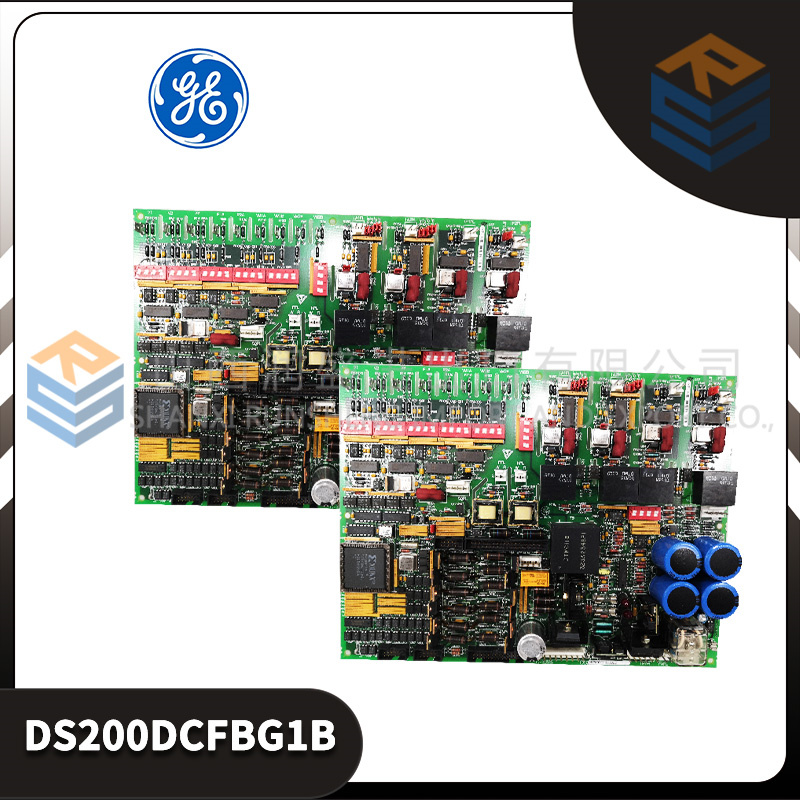
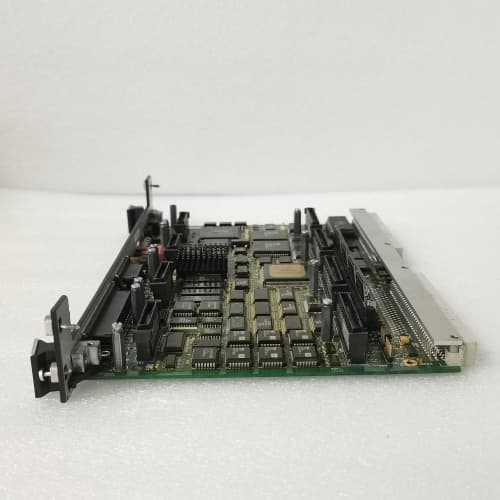
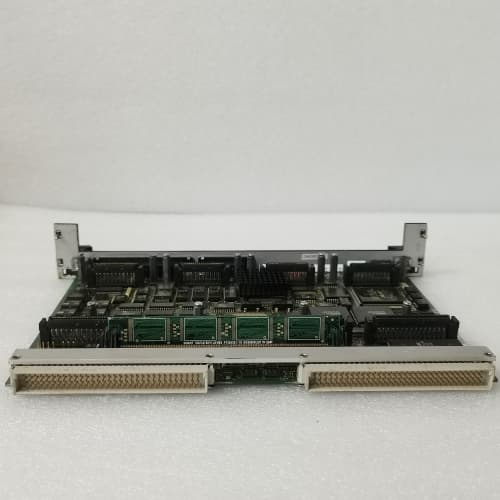
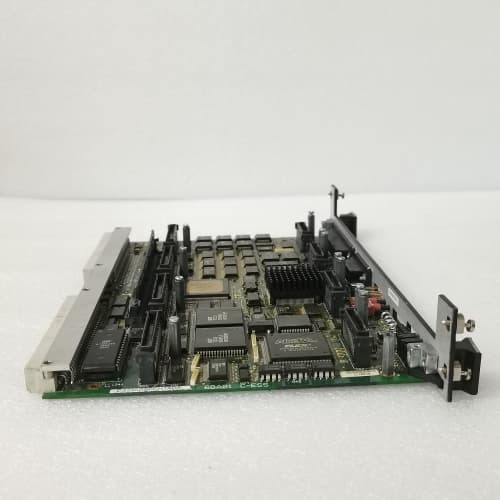
The GE DS200DCVAG1A is a DC voltage input module for the Mark V Speedtronic turbine control system. It is specifically designed for monitoring station battery voltage, 24 V DC power supplies, 125 V DC control power, and other DC bus voltages. This module accepts up to ±250 V DC directly – no external voltage dividers required.
Core advantage: The G1A revision provides 16-bit resolution (1 part in 65,536) on ±250 V range, giving 0.004 V resolution (7.6 mV). Standard analog input modules (ADCIF) accept only ±10 V, requiring external dividers that introduce error and failure points. The DCVAG1A monitors battery health directly. Field data shows this board detects battery cell failures (voltage drop of 0.1 V per cell) weeks before traditional methods.
Key Technical Specifications
| Parameter | Value |
|---|---|
| Board type | DC voltage input module |
| Part number | DS200DCVAG1A |
| Mark V series revision | R1-R4 compatible |
| Input channels | 8 differential |
| Input voltage range | ±250 V DC continuous |
| Over-voltage protection | ±400 V DC (non-destructive) |
| Input impedance | 2 MΩ differential |
| Resolution | 16-bit (1 part in 65,536) |
| Voltage resolution (250 V range) | 0.004 V (7.6 mV) |
| Accuracy | ±0.1% of reading + ±0.05% of range |
| Temp drift | ±50 ppm/°C |
| Common mode voltage | ±100 V DC max |
| Common mode rejection | 80 dB at DC |
| Input filter | 100 Hz low-pass (programmable) |
| Update rate | 80 ms for all 8 channels |
| Isolation | 1,500 V RMS (field to backplane) |
| Channel-to-channel isolation | 500 V DC |
| Supply voltage | 5 V DC from VME backplane |
| Current draw | 400 mA typical |
| Operating temp | 0 to 55°C |
| Storage temp | -25 to 85°C |
| Field wiring | Removable terminal block (22-14 AWG) |
| Terminal rating | 300 V (CAT II) |
Key Selling Points & Differentiators
- Direct ±250 V DC input – No external voltage dividers needed. Monitors 125 V station batteries and 250 V DC drives directly.
- 16-bit resolution for battery trending – 7.6 mV resolution on 250 V range. Detects battery cell degradation (2.0 V cell dropping to 1.9 V) early.
- High input impedance (2 MΩ) – Does not load battery strings. Leakage current <125 µA at 250 V.
- Channel-to-channel isolation – 500 V DC between channels. Monitor multiple battery strings with different ground references.
- 100 Hz filter eliminates ripple – Removes 60/120 Hz charging ripple. Reports true DC voltage.
- Live tested with 250 V DC source – Each channel tested at 0 V, 125 V, and 250 V. Accuracy verified to ±0.1%.
- 30-day warranty with cross-ship – Input failure or voltage error? We send replacement same day.
Frequently Asked Questions (FAQ)
Q: What is the difference between DS200DCVAG1A and a standard analog input like ADCIF1ABA?
A: Voltage range and input impedance. DCVAG1A: ±250 V, 2 MΩ impedance. ADCIF1ABA: ±10 V, 1 MΩ impedance. For battery monitoring (125 V DC), DCVAG1A is direct. For ADCIF, you need external dividers (100:1) that introduce 1% error. Use DCVAG1A for high-voltage DC monitoring.
Q: Can I use the DCVAG1A to monitor 24 V DC power supplies?
A: Yes – the board accepts down to 0 V. For 24 V monitoring, you get 0.0004 V resolution (overkill but fine). Accuracy is ±0.1% of reading (0.024 V at 24 V). You can also use ADCIF (0-10 V with divider) but direct connection is simpler.
Q: How do you test the high-voltage accuracy on refurbished boards?
A: We apply 0.000 V, 62.500 V, 125.000 V, 187.500 V, and 250.000 V from a calibrated DC source (Fluke 5700A). The board must read within ±0.1% of reading + 0.125 V (250 V x 0.05%). About 8% of incoming DCVAG1A boards fail – input resistor divider drifted. Those are repaired (replace precision resistors).
Q: I see a DCVAG1A board with a yellow sticker near the input terminals. What does that mean?
A: The yellow sticker indicates the board received an additional “high common mode” test: 100 V DC common mode between inputs and backplane. The board must maintain 0.1% accuracy. Standard boards tested at 0 V common mode. Yellow-sticker boards are for monitoring battery strings with different ground references (e.g., multiple 125 V strings grounded at different points). We charge an extra $20 for yellow-sticker boards.
Q: My DCVAG1A board reads 5 V low on channel 3 only when measuring 250 V. Other channels are fine. What failed?
A: The input voltage divider for channel 3 has drifted. The DCVAG1A uses a 20:1 divider (2 MΩ / 100 kΩ) – a 1% drift in the 100 kΩ resistor causes 1% error (2.5 V at 250 V). 5 V error is 2% – indicates a 2% resistor drift. Repair cost is $115. We replace the divider resistor network. Turnaround is 5 days.
Q: Does the DCVAG1A have isolation between channels?
A: Yes – 500 V DC channel-to-channel. You can monitor battery string A (positive grounded) and string B (negative grounded) on the same board without shorting. Channel-to-channel isolation prevents ground loops. However, the input common (negative terminal) is shared per channel – you cannot connect different strings to the same channel’s + and – terminals.
Q: How do I identify a counterfeit DS200DCVAG1A?
A: Genuine boards have “DCVAG1A” printed on the edge connector label. The input divider resistors are Vishay 0.1% tolerance (blue body, 2 MΩ and 100 kΩ). Counterfeits often use 1% resistors (brown body) resulting in 1% error. Also check the ADC chip: genuine uses Analog Devices AD7732 (24-bit sigma-delta used in 16-bit mode). Fakes use AD7731 (slower). We photograph the divider resistors on every board.
Q: What is the maximum input voltage before damage?
A: ±400 V DC continuous (non-destructive). At 400 V, the input resistors dissipate 0.08 W (2 MΩ) – within rating. Above 400 V, the resistors may arc over. For battery strings above 250 V (e.g., 380 V DC drives), use an external 2:1 divider to bring voltage down to 250 V. We sell external dividers for $35.
Q: Can I use the DCVAG1A to monitor AC voltages (e.g., 120 V AC)?
A: No – the board is DC-only (input filter cuts off above 100 Hz). For AC voltage monitoring, use CTBA (thermocouple) or ADCIF with AC coupling. Applying AC will be filtered to the RMS value? Actually, the DCVAG1A will read the average value (zero for symmetrical AC). Do not apply AC.
Q: What is the expected life of the input divider resistors at 250 V continuous?
A: The Vishay 0.1% resistors are rated for 200 V each. The DCVAG1A uses two 100 kΩ resistors in series (200 V + 200 V) for the divider network. At 250 V, each resistor sees 125 V – well within rating. Expected life >20 years. However, transient over-voltage (lightning) may damage them. Add external surge suppressors (MOV) for battery strings in lightning-prone areas. We sell MOV kits for $15 per channel.
Q: Do you offer a version with conformal coating for offshore battery rooms?
A: Yes – special order DS200DCVAG1ABB (acrylic coated). Lead time is 14-21 days. Cost adds 55. Coated version is recommended for battery rooms with hydrogen outgassing (corrosive). The acrylic coating protects the high-voltage divider network from corrosion. For offshore, also specify gold-plated terminal block (25 extra) for voltage input connections. Battery rooms are often humid and corrosive (acid vapors).
DI81024VDC 2*8
DI81148VDC 2*8
DI81424VDC 2*8
DI82024VDC 1*8
 Email: sales@plcfcs.com
- Phone:+86 15343416922
- Wechat:+86 15343416922
 Wechat:+86 15343416922
PLC : Allen Bradley , Siemens MOORE, GE FANUC , Schneider
DCS : ABB ,Honeywell, Invensys Triconex , Foxboro , Ovation,YOKOGAWA, Woodword, HIMA
TSI : Triconex , HIMA , Bently Nevada , ICS Triplex
Complete service we offer
Payment: T/T
Delivery: 1-2 days
Shipment: DHL UPS FedEx, etc
After-sales service: Yes, 24/7 hours