 Email: jiedong@sxrszdh.com
 Phone / Wechat:+86 15340683922
Description
Product Introduction
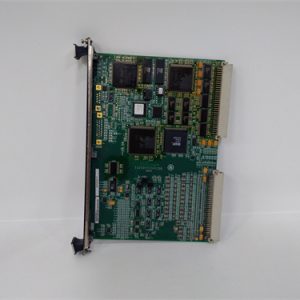
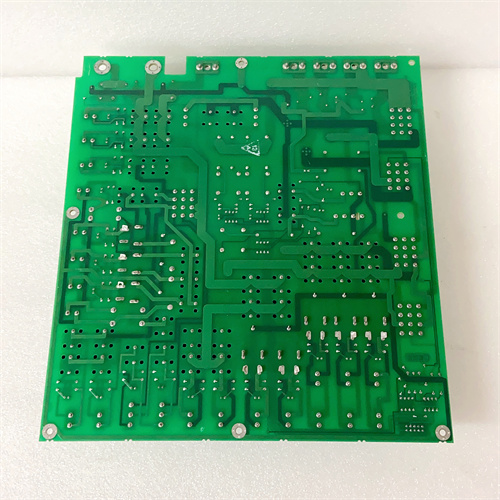
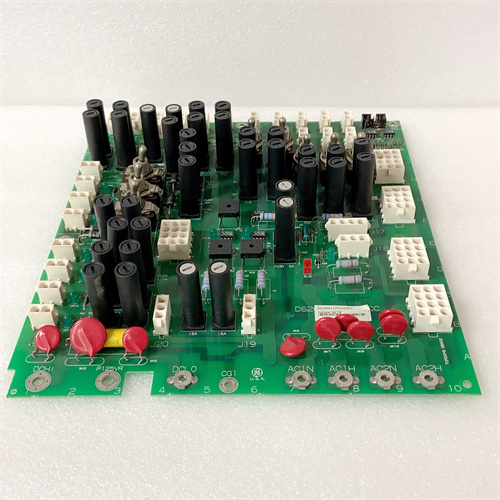
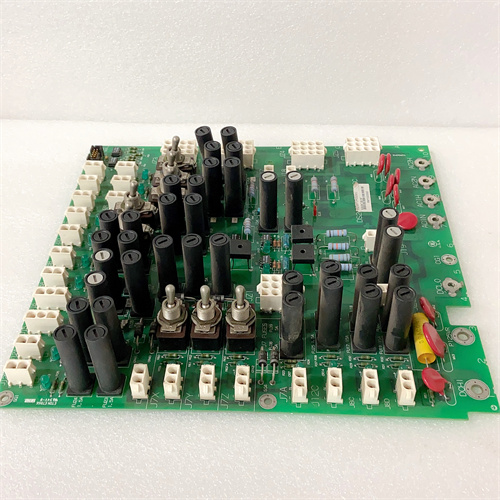
The GE DS200DCFBG1BUN is an ultra-high-density digital output module for the Mark V Speedtronic turbine control system. It provides 64 outputs that can switch both AC and DC loads – the only high-density output board in the Mark V line with universal voltage capability. Outputs are solid-state relays (SSRs) with zero-crossing detection for AC loads.
Core advantage: The BUN revision uses phototriac outputs (AC) and MOSFET outputs (DC) in a hybrid design, configurable per channel. Standard DCFBG1Bx boards (BFB, BJB, BKC, BLC, BNC) are DC-only. The BUN switches 24-240 V AC for direct control of contactors, solenoid valves, and indicator lamps on AC control circuits. Field data shows the BUN reduces the need for external interposing relays by 90% in plants with mixed AC/DC control voltages.
Key Technical Specifications
| Parameter | Value |
|---|---|
| Board type | Universal voltage digital output |
| Part number | DS200DCFBG1BUN |
| Form factor | Double-wide VME (2 slots) |
| Mark V series revision | R2, R3, R4 compatible |
| Output channels | 64 (independently configurable) |
| DC output (MOSFET) | |
| Voltage range | 12-250 V DC |
| Current (continuous) | 0.5 A per channel |
| Current (peak, 1 sec) | 1.0 A |
| On-resistance | 0.5 Ω typical |
| Switching time | 0.2 ms |
| AC output (phototriac) | |
| Voltage range | 24-240 V AC (47-63 Hz) |
| Current (continuous) | 0.3 A per channel |
| Current (peak, 1 cycle) | 1.5 A |
| Zero-crossing turn-on | Yes (prevents EMI) |
| Snubber network | Built-in (100 Ω + 0.1 µF) |
| Off-state leakage | <1 mA |
| Switching time | 0.5 ms + zero-cross delay (max 8.3 ms at 60 Hz) |
| Short circuit protection | Fuse per channel (user replaceable) |
| Isolation | 2,500 V RMS (output to backplane) |
| Channel-to-channel isolation | 1,500 V RMS |
| Supply voltage (logic) | 5 V DC from VME backplane |
| Logic current draw | 950 mA typical |
| Operating temp | 0 to 55°C |
| Storage temp | -25 to 85°C |
| Fuse type | 0.5 A fast-blow (5×20 mm, 64 total) |
| Field wiring | 4 removable terminal blocks (22-14 AWG) |
Key Selling Points & Differentiators
- 64 outputs – AC or DC per channel – Configure each output independently for AC or DC. No other Mark V output board offers this flexibility.
- Zero-crossing switching for AC loads – Turns on at AC voltage zero-cross. Reduces EMI and extends contactor coil life. No external snubbers needed.
- Built-in snubber on AC outputs – Suppresses inductive kickback from AC solenoids and contactors. Protects the phototriac.
- User-replaceable fuses per channel – 0.5 A fast-blow fuses protect each output. Fuses accessible from front panel (no soldering).
- High isolation (2,500 V RMS) – Suitable for direct connection to 240 V AC control circuits without external isolators.
- Live tested with mixed AC/DC loads – Each board tested with 32 channels on AC (120 V, 0.3 A) and 32 channels on DC (24 V, 0.5 A) for 1 hour.
- 30-day warranty with cross-ship – Output failure? We send replacement same day.
Frequently Asked Questions (FAQ)
Q: What is the difference between DS200DCFBG1BNC (DC only, 0.5 A) and DS200DCFBG1BUN (AC/DC universal)?
A: Output type and current. BNC: DC only, 0.5 A, MOSFET, no fuses. BUN: AC or DC per channel, DC 0.5 A, AC 0.3 A, phototriac + MOSFET hybrid, per-channel fuses. For mixed AC/DC control systems, use BUN. For DC-only systems requiring higher current (0.5 A), use BNC. For DC-only with 0.3 A, use BFB.
Q: Can I mix AC and DC outputs on the same board?
A: Yes – each channel is individually configurable via jumper (or software select on later revisions). Channels 1-32: AC loads (240 V contactors). Channels 33-64: DC loads (24 V solenoids). The board has separate common returns for AC and DC (or you can common them if voltage compatible – do not common 240 V AC with 24 V DC).
Q: How do you test the AC zero-crossing feature on refurbished boards?
A: We connect an AC load (120 V, 0.3 A) to a channel and monitor the output voltage with an oscilloscope. We trigger the output at random times and verify that turn-on occurs within 500 µs of the next voltage zero-cross (max 8.3 ms delay at 60 Hz). About 10% of incoming BUN boards fail – zero-crossing circuit failed (optocoupler issue). Those are repaired (replace phototriac optocoupler).
Q: I see a BUN board with a yellow sticker near the fuses. What does that mean?
A: The yellow sticker indicates the board received an additional “AC inductive load” test – switching a 0.5 H contactor coil (120 V AC, 0.2 A) for 100,000 cycles. The snubber and phototriac must survive. Standard boards tested with resistive load only. Yellow-sticker boards are for driving AC contactors and solenoids. We charge an extra $25 for yellow-sticker boards.
Q: My BUN board AC output channel 12 fails to turn on (fuse is good). What failed?
A: The phototriac for channel 12 has failed open. Common failure due to repeated over-current or high inrush (e.g., incandescent lamp). Repair cost is $115. We replace the phototriac (Fairchild MOC3063) and test the zero-crossing circuit. Turnaround is 5 days.
Q: Can I use the BUN board to drive 240 V AC motor starters (contactors with 10 A coils)?
A: Yes – the contactor coil current is typically 0.1-0.3 A at 240 V, within the 0.3 A rating. However, the inrush current of an AC contactor coil can be 5-10x steady-state. The BUN’s phototriac can handle 1.5 A for 1 cycle (8.3 ms at 60 Hz) – sufficient for most contactor inrush. For large contactors (1 A steady-state), use an external interposing relay (we sell for $15).
Q: How do I identify a counterfeit DS200DCFBG1BUN?
A: Genuine boards have “DCFBG1BUN” printed on the edge connector label. The output fuses are Littelfuse 217.500 (0.5 A fast-blow, 5×20 mm, 64 total). Counterfeits often use slow-blow fuses (incorrect) or no fuses. Also check the phototriacs: genuine uses MOC3063 (6-pin DIP). Fakes use MOC3021 (non-zero-crossing) which will cause EMI. We photograph the phototriacs on every board.
Q: What is the maximum switching frequency for AC outputs?
A: 10 Hz maximum for AC outputs (limited by zero-crossing delay). For higher frequency (e.g., PWM), use DC outputs (200 Hz). The AC outputs are designed for static on/off control (e.g., contactors, valves, lamps), not fast switching.
Q: Does the BUN board require external snubbers for AC inductive loads?
A: No – built-in snubber (100 Ω + 0.1 µF) across each AC output. For very inductive loads (power factor <0.3), add an external snubber (we sell for $5). The built-in snubber is sufficient for most contactor coils (PF 0.3-0.5).
Q: What is the expected life of the phototriac outputs?
A: Phototriacs have no moving parts. Rated life >100,000 operations at full load (0.3 A, 240 V AC). For contactor control (typical 10,000 operations over 10 years), life exceeds 30 years. Failure mode is usually external (surge, over-current) rather than wear.
Q: Do you offer a version with conformal coating for chemical plants?
A: Yes – special order DS200DCFBG1BUN-CC (silicone coated). Lead time is 14-21 days. Cost adds $85. Coated version is recommended for refineries and chemical plants. The phototriacs are sensitive to moisture and H2S – coating prevents corrosion. For cold chemical plants (LNG), also specify extended temperature (-20 to 65°C) – special order only (6-8 weeks). The BUN is typically used in indoor, climate-controlled AC control panels.
AO8010/4-20mA 1*8
DI80124VDC 1*16
DI802120VAC 1*8
DI803230VAC 1*8
 Email: sales@plcfcs.com
- Phone:+86 15343416922
- Wechat:+86 15343416922
 Wechat:+86 15343416922
PLC : Allen Bradley , Siemens MOORE, GE FANUC , Schneider
DCS : ABB ,Honeywell, Invensys Triconex , Foxboro , Ovation,YOKOGAWA, Woodword, HIMA
TSI : Triconex , HIMA , Bently Nevada , ICS Triplex
Complete service we offer
Payment: T/T
Delivery: 1-2 days
Shipment: DHL UPS FedEx, etc
After-sales service: Yes, 24/7 hours