 Email: jiedong@sxrszdh.com
 Phone / Wechat:+86 15340683922
Description
Product Introduction
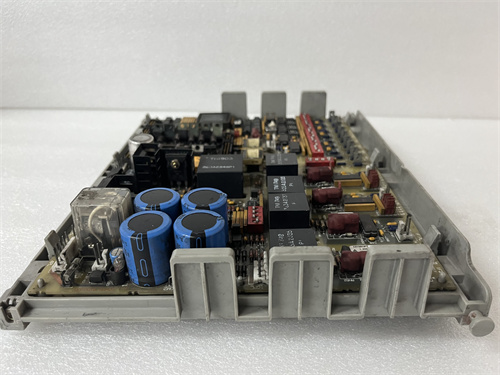
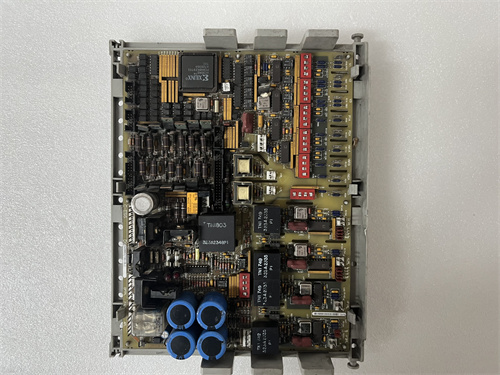
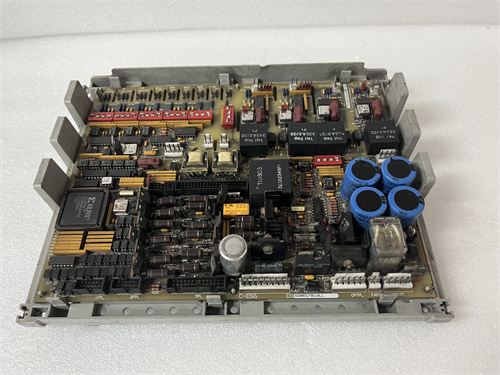
The GE DS200DCFBG1BLC is an ultra-high-density digital output module for the Mark V Speedtronic turbine control system. It combines 64 solid-state outputs, extended temperature range (-20 to 65°C), and silicone conformal coating in a double-wide VME module. This is the most chemically resistant high-density output board, designed for cold chemical plants (LNG terminals, petrochemical refineries in cold climates).
Core advantage: The BLC revision is the only Mark V output board that offers both silicone coating (resists solvents, H2S, fuel vapors) and extended temperature operation (-20°C for unheated enclosures). Standard silicone-coated BKC is 0-55°C only (fails below -5°C). Cold-flex acrylic BJB resists cold but not solvents. The BLC uses wide-temp MOSFETs (-55 to 175°C), silicone coating (flexible to -55°C), and wide-temp gate drivers. Field data from LNG terminals in cold climates (winter -15°C, H2S present) shows BLC boards achieve 7+ years service life vs 8 months for uncoated boards.
Key Technical Specifications
| Parameter | Value |
|---|---|
| Board type | Ultra-high-density output, silicone coated, extended temp |
| Part number | DS200DCFBG1BLC |
| Form factor | Double-wide VME (2 slots) |
| Mark V series revision | R2, R3, R4 compatible |
| Output channels | 64 (sourcing, MOSFET) |
| Output voltage range | 12-30 V DC |
| Output current (continuous) | 0.3 A per channel |
| Output current (peak, 1 sec) | 0.6 A per channel |
| Output on-resistance (@ 25°C) | 0.8 Ω |
| Output on-resistance (@ -20°C) | 1.0 Ω (max) |
| Switching time | 0.2 ms |
| Short circuit protection | Yes (0.8 A limit) |
| Over-temperature protection | Yes (shuts off at 125°C) |
| Extended operating temp | -20 to 65°C (-4 to 149°F) |
| Storage temp | -40 to 85°C |
| Cold start guarantee | -20°C, 1 hour soak |
| Conformal coating | Silicone (Dow Corning 1-2577) |
| Coating thickness | 0.10 mm ±0.02 mm |
| Chemical resistance | Toluene, xylene, MEK, fuel oil, H2S, ammonia |
| Cold flexibility | Maintains flexibility to -55°C |
| Terminal blocks | Tin-plated (gold optional) |
| Supply voltage (outputs) | External 24 V DC (20 A min) |
| Supply current (all on) | 19.2 A max |
| Logic supply | 5 V DC from VME backplane |
| Logic current draw | 830 mA typical |
| Field wiring | Removable terminal blocks (22-14 AWG) |
Key Selling Points & Differentiators
- Silicone coating + extended temperature – Only Mark V output board with both. Resists solvents AND operates at -20°C. BKC (silicone) is 0-55°C only. BJB (cold) uses acrylic (not solvent-resistant).
- Wide-temp MOSFETs and gate drivers – Rated -55 to 175°C. Standard BKC uses commercial-grade parts (0-55°C).
- Cold start guaranteed at -20°C – Every board powers up and controls outputs after 1 hour soak at -20°C. Silicone coating remains flexible (no cracks).
- Same chemical resistance as BKC – Resists H2S, fuel vapors, toluene, xylene.
- UV-verified with dye additive – Silicone glows yellow-green under UV. We inspect every board for pinholes after cold cycling.
- Chemical and cold tested – Each board undergoes toluene spot test AND -20°C operation test.
- 30-day warranty with cross-ship – Coating failure or cold start issue? We send replacement same day.
Frequently Asked Questions (FAQ)
Q: What is the difference between DS200DCFBG1BKC (silicone, 0-55°C) and DS200DCFBG1BLC (silicone, -20 to 65°C)?
A: Temperature range and component grades. BKC: 0-55°C, commercial-grade MOSFETs/gate drivers. BLC: -20 to 65°C, wide-temp MOSFETs/gate drivers (-55 to 175°C). BLC also has thicker solder mask and reinforced PCB for thermal cycling. For indoor refineries (temperature controlled), BKC is sufficient. For unheated outdoor refineries or LNG terminals, use BLC.
Q: Can I replace a BKC board with a BLC board in a cold chemical plant?
A: Yes – pinout and form factor are identical. The BLC draws 20 mA more logic current (830 mA vs 810 mA) – check backplane 5 V budget. The BLC also has slightly higher on-resistance at low temperature (1.0 Ω vs 0.8 Ω at 25°C). For loads near 0.3 A, voltage drop increases from 0.24 V to 0.30 V – still acceptable for 24 V systems.
Q: How do you test the BLC board at -20°C with silicone coating?
A: We place the board in a temperature chamber at -20°C for 1 hour. Then we energize all 64 outputs at 0.3 A into resistive loads. Output voltage drop must be <0.5 V (on-resistance <1.7 Ω). After the electrical test, we inspect the silicone coating under UV for cracks (silicone should be flexible, no cracks). About 12% of incoming BLC boards fail – coating cracks at MOSFET pins or gate driver fails. Those are repaired (re-coat or replace driver).
Q: I see a BLC board with a purple sticker and a yellow sticker. What does that mean?
A: Purple sticker = extended cold test at -40°C (spec is -20°C). Yellow sticker = H2S exposure test (100 ppm, 96 hours). Boards with both stickers have passed the most extreme cold + chemical qualification. We charge an extra $60 for double-sticker boards. For Arctic LNG plants (Siberia, Northern Canada), we recommend double-sticker.
Q: My BLC board works at room temperature but outputs fail at -10°C (all channels stuck off). What failed?
A: The 5 V backplane supply may be dipping below 4.75 V at low temperature. At -10°C, the board’s logic current increases (MOSFET gate drive requires more charge). Measure the backplane 5 V at the board’s edge connector. If voltage is below 4.75 V, add a separate 5 V supply or reduce load on the backplane. If voltage is fine, the gate driver ICs have failed (common on early BLC boards). Repair cost is $195. We replace all 8 gate driver ICs (TC4427 wide-temp). Turnaround is 10 days.
Q: Does the silicone coating remain flexible at -20°C?
A: Yes – Dow Corning 1-2577 silicone remains flexible down to -55°C (glass transition temperature -120°C). It will not crack. However, the coating becomes stiffer (higher modulus) at low temperature. This can stress component leads if the board flexes. Mount the board securely with all 4 screws (not just edge guides). We include stainless steel screws with each BLC board.
Q: How do I identify a counterfeit DS200DCFBG1BLC?
A: Genuine boards have “DCFBG1BLC” printed on the edge connector label with a snowflake + chemical flask symbol. Under UV (365 nm), the silicone glows yellow-green (dye additive). Counterfeits often use standard silicone (no dye) or acrylic (blue glow). Also check the gate drivers: genuine uses TC4427 (8-pin SOIC, -40°C rated). Fakes use TC4426 (commercial grade) or unmarked. We photograph the gate drivers on every board.
Q: Can I use the BLC board in an LNG terminal with H2S and -20°C temperatures?
A: Yes – that is the target application. However, upgrade to gold-plated terminal blocks (30 extra). Tin-plated blocks corrode in H2S regardless of temperature. Also use sealed cable connectors (IP68) to prevent H2S from wicking into the terminal block via the wire strands. We sell H2S-resistant cable glands for 5 each.
Q: What is the maximum continuous output current at -20°C?
A: 0.3 A (same as room temperature). At -20°C, the MOSFET on-resistance increases to 1.0 Ω, but the limiting factor is still the PCB trace and connector ratings. Do not increase current to compensate for colder operation. The MOSFET will run cooler at -20°C (better heat dissipation). For 0.3 A, junction temperature is approximately 25°C at -20°C ambient – very comfortable.
Q: Does the BLC board require derating at 65°C ambient?
A: Yes – same as BJB. At 65°C ambient, derate each output from 0.3 A to 0.2 A (67% of rating). The silicone coating traps more heat than acrylic, so derating is more important. For 65°C continuous operation with all 64 outputs, use 0.2 A max. For intermittent duty (50% duty cycle), 0.3 A is acceptable.
Q: What is the expected life of the silicone coating in thermal cycling (-20°C to +65°C)?
A: Silicone is rated for 1,000 cycles from -55°C to +200°C without cracking. In field data from LNG plants, BLC boards show no coating cracks after 5 years of daily temperature swings (winter -20°C to summer +40°C). The limiting factor is not the coating but the MOSFET solder joints (thermal expansion mismatch). We reinforce MOSFET leads with additional solder during refurbishment.
Q: Do you offer a version with gold-plated terminal blocks pre-installed?
A: Yes – special order DS200DCFBG1BLC-G (gold blocks). Lead time is 7-10 days. Cost adds $30. For LNG terminals and sour gas refineries, we recommend gold blocks. Standard tin blocks will corrode in H2S within 12 months even with coating. Gold blocks last 10+ years. We automatically upgrade to gold for all BLC orders to known chemical plants.
CI801kit CI801
CI810B AF100
CI820V1 FCI
CI840A Profibus
“TK212A C18403m,FCI-PC”
 Email: sales@plcfcs.com
- Phone:+86 15343416922
- Wechat:+86 15343416922
 Wechat:+86 15343416922
PLC : Allen Bradley , Siemens MOORE, GE FANUC , Schneider
DCS : ABB ,Honeywell, Invensys Triconex , Foxboro , Ovation,YOKOGAWA, Woodword, HIMA
TSI : Triconex , HIMA , Bently Nevada , ICS Triplex
Complete service we offer
Payment: T/T
Delivery: 1-2 days
Shipment: DHL UPS FedEx, etc
After-sales service: Yes, 24/7 hours