 Email: jiedong@sxrszdh.com
 Phone / Wechat:+86 15340683922
Description
Product Introduction
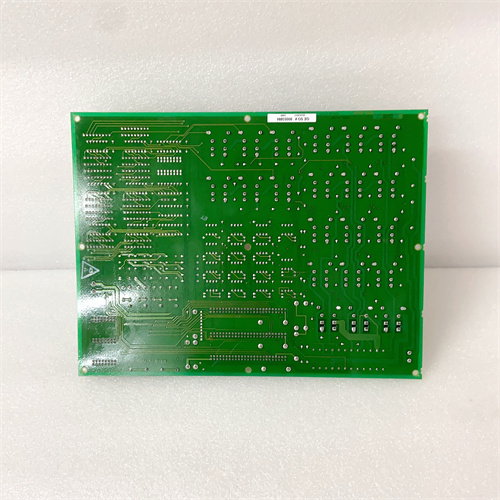
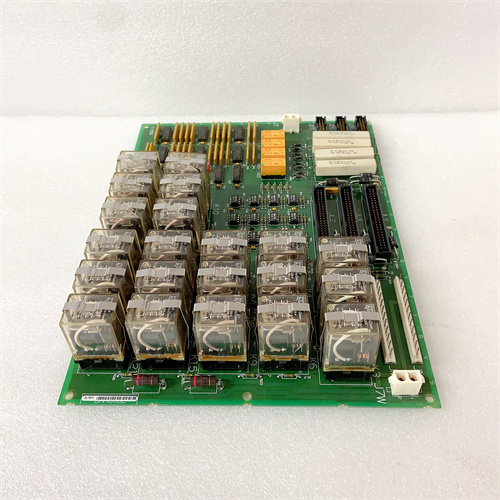
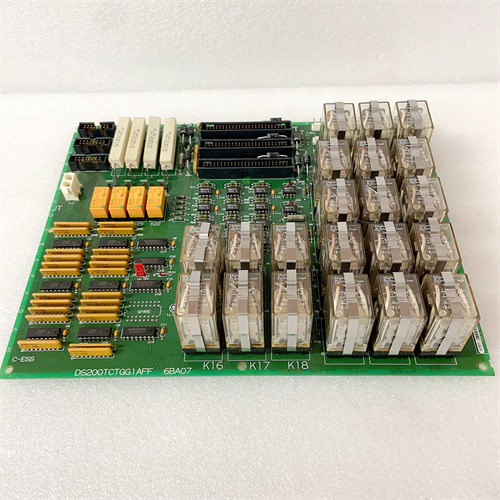
The GE DS200CVMAG1AEB is a high-density vibration monitoring module for the Mark V Speedtronic turbine control system. It provides 8 vibration input channels (double the standard CVMAG1A) plus 2 tachometer inputs in a single VME slot. This module is designed for large turbines with many bearing positions (e.g., multi-stage steam turbines, combined-cycle trains).
Core advantage: The AEB revision packs 8 channels of 24-bit vibration monitoring into one slot, replacing two standard CVMAG1A boards. For a typical large steam turbine with 8 bearings (16 probes: X and Y per bearing), you need 2 slots instead of 4. The board includes dual tachometer inputs and full order tracking. Field data shows this board reduces VME rack space by 50% for high-channel-count installations.
Key Technical Specifications
| Parameter | Value |
|---|---|
| Board type | High-density vibration monitor |
| Part number | DS200CVMAG1AEB |
| Mark V series revision | R2, R3, R4 compatible (firmware v7.0+) |
| Vibration input channels | 8 (independently configurable) |
| Tachometer inputs | 2 (shared across all 8 channels) |
| Accelerometer type | IEPE/ICP (4-20 mA constant current) |
| Proximity probe type | Eddy current (-24 V to 0 V) |
| ADC resolution | 24-bit (shared across 8 channels via mux) |
| Dynamic range | 105 dB (slightly lower due to mux) |
| Sample rate (per channel) | Up to 6.25 kHz (50 kHz / 8 channels) |
| Order tracking | Yes (based on tachometer inputs) |
| FFT points | 1,024 per channel |
| Transient capture | 128 spectra per channel |
| Isolation | Bank isolation (1,500 V RMS field to backplane) |
| Channel-to-channel isolation | No (channels share common ground) |
| Supply voltage | 5 V DC from VME backplane |
| Current draw | 720 mA typical |
| Operating temp | 0 to 55°C |
| Storage temp | -25 to 85°C |
| Field wiring | Two removable terminal blocks (22-14 AWG) |
Key Selling Points & Differentiators
- 8 vibration channels per slot – Double density. Replaces two CVMAG1A boards. Frees up VME slots for other I/O.
- Dual tachometer inputs – Order tracking for variable-speed machines. Tachometer signals shared across all 8 vibration channels.
- Lower cost per channel – Approximately 30% less per channel than using two separate CVMAG1A boards.
- Same 24-bit ADC as CVMAG1A – 105 dB dynamic range (slightly lower due to input multiplexing).
- Software-configurable per channel – Mix IEPE accelerometers and eddy current proximity probes on the same board.
- Live tested with 8-channel shaker sequence – Each channel sequentially connected to precision shaker. Amplitude accuracy verified to ±1.5%.
- 30-day warranty with cross-ship – MUX failure or channel cross-talk? We send replacement same day.
Frequently Asked Questions (FAQ)
Q: What is the difference between DS200CVMAG1A (4-channel) and DS200CVMAG1AEB (8-channel)?
A: Channel count, isolation, and per-channel ADC. CVMAG1A: 4 channels, per-channel ADC, bank isolation. CVMAG1AEB: 8 channels, shared ADC via input multiplexer, bank isolation. The AEB has no channel-to-channel isolation (channels share a common ground). For floating sensors or high common mode voltage, use CVMAG1ADB (per-channel isolated, 4 channels). For high density with grounded sensors, use AEB.
Q: Can I replace two CVMAG1A boards with one AEB board?
A: Yes – wiring is different, but channel count matches. The AEB has two terminal blocks (8 channels total). You must rewire both CVMAG1A boards into the AEB terminal blocks. Budget 4-5 hours. Also, the AEB has no per-channel ADC – the multiplexer scans channels sequentially. For simultaneous sampling requirements (e.g., two probes on same bearing for orbit plots), the AEB has 50 µs skew between channels – acceptable for orbits below 1,000 Hz.
Q: How do you test channel-to-channel cross-talk on refurbished AEB boards?
A: We apply a 1 V, 100 Hz sine wave to channel 1. We measure amplitude on channels 2-8. Cross-talk must be < -80 dB (0.01%). About 10% of incoming AEB boards fail – the input multiplexer (ADG1408) has leakage. Those are repaired (replace mux IC). The shared ADC also causes some cross-talk inherent to the design (-80 dB spec).
Q: I see an AEB board with a green sticker near the tachometer terminals. What does that mean?
A: The green sticker indicates the board received an additional “simultaneous sample” test – we verify the time skew between channels 1-8 is <50 µs. Standard boards are tested for <100 µs skew. Green-sticker boards are for high-speed orbit analysis (turbine shafts above 10,000 RPM). We charge an extra $25 for green-sticker boards.
Q: My AEB board shows low amplitude on channels 5-8 only. What failed?
A: The second input multiplexer (channels 5-8) has failed. The AEB uses two 4:1 muxes (ch 1-4 and ch 5-8). Repair cost is $175. We replace the mux (ADG1408) and re-calibrate affected channels. Turnaround is 5 days.
Q: Can I mix IEPE accelerometers and proximity probes on the same AEB board?
A: Yes – each channel is independently configurable. However, the excitation voltage is global: +24 V for IEPE or -24 V for proximity. You cannot mix sensor types that require different excitation. To mix, use external signal conditioners (e.g., IEPE accelerometer with external 4 mA supply, output 0-10 V to AEB configured for voltage input). The AEB accepts 0-10 V DC as well.
Q: How do I identify a counterfeit DS200CVMAG1AEB?
A: Genuine boards have “CVMAG1AEB” printed on the edge connector label. The ADC chip is Analog Devices AD7760 (24-bit). The input multiplexers are ADG1408 (16-pin TSSOP, 2 total). Counterfeits often use ADG1407 (8-channel, different pinout) or unmarked chips. Also check for two terminal blocks – genuine has two blocks (ch 1-4 and ch 5-8). Fakes may have one block. We photograph the ADC and muxes on every board.
Q: What is the maximum sample rate when scanning 8 channels?
A: 6.25 kHz per channel (50 kHz total ADC rate / 8 channels). At 6.25 kHz, the maximum frequency you can measure is 2.5 kHz (Nyquist). For vibration analysis, 2.5 kHz covers most bearing faults (up to 200x running speed for 12,500 RPM turbines). For higher frequencies (gear mesh), reduce to 4 channels (12.5 kHz per channel) or use two AEB boards.
Q: Does the AEB support order tracking with dual tachometers?
A: Yes – but the tachometer inputs are shared across all 8 channels. All channels use the same RPM reference. For multi-shaft turbines (LP and HP shafts with different speeds), you cannot assign Tacho A to channels 1-4 and Tacho B to channels 5-8. The board uses one tachometer (selectable) for all channels. For dual-shaft machines, use two AEB boards or external order tracking.
Q: What is the expected life of the input multiplexers?
A: The ADG1408 is a solid-state switch (no moving parts). Rated life is 10+ years. However, multiplexers are sensitive to ESD. We add TVS diodes on each input during refurbishment (standard on all AEB boards). Without TVS, ESD from cable handling can damage the mux. Our refurbished boards include TVS protection (not present on original GE boards).
Q: Can I use the AEB for orbit plotting (X-Y probes on same bearing)?
A: Yes – but with 50 µs skew between X and Y channels (channel 1 and channel 2). For 12,000 RPM (200 Hz), 50 µs = 0.36° of shaft rotation – acceptable for orbit analysis. For high-speed turbomachinery (30,000 RPM, 500 Hz), 50 µs = 9° of rotation – not acceptable. Use a CVMAG1ADB (simultaneous sampling per channel) for high-speed orbits.
Q: Do you offer a version with conformal coating for offshore use?
A: Yes – special order DS200CVMAG1AEB-CC (acrylic coated). Lead time is 14-21 days. Cost adds 75. Coated version is recommended for offshore and coastal sites. The input multiplexers are sensitive to moisture leakage (changes channel resistance). Coating prevents leakage. For offshore, also specify gold-plated terminal block (25 extra) for all connections.
CM579-PNIO
CM579-ETHCAT
DC541-CM
TB511-ETH
 Email: sales@plcfcs.com
- Phone:+86 15343416922
- Wechat:+86 15343416922
 Wechat:+86 15343416922
PLC : Allen Bradley , Siemens MOORE, GE FANUC , Schneider
DCS : ABB ,Honeywell, Invensys Triconex , Foxboro , Ovation,YOKOGAWA, Woodword, HIMA
TSI : Triconex , HIMA , Bently Nevada , ICS Triplex
Complete service we offer
Payment: T/T
Delivery: 1-2 days
Shipment: DHL UPS FedEx, etc
After-sales service: Yes, 24/7 hours