 Email: jiedong@sxrszdh.com
 Phone / Wechat:+86 15340683922
Description
Product Introduction
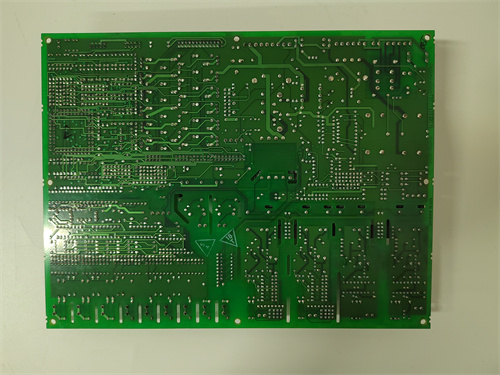
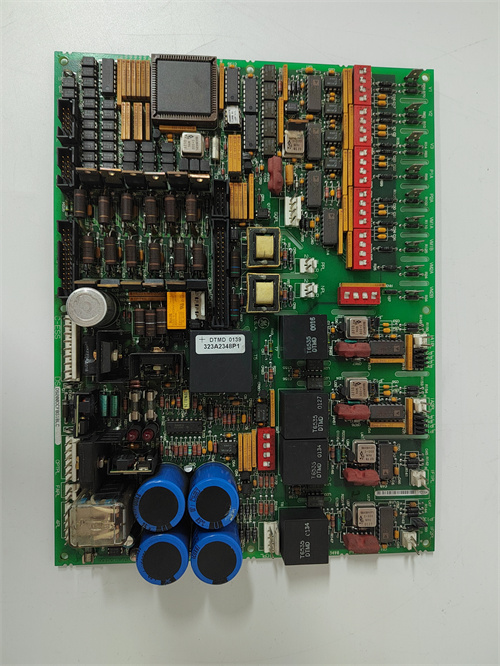
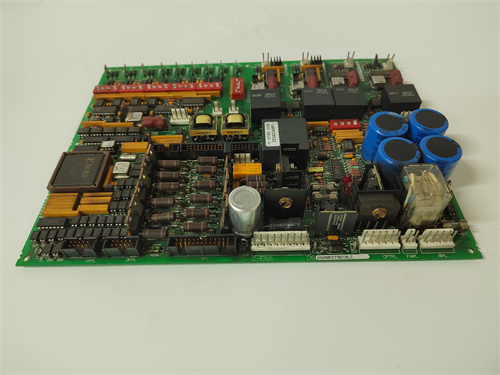
The GE DS200CTBAG1ACC is a thermocouple input module for the Mark V Speedtronic turbine control system. It monitors exhaust gas temperatures (EGT) and other thermal points in chemically aggressive environments. This module adds silicone conformal coating (Dow Corning 1-2577) to the CTBAG1A platform.
Core advantage: The ACC suffix uses silicone coating instead of acrylic (ABB). Silicone resists fuel vapors, solvents, and H2S that attack acrylic in refinery and petrochemical environments. The cold junction compensation (CJC) thermistors are also coated, preventing corrosion of their leads. Field data from refinery cogeneration plants shows silicone-coated CTBA boards achieve 6+ years service life vs 14 months for uncoated boards in the same environment.
Key Technical Specifications
| Parameter | Value |
|---|---|
| Board type | Thermocouple input, silicone coated |
| Part number | DS200CTBAG1ACC |
| Mark V series revision | R2, R3, R4 compatible |
| Input channels | 16 differential |
| Thermocouple types | J, K, T, E, R, S, B (linearized) |
| Resolution | 16-bit |
| Input range | -10 mV to +70 mV |
| Cold junction compensation | Onboard thermistor per 8 channels (coated) |
| CJC accuracy | ±0.5°C (0-55°C ambient) |
| Accuracy (Type K) | ±1.0°C (typical) |
| Conformal coating | Silicone (Dow Corning 1-2577) |
| Coating thickness | 0.10 mm ±0.02 mm |
| Chemical resistance | Toluene, xylene, MEK, fuel oil, H2S, ammonia |
| Input impedance | >10 MΩ |
| Open TC detection | Yes |
| Update rate | 320 ms for all 16 channels |
| Isolation | 1,500 V RMS |
| Supply voltage | 5 V DC from VME backplane |
| Current draw | 430 mA typical |
| Operating temp | 0 to 55°C (32 to 131°F) |
| Storage temp | -25 to 85°C |
| Field wiring | Removable terminal block (22-14 AWG) |
Key Selling Points & Differentiators
- Silicone coating for refineries and chemical plants – Resists fuel vapors, H2S, and solvents. Acrylic-coated boards swell and delaminate in these environments.
- CJC thermistors fully coated – Leads and solder joints protected from corrosion. Uncoated CJC leads fail in H2S within 12 months.
- Thicker coating than acrylic – 0.10 mm silicone vs 0.05 mm acrylic. Better barrier against moisture and chemicals.
- Same 16-channel density and 16-bit resolution – No performance compromise from coating. 0.03°C resolution for Type K.
- UV-verified with dye additive – Silicone is normally invisible under UV. We add fluorescent dye (glows yellow-green) for inspection.
- Chemical spot test verified – Toluene applied to test coupon from each batch. Coating must not swell.
- 30-day warranty with cross-ship – Coating delamination or CJC failure? We send replacement same day.
Frequently Asked Questions (FAQ)
Q: What is the difference between DS200CTBAG1ABB (acrylic) and DS200CTBAG1ACC (silicone)?
A: Coating chemistry. ABB uses acrylic (resists humidity/salt, not solvents). ACC uses silicone (resists solvents/fuel vapors, not as humidity-resistant). For offshore (salt, no solvents), use ABB. For refinery (H2S, fuel vapors, no salt), use ACC. For coastal refinery (both), ACC is safer – silicone passes 96-hour salt fog but acrylic fails solvent test.
Q: Can I use the ACC board in a refinery with H2S?
A: Yes – silicone coating is H2S resistant. However, the terminal block screws (tin-plated) will corrode in H2S. Upgrade to gold-plated terminal block ($25 extra). Gold does not tarnish in H2S. We pre-install gold blocks on ACC boards for refinery orders. Without gold block, the screws will fail within 6 months.
Q: How do you test the silicone coating on refurbished ACC boards?
A: We apply a drop of toluene to a coated test coupon and cover for 1 hour. Coating must not swell or soften. We also perform insulation resistance test: 500 V DC between adjacent terminal block pins. Coated boards must measure >100 GΩ (uncoated measures 1-10 GΩ in humidity). About 10% of incoming ACC boards fail – coating has pinholes. Those are stripped and re-coated.
Q: I see an ACC board with a red sticker near the CJC thermistors. What does that mean?
A: The red sticker indicates the board received an additional “H2S exposure” test (100 ppm H2S for 96 hours). The CJC thermistors and solder joints must show no tarnish. Standard boards are not H2S tested. Red-sticker boards are for sour gas refineries (high H2S concentration). We charge an extra $30 for red-sticker boards.
Q: Does silicone coating affect the CJC accuracy?
A: Yes – silicone has higher thermal resistance than acrylic. The CJC thermistor responds 2-3x slower to temperature changes. For steady-state operation (constant cabinet temperature), accuracy is unchanged. For rapid temperature changes (e.g., cabinet door opened), the CJC may lag by 1-2°C for 5 minutes. For critical EGT monitoring, allow 10 minutes after cabinet access before trusting readings.
Q: My ACC board reads correctly on all channels but the CJC temperature is 2°C low. What failed?
A: The CJC thermistor has been contaminated by silicone coating or chemical residue. We have seen this on boards where coating wicked under the thermistor. Repair cost is 155. We remove the thermistor, clean pads, install new thermistor, and re-coat. Turnaround is 7 days. For future orders, request “masked CJC” (15 extra) – we keep the thermistor uncoated.
Q: How do I identify a counterfeit DS200CTBAG1ACC?
A: Genuine boards have “CTBAG1ACC” printed on the edge connector label. Under UV (365 nm), the coating glows yellow-green (dye additive). Counterfeits often use polyurethane (no glow) or no coating with fake label. Also check the ADC chip: genuine uses AD7732 (24-bit sigma-delta). Fakes use AD7731 (slower, 16-bit) or unmarked chips. We UV-inspect and photograph every board.
Q: Can the ACC board be used with grounded thermocouples in a refinery?
A: Yes – but use caution. Grounded TCs create ground loops with the turbine chassis. In refineries with cathodic protection, ground currents can be high (amps). These currents will heat the TC wires and cause measurement error. Use isolated (ungrounded) thermocouples or add external isolators. The ACC coating does not solve ground loop issues.
Q: What is the expected life of silicone coating in high-temperature refinery areas (65°C+)?
A: Silicone is rated for continuous operation at 200°C. The board’s components fail before the coating (capacitors rated 105°C max). Keep cabinet temperature below 55°C. For refineries with ambient above 55°C, install cabinet air conditioning. The coating will outlast the electrolytic capacitors.
Q: Does the ACC board support open thermocouple detection?
A: Yes – same as CTBAG1A. The board injects a small pull-up current (10 nA) and detects when voltage exceeds 100 mV (open circuit). The silicone coating does not affect this circuit. Open detection works even with coated terminal blocks (coating stops 3 mm from screw terminals).
Q: Can I wash the ACC board with solvent if it gets fuel oil on it?
A: No – solvents will dissolve the silicone coating. For fuel oil spills, wipe with a dry cloth or use isopropyl alcohol (70% max). Alcohol will not damage silicone but may leave residue. Do not use toluene, xylene, MEK, acetone, or mineral spirits. For heavy contamination, return the board to us for professional cleaning ($45). We use specialized fluorinated solvents (Novec) that do not harm coating.
Q: Do you offer a version with silicone coating and gold-plated terminal block?
A: Yes – standard on all ACC boards we ship to refineries. The base ACC includes tin-plated block. Specify “-G” suffix (DS200CTBAG1ACC-G) at no extra charge for gold. Gold is mandatory for H2S or high-humidity + chemical environments. Tin will corrode within 6 months in sour gas. We automatically upgrade to gold for refinery and petrochemical orders.
Q: What is the shelf life of ACC boards in chemical plant storage?
A: Silicone coating does not degrade in storage. However, the board may absorb chemical vapors from the air. Store spare ACC boards in sealed anti-static bags with activated charcoal (we include for $5). Without charcoal, the board may absorb H2S over 12 months. Upon power-up, absorbed H2S can outgas and corrode neighboring boards. We recommend replacing the desiccant bag annually.
PM633 3BSE008062R1
Sanyo Denki103H89331-0265
TPC-1570H 3BHE031734R1011
SC610 3BSE001552R1
IMDSI12
 Email: sales@plcfcs.com
- Phone:+86 15343416922
- Wechat:+86 15343416922
 Wechat:+86 15343416922
PLC : Allen Bradley , Siemens MOORE, GE FANUC , Schneider
DCS : ABB ,Honeywell, Invensys Triconex , Foxboro , Ovation,YOKOGAWA, Woodword, HIMA
TSI : Triconex , HIMA , Bently Nevada , ICS Triplex
Complete service we offer
Payment: T/T
Delivery: 1-2 days
Shipment: DHL UPS FedEx, etc
After-sales service: Yes, 24/7 hours