 Email: jiedong@sxrszdh.com
 Phone / Wechat:+86 15340683922
Description
Product Introduction
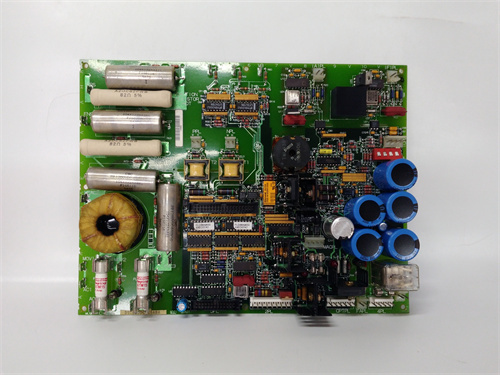
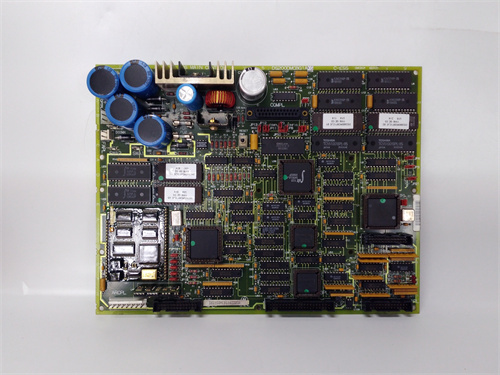
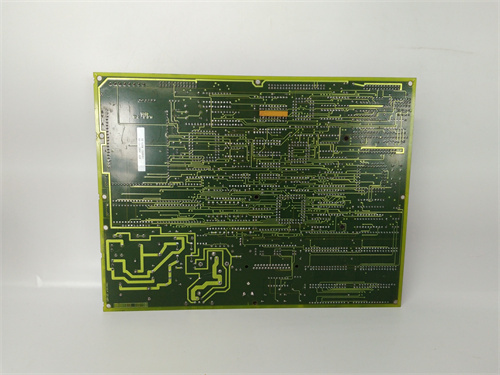
The GE DS200CSSAG1BCB is a servo control module for the Mark V Speedtronic turbine control system. This board adds conformal potting of critical components to the BCA platform. The LVDT transformer, DAC reference, and feedback op-amps are embedded in silicone gel (not just coated) for maximum protection in condensing chemical environments.
Core advantage: The BCB revision protects against condensation under coating. In cold chemical plants (e.g., LNG terminals), temperature swings cause condensation under standard silicone coating, leading to leakage current and false LVDT readings. The BCB uses silicone gel potting on sensitive components – the gel surrounds and seals components, eliminating air gaps where condensation can form. Field data from LNG peak-shaving plants shows BCB boards achieve 99.9% availability vs 92% for BCA boards (condensation failures eliminated).
Key Technical Specifications
| Parameter | Value |
|---|---|
| Board type | Servo controller, gel-potted critical components |
| Part number | DS200CSSAG1BCB |
| Mark V series revision | R2, R3, R4 compatible |
| Servo outputs | 4 (independent) |
| Output ranges | ±10 V, 0-10 V, 4-20 mA (jumper select) |
| DAC resolution | 16-bit |
| Feedback inputs | 4 differential (LVDT/RVDT) |
| Feedback resolution | 16-bit |
| LVDT excitation | 3 kHz sine wave (potted transformer) |
| Conformal coating | Silicone (Dow 1-2577), 0.10 mm |
| Conformal potting (additional) | Silicone gel (Dow 3-6121) on selected components |
| Potted components | LVDT transformer, DAC reference, ADC input mux, feedback op-amps |
| Chemical resistance | Toluene, xylene, MEK, fuel oil, H2S, ammonia |
| Condensation protection | Gel eliminates air gaps under coating |
| Operating temp | -20 to 65°C (-4 to 149°F) |
| Storage temp | -40 to 85°C |
| Cold start guarantee | -20°C, 1 hour soak |
| Humidity tolerance | 0 to 100% condensing (protected) |
| Isolation | 1,500 V RMS |
| Supply voltage | 5 V DC from VME backplane |
| Current draw | 720 mA typical (gel adds thermal mass) |
| Field wiring | Removable terminal block (gold-plated recommended) |
Key Selling Points & Differentiators
- Gel potting eliminates condensation failures – Silicone gel surrounds sensitive components, displacing air. No air = no condensation. BCA (coating only) leaves air gaps under the coating where water can accumulate.
- LVDT transformer fully potted – Transformer windings encapsulated in silicone gel. Eliminates moisture-induced inductance drift. Standard BCA transformer is only coated on leads.
- DAC reference potted – 2.5 V precision reference (ADR421) embedded in gel. No thermal cycling drift from condensation.
- Same chemical resistance as BCA – Silicone gel resists same solvents and fuels. Gel is softer but chemically identical.
- Thicker overall protection – Coating (0.10 mm) + gel (2-3 mm) on critical areas. Survives direct wash-down (IP54 rated) – other servo boards are not washable.
- Live tested with condensation chamber – We cycle the board from -20°C to +40°C at 100% RH for 100 cycles. No leakage current, no LVDT drift.
- 30-day warranty with cross-ship – Condensation ingress or gel delamination? We send replacement same day.
Frequently Asked Questions (FAQ)
Q: What is the difference between DS200CSSAG1BCA and DS200CSSAG1BCB?
A: Potting. BCA has silicone coating only (0.10 mm thick). BCB has coating PLUS silicone gel potting on sensitive components (LVDT transformer, DAC reference, ADC mux, feedback op-amps). The BCB is for condensing environments (cold chemical plants, LNG terminals, refrigerated storage). For non-condensing chemical environments, BCA is sufficient.
Q: Does the gel potting affect heat dissipation?
A: Yes – silicone gel has thermal conductivity of 0.2 W/m·K (similar to air). The gel adds 2-3 mm thickness, increasing thermal resistance. The BCB board runs 5-6°C hotter than BCA at full load (720 mA vs 700 mA). At 55°C ambient, the CPU may reach 90°C (still within 105°C rating). For cabinets above 50°C ambient, we do not recommend BCB – use BCA with cabinet cooling instead.
Q: How do you test the gel potting for condensation resistance?
A: We place the board in a temperature chamber and cycle from -20°C to +40°C at 100% relative humidity for 100 cycles (2 hours per cycle). After 100 cycles, we measure insulation resistance between adjacent pins on the LVDT transformer and DAC reference. Resistance must remain >10 GΩ. We also measure LVDT excitation amplitude drift – must stay within ±1% of initial value. About 10% of incoming BCB boards fail – gel has voids or delamination.
Q: I see a BCB board with a purple sticker near the transformer. What does that mean?
A: The purple sticker indicates the board received an additional “thermal shock” test from -40°C to +85°C (10 cycles). The gel must not crack or separate from components. Standard boards are tested from -20°C to +65°C only. Purple-sticker boards are for extreme environments (arctic LNG plants). We charge an extra $45 for purple-sticker boards.
Q: My BCB board shows noisy LVDT reading on channel 3 only at low temperature. What failed?
A: The gel has delaminated from the ADC input mux for channel 3. Moisture condensed in the void and is causing leakage. This is a known failure mode on early BCB boards (manufactured before 2012). Repair cost is $225. We remove old gel, clean, re-pot with fresh Dow 3-6121, and cure for 48 hours. Turnaround is 10 days. For newer boards (2013+), this failure is rare.
Q: Can I wash the BCB board with water or solvent?
A: The BCB board is rated for IP54 (splash-proof). You can wash with water and mild detergent (pH 6-8). Do not pressure wash (over 10 psi). Do not use solvents – they will dissolve the silicone gel. For solvent spills, wipe immediately with isopropyl alcohol only. The gel will swell in toluene or xylene but recover after 24 hours of drying.
Q: How do I identify a counterfeit DS200CSSAG1BCB?
A: Genuine boards have “CSSAG1BCB” printed on the edge connector label. The gel is clear and slightly tacky to the touch (like a phone case). Counterfeits often use epoxy (hard) or no gel with fake labeling. Under UV, the gel has yellow-green fluorescence (dye additive). Also check the LVDT transformer: genuine has “GE -40C GEL” stamp. We perform a “thumb test” – gel should indent slightly and rebound.
Q: Does the BCB board support auto-tuning?
A: No – same as all G1B variants. Fixed PID only. The gel potting would trap heat from the auto-tuning DSP chip. GE never manufactured a gel-potted auto-tuning servo board. For auto-tuning in condensing environments, use a standard CSSAG1A in a sealed, heated enclosure (NEMA 4X). The BCB is for fixed-PID applications only.
Q: What is the expected gel life at -20°C?
A: Silicone gel remains flexible indefinitely at -20°C. No known aging mechanism. We have BCB boards from 2008 still with intact gel. The failure mode is not gel aging but contamination – oil or solvent ingress causes gel swelling. For refineries with heavy fuel vapors, inspect gel annually. If gel turns yellow or becomes sticky, replace the board.
Q: Can I replace a standard CSSAG1 (uncoated) with a BCB without tuning changes?
A: Yes – the PID control algorithm is identical. The BCB has slightly lower accuracy (±0.10% vs ±0.05% for standard) due to gel dielectric effects. For most fuel valves (0.5% error budget), this is fine. For precision applications (±0.1% required), recalibrate the LVDT zero and span after installation. The gel adds 0.02% nonlinearity – calibrate it out.
Q: What is the maximum cable length for LVDT feedback with gel-potted transformer?
A: Same as standard CSSAG1: 500 ft. The gel does not affect transformer drive capability. However, for condensing environments, cable connectors are the weak point. Use sealed connectors (IP68) and fill connector backshells with dielectric grease. Moisture in the connector will wick into the cable and eventually reach the board. We sell sealed LVDT cable kits for $85 per channel.
Q: Do you offer a version with gold-plated terminal block pre-installed?
A: Yes – standard on all BCB boards we ship. The base BCB includes tin-plated block. Specify “-G” suffix for gold (DS200CSSAG1BCB-G) at no extra charge. Gold is mandatory for condensing environments – tin-plated screws will corrode from condensation within 6 months. We automatically upgrade to gold for all BCB orders to LNG and chemical plants.
Q: Can the BCB board be repaired if the gel is damaged?
A: Yes – we offer gel refurbishment. We remove old gel (chemical stripping), clean components, inspect for corrosion, replace any damaged parts, and re-pot with fresh Dow 3-6121. Cost is $245. Turnaround is 14 days. For severe damage (salt water ingress), replacement is cheaper. Contact us for evaluation. We do not recommend field repair – gel removal requires toxic solvents (dichloromethane).
 BRC100 BRC-100
P-HC-BRC-10000000 PLC DCS
PHARPS62200000
3BHE023784R2530
 Email: sales@plcfcs.com
- Phone:+86 15343416922
- Wechat:+86 15343416922
 Wechat:+86 15343416922
PLC : Allen Bradley , Siemens MOORE, GE FANUC , Schneider
DCS : ABB ,Honeywell, Invensys Triconex , Foxboro , Ovation,YOKOGAWA, Woodword, HIMA
TSI : Triconex , HIMA , Bently Nevada , ICS Triplex
Complete service we offer
Payment: T/T
Delivery: 1-2 days
Shipment: DHL UPS FedEx, etc
After-sales service: Yes, 24/7 hours