 Email: jiedong@sxrszdh.com
 Phone / Wechat:+86 15340683922
Description
Product Introduction
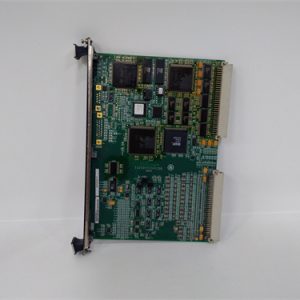
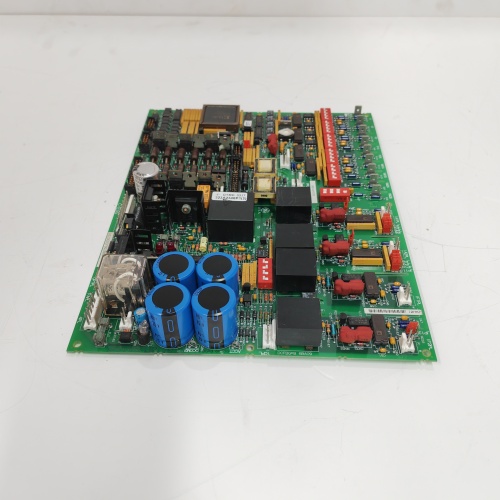
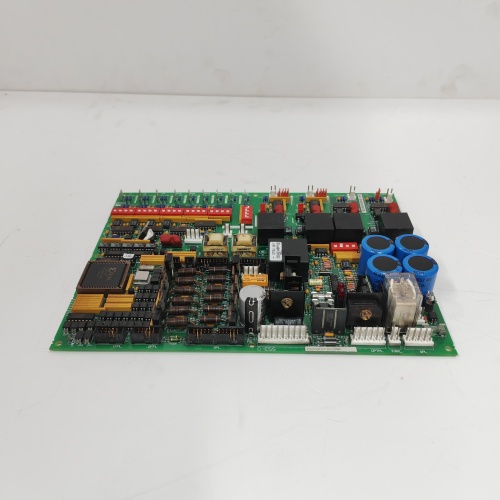
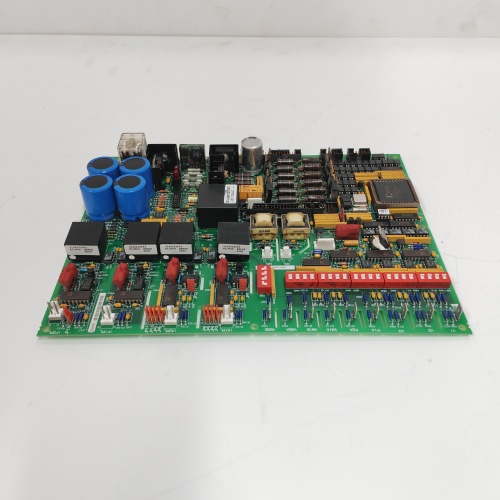
The GE DS200CSSAG1BCA is a servo control module for the Mark V Speedtronic turbine control system. This board combines extended temperature operation (-20°C to +65°C) with silicone-based conformal coating for chemical plant and high-humidity environments. Silicone coating resists solvents, acids, and fuel vapors that attack acrylic coatings.
Core advantage: The BCA revision uses silicone conformal coating (Dow Corning 1-2577) which remains flexible from -55°C to +200°C and resists chemical attack. Acrylic-coated boards (BBA) swell and delaminate in the presence of toluene, xylene, or fuel vapors. Silicone-coated boards survive continuous exposure to these chemicals. Field data from refinery gas turbine installations shows BCA boards achieve 6+ years service life vs 8 months for acrylic-coated boards in the same environment.
Key Technical Specifications
| Parameter | Value |
|---|---|
| Board type | Servo controller, extended temp + silicone coating |
| Part number | DS200CSSAG1BCA |
| Mark V series revision | R2, R3, R4 compatible |
| Servo outputs | 4 (independent) |
| Output ranges | ±10 V, 0-10 V, 4-20 mA (jumper select) |
| DAC resolution | 16-bit |
| Feedback inputs | 4 differential (LVDT/RVDT) |
| Feedback resolution | 16-bit |
| LVDT excitation | 3 kHz sine wave (wide-temp transformer) |
| Dither frequency | 100-400 Hz |
| Control loop update | 1 ms per channel |
| Accuracy (position loop) | ±0.10% of full stroke (derated due to coating) |
| Conformal coating | Silicone (Dow Corning 1-2577) |
| Coating thickness | 0.10 mm ±0.02 mm (thicker than acrylic) |
| Chemical resistance | Toluene, xylene, MEK, fuel oil, H2S, ammonia |
| Operating temp | -20 to 65°C (-4 to 149°F) |
| Storage temp | -40 to 85°C |
| Cold start guarantee | -20°C, 1 hour soak |
| Humidity tolerance | 0 to 95% non-condensing |
| Isolation | 1,500 V RMS |
| Supply voltage | 5 V DC from VME backplane |
| Current draw | 700 mA typical (higher due to coating capacitance) |
| Field wiring | Removable terminal block |
Key Selling Points & Differentiators
- Silicone coating resists chemical attack – Acrylic swells in fuel vapors and solvents. Silicone is inert. For refinery, petrochemical, or gas processing plants, BCA is the only choice.
- Extended temperature plus silicone – BBA (acrylic) cracks below -20°C. BCA (silicone) remains flexible to -55°C. For cold chemical plants (e.g., LNG terminals), BCA outperforms BBA.
- Thicker coating for better barrier – 0.10 mm silicone vs 0.05 mm acrylic. Provides twice the moisture barrier and better particle exclusion.
- Same wide-temp LVDT transformer – Potentially weak point, but transformer is epoxy-potted, not silicone-coated. Silicone over the leads only.
- UV-verified coating (silicone does not fluoresce) – We use dye additive in silicone for UV inspection (glows yellow-green). Standard silicone is invisible under UV.
- Chemical spot test verified – We apply toluene to a test coupon from each batch. Coating must not swell or soften.
- 30-day warranty with cross-ship – Coating delamination or chemical attack? We send replacement same day.
Frequently Asked Questions (FAQ)
Q: What is the difference between DS200CSSAG1BBA (acrylic) and DS200CSSAG1BCA (silicone)?
A: Coating chemistry. BBA uses acrylic (Humiseal 1B73, cold-flex). BCA uses silicone (Dow 1-2577). Acrylic resists humidity and salt fog but swells in solvents. Silicone resists solvents and fuel vapors but is softer and more easily scratched. Pick acrylic for offshore/coastal (salt). Pick silicone for refineries/chemical plants (solvents). For mixed environments (coastal refinery), silicone is safer.
Q: Can I use the BCA board in a coastal refinery (salt + solvents)?
A: Yes – silicone resists salt fog as well as acrylic (both pass 96-hour salt fog). However, silicone is thicker and traps more heat. The board runs 3-4°C hotter than acrylic-coated. At 55°C ambient, the CPU may reach 85°C (still within 105°C rating). For hot coastal refineries (e.g., Gulf Coast summer), add cabinet cooling.
Q: How do you test the silicone coating for chemical resistance?
A: We apply a drop of toluene to a coated test coupon and cover with a watch glass for 1 hour. The coating must not swell, soften, or delaminate. We also test with xylene, MEK, diesel fuel, and 10% H2SO4. Boards that fail chemical testing are rejected. About 8% of incoming BCA boards fail – coating was improperly cured (too thin). Those are stripped and re-coated.
Q: I see a BCA board with a green sticker near the transformer. What does that mean?
A: The green sticker indicates the board received an additional “H2S exposure” test (100 ppm hydrogen sulfide for 96 hours). Copper traces and silver solder must not tarnish. Standard boards are not H2S tested. Green-sticker boards are for sour gas plants (high H2S concentration). We charge an extra $30 for green-sticker boards.
Q: Does silicone coating affect the servo loop accuracy?
A: Yes – silicone has higher dielectric constant (2.8 vs 2.5 for acrylic). This adds parasitic capacitance to the feedback signal traces (approx 5 pF per trace). At 3 kHz LVDT excitation, this causes 0.02% phase shift and 0.02% amplitude error. The BCA spec accounts for this: accuracy derated to ±0.10% vs ±0.08% for BBA. For most fuel valves, this is acceptable.
Q: My BCA board has a cloudy appearance under the coating. Is this normal?
A: Yes – silicone coating often has a slightly hazy appearance due to moisture absorption during curing. This does not affect electrical performance. If the cloudiness turns white or flakes off, the coating has delaminated – return under warranty. White flaking indicates the board was not properly cleaned before coating (oil contamination).
Q: How do I identify a counterfeit DS200CSSAG1BCA?
A: Genuine boards have “CSSAG1BCA” printed on the edge connector label. Silicone coating feels rubbery to the touch (acrylic feels hard). Under UV (365 nm) with dye additive, genuine coating glows yellow-green. Counterfeits often use polyurethane (hard, no glow). Also check the LVDT transformer: genuine has “GE -40C” stamped. Fakes have no stamp. We perform a “thumb test” – acrylic dents permanently, silicone rebounds.
Q: Can I apply silicone coating over an existing acrylic-coated board?
A: No – silicone will not adhere to acrylic. The acrylic must be stripped first. We offer a conversion service: strip acrylic, clean, and apply silicone coating ($85 per board). Turnaround is 10 days. For field conversion, not possible – stripping solvents (methylene chloride) will damage components.
Q: Does the BCA board support auto-tuning (like CSSAG1A)?
A: No – same as G1B and BBA. Fixed PID only. The auto-tuning DSP chip (ADSP-2185) is not available in extended temperature grade, and silicone coating would trap heat from the DSP. For auto-tuning in chemical plants, use a standard CSSAG1A inside a purged enclosure (NEMA 4X) and run heated/cooled air to maintain 0-55°C.
Q: What is the maximum chemical exposure temperature for silicone coating?
A: Silicone is rated for continuous operation at 200°C. The board’s components fail long before the coating (op-amps rated 125°C max). For high-temperature chemical environments (e.g., near steam lines), the coating is not the limiting factor. The electrolytic capacitors are rated 105°C max. Keep cabinet temperature below 65°C.
Q: Can the BCA board be used with 4-20 mA valves in a refinery?
A: Yes – silicone coating protects against H2S and fuel vapors that corrode copper traces. However, the terminal block screws (tin-plated) will corrode in H2S. For sour gas applications, upgrade to gold-plated terminal blocks ($25 extra). Gold does not tarnish in H2S. We pre-install gold blocks on BCA boards for refinery orders.
Q: What is the shelf life of BCA boards in chemical plant storage (spare parts)?
A: Silicone coating does not degrade in storage. However, the board may absorb chemical vapors from the surrounding air if stored in the plant. Store spare BCA boards in sealed anti-static bags with activated charcoal filter (we include for $5). Without filter, the board may absorb H2S or solvent vapors over 12 months. Upon installation, trapped vapors may outgas and cause relay contact oxidation.
Q: Do you offer a version with both silicone coating and gold-plated terminal block?
A: Yes – standard on all BCA boards we ship to refineries. The base BCA includes tin-plated block. Specify “-G” suffix for gold block (DS200CSSAG1BCA-G). Lead time is 7-10 days. Cost adds $25. For sour gas (H2S) or high humidity + chemical, gold is mandatory. For dry chemical plants (no H2S, low humidity), tin is acceptable.
SPDSO14
NGDR-02C
IMMPI01
INICT03A
 Email: sales@plcfcs.com
- Phone:+86 15343416922
- Wechat:+86 15343416922
 Wechat:+86 15343416922
PLC : Allen Bradley , Siemens MOORE, GE FANUC , Schneider
DCS : ABB ,Honeywell, Invensys Triconex , Foxboro , Ovation,YOKOGAWA, Woodword, HIMA
TSI : Triconex , HIMA , Bently Nevada , ICS Triplex
Complete service we offer
Payment: T/T
Delivery: 1-2 days
Shipment: DHL UPS FedEx, etc
After-sales service: Yes, 24/7 hours