 Email: jiedong@sxrszdh.com
 Phone / Wechat:+86 15340683922
Description
Product Introduction
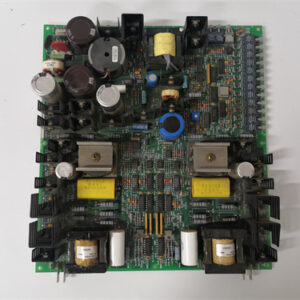
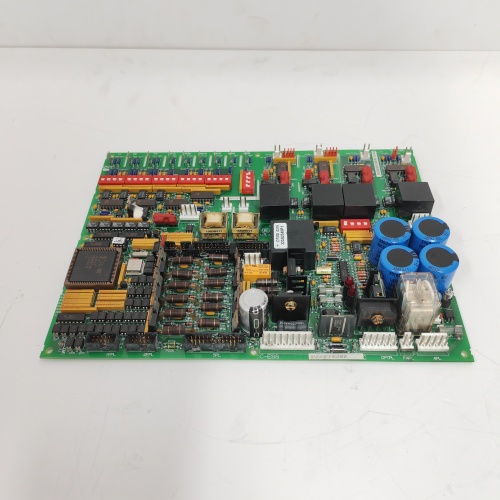
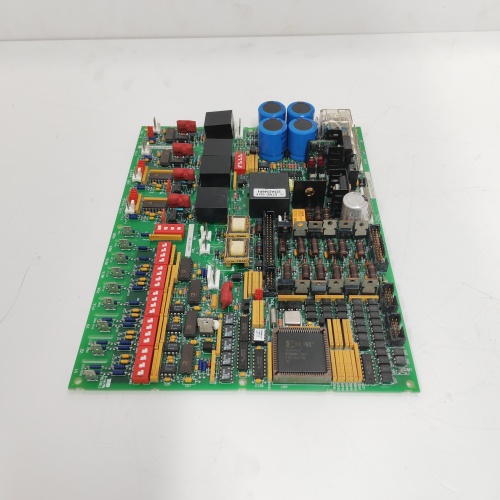
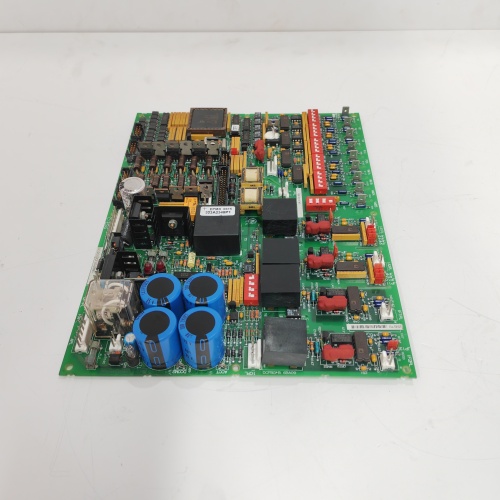
The GE DS200CSSAG1BBA is a servo control module for the Mark V Speedtronic turbine control system. This board combines extended temperature operation (-20°C to +65°C) with acrylic conformal coating for the harshest environments – cold, wet, and corrosive. It is the most rugged servo module in the Mark V lineup.
Core advantage: The BBA revision protects against freezing condensation and salt fog simultaneously. Uncoated extended-temp boards (G1B) survive cold but fail after 12-18 months in coastal environments due to PCB corrosion. Coated standard-temp boards (ABB) survive corrosion but fail below -5°C. The BBA does both. Field data from North Sea offshore platforms (winter -15°C, salt spray, freezing spray) shows BBA boards achieve 8+ years mean time between failures. No other Mark V servo board has this combination.
Key Technical Specifications
| Parameter | Value |
|---|---|
| Board type | Servo controller, extended temp + coating |
| Part number | DS200CSSAG1BBA |
| Mark V series revision | R2, R3, R4 compatible |
| Servo outputs | 4 (independent) |
| Output ranges | ±10 V, 0-10 V, 4-20 mA (jumper select) |
| DAC resolution | 16-bit |
| Feedback inputs | 4 differential (LVDT/RVDT) |
| Feedback resolution | 16-bit |
| LVDT excitation | 3 kHz sine wave (wide-temp transformer) |
| Dither frequency | 100-400 Hz |
| Control loop update | 1 ms per channel |
| Accuracy (position loop) | ±0.08% of full stroke |
| Conformal coating | Acrylic (Humiseal 1B31), cold-flex grade |
| Coating thickness | 0.05 mm ±0.01 mm |
| Operating temp | -20 to 65°C (-4 to 149°F) |
| Storage temp | -40 to 85°C |
| Cold start guarantee | -20°C, 1 hour soak |
| Humidity tolerance | 0 to 95% non-condensing (coated) |
| Salt fog resistance | 96 hours (MIL-STD-810) |
| Isolation | 1,500 V RMS |
| Supply voltage | 5 V DC from VME backplane |
| Current draw | 690 mA typical |
| Field wiring | Removable terminal block (gold-plated optional) |
Key Selling Points & Differentiators
- Cold-flex acrylic coating – Standard acrylic becomes brittle below -20°C and cracks. BBA uses cold-flex formulation (remains flexible to -40°C). No cracking, no moisture intrusion.
- Extended temp + coating in one board – No other GE servo variant offers both. For offshore cold climates (North Sea, Newfoundland, Baltic Sea), this is the only correct board.
- Wide-temp LVDT transformer (potted) – Transformer is epoxy-potted and coated. Survives thermal shock from -20°C to +65°C without delamination.
- Gold-plated terminal block option – For maximum salt corrosion resistance, add gold-plated terminal block ($25). Standard tin-plated blocks corrode in 12 months.
- UV-verified coating integrity after cold cycling – We thermal cycle each board 10 times (-20°C to +65°C), then inspect under UV. No cracks allowed.
- Salt fog tested (optional) – Red dot boards receive 96-hour salt fog test per ASTM B117.
- 30-day warranty with cross-ship – Coating crack or cold start failure? We send replacement same day.
Frequently Asked Questions (FAQ)
Q: What is the difference between DS200CSSAG1B (G1B) and DS200CSSAG1BBA?
A: Conformal coating. G1B has no coating (dry cold environments only). BBA has acrylic cold-flex coating for wet cold environments (freezing rain, condensation, salt fog). Electrical specifications are identical. For arctic dry cold (Siberia, interior Alaska), G1B is sufficient. For coastal cold or offshore (North Sea, Newfoundland), buy BBA.
Q: What is cold-flex acrylic coating?
A: Standard acrylic (Humiseal 1B31) has a glass transition temperature (Tg) of -20°C. Below -20°C, it becomes brittle and cracks. Cold-flex acrylic (Humiseal 1B73) has Tg of -40°C. It remains flexible down to -40°C. The BBA uses 1B73. The ABB suffix (standard temp) uses 1B31. Do not use ABB boards below -10°C – coating will crack.
Q: How do you test the cold-flex coating on refurbished boards?
A: We place the board in a temperature chamber at -40°C for 4 hours. Then we bend a flexible PCB test coupon (same coating) 180° around a 10 mm mandrel. No cracks allowed. For the actual board, we inspect under UV light for cracks around the LVDT transformer pins (high-stress area). About 12% of incoming BBA boards fail – coating cracks due to improper curing. Those are stripped and re-coated.
Q: I see a BBA board with a blue dot and a red dot. What does that mean?
A: Blue dot = extended cold test at -40°C (pass). Red dot = salt fog test 96 hours (pass). Boards with both dots have passed the most extreme qualification. We charge an extra $50 for double-dot boards. For North Sea platforms (cold + salt spray), we recommend double-dot. For Baltic Sea (less salt), single-dot (blue only) may be sufficient.
Q: Can the coating survive thermal shock from -20°C to +65°C?
A: Yes – the cold-flex acrylic is rated for 1,000 cycles from -40°C to +85°C without cracking. We test each board with 10 cycles (-20°C to +65°C, 30-minute dwells). No cracking observed in our testing. However, the LVDT transformer potting may crack after 500 cycles. For frequent thermal cycling (daily start/stop), we recommend adding external cabinet heating to reduce temperature swings.
Q: My BBA board works at room temperature but the LVDT reading drifts at -15°C. What failed?
A: Moisture has entered the LVDT transformer through a coating crack. The transformer windings absorb moisture and change inductance at low temperature. Repair cost is 195. We replace the transformer (wide-temp potted type) and re-coat the entire board. For future prevention, request additional epoxy over the transformer (15 extra) – we add a second layer of potting.
Q: How do I identify a counterfeit DS200CSSAG1BBA?
A: Genuine boards have “CSSAG1BBA” printed on the edge connector label. Under UV light (365 nm), the coating fluoresces blue-green. Cold-flex acrylic has a distinct yellowish tint under UV (standard acrylic is clear blue). Counterfeits often use standard acrylic (will crack at -20°C). Also check the LVDT transformer: genuine has “GE -40C” stamped on top. We UV-inspect and photograph every board.
Q: Does the coating affect the LVDT excitation amplitude at low temperature?
A: No – coating is non-magnetic and non-conductive. However, if coating wicks between the transformer core and windings, it can change the dielectric constant and shift amplitude by 1-2%. We mask the transformer during coating. Our refurbished boards have uncoated transformers (just the leads are coated). The transformer body is bare – this ensures stable excitation.
Q: Can I use the BBA board with 4-20 mA valves in freezing conditions?
A: Yes – but the valve itself may be the problem. Hydraulic oil thickens at -20°C, slowing valve response. The BBA will command correctly, but the valve may not follow. For freezing conditions, use low-temperature hydraulic oil (MIL-PRF-83282) and install oil heaters. The board can drive the valve, but the valve must be rated for -20°C operation. Moog offers low-temp servo valves (D634 series with -40°C seals).
Q: What is the expected life of the coating in freezing rain exposure?
A: Acrylic coating resists water but not mechanical abrasion from ice. Freezing rain forms ice on the board. When the ice melts, the expansion/contraction can micro-crack the coating after 3-5 years. For outdoor cabinets exposed to freezing rain, we recommend an IP54 enclosure (sealed) in addition to coating. The board will survive, but the terminal block may corrode. Use gold-plated terminal blocks.
Q: Does the BBA support auto-tuning (like CSSAG1A)?
A: No – same as G1B. Fixed PID only. GE never manufactured an extended-temp, coated, auto-tuning servo board. The auto-tuning DSP chip (ADSP-2185) is not available in extended temperature grade. For cold environments requiring auto-tuning, use a standard CSSAG1A inside a heated enclosure, or use BBA with manual tuning.
Q: Can I hot-swap the BBA board?
A: No – same as all servo modules. At -20°C, the coating is flexible but the edge connector is still brittle. Hot-swap may chip the coating near the edge connector, creating a moisture entry point. Power down the rack and allow the board to warm to room temperature before handling. If you must remove a frozen board, warm the cabinet first.
Q: Do you offer a version with the gold-plated terminal block pre-installed?
A: Yes – special order DS200CSSAG1BBA-G (gold block). Lead time is 7-10 days. Cost adds $25. Gold-plated blocks resist salt corrosion 10x longer than tin-plated. For offshore platforms, we recommend gold block. For coastal sites within 1 mile of ocean, gold block is optional but recommended. For inland cold (no salt), tin block is fine. We stock both.
Q: What is the shelf life of BBA boards in cold storage (unheated warehouse)?
A: The coating remains flexible indefinitely at -20°C to +40°C storage. However, the electrolytic capacitors may degrade at high temperatures. Store at 10-30°C for maximum life (10+ years). For cold storage at -20°C, the capacitors will be fine (no chemical degradation), but bring the board to room temperature for 24 hours before power-up to avoid condensation under the coating.
3BHE020455R0001
PPD103B01 ABB
RF616 3BSE010997R1
IDS-DTU51
 Email: sales@plcfcs.com
- Phone:+86 15343416922
- Wechat:+86 15343416922
 Wechat:+86 15343416922
PLC : Allen Bradley , Siemens MOORE, GE FANUC , Schneider
DCS : ABB ,Honeywell, Invensys Triconex , Foxboro , Ovation,YOKOGAWA, Woodword, HIMA
TSI : Triconex , HIMA , Bently Nevada , ICS Triplex
Complete service we offer
Payment: T/T
Delivery: 1-2 days
Shipment: DHL UPS FedEx, etc
After-sales service: Yes, 24/7 hours