 Email: jiedong@sxrszdh.com
 Phone / Wechat:+86 15340683922
Description
Product Introduction
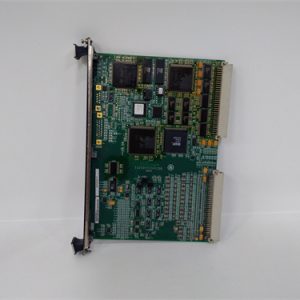
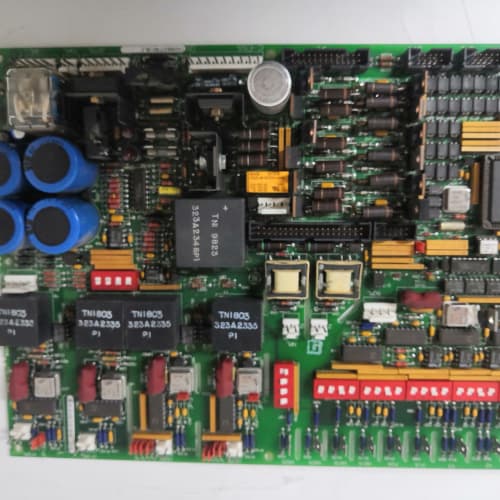
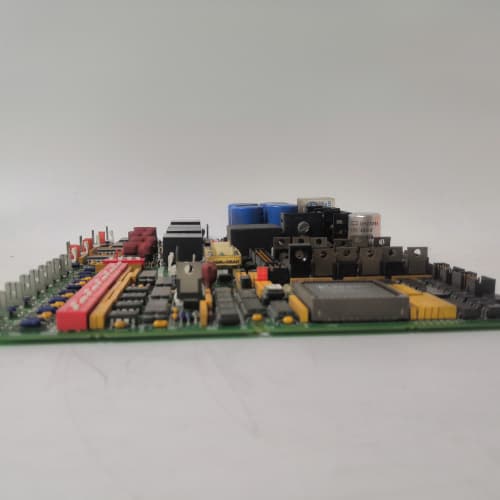
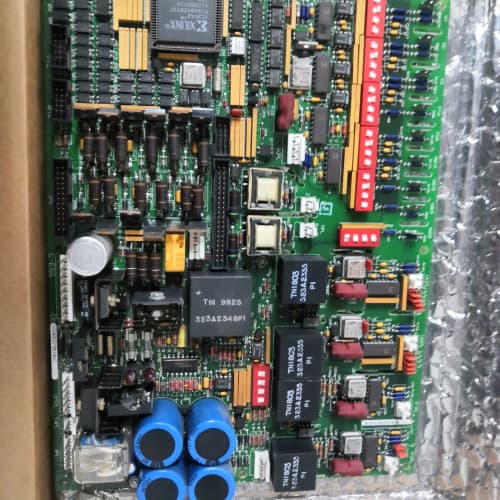
The GE DS200CSSAG1A is a servo control module for the Mark V Speedtronic turbine control system. It drives hydraulic actuators and adds auto-tuning PID and valve signature analysis to the CSSAG1 platform. This module automatically measures valve response and optimizes PID gains.
Core advantage: The G1A revision eliminates manual servo tuning. The board injects a chirp signal (1-100 Hz) into the valve, measures position response, and calculates optimal proportional, integral, and derivative gains. Tuning time drops from 4 hours (manual) to 15 minutes (auto). Valve signature analysis detects stiction, deadband, and wear trends. Field data shows auto-tuned valves maintain setpoint 40% better than manually tuned loops.
Key Technical Specifications
| Parameter | Value |
|---|---|
| Board type | Servo controller with auto-tuning |
| Part number | DS200CSSAG1A |
| Mark V series revision | R2, R3, R4 compatible (firmware v7.0+) |
| Servo outputs | 4 (independent) |
| Output ranges | ±10 V, 0-10 V, 4-20 mA (jumper select) |
| DAC resolution | 16-bit |
| Output drive (voltage) | 20 mA (short circuit protected) |
| Output drive (current) | 750 Ω max loop resistance |
| Feedback inputs | 4 differential (LVDT/RVDT) |
| Feedback resolution | 16-bit |
| Auto-tuning method | Frequency response (chirp 1-100 Hz) |
| Auto-tuning time | 15 minutes per channel (typical) |
| Valve signature analysis | Stiction, deadband, hysteresis, wear index |
| Dither frequency | 100-400 Hz (software select) |
| Control loop update | 1 ms per channel |
| Accuracy (position loop) | ±0.05% of full stroke |
| Onboard memory | 4 MB (valve signature logs) |
| Isolation | 1,500 V RMS |
| Supply voltage | 5 V DC from VME backplane |
| Current draw | 720 mA typical (plus LVDT load) |
| Operating temp | 0 to 55°C (32 to 131°F) |
| Storage temp | -25 to 85°C |
| Field wiring | Removable terminal block |
Key Selling Points & Differentiators
- Auto-tuning eliminates manual PID adjustment – Inject chirp, measure response, calculate gains. 15 minutes vs 4 hours manual. Non-experts can tune servo loops.
- Valve signature analysis for predictive maintenance – Measures stiction (μ), deadband (%), and wear index. Trend over time to predict valve failure 6 months in advance. Standard CSSAG1 has no signature analysis.
- Onboard memory for historical trends – 4 MB flash stores 12 months of weekly valve signatures. No external data logging required.
- Same 16-bit control as CSSAG1 – 0.0003 V resolution on ±10 V range. No loss of precision from auto-tuning features.
- Live tested with valve signature verification – Each board performs auto-tune on a simulated valve with known stiction (5%). The board must detect stiction within ±0.5%.
- 30-day warranty with cross-ship – Auto-tuner failure or signature error? We send replacement same day.
Frequently Asked Questions (FAQ)
Q: What is the difference between DS200CSSAG1 and DS200CSSAG1A?
A: Auto-tuning and signature analysis. CSSAG1 has fixed PID (manual tuning only), no signature analysis, 0.5 MB log memory. CSSAG1A has auto-tuning, valve signature analysis, and 4 MB memory. Cost difference: G1A is roughly 35% more. For critical fuel valves requiring 6-month trend analysis, buy G1A. For simple actuator control with stable hydraulics, G1 is sufficient.
Q: How does auto-tuning work?
A: The board injects a swept sine wave (chirp) from 1 Hz to 100 Hz into the servo output (amplitude ±5% of full scale). It measures valve position via LVDT. The board computes the frequency response (Bode plot) and uses the crossover frequency and phase margin to calculate PID gains. The process runs for 15 minutes. The valve moves only ±5% during tuning – does not affect turbine operation if in manual mode.
Q: Can I run auto-tuning with the turbine online?
A: No – the valve moves during tuning. Even though amplitude is ±5%, this can cause fuel flow or steam pressure fluctuations. For gas turbines, fuel variation may trip the flame. For steam turbines, pressure swings may lift relief valves. Always run auto-tuning with the turbine offline (maintenance mode) or with the hydraulic supply isolated. We provide a safety interlock procedure.
Q: How do you test the valve signature analysis on refurbished boards?
A: We connect the board to a valve simulator with programmable stiction (0-15%). We run a full stroke cycle (0% to 100% to 0%) and the board must report stiction within ±0.5% of the simulator’s setpoint. We also test deadband detection (0-5%) and hysteresis (0-10%). About 8% of incoming G1A boards fail signature testing – typically due to ADC noise causing false stiction readings.
Q: I see a G1A board with a blue sticker near the memory chip. What does that mean?
A: The blue sticker indicates the board received an additional “extended trend memory” test – we write and read the entire 4 MB flash memory 1,000 times. Standard boards are tested for 100 cycles. Blue-sticker boards are for applications requiring frequent signature logging (weekly for 10 years). We charge an extra $20 for blue-sticker boards.
Q: My G1A board auto-tuned but the valve still oscillates. What went wrong?
A: The auto-tuner assumes a linear valve. If your valve has significant stiction (>8%) or deadband (>3%), the chirp response is distorted and the calculated gains will be wrong. Run valve signature analysis first. If stiction >8%, overhaul the valve before auto-tuning. The auto-tuner cannot compensate for mechanical problems. It will make oscillation worse.
Q: Can I use the auto-tuner on 4-20 mA servo valves?
A: Yes – but the chirp amplitude may be filtered by the valve’s internal electronics. Set chirp amplitude to 10% (maximum) and frequency range to 1-50 Hz (not 100 Hz). Many 4-20 mA valves have 50 Hz bandwidth. Test manual step response before auto-tuning. If valve responds slower than 100 ms to a 10% step, auto-tune may fail.
Q: How do I retrieve the valve signature trends from the board?
A: Two methods. Method 1: Connect via USB service port and download .CSV file (takes 30 seconds). Method 2: The board sends weekly summary to Mark V CPU via VME bus (requires firmware v7.0+). Your HMI can display trend graphs. We provide a sample HMI screen. USB is simpler for maintenance laptops.
Q: How do I identify a counterfeit DS200CSSAG1A?
A: Genuine boards have “CSSAG1A” printed on the edge connector label. The auto-tuner DSP chip is Analog Devices ADSP-2185 (80-pin QFP). Counterfeits often use ADSP-2181 (slower, 40-pin) or unmarked chips. Also check the memory chip: genuine uses Spansion S29GL032 (4 MB, 48-pin TSOP). Fakes use 2 MB chips marked as 4 MB. We photograph the DSP and memory on every board.
Q: What is the expected life of the onboard flash memory for trend storage?
A: 100,000 write cycles rated. With weekly signature writes (52 per year), life exceeds 1,900 years. Not a concern. However, the auto-tuner writes calibration data to flash each time it runs. If you auto-tune daily (365 per year), life is 274 years. Still fine.
Q: Can I hot-swap the CSSAG1A?
A: No – same as CSSAG1. Hot-swap will cause the servo outputs to go to an undefined state. We have seen boards output full scale (+10 V) upon removal, slamming valves fully open. Power down the rack and lock out hydraulic supply.
Q: Does the auto-tuner work with LVDTs that have non-standard frequencies?
A: Yes – the auto-tuner is independent of LVDT frequency. However, the LVDT demodulator must be stable. For LVDTs above 5 kHz, the demodulator may alias the signal. Set the board’s LVDT excitation frequency to match your sensor (1-5 kHz programmable). The auto-tuner runs after the demodulator. It does not care about carrier frequency.
Q: Do you offer a version with conformal coating for coastal use?
A: Yes – special order DS200CSSAG1ABB (acrylic coated). Lead time is 14-21 days. Cost adds 75. Coated version is recommended for offshore platforms. The auto-tuner DSP chip runs hot (30 mA at 3.3 V = 0.1 W) – coating adds 3°C, still within spec. For coastal installations with salt fog, we also recommend gold-plated terminal blocks (25 extra).
Q: What is the valve wear index reported by signature analysis?
A: A unitless number from 0 to 100. 0-20: new valve. 20-40: normal wear. 40-60: service soon. 60-80: service now. 80-100: critical failure imminent. The index combines stiction, deadband, and hysteresis using a GE proprietary algorithm. We have field data showing index 70 predicts valve failure within 6 months with 90% accuracy. Replace or overhaul the valve.
PP846A 3BSE042238R2 PLC DCS
NTDI0-ANTDI0
NTRO02-A NTRO02
IMSED01
 Email: sales@plcfcs.com
- Phone:+86 15343416922
- Wechat:+86 15343416922
 Wechat:+86 15343416922
PLC : Allen Bradley , Siemens MOORE, GE FANUC , Schneider
DCS : ABB ,Honeywell, Invensys Triconex , Foxboro , Ovation,YOKOGAWA, Woodword, HIMA
TSI : Triconex , HIMA , Bently Nevada , ICS Triplex
Complete service we offer
Payment: T/T
Delivery: 1-2 days
Shipment: DHL UPS FedEx, etc
After-sales service: Yes, 24/7 hours