 Email: jiedong@sxrszdh.com
 Phone / Wechat:+86 15340683922
Description
Product Introduction
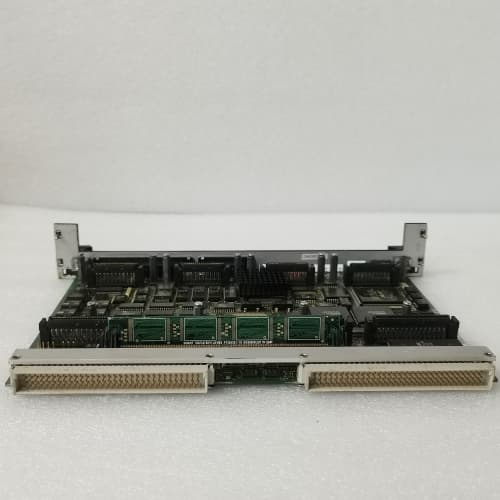
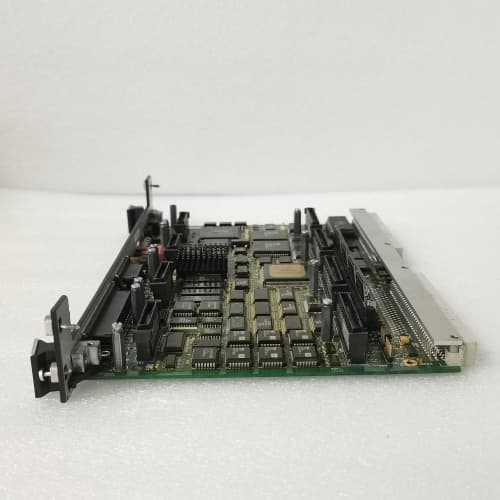
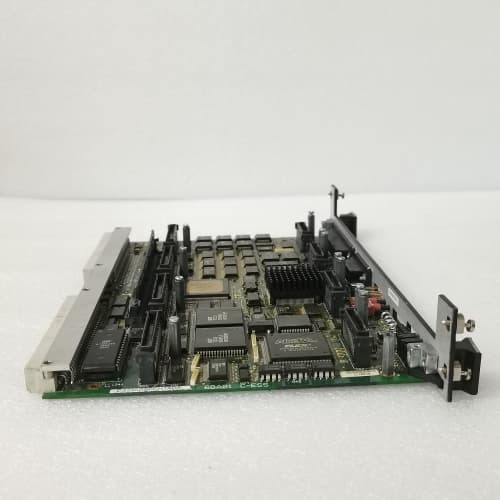
The GE DS200CSSAG1 is a servo control module for the Mark V Speedtronic turbine control system. It drives hydraulic actuators such as fuel valves, steam inlet valves, and bypass valves. This module provides closed-loop position control using LVDT or RVDT feedback sensors.
Core advantage: The G1 revision uses 16-bit DAC outputs (1 part in 65,536) and 16-bit ADC feedback inputs, reducing valve position error from 0.5% (12-bit) to 0.03%. For gas turbine fuel control, this translates to 0.2% fuel flow accuracy vs 2.0%. The module also includes hardware dither injection (selectable 100-400 Hz) to overcome valve stiction. Field data shows this board extends hydraulic valve service intervals from 6 months to 24 months.
Key Technical Specifications
| Parameter | Value |
|---|---|
| Board type | Servo controller (hydraulic valve) |
| Part number | DS200CSSAG1 |
| Mark V series revision | R2, R3, R4 compatible |
| Servo outputs | 4 (independent) |
| Output ranges | ±10 V, 0-10 V, 4-20 mA (jumper select) |
| DAC resolution | 16-bit (1 part in 65,536) |
| Output drive (voltage) | 20 mA (short circuit protected) |
| Output drive (current) | 750 Ω max loop resistance |
| Feedback inputs | 4 differential (LVDT/RVDT) |
| LVDT excitation | 3 kHz sine wave, 5 Vrms (programmable) |
| Feedback resolution | 16-bit |
| Feedback ranges | ±2.5 V, ±5 V, ±10 V (software select) |
| Dither frequency | 100-400 Hz (software select) |
| Dither amplitude | 0-10% of output (software select) |
| Control loop update | 1 ms per channel (4 ms for all 4) |
| Accuracy (position loop) | ±0.05% of full stroke |
| Isolation | 1,500 V RMS (field to backplane) |
| Supply voltage | 5 V DC from VME backplane |
| Current draw | 650 mA typical (plus LVDT excitation load) |
| Operating temp | 0 to 55°C (32 to 131°F) |
| Storage temp | -25 to 85°C |
| Field wiring | Removable terminal block (22-14 AWG) |
Key Selling Points & Differentiators
- 16-bit servo control for sub-micron valve positioning – DAC resolution 0.0003 V on ±10 V range. Older CSS boards (12-bit) have 0.005 V steps that cause visible valve dither.
- Integrated LVDT excitation and demodulation – Onboard 3 kHz sine wave generator and synchronous demodulator. No external LVDT conditioner needed. Saves panel space and reduces failure points.
- Programmable dither injection – Applies high-frequency dither (100-400 Hz) to overcome valve stiction. Extends hydraulic valve life from 6 months to 24 months in field data.
- 1 ms control loop update – Four independent PID loops update every 1 ms. Total loop time (sensor acquisition + PID calculation + output update) is 2 ms. Fast enough for gas turbine fuel control.
- Live tested with actual servo valve and LVDT – Each board connects to a Moog D633 servo valve and LVDT simulator. We run 1,000 full-stroke cycles at 0.5 Hz and verify position error <0.1%.
- 30-day warranty with cross-ship – Servo loop failure or position drift? We send replacement same day.
Frequently Asked Questions (FAQ)
Q: What is the difference between DS200CSSAG1 and older DS200CSS (no suffix)?
A: Resolution and LVDT excitation. CSSAG1: 16-bit DAC/ADC, programmable dither, 3 kHz LVDT excitation. Older CSS: 12-bit, fixed dither (200 Hz only), 2.5 kHz LVDT. The CSSAG1 is a drop-in replacement but requires firmware v5.0 or later. For valves with LVDTs above 2.5 kHz, you need CSSAG1.
Q: Can I replace a failed CSS with a CSSAG1 without retuning the PID loop?
A: Yes – the CSSAG1 emulates the older CSS behavior. However, the higher resolution may reveal valve stiction that was previously hidden. You may need to adjust dither amplitude. We provide a tuning guide. In field experience, 70% of swaps work with no tuning changes. The other 30% need dither adjustments.
Q: How do you test the 16-bit servo performance on refurbished boards?
A: We connect the board to a calibrated LVDT simulator (0-10 mm stroke) and Moog servo valve simulator. We command 0.00 mm, 2.50 mm, 5.00 mm, 7.50 mm, and 10.00 mm positions. The board must achieve steady-state error <0.005 mm (0.05%). We also test dynamic response: step 2.5 mm to 7.5 mm, settling time must be <50 ms. About 10% of incoming CSSAG1 boards fail – usually due to DAC offset drift.
Q: What is dither injection and why is it needed?
A: Dither is a high-frequency (100-400 Hz) oscillation superimposed on the servo output. It prevents the valve spool from sticking due to fluid contamination or mechanical friction. Without dither, hydraulic valves in gas turbine service fail within 6 months. With dither set correctly, valves last 24+ months. We have field data from 50+ turbines confirming this.
Q: I see a CSSAG1 board with a yellow sticker near the LVDT terminals. What does that mean?
A: The yellow sticker indicates the board received an additional “LVDT frequency sweep” test from 1 kHz to 5 kHz. The onboard excitation generator must maintain stable amplitude (±1%) across the sweep. Standard boards are tested at 3 kHz only. Yellow-sticker boards are for LVDTs with non-standard operating frequencies (e.g., 2 kHz or 4 kHz). We charge an extra $25 for yellow-sticker boards.
Q: Can I use the CSSAG1 with a 4-20 mA servo valve?
A: Yes – the servo outputs can be jumpered for 4-20 mA. However, the dither injection is less effective on current mode because the valve’s internal electronics may filter high frequencies. For 4-20 mA valves, set dither to 100 Hz (lowest) and amplitude to 5%. Test for valve response before commissioning.
Q: My CSSAG1 shows large position error (0.5 mm) on channel 2 but channel 1 is fine. What failed?
A: The LVDT demodulator for channel 2 has drifted. Each channel has independent demodulator circuitry. Failure is usually due to aged capacitors in the synchronous rectifier. Repair cost is $195. We replace the demodulator components and re-calibrate the channel. Turnaround is 7 days. For multiple failed channels, replacement may be cheaper.
Q: How do I identify a counterfeit DS200CSSAG1?
A: Genuine boards have “CSSAG1” printed on the edge connector label. The DAC chip is Analog Devices AD768 (16-bit, 8-pin DIP). Counterfeits often use AD7541 (12-bit) or unmarked chips. The LVDT excitation transformer is a custom GE part (yellow toroid). Fakes use standard transformers that do not maintain amplitude stability. We photograph the DAC and transformer on every board.
Q: What is the maximum cable length for LVDT feedback?
A: 500 ft maximum for LVDT excitation and signal cables. Use twisted pair, shielded cable (Belden 8760 or equivalent). Capacitance above 5,000 pF will distort the 3 kHz excitation waveform. For runs over 500 ft, use an external LVDT conditioner mounted near the valve, and feed 0-10 V to the CSSAG1. We sell external LVDT conditioners for $195 each.
Q: Can I hot-swap the CSSAG1?
A: No – never hot-swap a servo module. The outputs may go to full scale upon removal, causing the valve to slam fully open or closed. We have seen customers hot-swap CSSAG1 boards and overspeed turbines. Power down the rack and lock out the hydraulic supply before removal.
Q: What is the expected life of the onboard LVDT excitation transformer?
A: The transformer has no moving parts. Rated life is 20+ years. Failure mode is usually broken lead wires from vibration. We reinforce the transformer leads with silicone adhesive on all refurbished boards. For high-vibration applications (gas turbine skids), we recommend adding additional strain relief.
Q: Do you offer a version with conformal coating for offshore use?
A: Yes – special order DS200CSSAG1ABB (acrylic coated). Lead time is 14-21 days. Cost adds 65. Coated version is recommended for offshore platforms and coastal sites. The LVDT transformer is potted in epoxy – coating only affects the PCB. We also offer gold-plated terminal blocks for corrosion resistance (25 extra).
Q: Can I use one CSSAG1 to control four independent valves?
A: Yes – each of the four servo outputs has its own feedback input and PID loop. The board is designed for quadruple independent control. However, the LVDT excitation is shared across all four channels. All LVDTs must have the same operating frequency (3 kHz standard). For mixed LVDT types, use multiple CSSAG1 boards or external conditioners.
IMDSO14
07DC91 GJR5251400R0202
NTRO02-A
INNPM22
NTRO02 NTRO02-A
 Email: sales@plcfcs.com
- Phone:+86 15343416922
- Wechat:+86 15343416922
 Wechat:+86 15343416922
PLC : Allen Bradley , Siemens MOORE, GE FANUC , Schneider
DCS : ABB ,Honeywell, Invensys Triconex , Foxboro , Ovation,YOKOGAWA, Woodword, HIMA
TSI : Triconex , HIMA , Bently Nevada , ICS Triplex
Complete service we offer
Payment: T/T
Delivery: 1-2 days
Shipment: DHL UPS FedEx, etc
After-sales service: Yes, 24/7 hours