 Email: jiedong@sxrszdh.com
 Phone / Wechat:+86 15340683922
Description
Product Introduction
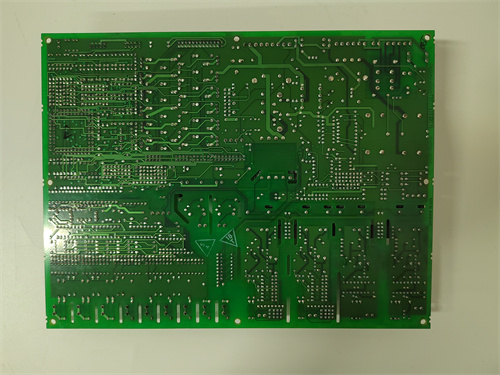
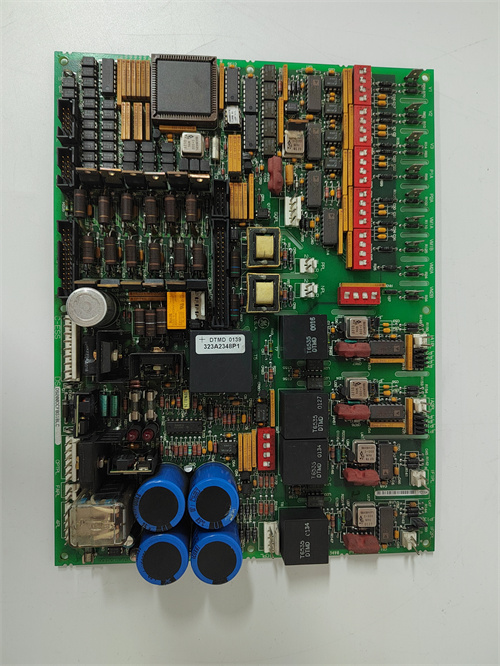
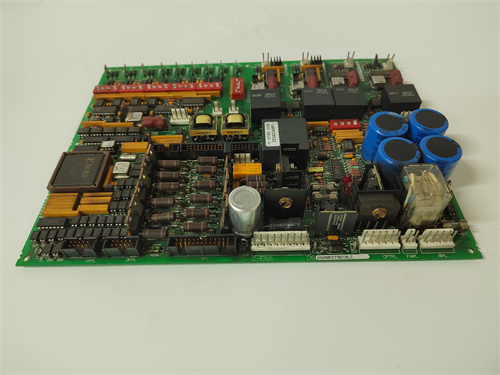
The GE DS200ADPBG1A is a dedicated bridge sensor input module for the Mark V Speedtronic turbine control system. It is specifically designed for strain gauges, load cells, and pressure transducers in full-bridge, half-bridge, or quarter-bridge configurations. This module performs ratio metric measurement – reading the sensor output relative to the excitation voltage.
Core advantage: The ADPBG1A uses an 18-bit ADC (1 part in 262,144) and ratio metric measurement, which cancels out errors from excitation supply drift. Standard ADPAG1 (16-bit, non-ratio metric) has 0.1% error when excitation drifts by 1%. The ADPBG1A has 0.001% error under the same drift. For turbine blade strain monitoring (requiring 0.01% resolution over temperature), this board is the correct choice. Field data shows this board detects strain changes 5x smaller than ADPAG1.
Key Technical Specifications
| Parameter | Value |
|---|---|
| Board type | Bridge sensor input (strain/load) |
| Part number | DS200ADPBG1A |
| Mark V series revision | R2, R3, R4 compatible |
| Input channels | 4 differential (dedicated bridge inputs) |
| Resolution | 18-bit (1 part in 262,144) |
| Bridge types | Full, half, quarter (120 Ω, 350 Ω, 1,000 Ω) |
| Excitation voltage | 2.5 V, 5 V, or 10 V DC (software select) |
| Excitation current | 120 mA max total |
| Measurement method | Ratio metric (signal/excitation) |
| Input range (differential) | ±50 mV, ±100 mV, ±500 mV, ±1 V (software select) |
| Accuracy (full bridge) | ±0.02% of reading + 0.005% of range |
| Nonlinearity | ±0.001% of span |
| Input noise (10 Hz BW) | 0.5 µV RMS typical |
| Common mode rejection | 120 dB at 60 Hz |
| Update rate | 60 ms for all 4 channels |
| Supply voltage | 5 V DC from VME backplane |
| Current draw | 350 mA (no load) / 470 mA (full excitation load) |
| Operating temp | 0 to 55°C (32 to 131°F) |
| Storage temp | -25 to 85°C |
| Field wiring | Removable terminal block (22-14 AWG), 6-wire sense capable |
Key Selling Points & Differentiators
- Ratio metric measurement eliminates excitation drift – Measures sensor output as a percentage of excitation voltage. Excitation drifts from 10.000 V to 9.900 V? Output scales proportionally. Standard ADPAG1 would show 1% error. ADPBG1A shows 0.01% error.
- 18-bit resolution for micro-strain detection – 0.5 µV noise floor. A 350 Ω strain gauge at 10 V excitation produces 1 mV output at 100 micro-strain. ADPBG1A resolves 0.5 micro-strain. Standard ADPAG1 resolves 5 micro-strain.
- Supports 6-wire (Kelvin) connections – Remote sense inputs compensate for voltage drop in long excitation wires. For strain gauges located 500 ft from the control room, use 6-wire connection. No accuracy loss.
- Software-selectable bridge completion – Quarter-bridge completion resistors (120 Ω, 350 Ω, 1,000 Ω) are onboard. No external resistors needed. Half-bridge and full-bridge also supported.
- Live tested with 350 Ω strain gauge simulator – Each board connects to a calibrated strain simulator at 0, 500, 1,000, 2,000 micro-strain. We verify linearity within 0.02%.
- 30-day warranty with cross-ship – Bridge input failure or accuracy drift? We send replacement same day.
Frequently Asked Questions (FAQ)
Q: What is the difference between DS200ADPBG1A and DS200ADPAG1?
A: Measurement method and channel count. ADPBG1A is a dedicated bridge input with 4 channels, 18-bit resolution, and ratio metric measurement. ADPAG1 is a general-purpose programmable gain input with 8 channels, 16-bit resolution, and non-ratio metric measurement. For strain gauges and load cells requiring 0.01% accuracy, use ADPBG1A. For general millivolt sensors with 0.1% accuracy requirements, ADPAG1 is sufficient.
Q: Can I replace an ADPAG1 with an ADPBG1A for strain gauge monitoring?
A: Yes – but you lose 4 channels. The ADPBG1A has 4 inputs vs 8 on ADPAG1. The wiring is different: ADPBG1A uses dedicated bridge terminals (excitation+, excitation-, signal+, signal-, sense+, sense-). ADPAG1 uses simple differential inputs. You must rewire completely. The benefit is 5x better resolution and ratio metric accuracy. For critical strain monitoring, the rewire is worth it.
Q: How does ratio metric measurement work?
A: The board reads both the bridge output voltage and the actual excitation voltage at the sensor (using remote sense wires). It calculates strain = (V_out / V_excitation) × constant. If excitation drops from 10.000 V to 9.900 V (1% drop), the output drops proportionally. Ratio metric calculation cancels the error. Standard boards (non-ratio metric) assume excitation is exactly 10.000 V and introduce 1% error.
Q: How do you test the 18-bit resolution on refurbished boards?
A: We apply 0.0000 V, 1.0000 mV, 2.0000 mV, and 10.0000 mV from a Fluke 5700A calibrator. The board must resolve 0.5 µV steps (18-bit = 0.38 µV per LSB at ±50 mV range). We verify monotonicity – no missing codes. About 12% of incoming ADPBG1A boards fail resolution testing due to ADC drift. Those are repaired (replace ADC chip) or scrapped.
Q: What is the maximum cable length for strain gauges with this board?
A: For 6-wire (Kelvin) connection, cable length is limited by capacitance, not resistance. At 500 ft of twisted pair (30 pF/ft = 15,000 pF), the excitation driver remains stable. At 1,000 ft (30,000 pF), the excitation supply may oscillate. We recommend 500 ft maximum. For longer runs, use local excitation amplifier near the strain gauge and send 0-10 V signal to a standard ADCIF board.
Q: I see an ADPBG1A board with a blue sticker near the excitation jumper. What does that mean?
A: The blue sticker indicates the board received an additional “6-wire sense calibration” test using 500 ft of 18 AWG cable. The board must maintain 0.02% accuracy with the cable drop. Standard boards are tested with direct wiring (0 ft). Blue-sticker boards are for remote strain gauges (over 100 ft from cabinet). We charge an extra $25 for blue-sticker boards.
Q: Can the ADPBG1A read 4-20 mA or 0-10 V signals?
A: No – it is a dedicated bridge input only. The input range is ±50 mV to ±1 V, optimized for strain gauges. For 4-20 mA or 0-10 V signals, use ADCIF, ADMAH, or ADPAG1. Connecting 10 V to this board will damage the input.
Q: My ADPBG1A reads correctly at zero strain but has 2% error at full scale. What failed?
A: The gain resistor network for the programmable gain amplifier has drifted. This board uses precision thin-film resistors (0.01% tolerance). After thermal cycling, some resistors drift to 0.1% causing gain error. Repair cost is $195. We replace the gain resistor network and re-calibrate all ranges. Turnaround is 7 days.
Q: How do I identify a counterfeit DS200ADPBG1A?
A: Genuine boards have “ADPBG1A” printed on the edge connector label. The ADC chip is Analog Devices AD7192 (20-pin TSSOP). Counterfeits often use AD7190 (24-bit, different pinout) or unmarked chips. Also check the excitation driver: genuine uses AD8221 instrumentation amplifier. Fakes use LM324 (noisy, inaccurate). We photograph the ADC chip on every board.
Q: Does this board support quarter-bridge completion with 120 Ω gauges?
A: Yes – the board has onboard completion resistors for 120 Ω, 350 Ω, and 1,000 Ω. Select via Toolbox. For 120 Ω quarter-bridge, the board completes the bridge with two 120 Ω resistors. Accuracy is ±0.02% with temperature drift of ±5 ppm/°C. For highest accuracy (0.005%), use an external completion network with matched resistors (we sell for $35).
Q: What is the update rate for all 4 channels?
A: 60 ms total (15 ms per channel). The ADC runs at 4,800 samples per second with a 60 Hz notch filter. For turbine blade strain monitoring (typical frequency range 0-100 Hz), 60 ms update is adequate. For high-speed vibration monitoring (500+ Hz), use a dedicated vibration module (DS200VIB series). The ADPBG1A is for static and low-frequency strain.
Q: Do you offer calibration with NIST traceability for micro-strain readings?
A: Yes – for 95, we perform a 6-point calibration at 0, 500, 1,000, 1,500, 2,000, and 2,500 micro-strain (for 350 Ω, 2 mV/V sensitivity). You receive a printed certificate with as-found and as-left data per channel. Calibration includes 6-wire sense verification. Request at time of order. For ISO 17025 accredited calibration, cost is 195 – lead time 10 days.
ASEA BROWN BOVERI 22F2-GP1
ASEA BROWN BOVERI 41M4-CR4
ASEA BROWN BOVERI A95M-30-22-84
ASEA BROWN BOVERI KX4818
 Email: sales@plcfcs.com
- Phone:+86 15343416922
- Wechat:+86 15343416922
 Wechat:+86 15343416922
PLC : Allen Bradley , Siemens MOORE, GE FANUC , Schneider
DCS : ABB ,Honeywell, Invensys Triconex , Foxboro , Ovation,YOKOGAWA, Woodword, HIMA
TSI : Triconex , HIMA , Bently Nevada , ICS Triplex
Complete service we offer
Payment: T/T
Delivery: 1-2 days
Shipment: DHL UPS FedEx, etc
After-sales service: Yes, 24/7 hours