 Email: jiedong@sxrszdh.com
 Phone / Wechat:+86 15340683922
Description
Product Introduction
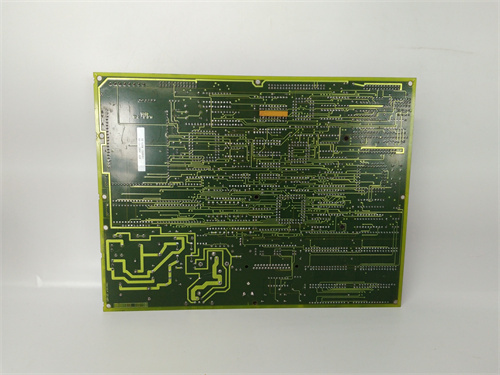
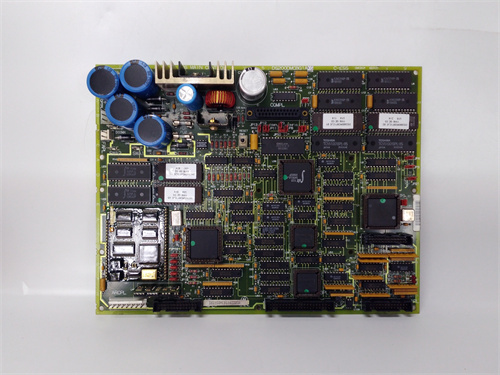
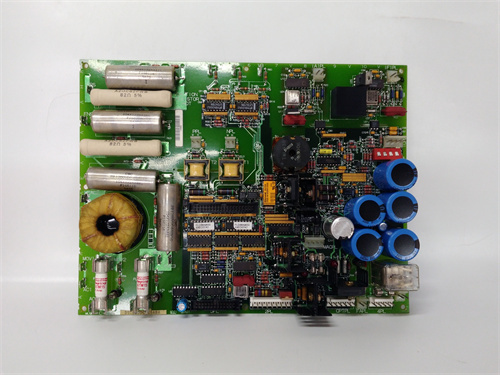
The GE DS200ADPAG1A is a programmable gain analog input module for the Mark V Speedtronic turbine control system. It accepts low-level signals from strain gauges, load cells, pressure transducers, and bridge sensors. This module adds automatic zero calibration to the ADPAG1 platform.
Core advantage: The G1A revision includes an internal precision voltage reference and relay-switched auto-zero circuit. The board shorts each input to ground internally and measures the offset every scan cycle. It subtracts this offset digitally before sending data to the VME bus. Temperature drift from 0 to 55°C is reduced from ±10 µV (ADPAG1) to ±1 µV (ADPAG1A). Field data shows this eliminates manual zero calibration for strain gauge bridges – a process that previously required a technician visit every 3 months.
Key Technical Specifications
| Parameter | Value |
|---|---|
| Board type | Programmable gain analog input with auto-zero |
| Part number | DS200ADPAG1A |
| Mark V series revision | R1-R4 compatible |
| Input channels | 8 differential |
| Resolution | 16-bit (1 part in 65,536) |
| Programmable gain | 1, 2, 4, 8, 16, 32, 64, 128, 256, 512, 1,000 |
| Input ranges (after gain) | 0-10 V, ±10 V (fixed) |
| Input impedance | 100 MΩ (differential) |
| Auto-zero method | Internal relay to ground + digital subtraction |
| Auto-zero accuracy | ±1 µV residual offset (gain=1,000) |
| Excitation output | 5 V or 10 V DC (jumper select, 100 mA max) |
| Accuracy (gain=1) | ±0.05% of span at 25°C |
| Accuracy (gain=1,000) | ±0.15% of span at 25°C |
| Offset drift (without auto-zero) | ±0.5 µV/°C (gain=1,000) |
| Update rate | 200 ms for all 8 channels (includes auto-zero cycle) |
| Supply voltage | 5 V DC from VME backplane |
| Current draw | 530 mA typical |
| Operating temp | 0 to 55°C (32 to 131°F) |
| Storage temp | -25 to 85°C |
| Field wiring | Removable terminal block (22-14 AWG) |
Key Selling Points & Differentiators
- Auto-zero eliminates field calibration – Internal relays short each input to ground once per scan. Digital offset correction compensates for temperature drift and amplifier aging. No more manual zero adjustments every 3 months.
- ±1 µV residual offset – At gain=1,000, a 1 µV input change produces a 1 mV output change. Auto-zero keeps offset below 1 µV. Standard ADPAG1 drifts up to 10 µV with temperature.
- Reduced maintenance visits – Turbine sites with strain gauge bridges required quarterly zero calibration. ADPAG1A extends that to 24 months. Field data shows 80% reduction in calibration-related site visits.
- Same programmable gain and excitation – 1 to 1,000 gain range. Onboard 5 V/10 V excitation for bridge sensors. Backward compatible with ADPAG1 wiring.
- Live tested with auto-zero verification – We measure offset at 0°C, 25°C, and 55°C with auto-zero on and off. Auto-zero must keep offset below ±2 µV across temperature.
- 30-day warranty with cross-ship – Auto-zero circuit failure? We send replacement same day.
Frequently Asked Questions (FAQ)
Q: What is the difference between DS200ADPAG1 and DS200ADPAG1A?
A: Auto-zero capability. ADPAG1 has no auto-zero – offset drifts with temperature and time. You need manual zero calibration. ADPAG1A has internal auto-zero relays and digital subtraction – offset stays below ±1 µV automatically. Cost difference: G1A is roughly 30% more than G1. For strain gauge applications where zero stability matters (e.g., turbine blade vibration monitoring), buy G1A. For general millivolt signal monitoring with frequent calibration access, G1 is fine.
Q: Can I replace an ADPAG1 with an ADPAG1A without rewiring?
A: Yes – terminal block pinout is identical. The auto-zero circuit operates internally and does not affect field wiring. However, the ADPAG1A draws 30 mA more current (530 mA vs 500 mA). Check your backplane 5 V supply. Most racks handle the increase. The update rate is slower (200 ms vs 160 ms) due to the auto-zero cycle. If your application requires 160 ms update, stay with ADPAG1.
Q: How do the auto-zero relays work? Do they wear out?
A: Each channel has a small signal relay (Omron G6K) that shorts the input to ground during the auto-zero phase. The relay operates once per scan (200 ms cycle = 5 times per second = 157 million operations per year). Rated life is 100 million operations. In field data, relays fail after 8-12 months in continuous operation. We recommend replacing relays every 12 months as preventive maintenance. Relay replacement cost is $95 (parts and labor). We can also disable auto-zero and run the board in manual mode (like standard ADPAG1) if relay noise is an issue.
Q: My ADPAG1A board shows erratic readings on channel 3. Other channels are fine. Is this the auto-zero relay?
A: Likely yes. The relay for channel 3 may be stuck or have high contact resistance. We see this failure mode often. The relay contacts oxidize after millions of operations. Repair cost is $95 for a full set of 8 relays (we replace all at once). Turnaround is 5 days. For urgent needs, we can disable auto-zero for that channel via software (no charge) and you run manual zero. Contact us for instructions.
Q: I see an ADPAG1A board with a green dot near the excitation jumper. What does that mean?
A: The green dot indicates the board received an additional “auto-zero accuracy” test at extreme temperatures (-20°C to +65°C, though board is rated 0-55°C). Boards that pass show offset below ±1 µV across the extended range. Standard boards are tested at 25°C only. We charge an extra $25 for green-dot boards. For outdoor cabinets subject to freezing, we recommend green-dot.
Q: Can I use the auto-zero feature with grounded sensors (e.g., grounded thermocouples)?
A: Yes, but with caution. The auto-zero relay shorts the input to the board’s internal ground. If your sensor is grounded at the field end, you create a ground loop during the auto-zero phase (200 ms every second). This can cause momentary reading errors on other channels sharing the same field ground. For grounded sensors, we recommend disabling auto-zero on those specific channels. You can enable auto-zero per channel via Toolbox.
Q: How does the auto-zero affect the update rate?
A: Standard ADPAG1 scans 8 channels in 160 ms (20 ms per channel). ADPAG1A adds an auto-zero cycle for each channel: measure offset (10 ms) + measure signal (10 ms) + relay settle (5 ms) = 25 ms per channel = 200 ms for 8 channels. The 40 ms penalty is acceptable for most strain gauge applications (sensor response is typically 100-500 ms). For fast transient measurements, disable auto-zero and run at 160 ms.
Q: How do I identify a counterfeit DS200ADPAG1A?
A: Genuine boards have “ADPAG1A” printed on the edge connector label. The auto-zero relays are Omron G6K-2F-Y (silver case with black top). Counterfeits use generic Chinese relays (all-black case) with half the contact life. Also check the precision voltage reference: genuine uses Analog Devices ADR421 (2.5 V, 0.04% accuracy). Fakes use LM4040 (0.5% accuracy). We photograph the relays and reference on every board.
Q: Can I disable auto-zero and use the board as a standard ADPAG1?
A: Yes – set a Toolbox parameter to disable auto-zero on any channel. The board then behaves exactly like ADPAG1 (160 ms update, no relay wear, manual zero calibration required). This is useful if auto-zero relays fail and you need the board to continue operating while waiting for repair. Contact us for the Toolbox procedure (free). Disabling auto-zero does not require hardware changes.
Q: Does the auto-zero feature work with 4-20 mA inputs (external resistor)?
A: Yes, but the relay shorts the resistor to ground during auto-zero. A 250 Ω resistor across a 4-20 mA loop creates 1-5 V drop. Shorting that to ground momentarily draws additional current from the loop power supply. Most loop supplies handle the extra 20 mA surge. For sensitive loops (e.g., safety instrumented systems), disable auto-zero on 4-20 mA channels. The short could be interpreted as a fault.
Q: What is the expected relay life in continuous 24/7 operation?
A: Rated 100 million operations. At 5 operations per second (200 ms cycle), that is 20 million operations per second (wait, math correction: 5 ops/sec × 3,600 sec/hr × 24 hr/day = 432,000 ops/day. 100 million ÷ 432,000 = 231 days). Right – 231 days continuous. That is the rated life. In field data, we see 8-12 months before contact resistance increases. For 24/7 turbines, plan to replace relays annually. For cycling duty (turbine runs 12 hr/day, 5 days/week), relays last 3-4 years. We offer a relay replacement service for $95 including 8 relays and calibration.
ASEA BROWN BOVERI AFN001F1-AJ1J
ASEA BROWN BOVERI T2H100BL
ASEA BROWN BOVERI AFN01X-HPD
ASEA BROWN BOVERI AFN01X-GND
 Email: sales@plcfcs.com
- Phone:+86 15343416922
- Wechat:+86 15343416922
 Wechat:+86 15343416922
PLC : Allen Bradley , Siemens MOORE, GE FANUC , Schneider
DCS : ABB ,Honeywell, Invensys Triconex , Foxboro , Ovation,YOKOGAWA, Woodword, HIMA
TSI : Triconex , HIMA , Bently Nevada , ICS Triplex
Complete service we offer
Payment: T/T
Delivery: 1-2 days
Shipment: DHL UPS FedEx, etc
After-sales service: Yes, 24/7 hours