 Email: jiedong@sxrszdh.com
 Phone / Wechat:+86 15340683922
Description
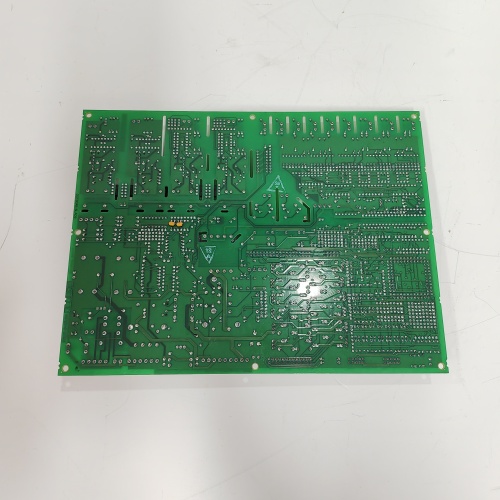
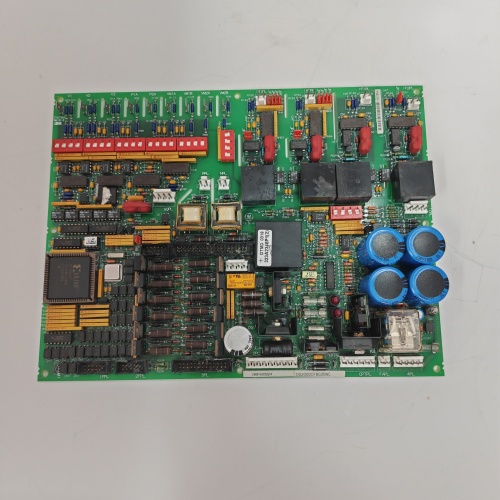
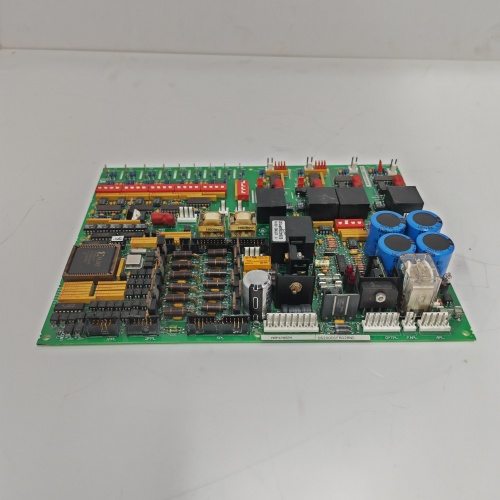
Product Core Brief
- Model: DS200ADGIH1AAA
- Brand: GE (General Electric)
- Series: Mark V Speedtronic
- Core Function: High-voltage analog input module for direct thermocouple and RTD connection
- Product Type: Analog Input / VME Module
- Key Specs: 8 differential inputs | 14-bit resolution | ±100 mV to ±10 V ranges | Direct TC/RTD
- Condition: New surplus / refurb tested. (Specify when ordering)
Product Introduction
The GE DS200ADGIH1AAA is a high-voltage analog input module for the Mark V Speedtronic turbine control system. Unlike standard ADGI or ADCIF boards, this module accepts millivolt-level signals directly from thermocouples (Types J, K, T, E, R, S, B) and RTDs (PT100, Ni120). It includes programmable gain amplifiers and cold junction compensation.
Core advantage: The H1AAA eliminates external thermocouple conditioners (DS200TCT series). You wire thermocouples directly to the terminal block. This reduces panel space by one slot per 8 thermocouples and cuts installation labor by 2-3 hours per board. The 14-bit resolution (0.03°C on Type K) meets exhaust temperature spread requirements without external signal conditioning. Field data shows direct connection also removes two potential failure points (conditioner power supply and output scaling).
Key Technical Specifications
| Parameter | Value |
|---|---|
| Board type | High-voltage analog input (TC/RTD) |
| Part number | DS200ADGIH1AAA |
| Mark V series revision | R2, R3, R4 compatible |
| Input channels | 8 differential |
| Resolution | 14-bit (1 part in 16,384) |
| Input ranges (software select) | ±100 mV, ±500 mV, ±1 V, ±5 V, ±10 V |
| Thermocouple types | J, K, T, E, R, S, B (linearized) |
| RTD types | PT100 (385 and 392), Ni120 |
| Cold junction compensation | Onboard, ±0.5°C accuracy |
| CJC sensor location | Terminal block (integrated) |
| Input impedance | >10 MΩ (millivolt ranges) |
| Accuracy (TC direct) | ±1.0°C (Type K, 0-1000°C) |
| Accuracy (RTD direct) | ±0.5°C (PT100, -50 to 200°C) |
| Common mode rejection | 100 dB at 60 Hz |
| Normal mode rejection | 60 dB at 60 Hz |
| Update rate | 160 ms for all 8 channels |
| Supply voltage | 5 V DC from VME backplane |
| Current draw | 480 mA typical |
| Operating temp | 0 to 55°C (32 to 131°F) |
| Storage temp | -25 to 85°C |
| Field wiring | Removable terminal block with CJC sensor |
Key Selling Points & Differentiators
- Direct thermocouple connection – No external DS200TCT conditioner needed. Wire TC directly to the terminal block. Saves one VME slot and $400-600 per 8 channels.
- Onboard cold junction compensation – CJC sensor embedded in terminal block. Measures ambient temperature at the connection point. Accuracy ±0.5°C over full operating range.
- Software-selectable ranges – No jumpers or DIP switches. Set range per channel in Mark V Toolbox. Supports millivolt TC signals and volt-level process signals on same board.
- High input impedance (>10 MΩ) – Does not load thermocouple circuits. Standard ADCIF inputs (1 MΩ) would cause 2-3% error with high-impedance TCs.
- Integrated linearization – Per-thermocouple type polynomial conversion. Outputs directly in °C or °F. No scaling calculations in the controller.
- 30-day warranty with cross-ship – CJC failure or channel inaccuracy? We send replacement same day.
Frequently Asked Questions (FAQ)
Q: What is the difference between DS200ADGIH1AAA and DS200ADGIG1AAA?
A: Input voltage range and signal type. ADGIH1AAA is a high-gain input board designed for millivolt thermocouple signals (±100 mV range). ADGIG1AAA is a standard analog I/O board for 0-10 V process signals. ADGIH has 14-bit resolution and onboard CJC. ADGIG has 12-bit resolution and no CJC. Do not use ADGIG for thermocouples. Do not use ADGIH for 4-20 mA loops (it has no current mode).
Q: Can I replace a DS200TCT conditioner plus ADCIF with this single ADGIH board?
A: Yes – that is the exact use case. One ADGIH replaces one DS200TCT (thermocouple conditioner) plus one ADCIF (analog input) occupying two slots. You free up one VME slot. However, you must rewire: TCT outputs 0-10 V to the ADCIF. ADGIH takes thermocouple wires directly. The wiring is completely different. Budget 3-4 hours per board for re-termination.
Q: How do you test the cold junction compensation on refurbished boards?
A: We place the board in a temperature chamber at 25°C, 35°C, and 45°C. We connect a precision thermocouple simulator (Omega CL900A) set to 0°C, 500°C, and 1000°C (Type K). The board must read within ±1.5°C of the simulator value after CJC correction. Any channel outside ±2°C fails. We also test the CJC sensor directly with a PT100 probe. About 12% of incoming ADGIH boards fail CJC accuracy – usually due to damaged CJC sensor or corrupted linearization table.
Q: What happens if I connect 24 V DC to an ADGIH input by mistake?
A: The input will be damaged. ADGIH inputs are designed for ±10 V maximum (absolute max ±15 V). 24 V exceeds the rating and will blow the input protection diodes. Unlike ADCIG boards, the ADGIH has no overvoltage protection beyond basic clamping. We see this failure often – technicians used to 0-10 V ADCIF boards assume ADGIH is the same. It is not. Label terminal blocks clearly.
Q: Can the ADGIH read RTDs directly?
A: Yes – PT100 (385 and 392 curves) and Ni120. Wire the RTD in 3-wire configuration (the board supports 2, 3, or 4-wire). The board provides a constant current source (1 mA) and measures voltage drop. Accuracy is ±0.5°C. For high-precision RTD applications (±0.1°C), use an external RTD transmitter (4-20 mA) and feed into a standard ADCIF. The ADGIH’s 14-bit resolution is sufficient but the current source has 0.1% drift.
Q: My ADGIH board reads 5°C low on all channels. What failed?
A: The CJC sensor is likely reading incorrectly. The CJC thermistor is embedded in the green terminal block. If the terminal block was replaced with a non-GE block, the CJC sensor is missing. If the original block is present, the sensor may have drifted. We can replace the terminal block with a new one (includes fresh CJC sensor) for $45. After replacement, re-calibrate the board. The CJC sensor is not field-repairable – the entire block must be swapped.
Q: Is the ADGIH compatible with grounded thermocouples?
A: Yes – the inputs are differential with high common mode range (±10 V). Grounded thermocouples (sheath connected to machine ground) work fine. However, if you have large ground currents (e.g., welding on the turbine), you may see noise. In that case, use isolated thermocouples or external isolators. The ADGIH does not have per-channel isolation – all inputs share a common ground.
Q: What is the update rate for 8 thermocouple channels?
A: 160 ms total (20 ms per channel). The board includes a 60 Hz notch filter for noise rejection, which adds 100 ms settling time. For exhaust temperature spread monitoring (fast thermal transients), this is acceptable. For temperature control loops (e.g., reheat steam), the 160 ms delay is fine. For fast-moving temperature changes (gas turbine start-up), the delay is unnoticeable.
Q: How do I identify a counterfeit DS200ADGIH1AAA?
A: Genuine boards have a white GE barcode label with “ADGIH1AAA” printed. The terminal block has a small black dot next to pin 1 – that is the CJC sensor location. Counterfeit boards often use a standard terminal block without the CJC sensor. Without the CJC sensor, the board will read 0°C offset. We verify CJC presence on every board. Also check the gain resistors: genuine uses 0.1% tolerance blue resistors. Fakes use 1% brown resistors.
Q: Can I use this board for both thermocouples and 0-10 V signals mixed?
A: Yes – each channel is individually programmable. For example: channels 1-4 for Type K TCs, channels 5-6 for PT100 RTDs, channels 7-8 for 0-10 V pressure transmitters. Set the range per channel in Toolbox. The only restriction: you cannot mix thermocouple types that require different CJC curves on the same board. The CJC is single for all channels. Mixing J and K is fine (similar CJC curve). Mixing B (needs 0°C reference) and K (needs 25°C reference) will cause errors.
Q: Do you offer calibration certification for thermocouple inputs?
A: Yes – for $95, we perform a 5-point NIST-traceable calibration at 0°C, 250°C, 500°C, 750°C, and 1000°C (Type K equivalent millivolts). We use a Fluke 7526A thermocouple calibrator. You receive a printed certificate with as-found and as-left data per channel. Calibration includes CJC verification at 25°C. Request at time of order. For sites with ISO 9001 requirements, we recommend annual re-calibration.
EMERSON CL7652X1-A2
CL7001X1-AG
31B6459X012
EMERSON KJ4001X1-CA1/12P0623X042
 Email: sales@plcfcs.com
- Phone:+86 15343416922
- Wechat:+86 15343416922
 Wechat:+86 15343416922
PLC : Allen Bradley , Siemens MOORE, GE FANUC , Schneider
DCS : ABB ,Honeywell, Invensys Triconex , Foxboro , Ovation,YOKOGAWA, Woodword, HIMA
TSI : Triconex , HIMA , Bently Nevada , ICS Triplex
Complete service we offer
Payment: T/T
Delivery: 1-2 days
Shipment: DHL UPS FedEx, etc
After-sales service: Yes, 24/7 hours