 Email: jiedong@sxrszdh.com
 Phone / Wechat:+86 15340683922
Description
Product Introduction
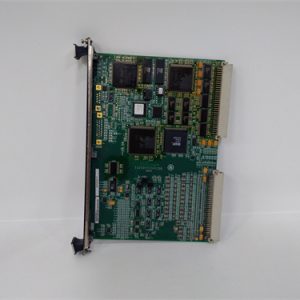
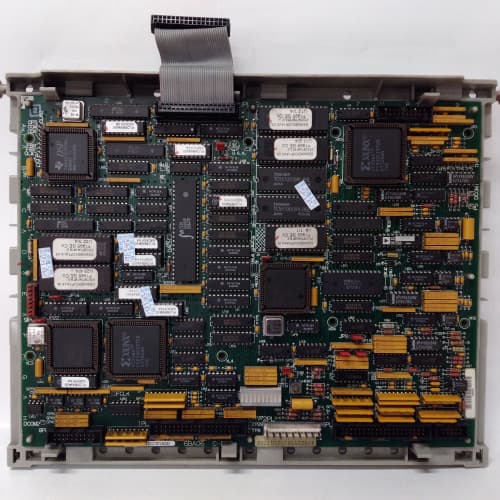
The GE DS200ADCIH1 is a high-density analog interface board for the Mark V Speedtronic turbine control system. It packs 16 analog inputs and 8 analog outputs into a single VME slot. This module serves applications with high I/O counts such as combined-cycle plants with multiple auxiliary systems (lube oil, cooling water, fuel gas).
Core advantage: The H1 revision gives you 24 analog channels in one slot – equivalent to two ADCIF boards plus four extra channels. Rack space is often limited in Mark V cabinets (14 slots total). This board frees up two slots for additional protection modules or comms. The trade-off is 12-bit resolution (vs 16-bit on ADCIF/ADCIG). For non-critical monitoring (pressures, temperatures, tank levels), 12-bit is sufficient. For fuel valve control, use the higher-resolution ADCIF or ADCIG.
Key Technical Specifications
| Parameter | Value |
|---|---|
| Board type | High-density analog interface |
| Part number | DS200ADCIH1 |
| Mark V series revision | R2, R3, R4 compatible |
| Analog inputs | 16 single-ended, 12-bit |
| Input ranges | 0–10 V, 0–5 V, 0–20 mA (with ext resistor) |
| Analog outputs | 8, 12-bit |
| Output ranges | 0–10 V or 4–20 mA (jumper select) |
| Output drive | 10 mA (voltage) / 500 Ω (current) |
| Input accuracy | ±0.2% of span at 25°C |
| Output accuracy | ±0.3% of span at 25°C |
| Resolution (inputs) | 2.44 mV per count (0–10 V range) |
| Update rate | Inputs: 160 ms scan (all 16) / Outputs: 20 ms per channel |
| Isolation | Bank isolation: 500 V DC (field to backplane) |
| Supply voltage | 5 V DC from VME backplane |
| Current draw | 620 mA typical |
| Operating temp | 0 to 55°C (32 to 131°F) |
| Storage temp | -25 to 85°C |
| Field wiring | Two removable terminal blocks (22-14 AWG) |
Key Selling Points & Differentiators
- 24 channels in one slot – 16 inputs, 8 outputs. Frees up two VME slots for other functions. Standard configuration would require two ADCIF boards (16 inputs, 8 outputs would need 2x ADCIF but that gives only 8 outputs total – actually you would need 2x ADCIF for 16 inputs plus a separate ACOA for 8 outputs). The ADCIH1 consolidates everything.
- Cost-effective for monitoring-only – 12-bit resolution is adequate for tank levels, filter pressure drops, bearing temperatures (PT100), and ambient conditions. Do not use for fuel or steam valve control.
- Simplified wiring – Two removable terminal blocks. Inputs share commons (8 per block). Reduces field wiring time by 40% compared to separate modules.
- Live tested with full channel scan – Each board cycles through all 16 inputs and 8 outputs for 4 hours. We inject 5.000 V on inputs, command 5.000 V on outputs, and verify within ±0.02 V (inputs) and ±0.03 V (outputs).
- Compatible with existing ADCIF wiring – Terminal block layout follows the same pin order as two ADCIF boards side by side. Retrofit without complete rewire.
- 30-day warranty with cross-ship – Channel failure or accuracy drift? We send replacement same day.
Frequently Asked Questions (FAQ)
Q: Can I use the ADCIH1 for fuel valve control?
A: We strongly advise against it. The 12-bit resolution on outputs gives you 2.44 mV steps on a 0–10 V output. For a fuel valve with 0.5 V deadband, that is fine. But the output accuracy is ±0.3% (30 mV error). That creates a 3% uncertainty in valve position. On a 10 V command (full fuel), 30 mV error is negligible. On a 1 V command (low fuel, startup), 30 mV error is 3% – potentially unstable. Use ADCIG1ADB or ADCIF1ABA for fuel control. Use ADCIH1 for monitoring only.
Q: What is the difference between DS200ADCIH1 and DS200ADCIG1ADB?
A: Channel count vs resolution and isolation. ADCIH1: 16 inputs, 8 outputs, 12-bit, bank isolation. ADCIG1ADB: 8 inputs, 4 outputs, 16-bit, per-channel isolation. ADCIH1 is for high-density monitoring (e.g., 16 bearing temps). ADCIG is for critical control loops (e.g., 4 fuel valves with isolation). Do not substitute one for the other without reviewing your I/O list.
Q: Can the ADCIH1 inputs read 4–20 mA directly?
A: No – same as all Mark V analog modules. Add external 250 Ω precision resistors (0.1%) across each input. Because the ADCIH1 has 16 inputs, we recommend buying a resistor bank (16 resistors on a DIN rail carrier). We sell pre-assembled resistor banks for $45 – saves 2 hours of wiring.
Q: How do you test 16 inputs and 8 outputs on refurbished boards?
A: We use a custom automated test rack with 16 precision voltage sources (0-10 V) and 8 electronic loads (10 kΩ). The test script cycles each input through 0 V, 2.5 V, 5.0 V, 7.5 V, and 10.0 V. Outputs drive the same sequence. We log all 24 channels simultaneously. Total test time per board is 90 minutes. Any channel outside ±0.02 V (input) or ±0.03 V (output) fails. About 15% of incoming ADCIH1 boards fail – usually due to damaged input mux chips.
Q: My ADCIH1 board reads correct on inputs 1-8 but all zeros on inputs 9-16. What failed?
A: The analog multiplexer chip for the second bank (inputs 9-16) is dead. This is common on ADCIH1 boards – the mux (DG408) is sensitive to ESD. Repair cost is $165. We replace both mux chips (inputs 1-8 and 9-16) and re-calibrate. Turnaround is 5 days. Do not attempt field repair – the mux is a surface-mount 16-pin SOIC package. We have seen technicians bridge pins and short the 5 V supply.
Q: Is the ADCIH1 hot-swappable?
A: No – same as all Mark V analog modules. The backplane does not support hot-swap for this board. Removing it with power applied can leave the output drivers in an undefined state. We have seen outputs latch to 10 V after hot-swap, causing full fuel command. Power down the rack.
Q: Can I mix ADCIH1 and ADCIF boards in the same rack?
A: Yes – the VME bus handles mixed module types. However, the Mark V controller assigns I/O addresses based on slot position. If you replace an ADCIF (8 inputs, 4 outputs) with an ADCIH1 (16 inputs, 8 outputs), the controller will map the extra channels to the next available addresses. Your HMI may show “CH9” from the ADCIH1 as “CH1” from the next slot. You must reconfigure the I/O map in Toolbox. Takes 30 minutes. We provide the mapping procedure.
Q: What is the input impedance of the ADCIH1?
A: 1 MΩ in voltage mode. In current mode (with external 250 Ω resistor), the impedance is 250 Ω. Do not exceed 30 V on any input – the protection circuit clamps but will fail after repeated overvoltage. We have seen boards from power plants with 120 V AC accidentally connected to inputs. The TVS diodes short and take down the entire input bank.
Q: Do you offer a version with higher resolution?
A: No – the ADCIH1 is fixed at 12-bit. For 16-input applications requiring 16-bit resolution, you need two ADCIF1ABA boards (16 inputs total, but only 8 outputs combined). Or one ADCIF and one separate ACNA input board. There is no 16-bit, 16-input analog module in Mark V line. GE designed ADCIH1 for monitoring, not precision control.
Q: How do I identify a counterfeit DS200ADCIH1?
A: Genuine boards have a white barcode label with “ADCIH1” printed. Counterfeits often miss the GE logo on the PCB. Also check the mux chips: genuine uses DG408DY (Maxim or Analog Devices). Fakes use unmarked or relabeled chips. We UV-check every board and photograph the mux chips. Counterfeit rate for ADCIH1 is higher than other Mark V modules because it is a popular spare. Buy from trusted surplus dealers only.
EB-203-00-000
E1-202-00-000
KJ3222X1-BA1
HD22020-3
 Email: sales@plcfcs.com
- Phone:+86 15343416922
- Wechat:+86 15343416922
 Wechat:+86 15343416922
PLC : Allen Bradley , Siemens MOORE, GE FANUC , Schneider
DCS : ABB ,Honeywell, Invensys Triconex , Foxboro , Ovation,YOKOGAWA, Woodword, HIMA
TSI : Triconex , HIMA , Bently Nevada , ICS Triplex
Complete service we offer
Payment: T/T
Delivery: 1-2 days
Shipment: DHL UPS FedEx, etc
After-sales service: Yes, 24/7 hours