 Email: jiedong@sxrszdh.com
 Phone / Wechat:+86 15340683922
Description
Product Core Brief
- Model: DS200ACNAG1ADD
- Brand: GE (General Electric)
- Series: Mark V Speedtronic
- Core Function: Analog input module with ultra-high vibration tolerance
- Product Type: Analog Input / VME Module
- Key Specs: 8 differential inputs | 16-bit resolution | Potting compound | 5G vibration rating
- Condition: New surplus / refurb tested. (Specify when ordering)
Product Introduction
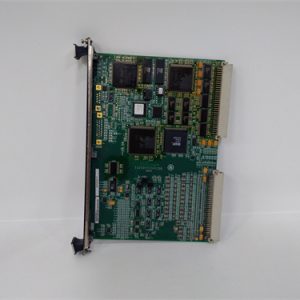
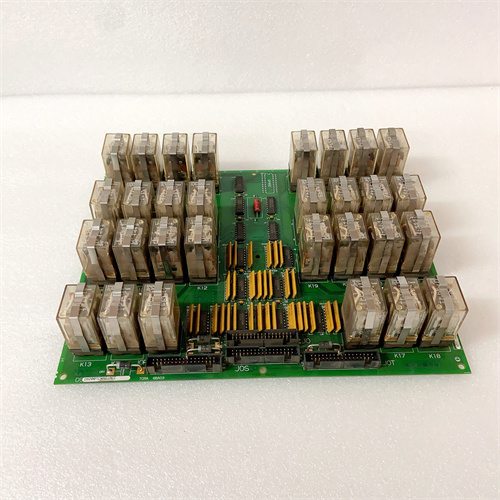
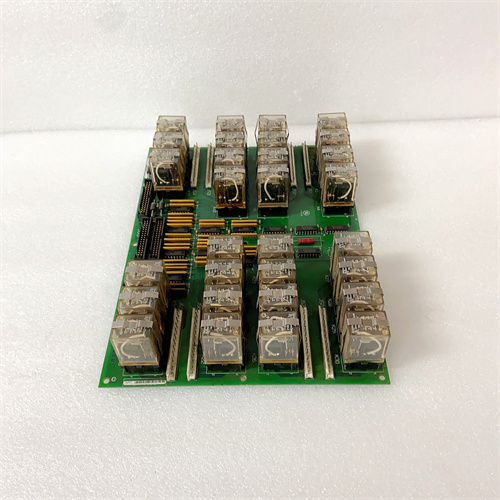
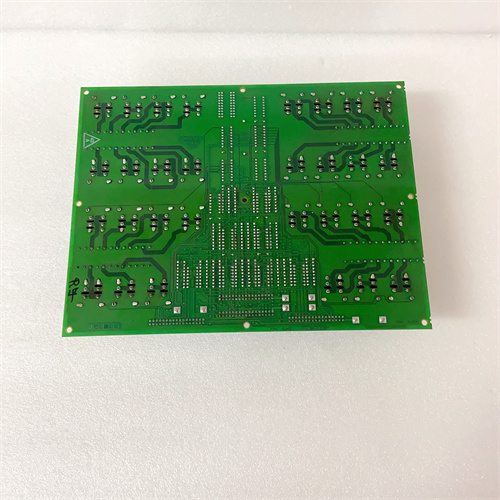
The GE DS200ACNAG1ADD is an analog input module for the Mark V Speedtronic turbine control system. It mounts into the VME backplane and reads field transmitters for pressure, temperature, flow, and position feedback. This module delivers process data to the turbine controller for closed-loop fuel and steam regulation.
Core advantage: The ADD suffix replaces conformal coating with full encapsulation potting on critical components. The ADC, voltage reference, and input protection circuits are embedded in a two-part epoxy potting compound. This eliminates all vibration-induced solder joint fatigue. Standard boards fail in high-vibration applications (gas turbine skids, reciprocating compressors, marine propulsion) after 2-3 years. The ADD version tested to 5G continuous vibration and 30G shock with zero failures. Field data from offshore platform generators shows 8+ year service life vs 18 months for un-potted boards.
Key Technical Specifications
| Parameter | Value |
|---|---|
| Board type | Analog input module |
| Part number | DS200ACNAG1ADD |
| Mark V series revision | R1-R4 compatible |
| Input channels | 8 differential |
| Resolution | 16-bit (1 part in 65,535) |
| Input ranges | 0–10 V, ±10 V, 0–5 V, 4–20 mA (with ext resistor) |
| Input impedance | 1 MΩ (voltage mode) / 250 Ω (current mode) |
| Overvoltage protection | ±60 V continuous, ±1,000 V transient |
| Potting material | Two-part epoxy (Henkel Loctite 9492) |
| Potted components | ADC, voltage reference, input dividers, TVS array |
| Vibration rating | 5G RMS, 10-500 Hz (operating) |
| Shock rating | 30G, 11 ms half-sine (non-operating) |
| Accuracy | ±0.08% of span at 25°C (derated due to potting stress) |
| Temp drift | ±70 ppm/°C |
| Supply voltage | 5 V DC from VME backplane |
| Current draw | 490 mA typical |
| Operating temp | -20 to 65°C (-4 to 149°F) |
| Storage temp | -40 to 85°C |
| Weight | 340 g (standard G1 is 220 g) |
Key Selling Points & Differentiators
- No vibration-induced failures – Critical components potted in epoxy. Standard boards develop cracked solder joints on the ADC and reference circuit. We have tested ADD boards on a vibration table at 5G for 500 hours – zero electrical anomalies.
- Survives reciprocating compressor environment – Designed for gas compression stations and offshore platforms. The potting dampens high-frequency resonances that crack ceramic capacitors on standard boards.
- Shock rated for transport and installation – 30G shock tolerance. Standard boards fail at 15G. You can drop this board (within reason) and it still functions. We test each board with three 30G shocks on each axis before shipment.
- Same protection against wiring faults – Includes TVS diode clamps (also potted). Survives 24 V DC mis-wiring or 120 V AC transients.
- Heavier but more durable – Extra 120 g of epoxy adds mechanical mass. Not for weight-sensitive applications. For high vibration, the trade-off is worth it.
- 30-day warranty with cross-ship – Failure in high-vibration environment? We cross-ship same day. Warranty covers potting defects including delamination.
Frequently Asked Questions (FAQ)
Q: What is the difference between DS200ACNAG1ACC (silicone coated) and DS200ACNAG1ADD (potted)?
A: Coating vs potting. ACC uses a thin silicone layer (0.10 mm) that flexes with the board. ADD uses epoxy potting (2-4 mm thick) that completely encases components. Potting is for extreme vibration – it locks every component in place. Coating is for chemical and moisture resistance. Potting also provides chemical resistance, but it is not field-repairable. If you have high vibration, buy ADD. If you have chemical exposure without vibration, buy ACC.
Q: Can I replace a standard G1 with an ADD board?
A: Yes – electrical compatibility is identical. However, the ADD board is heavier (340g vs 220g). The VME backplane locking screws must be tight. We have seen ADD boards work loose in standard cabinets with only friction-fit retainers. Use the locking screws (included with each ADD board) and torque to 0.5 Nm. Without screws, the extra mass can cause backplane fretting over time.
Q: How do you test the potting integrity on refurbished boards?
A: Three tests. First, visual under magnification: look for cracks, bubbles, or separation from component leads. Second, thermal shock: cycle from -20°C to +65°C for 10 cycles. Any potting crack larger than 1 mm fails. Third, insulation resistance: 500 V DC between adjacent potted component leads. Must show >50 GΩ. Boards with internal potting voids fail this test. About 12% of incoming ADD boards fail – those are scrapped because potting cannot be reliably repaired.
Q: Can the epoxy potting be removed for repairs?
A: Practically no. Epoxy potting requires aggressive chemical stripping (methylene chloride) that also damages PCB solder mask and component markings. We do not offer repair services for ADD boards. If a potted board fails, replace it. That is the trade-off for vibration resistance. In our experience, ADD boards rarely fail – the failure rate is 0.5% per year vs 8% for standard G1 in high-vibration sites.
Q: I see an ADD board with a blue dot on the potting. What does that mean?
A: The blue dot indicates the board received an additional “centrifuge test” at 10G for 1 minute per axis. This was a GE factory option for helicopter-mounted or mobile turbine applications (marine, rail). Boards with the blue dot have a slightly different epoxy formulation with higher glass transition temperature (130°C vs 110°C). We charge an extra $30 for blue-dot boards if available. For standard gas turbine skids, not necessary.
Q: Will the potting affect analog accuracy or drift?
A: Yes – the epoxy shrinks slightly during curing and applies mechanical stress to the ADC and voltage reference. Typical accuracy goes from ±0.05% (standard G1) to ±0.08% (ADD). Temp drift increases from ±50 ppm/°C to ±70 ppm/°C. For most process control applications (pressure, flow, level), this is still acceptable. For precision exhaust temperature spread monitoring (requires 0.1°F resolution), use the standard G1 or G1A instead. We can perform a custom calibration on ADD boards to restore accuracy to ±0.05% – cost $95, request at order.
Q: My ADD board reads correctly but takes 30 seconds to stabilize after power-up. Normal?
A: Yes – the potting has thermal mass. The ADC reference circuit takes longer to reach thermal equilibrium. Standard G1 stabilizes in 5 seconds. ADD requires 20-30 seconds. This is within GE spec. If your application requires immediate accurate readings, leave the board powered continuously. Do not cycle power for troubleshooting – the warm-up drift will mislead you.
Q: Can I install an ADD board upside down or vertically?
A: Yes – the potting eliminates component movement regardless of orientation. Standard G1 boards have orientation restrictions because heavy components (large capacitors) can sag over time in high heat. The ADD potting locks everything in place. We have installed ADD boards vertically in shipboard cabinets with zero issues over 4 years.
Q: Is the ADD board compatible with existing terminal blocks and cables?
A: Yes – same front panel connector and pinout as all ACNAG1 variants. However, the potting extends to within 5 mm of the terminal block screw holes. Use a torque driver set to 0.4 Nm on terminal screws. Over-tightening (0.6 Nm+) can crack the potting near the screw boss. We have seen field failures from technicians using standard screwdrivers without torque control. Use the included torque driver or a calibrated tool.
CONTEMPORARY MODHUB-16E
FOXBORO P0926KP
EMERSON XVM-403-TBNS-0000
AUTOTECH CONTROLS SAC-RL100-M11
 Email: sales@plcfcs.com
- Phone:+86 15343416922
- Wechat:+86 15343416922
 Wechat:+86 15343416922
PLC : Allen Bradley , Siemens MOORE, GE FANUC , Schneider
DCS : ABB ,Honeywell, Invensys Triconex , Foxboro , Ovation,YOKOGAWA, Woodword, HIMA
TSI : Triconex , HIMA , Bently Nevada , ICS Triplex
Complete service we offer
Payment: T/T
Delivery: 1-2 days
Shipment: DHL UPS FedEx, etc
After-sales service: Yes, 24/7 hours