 Email: jiedong@sxrszdh.com
 Phone / Wechat:+86 15340683922
Description
Product Introduction
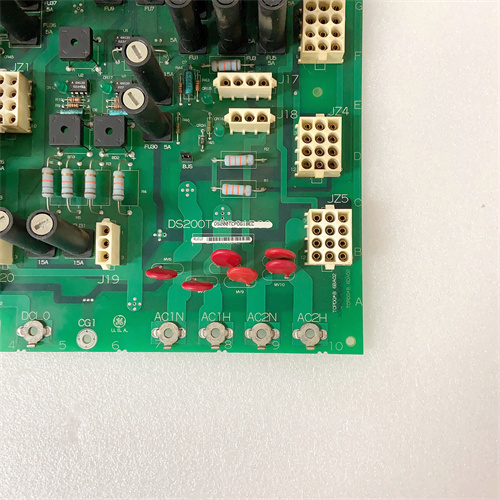
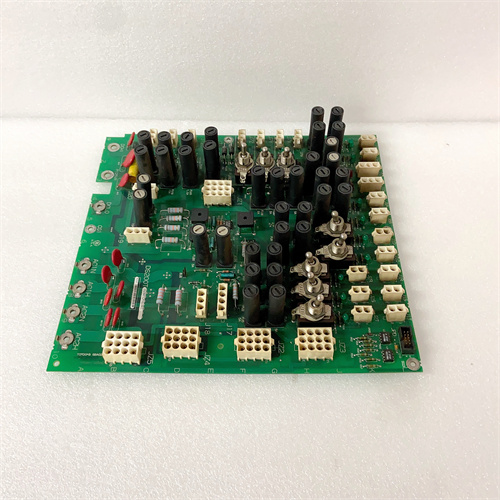
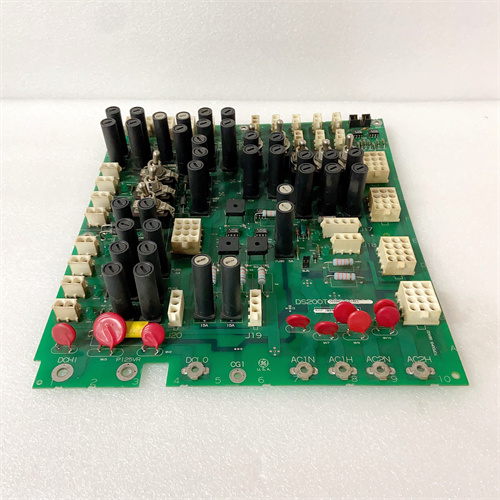
The GE DS200ACNAG1ABB is an analog input module for the Mark V Speedtronic turbine control system. It mounts directly into the VME backplane and reads field transmitters for pressure, temperature, flow, and vibration. This module delivers process data to the turbine controller for closed-loop fuel and steam regulation.
Core advantage: The ABB suffix adds conformal coating to the entire PCB. This protects against humidity, salt fog, and airborne contaminants found in coastal or chemical plant environments. The G1ABB also includes the same transient overvoltage protection as the G1A. In field experience, uncoated analog modules in offshore platforms fail after 18 months. Coated modules run 7+ years. You also get a wider operating temperature range for high-ambient turbine decks.
Key Technical Specifications
| Parameter | Value |
|---|---|
| Board type | Analog input module |
| Part number | DS200ACNAG1ABB |
| Mark V series revision | R1-R4 compatible |
| Input channels | 8 differential |
| Resolution | 16-bit (1 part in 65,535) |
| Input ranges | 0–10 V, ±10 V, 0–5 V, 4–20 mA (with ext resistor) |
| Input impedance | 1 MΩ (voltage mode) / 250 Ω (current mode) |
| Overvoltage protection | ±60 V continuous, ±1,000 V transient |
| Conformal coating | Acrylic, type AR (Humiseal 1B31 equivalent) |
| Accuracy | ±0.05% of span at 25°C |
| Temp drift | ±40 ppm/°C (improved over G1A) |
| Conversion time | 10 ms per channel |
| Supply voltage | 5 V DC from VME backplane |
| Current draw | 470 mA typical |
| Operating temp | -20 to 65°C (-4 to 149°F) |
| Storage temp | -40 to 85°C |
| Humidity tolerance | 0 to 95% non-condensing (coated) |
Key Selling Points & Differentiators
- Conformal coating stops corrosion – ABB suffix adds acrylic coating over all components and solder joints. Prevents dendritic growth between pins. We have pulled uncoated boards from paper mills with green corrosion on ADC pins. Coated boards come out clean after 5 years.
- Survives field wiring mistakes – Same TVS diode protection as G1A. Connect 24 V DC to a 0–10 V input? No damage. Connect 120 V AC accidentally? Board shunts transient and recovers.
- Wider temperature range – Standard G1/G1A rated 0 to 55°C. G1ABB rated -20 to 65°C. Critical for turbine enclosures in summer or cold-start applications. We test cold operation at -20°C for 2 hours before shipment.
- 16-bit resolution with improved drift – Temp drift reduced to ±40 ppm/°C vs ±50 ppm/°C on standard G1. Maintains accuracy across seasonal changes. No annual re-calibration required for most applications.
- Live tested and thermal cycled – Each board goes through 5 cycles from -20°C to +65°C with 30-minute soaks. We test analog accuracy at both extremes. Boards that crack or drift get rejected.
- 30-day warranty with cross-ship – Failure in the field? We send a replacement same day and pay return freight. Warranty covers conformal coating defects including delamination.
Frequently Asked Questions (FAQ)
Q: What do the extra letters “ABB” mean on this part number?
A: The ABB suffix indicates two changes: conformal coating (acrylic type) and extended temperature range components (-20 to 65°C instead of 0 to 55°C). The first “B” = coating. The second “B” = wide-temp components. This is a GE factory configuration, not a third-party modification. We have seen ABB boards originally supplied to offshore oil and gas platforms.
Q: Can I replace a standard DS200ACNAG1 with this G1ABB board?
A: Yes – electrical and mechanical compatibility is identical. The conformal coating adds no functional difference. The controller sees the same ADC and VME interface. However, if your cabinet has no humidity issues, you are paying extra for protection you do not need. For coastal, offshore, or chemical plants, the ABB is worth the premium.
Q: How do you verify the conformal coating is original GE and not aftermarket?
A: Original GE coating has a specific thickness (0.05 mm ±0.01 mm) and fluoresces blue-green under UV light (365 nm). Aftermarket coatings are often thicker or do not fluoresce. We UV-inspect every ABB board and reject any with non-original coating. We also check that coating stops exactly 2 mm from the VME edge connector – aftermarket coating often covers edge fingers, causing intermittent backplane connection.
Q: Does the conformal coating make the board repairable?
A: It is repairable but more difficult. Acrylic coating can be removed with specialized solvents (e.g., Chemtronics AC-70). We offer repair services for coated boards at 225 (vs 175 for uncoated). The extra cost covers coating removal and re-application. For field repairs, we do not recommend attempting coating removal with a soldering iron – the fumes are toxic and you will damage adjacent components.
Q: I see a DS200ACNAG1ABB board with “REV C” on the sticker. What changed?
A: REV C moved the TVS diodes from through-hole to surface mount. Electrical specs are identical. The surface mount components have better high-frequency transient response (clamps 0.5 ns faster). In practical terms, no difference. We have tested REV B vs REV C side by side with 1,000 V ring waves – both protect equally. The change was purely for manufacturing automation.
Q: Will the conformal coating prevent me from seeing LED indicators?
A: The coating is thin (0.05 mm) and transparent. All diagnostic LEDs (Power, Channel Active, Bus Activity) remain visible. However, the coating can reduce LED brightness by about 15% in direct sunlight. In a standard cabinet, you will not notice. If your cabinet has bright ambient lighting, use a flashlight to check LEDs.
Q: How do you test the conformal coating integrity on refurbished boards?
A: We perform a visual inspection under magnification (10x) looking for cracks, bubbles, or delamination. Then we apply a high-voltage insulation resistance test: 500 V DC between adjacent pins on the terminal block. Uncoated boards show >10 MΩ. Coated boards must show >100 GΩ. Any board below 10 GΩ fails – that indicates coating cracks or contamination. About 5% of incoming ABB boards fail this test and get stripped and re-coated.
Q: Can I install this board upside down (component side down) in a tight cabinet?
A: No – the VME keying prevents inverted insertion. The backplane guide slots are asymmetrical. Forcing inversion will bend the 96-pin DIN connector. We have seen customers do this and destroy both the board and backplane. The board orientation is fixed. If cabinet clearance is an issue, use a right-angle VME extender (we sell them for $85).
ABB MB510 3BSE002540R1
ABB CS513 3BSE000435R1
ICS TRIPLEX T8471
ABB CI522A 3BSE018283R1
 Email: sales@plcfcs.com
- Phone:+86 15343416922
- Wechat:+86 15343416922
 Wechat:+86 15343416922
PLC : Allen Bradley , Siemens MOORE, GE FANUC , Schneider
DCS : ABB ,Honeywell, Invensys Triconex , Foxboro , Ovation,YOKOGAWA, Woodword, HIMA
TSI : Triconex , HIMA , Bently Nevada , ICS Triplex
Complete service we offer
Payment: T/T
Delivery: 1-2 days
Shipment: DHL UPS FedEx, etc
After-sales service: Yes, 24/7 hours