 Email: jiedong@sxrszdh.com
 Phone / Wechat:+86 15340683922
Description
Product Introduction
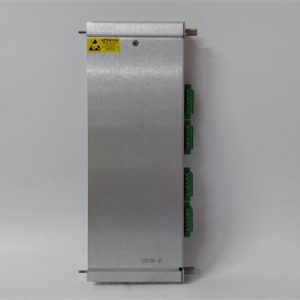
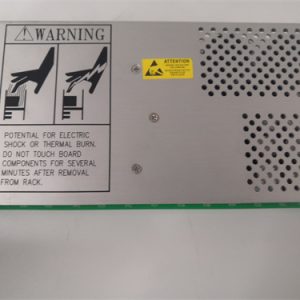
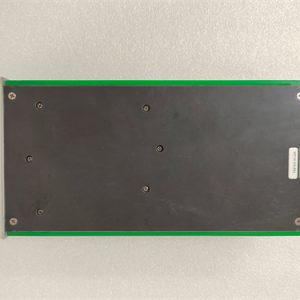
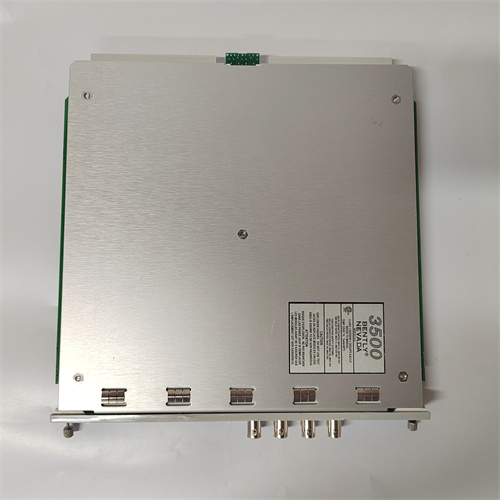
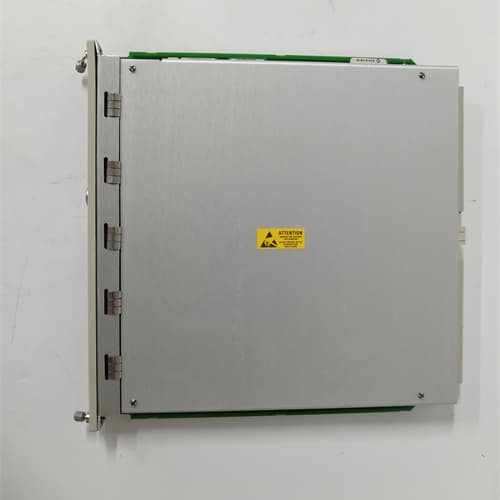
Your 3500 rack protects the machine — but only the 3500/22M makes that protection data visible to the people who trend it. The Bently Nevada 3500/22M is the Transient Data Interface: it sits in the rack, collects waveform and steady-state data from the monitor cards, and pushes it over Ethernet into System 1 for diagnostics and predictive analysis.
Strip the TDI out and the rack still trips on alarms. What you lose is the whole diagnostic layer — transient capture, waveform history, and the config path that lets engineers change setpoints without walking to the panel. One Ethernet port, a firmware stack that has to match your System 1 build, and a role as the rack’s only window to the outside world. In field deployments we found the 22M is the module that gets blamed first when comms drop, and it’s usually the network or the firmware.
Key Technical Specifications
| Parameter | Value |
|---|---|
| Module type | Transient Data Interface (TDI) |
| Platform | Bently Nevada 3500 rack |
| Communication | Ethernet to System 1 / host software |
| Data functions | Transient waveform capture, steady-state trending |
| Rack role | Rack configuration host interface |
| Slot requirement | Dedicated slot in 3500 rack |
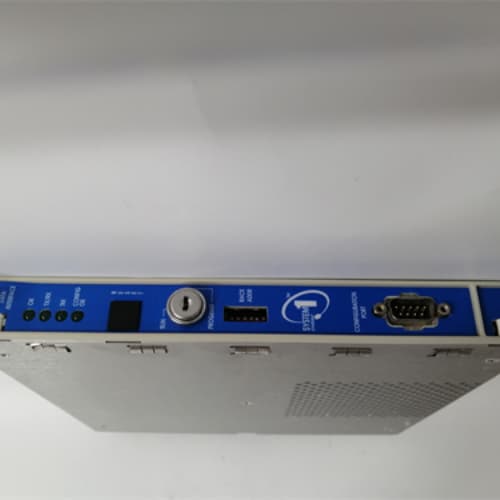
| Front-panel indicators | Status and Ethernet link LEDs |
| Operating temperature | 0 to +65 °C (rack ambient) |
| Storage temperature | −40 to +85 °C |
| Mounting | 3500 backplane connector |
| Firmware | Must match System 1 compatibility matrix — record before order |
| Redundancy | Verify dual-TDI support against your rack config |
Quality Inspection Process
A TDI that passes power-on but drops packets is worse than a dead one — it looks healthy while your data quietly disappears.
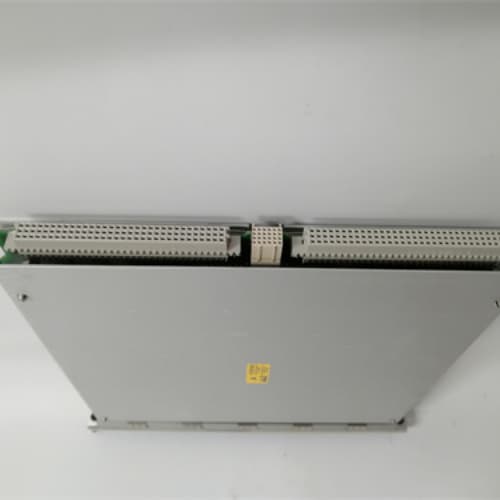
Incoming verification. OEM packing slip or customs docs matched to serial number. Bently Nevada serial lookup plus hologram check. Visual pass: Ethernet connector pins straight and clean, no corrosion on the backplane edge, no reflow marks around the comms controller, no discoloration. Accessories counted against the packing list.
Live functional test. Module slotted into a working 3500 rack with monitor cards installed. Boot sequence and LED pattern verified. Ethernet handshake to a System 1 test instance — the host must recognize the module and pull data without errors. Transient capture exercised with simulated waveform data and checked for scale and timing accuracy in the software. Then a 24-hour continuous run with link status and temperature logged.
Electrical parameters. Insulation resistance at 500 V megger, >10 MΩ. Ground continuity from chassis to backplane. Rails checked with a Fluke 115 multimeter.
Firmware verification. Firmware revision read and recorded on the test sheet. Configuration switch positions photographed as-found.
Final QC and packaging. QC sign-off with date, anti-static bag, bubble wrap, rigid carton, QC Passed label. Test photos and video available on request — every unit passes the tests above before shipping.
Field Replacement Pitfalls
Firmware-to-System-1 compatibility is the trap that catches everybody. The 22M firmware and the System 1 build have a compatibility matrix, and they don’t always agree. On a refinery job, a replacement TDI came in one firmware rev ahead of the host software — the card booted clean, the link LED went green, and System 1 still refused to ingest data. Record both firmware revisions before you order. Well, technically the module will run on older firmware, but only if that build is still in the System 1 matrix.
IP addressing. ❗ A duplicate IP on the condition monitoring subnet knocks both the new module and the existing one offline. Get the network plan in writing before you rack the card.
Photograph the old module’s configuration and slot position. Rack configuration files don’t always transfer cleanly between TDI revisions, and a half-loaded config gives you partial data that looks fine until an alarm channel goes missing.
Single vs. dual TDI. If your rack runs redundant TDIs, both must be the same firmware revision and share the network path. I’ve seen a “redundant” pair with mismatched revisions where failover dropped every transient buffer.
ESD. Wrist strap. The comms controller on this board is not forgiving.
Get these right and the data path stays clean.
New Original vs. Refurbished: Why It Matters
New Original (New Surplus) means OEM-manufactured, original packaging opened only for our bench test, no wear on the Ethernet or backplane connectors, no board-level repairs, and a serial number traceable to Bently Nevada.
A refurbished TDI carries aging components in the comms path — the exact circuits that fail intermittently and silently. Failure rates run 3–5× higher than new. Without a traceable serial, OEM firmware support stops at the door, and a firmware-locked TDI is a paperweight.
One data outage during a developing machine fault can cost 10× the price difference. What we hand over: OEM packing slip photo, traceable serial, bench test report with link and data verification, anti-static bag seal or documented reason for opening. Our price sits 30–50% above refurbished and 20–40% below OEM list — the delta covers global sourcing, the QC routine above, and a 12-month warranty.
Performance Benchmarks & Test Results
Bench data from our 3500 test rack, 25 °C ambient, 24 VDC supply, firmware as-shipped:
- Boot and link: module recognized by host software on first poll, Ethernet link stable
- Transient capture: simulated waveforms reproduced without scale or timing error in System 1
- 24-hour continuous run: zero link drops, zero packet errors logged, ambient 22–27 °C
- Insulation resistance: >10 MΩ at 500 V megger
- Rack integration: coexisted with monitor cards and relay modules without bus contention
- Thermal note: rack ambient above the OEM rating changes derating — check the curve before deploying in a hot cabinet
Exact data rates, channel counts, and MTBF figures depend on rack configuration and System 1 build — verify against OEM documentation before quoting to your reliability team.
FAQ
What does the 3500/22M actually do that other 3500 modules don’t?
It’s the rack’s data gateway to System 1 — transient waveform capture and steady-state trending over Ethernet, plus host configuration access.
Can I run a 3500 rack without the 22M?
Protection and trip logic keep working. You lose System 1 data, transient capture, and remote configuration.
Is this TDI new or refurbished?
New Original (New Surplus) — OEM-manufactured, bench-tested, traceable serial number. Not refurbished.
Does 3500/22M firmware have to match my System 1 version?
Yes. Check the compatibility matrix and record both revisions before ordering or installing.
 Email: sales@plcfcs.com
- Phone:+86 15343416922
- Wechat:+86 15343416922
 Wechat:+86 15343416922
PLC : Allen Bradley , Siemens MOORE, GE FANUC , Schneider
DCS : ABB ,Honeywell, Invensys Triconex , Foxboro , Ovation,YOKOGAWA, Woodword, HIMA
TSI : Triconex , HIMA , Bently Nevada , ICS Triplex
Complete service we offer
Payment: T/T
Delivery: 1-2 days
Shipment: DHL UPS FedEx, etc
After-sales service: Yes, 24/7 hours