 Email: jiedong@sxrszdh.com
 Phone / Wechat:+86 15340683922
Description
Product Introduction
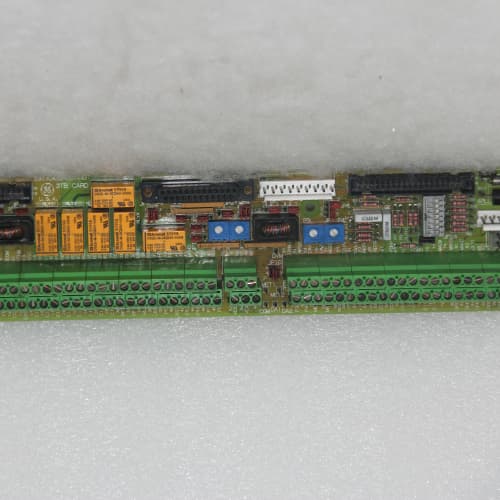
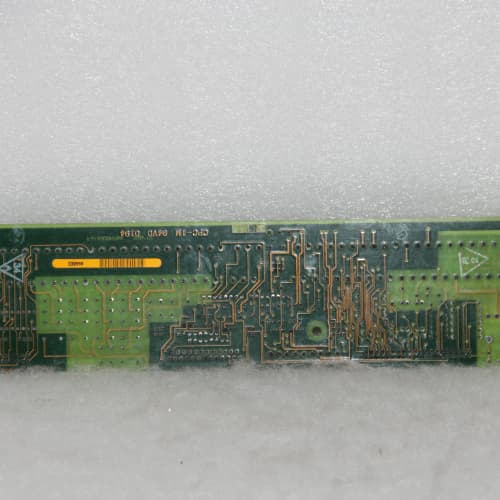
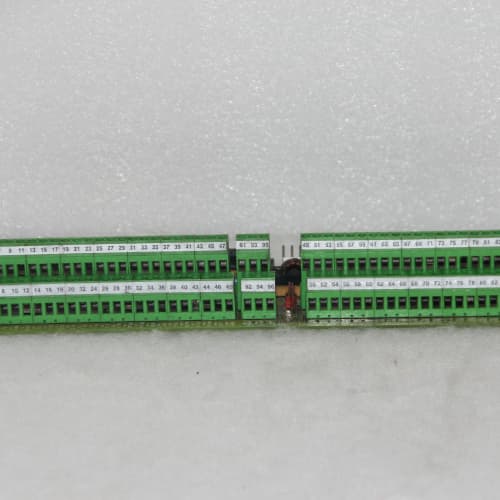
This GE 531X305NTBAJG1 is a specialized fiber-optic network board for the DC-300 and AC-300 drive platforms. The “J” suffix designates a board with integrated fiber-optic transceivers, built specifically for GE’s proprietary network protocol. Unlike the Ethernet variants, this board does not support TCP/IP or open protocols—it is designed for deterministic, high-speed communication between GE drives using fiber-optic cabling.
The board features two fiber-optic ports (ST connectors) for daisy-chaining drives over long distances. Fiber-optic communication provides complete electrical isolation, making this board ideal for high-EMI environments such as welding lines, steel mills, and heavy motor control centers. The onboard co-processor handles the proprietary GE network protocol, maintaining deterministic update rates as low as 2 ms for coordinated multi-axis applications. The board also includes 16 configurable digital I/O points for handshaking and status signaling. This is the board to use when your system uses the GE proprietary network and fiber-optic media is required for distance or noise immunity.
Key Technical Specifications
| Parameter | Value |
|---|---|
| Manufacturer | GE (General Electric) |
| Model Number | 531X305NTBAJG1 |
| Product Type | Network Interface / Fiber-Optic Communication Board |
| Communication Speed | 10 Mbps (proprietary GE protocol) |
| Ports | 2 independent fiber-optic ports (ST connectors) |
| Fiber Type | Multimode 62.5/125 µm |
| Maximum Distance | 2 km (1.2 miles) per segment |
| Protocol Support | GE proprietary (Genius or equivalent) |
| Co-Processor | Dedicated network processor |
| Digital I/O | 16 configurable inputs/outputs (24 VDC) |
| Output Drive | 0.5 A per digital output channel |
| Isolation | 2500 V (opto-isolated I/O, fiber-optic transceiver isolation) |
| Communication | 50-pin ribbon cable to main regulator board |
| Operating Temperature | 0 to +55 °C |
| Storage Temperature | -40 to +85 °C |
| Board Dimensions | 12.7 in x 6.0 in (approx) |
Key Selling Points & Differentiators
- Integrated Fiber-Optic Transceivers: Built-in ST connectors. No external media converters required. The transceivers are rated for industrial temperature ranges and provide 2 km reach.
- Complete Electrical Isolation: Fiber-optic cabling eliminates ground loops and protects the drive from electrical surges. This is essential in high-EMI environments where copper Ethernet would be unreliable.
- GE Proprietary Protocol: The board runs GE’s deterministic network protocol—not Ethernet/IP or Modbus TCP. This is the protocol used in legacy GE drive systems for multi-axis coordination. It is faster and more predictable than serial communication.
- Quantified Testing Protocol: We test each board with a fiber-optic loopback at 500 meters. We run the network at full 10 Mbps load for 8 hours and verify zero packet loss. We also measure the optical output power to ensure the transceivers meet GE’s specification.
- Warranty & Support: 2-year functional warranty. We include a fiber-optic cleaning kit and connection guide. Dirty fiber connectors are the number one cause of communication errors. Our guide covers proper cleaning procedures.
Frequently Asked Questions (FAQ)
Q1: What does the “J” suffix mean on the NTBAJG1?
A: The “J” indicates the board has integrated fiber-optic transceivers. GE used the “J” suffix to distinguish fiber-optic boards from copper Ethernet boards. The “J” boards are specifically for GE’s proprietary network protocol. They cannot be used with standard Ethernet or TCP/IP networks. They are a legacy product for GE-only drive networks.
Q2: Can I use this board to connect to an Ethernet network with a media converter?
A: No. This board uses GE’s proprietary network protocol, not TCP/IP. A fiber-to-Ethernet media converter will not work because the protocol is incompatible. The board only communicates with other GE devices running the same proprietary protocol. If you need Ethernet connectivity, you need the NTBAEG1 or NTBAHG1. The “J” board is for drive-to-drive communication, not for connecting to PLCs or networks running standard protocols.
Q3: What is the maximum length of fiber-optic cable I can use between drives?
A: The board supports up to 2 km (1.2 miles) with 62.5/125 µm multimode fiber. This is the distance per segment—each drive regenerates the signal, so you can extend beyond 2 km by adding drives. The optical output power is typically -15 dBm, which provides enough margin for 2 km with standard fiber loss. Do not use single-mode fiber. The transceivers are designed for multimode only.
Q4: Can I mix fiber and copper Ethernet connections on the same drive network?
A: Yes, but you need a network bridge module—a separate device that converts the GE proprietary fiber-optic signal to a copper Ethernet signal. The bridge module typically sits in the network and interfaces with a standard Ethernet switch. The “J” board itself does not have copper Ethernet ports. If you need to connect a fiber-optic drive network to a PLC over Ethernet, the bridge module is required. We can help you source the correct bridge module.
Q5: How many drives can I daisy-chain with the fiber-optic board?
A: The board supports up to 32 drives in a daisy-chain topology. Each drive regenerates the optical signal, so the total network length is 32 × 2 km = 64 km, but in practice, the protocol timing limits the number of drives. The GE proprietary network has a maximum cycle time that must be maintained—with 32 drives, the cycle time is approximately 10 ms. If you need faster updates, reduce the number of drives per chain. We recommend a maximum of 16 drives for high-speed motion applications.
Q6: How do I clean the fiber-optic connectors on this board?
A: This is critical. The ST connectors on the board are standard ceramic ferrules. Use a fiber-optic cleaning pen or lint-free wipes with isopropyl alcohol. Do not use compressed air—it can blow dust into the connector. We include a cleaning kit and procedure with the board. Dirty connectors cause intermittent communication errors that are difficult to diagnose. In our experience, 80% of field failures on fiber-optic boards are due to dirty connectors, not failed hardware.
Q7: What is the failover behavior if a fiber link is broken?
A: The board has two ports for daisy-chaining. If a fiber link breaks, the network protocol has built-in fault detection. The drive will report a network error, and the affected drive will enter a safe state (typically a stop or speed hold, depending on configuration). Unlike the Ethernet H board, the J board does not have built-in failover to a second path. The network is a simple daisy-chain—a break in the fiber disconnects all downstream drives. For critical applications, we recommend a redundant network topology or a second fiber path with separate boards.
Q8: Does this board support the same digital I/O as other NTB boards?
A: Yes, the board has 16 configurable digital I/O points. These are identical to the other NTB variants—24 VDC, 0.5 A per output, Darlington drivers without short-circuit protection. The I/O configuration is set through drive parameters. We recommend external fuses on outputs driving inductive loads. The digital I/O is independent of the fiber-optic communication and remains functional even if the network is disconnected.
Q9: Is this board a drop-in replacement for the NTBACG1 fiber-optic board?
A: Yes, the hardware is very similar. The NTBACG1 used a fiber-optic transceiver module that could be replaced, while the NTBAJG1 has integrated transceivers that are soldered to the board. Both use the GE proprietary protocol and are mechanically compatible. If you are replacing an NTBACG1 with an NTBAJG1, verify the transceiver output power. The integrated transceivers on the J board are factory-calibrated, so there is no field adjustment needed. The board will work in the same slot with the same ribbon cable.
Q10: What is the lifecycle status of the NTBAJG1?
A: This board is long discontinued. GE moved to Ethernet-based communication for drives. The NTBAJG1 was produced until approximately 2008. We have a small batch of 8 units from a decommissioned mining conveyor project. This is new surplus—unused, fully tested. Once sold, there will be no more new units available. Used pulls may exist, but fiber-optic transceivers degrade over time, and used boards often have marginal output power. Our units are fresh and meet the original GE specification for optical output. We recommend securing spares if your plant has multiple drives on the GE proprietary fiber-optic network.
TRICONEX 3503E
ABB CI854AK01
KOLLMORGE AKM44E-ANC2DB00
 Email: sales@plcfcs.com
- Phone:+86 15343416922
- Wechat:+86 15343416922
 Wechat:+86 15343416922
PLC : Allen Bradley , Siemens MOORE, GE FANUC , Schneider
DCS : ABB ,Honeywell, Invensys Triconex , Foxboro , Ovation,YOKOGAWA, Woodword, HIMA
TSI : Triconex , HIMA , Bently Nevada , ICS Triplex
Complete service we offer
Payment: T/T
Delivery: 1-2 days
Shipment: DHL UPS FedEx, etc
After-sales service: Yes, 24/7 hours