 Email: jiedong@sxrszdh.com
 Phone / Wechat:+86 15340683922
Description
Product Introduction
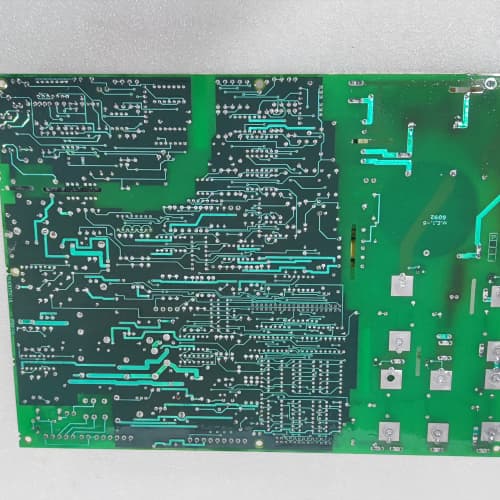
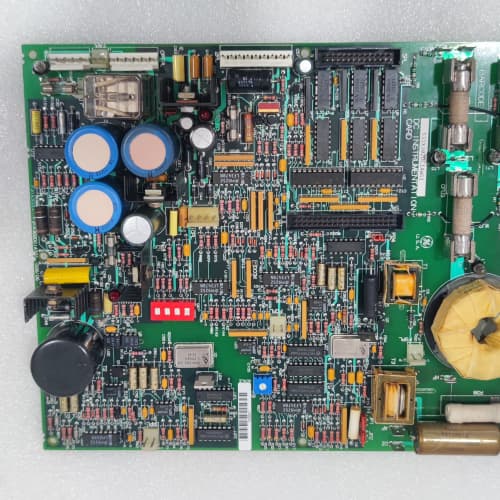
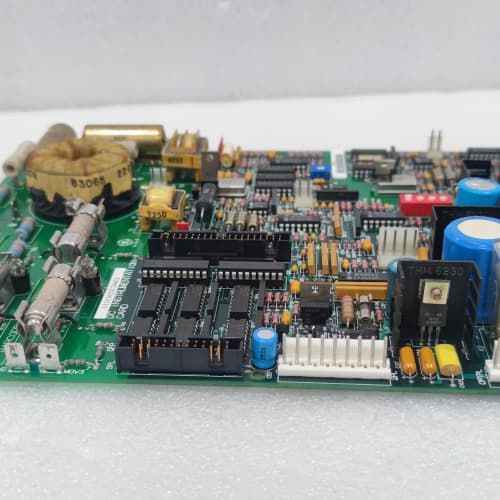
This GE 531X304IBDAMG1 is an enhanced version of the standard IBD interface board. The “M” in the suffix denotes additional memory—both RAM and EPROM—installed on the board to support larger protocol stacks and data buffering. The board carries the same dual serial ports as the standard IBD (RS-232 on Port 1, RS-422/485 on Port 2), plus 16 configurable digital I/O points, but with a significant upgrade in onboard processing capability.
The added memory enables this board to handle more complex protocols. It is the variant needed for the DF1 protocol used with Allen-Bradley PLCs, and for extended data logging where the drive buffers production data before transmitting. The board also holds additional user-defined configuration tables in its expanded EPROM, making it ideal for applications requiring custom handshaking or non-standard baud rates. This is the go-to board when you are interfacing a DC-300/AC-300 drive with a legacy PLC network that requires larger message blocks.
Key Technical Specifications
| Parameter | Value |
|---|---|
| Manufacturer | GE (General Electric) |
| Model Number | 531X304IBDAMG1 |
| Product Type | Interface / Communication Board (Memory-Expanded) |
| Serial Ports | 2 independent ports |
| Port 1 | RS-232 (DCE configuration) |
| Port 2 | RS-422 or RS-485 (jumper selectable) |
| Baud Rate (Port 1) | 300 to 19,200 bps |
| Baud Rate (Port 2) | 300 to 38,400 bps |
| Data Format | 7 or 8 bits, parity optional |
| Protocol Support | GE proprietary, Modbus RTU, DF1 (Allen-Bradley), custom |
| Memory Expansion | Additional RAM (8 KB) and EPROM (16 KB) over standard IBD |
| Digital I/O | 16 configurable inputs/outputs (24 VDC) |
| Output Drive | 0.5 A per digital output channel |
| Isolation | 2500 V (opto-isolated I/O) |
| Communication | 50-pin ribbon cable to main regulator board |
| Operating Temperature | 0 to +55 °C |
| Storage Temperature | -40 to +85 °C |
| Board Dimensions | 12.7 in x 6.0 in (approx) |
Key Selling Points & Differentiators
- Expanded Protocol Support: The extra memory allows the board to hold the DF1 protocol stack for Allen-Bradley PLCs. This is not available on the standard IBD board. If you are connecting to a PLC-5 or SLC 500, this is the board you need.
- Larger Data Buffers: The 8 KB of additional RAM gives you a deeper transmit and receive buffer. This prevents data overrun in high-speed polling networks where the PLC requests data at 38.4 kbps. Without the extra buffer, you will see intermittent communication faults.
- Custom Firmware Ready: The 16 KB EPROM socket is populated with the protocol firmware. For custom applications, we have worked with GE to load specific firmware versions. We can verify the firmware version on your board before shipping.
- Quantified Testing Protocol: We test both serial ports under load with continuous data transmission at maximum baud rates. We run a memory test on the expanded RAM to verify no bad cells. We also test the protocol switching between GE, Modbus, and DF1.
- Warranty & Support: 2-year functional warranty. We include a protocol selection and buffer configuration guide. Buffer overflow errors are the most common field issue—our guide walks you through optimizing the transmit/receive buffer sizes.
Frequently Asked Questions (FAQ)
Q1: What is the difference between the 531X304IBDAMG1 and the standard 531X304IBDAHG1?
A: The “M” in IBDAMG1 stands for memory. The standard IBD has a fixed 2 KB RAM and 8 KB EPROM. The IBDAM has 8 KB RAM and 16 KB EPROM—four times the RAM and double the EPROM. This additional memory supports larger protocol stacks like DF1 and allows deeper data buffering. If you are running a simple Modbus connection, the standard board is sufficient. If you are connected to an Allen-Bradley PLC or have a high-speed data logging application, you need the M variant.
Q2: Does this board support the DF1 protocol out of the box?
A: It can, provided the EPROM is loaded with the DF1 firmware. The hardware supports it. We check the EPROM version during our QC process. If the EPROM contains the GE proprietary protocol, the board will not talk DF1. We can confirm the firmware version from the EPROM label. If you need DF1, we will verify the firmware before shipping. If the board you receive has the wrong firmware, you cannot field-upgrade it—the EPROM is soldered. We make this verification a standard step.
Q3: What is the benefit of the larger data buffer on this board?
A: The data buffer holds incoming serial messages before the main drive processor reads them. If the drive processor is busy with motor control loops, the buffer continues to accumulate data. With the standard 2 KB buffer, a 38.4 kbps data stream can overflow in about 100 ms if the processor is delayed. The 8 KB buffer gives you about 400 ms—enough to handle most processor delays. In practice, this means fewer communication timeouts and more reliable connections on busy networks. We have seen buffer overflow errors drop from 2-3 per hour to zero on systems upgraded to the M board.
Q4: Can I use the RS-485 port as RS-232 if I change the jumpers?
A: No. Port 2 is physically wired for differential RS-422/485. There is no jumper option for RS-232. The transceiver chip is a differential type (like an SN75176). It cannot be re-configured to single-ended. If you need two RS-232 ports, this board is not the right choice. You would need an external RS-232 to RS-485 converter on Port 2, or a different interface board. We have seen customers attempt this and fail—the differential drivers do not output the correct voltage levels for RS-232.
Q5: How do you test the additional memory on the board?
A: We run a memory test that writes and reads back patterns (0x55, 0xAA, 0xFF, 0x00) across the entire 8 KB RAM address space. The test runs for 30 minutes while the board is at operating temperature. If we detect any bit errors, the board is rejected. The EPROM is verified against its checksum. We do not just power the board on—we stress the memory to catch intermittent failures. This is a level of testing that most third-party suppliers skip. We include the memory test results in the QC package.
Q6: Is there any limitation on the number of drives I can connect in a multidrop RS-485 network?
A: The RS-485 driver supports up to 32 unit loads. That means you can connect 32 devices on the bus if they are all standard RS-485 receivers. In practice, the electrical loading and cable capacitance may limit you to 20-25 drives on long runs. The board has built-in termination jumpers for the RS-485 line. You enable termination on the two end devices only. We recommend a maximum of 16 drives in a production network to keep communication reliable.
Q7: Can I use this board for data logging to a PC or printer?
A: Yes, the expanded memory helps in this application. You can configure the board to buffer production data and send it out Port 1 (RS-232) to a serial printer or a PC running a terminal emulator. The buffer holds up to 8 KB of data, which is typically enough for several minutes of production parameters. The drive’s parameters control what data is logged and how often. We have seen this used in printing and converting lines for quality tracking. If you need this function, we can share sample parameter settings from a similar installation.
Q8: What happens if the EPROM firmware on this board is corrupted?
A: The board has checksum verification at power-up. If the EPROM checksum fails, the board will not initialize, and the serial ports will remain inactive. The drive may show a “COMM FAIL” alarm. The only repair is to replace the EPROM—but it is soldered to the board, so this is a board-level repair. We do not offer this repair service. We recommend verifying the firmware version before ordering to avoid a mismatch. Our boards come with verified EPROMs from the original GE production run. We do not sell boards with unknown firmware.
HIMA F3236
ABB DSQC604
BENTLY 3500/42M
“Berkeley Berkeley
 Email: sales@plcfcs.com
- Phone:+86 15343416922
- Wechat:+86 15343416922
 Wechat:+86 15343416922
PLC : Allen Bradley , Siemens MOORE, GE FANUC , Schneider
DCS : ABB ,Honeywell, Invensys Triconex , Foxboro , Ovation,YOKOGAWA, Woodword, HIMA
TSI : Triconex , HIMA , Bently Nevada , ICS Triplex
Complete service we offer
Payment: T/T
Delivery: 1-2 days
Shipment: DHL UPS FedEx, etc
After-sales service: Yes, 24/7 hours