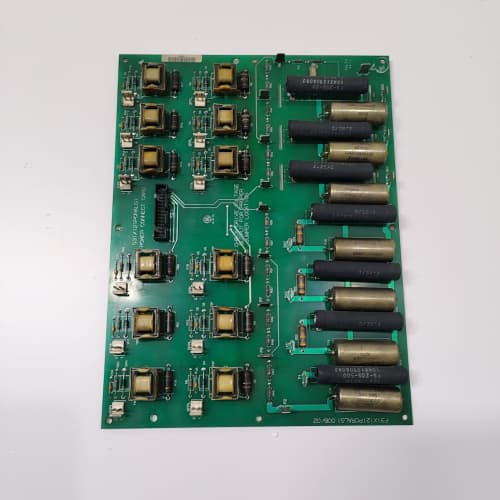
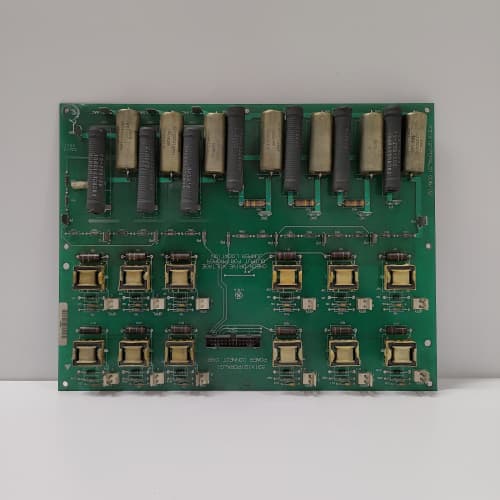
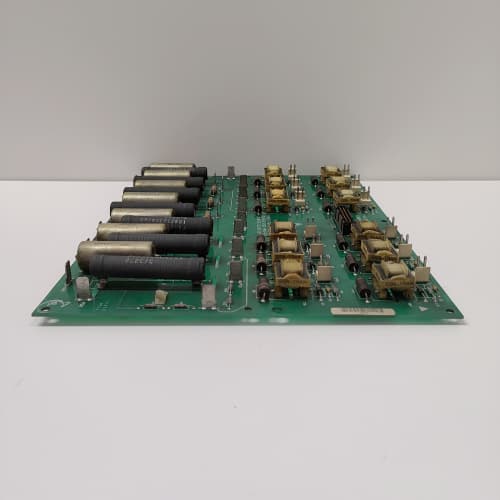
 Email: jiedong@sxrszdh.com
 Phone / Wechat:+86 15340683922
Description
Product Introduction
CANbus is the backbone of many GE drive networks. The GE 531X300CCHANM3 is the 300-series chassis with integrated CANbus wiring—a dedicated terminal block on the rear panel that brings the CAN_H and CAN_L lines from your logic board to a convenient termination point. No more fishing cables through the chassis or struggling with DB-9 connectors. It’s plug-and-play for DeviceNet, CANopen, or GE’s proprietary CAN-based drive sync protocols.
The “ANM3” suffix tells the story: “A” is the standard filter, “N” indicates CANbus integration, and “M3″ gives you the 92mm fans (65 CFM) with Molex Mini-Fit connectors. The CANbus terminal block is on the rear panel, with 3 terminals: CAN_H, CAN_L, and GND. The terminals are pre-wired to the backplane’s CANbus header (typically slot 2). The terminal block also has a jumper for the 120Ω termination resistor—install the jumper if this chassis is at the end of your CANbus segment; remove it if it’s in the middle. The terminal block is rated for 12-24 AWG wire. The chassis includes the standard A-filter, the distributed-ground backplane, and the M3 cooling package. The depth is 14.5” (same as the standard AM5). One caveat: the CANbus terminal block is not isolated—it’s directly connected to the backplane. In high-noise environments, use shielded twisted-pair cable and connect the shield to the GND terminal.
Key Technical Specifications
| Parameter | Value / Specification |
|---|---|
| Manufacturer | General Electric (GE) Drive Systems |
| Model Number | 531X300CCHANM3 |
| Series | 300 Series Drive Rack (CANbus-Ready) |
| Slot Capacity | 10 slots (accepts 210, 211, 212, 213 series boards) |
| Chassis Height | 6U (266mm / 10.5″) |
| Chassis Width | 19″ (standard rack mount) |
| Chassis Depth | 14.5″ (includes rear terminal block and shroud) |
| CANbus Terminal Block | 3-position (CAN_H, CAN_L, GND), 12-24 AWG |
| CANbus Termination | 120Ω jumper (selectable) |
| Backplane Connection | Pre-wired to CANbus header (slot 2) |
| CANbus Protocol | DeviceNet, CANopen, GE proprietary (board-dependent) |
| Max Baud Rate | 500 kbps (limited by board, not chassis) |
| AC Input Filter | Class A EMI/RFI filter (60dB @ 150kHz) |
| Surge Protection | 5kA, 8/20µs waveform |
| Cooling Fans | 2x 92mm, 65 CFM each, 12V DC (M3 revision) |
| Fan Connector | Molex Mini-Fit Jr. (4-pin) |
| Fan Noise | 42 dBA (at 1 meter) |
| Backplane | 531X213D10ABG1 (standard) |
| Cable Exit | Rear shrouded cable trough (removable) |
| Keying | Slot-specific keying bars (pre-installed) |
| Dimensions (Overall) | 19″ x 10.5″ x 15.5″ (with terminal block and shroud) |
| Weight | 21 lbs (9.5 kg) empty, 28 lbs with boards and PSU |
| Finish | Powder-coated steel (RAL 7035) |
| Operating Temp | 0° to 55°C |
| Certification | UL 508A, CE marked |
Compatible Replacement Models
✅ Drop-in Replacement:
- 531X300CCHANM3 directly replaces 531X300CCHANM2 and 531X300CCHANM1. The ANM3 has the same CANbus terminal block, same pre-wiring, and same backplane. The only difference is the fans—the ANM3 has 92mm fans vs. 80mm on the earlier revisions. The terminal block is in the same position. Swap your boards over—the CANbus wiring is pre-installed.
- 531X300CCHAAM5 (standard chassis): The ANM3 is the CANbus-ready version of the standard AM5 chassis. If you need CANbus connectivity, the ANM3 is a direct replacement. The backplane and slot spacing are identical. Move your boards over.
⚠️ Software Compatible (Requires Recompile):
- None. The CANbus terminal block is a passive wiring interface. No firmware, no configuration. The CANbus protocol is handled by your logic board. No recompile needed.
❌ Hardware Incompatible:
- 531X300CCHANM3 with a 210-series power supply: The 210-series supply doesn’t fit in the 212-series bay. You need a 212-series PSU.
- 531X300CCHANM3 in a rack depth under 15.5″: The chassis is 15.5″ deep with the CANbus terminal block and rear shroud. Remove the rear shroud (drops depth to 14.5″) if needed—the terminal block is on the rear panel and still needs clearance.
- 531X300CCHANM3 with CANbus wiring that exceeds the terminal block rating: The terminal block is rated for 12-24 AWG. Use appropriate wire—typically 24 AWG twisted-pair with a shield. For multi-drop networks, use a junction box. The terminal block is for a single cable entry.
Frequently Asked Questions (FAQ)
Q: What’s the purpose of the CANbus terminal block?
A: It gives you a clean, organized place to land your CANbus cable. Instead of running the cable directly to the logic board (which can be messy and strain the connector), you land it on the rear terminal block. The chassis is pre-wired from the terminal block to the backplane’s CANbus header. It’s a clean, serviceable solution for DeviceNet, CANopen, or GE’s proprietary CAN-based drive networks.
Q: Which slot does the CANbus terminal block connect to?
A: The terminal block is pre-wired to the CANbus header on slot 2. If your logic board is in a different slot, you’ll need to check the wiring. The pre-wiring is fixed; you can’t change the assignment. GE assumed the logic board would be in slot 2 for CANbus systems.
Q: Does the CANbus terminal block have a termination resistor?
A: Yes. There’s a jumper on the terminal block for the 120Ω termination resistor. Install the jumper if this chassis is at the end of your CANbus segment. Remove it if it’s in the middle. Without proper termination, you’ll get reflected signals and communication errors. This is a common source of CANbus issues—don’t skip it.
Q: Can I use the CANbus terminal block with DeviceNet?
A: Yes. DeviceNet is a CAN-based protocol, so the physical layer is identical (CAN_H, CAN_L, GND). The terminal block handles the physical connection. The protocol is handled by your logic board. Use DeviceNet-specific cable (thick or thin, as required by your network) and follow DeviceNet’s termination and grounding rules.
Q: Can I use the CANbus terminal block with CANopen?
A: Yes. CANopen is also CAN-based. The terminal block is just the physical interface. Connect your CANopen cable to the terminal block. The protocol is board-dependent, but the physical layer is standard CANbus.
Q: The ANM3 has 92mm fans. Is the cooling better than the ANM2?
A: Yes. The ANM3 has 92mm fans (65 CFM) vs. 80mm fans (45 CFM) on the ANM2. That’s a 44% increase in airflow. The chassis runs about 8°C cooler at full load. If you have a fully loaded rack in a warm cabinet, the ANM3 is a significant improvement.
Q: Is the CANbus terminal block isolated from the backplane?
A: No. The terminal block is directly connected to the backplane’s CANbus pins. There’s no isolation. If you have long cable runs or are in a high-noise environment, use shielded twisted-pair cable and connect the shield to the GND terminal. You can also add an external CANbus isolator if needed.
Q: Can I daisy-chain multiple CANbus devices through the ANM3?
A: Yes. The terminal block has a single set of CAN_H, CAN_L, and GND terminals. To daisy-chain, you’d need to bring two cables to the terminal block—one from the upstream device and one to the downstream device. The terminal block is a single-point connection; you’d need to use a junction box or a multi-port terminal block for daisy-chaining. The ANM3 is designed for a single cable entry. For multi-drop networks, use an external junction box.
Q: Does the ANM3 come with the CANbus cable?
A: No. The cable is not included. You’ll need to supply your own shielded twisted-pair cable. For DeviceNet, use DeviceNet cable. For CANopen, use standard CANbus cable (e.g., Belden 3082A). The terminal block accepts 12-24 AWG wire. We recommend 22-24 AWG twisted-pair for most CANbus installations.
Q: What’s the maximum baud rate for the CANbus terminal block?
A: The terminal block itself doesn’t limit the baud rate. The limit is your logic board and the CANbus devices on the network. Typical GE logic boards support up to 500 kbps. The terminal block and wiring can handle higher speeds (up to 1 Mbps), but the boards are the limiting factor. Use appropriate cable and termination for your baud rate.
Q: Can I use the ANM3 with the 531X211KLDACG1 communication board?
A: Yes. The ACG1 has a CANbus port (DeviceNet/CANopen). You can connect the ACG1 to the CANbus terminal block on the backplane. The terminal block is pre-wired to the backplane’s CANbus header. The ACG1 will automatically see the network. No additional wiring is needed.
Q: Does the ANM3 have a jumper for a split termination (two 60Ω resistors)?
A: No. The ANM3 uses a single 120Ω termination resistor (standard for CANbus). DeviceNet sometimes uses a split termination (two 60Ω resistors with a center tap). The ANM3 doesn’t support split termination. If your network requires split termination, you’ll need to add it externally—or use a DeviceNet-specific terminator. The standard 120Ω jumper is sufficient for most CANopen and DeviceNet networks.
SIEMENS HJD63F400
Pacific Scientific 33VM52-000-29
ABB LXN 1604-6 (P/N:3BHL000986P7000) 500W,AC
 Email: sales@plcfcs.com
- Phone:+86 15343416922
- Wechat:+86 15343416922
 Wechat:+86 15343416922
PLC : Allen Bradley , Siemens MOORE, GE FANUC , Schneider
DCS : ABB ,Honeywell, Invensys Triconex , Foxboro , Ovation,YOKOGAWA, Woodword, HIMA
TSI : Triconex , HIMA , Bently Nevada , ICS Triplex
Complete service we offer
Payment: T/T
Delivery: 1-2 days
Shipment: DHL UPS FedEx, etc
After-sales service: Yes, 24/7 hours