 Email: jiedong@sxrszdh.com
 Phone / Wechat:+86 15340683922
Description
Product Introduction
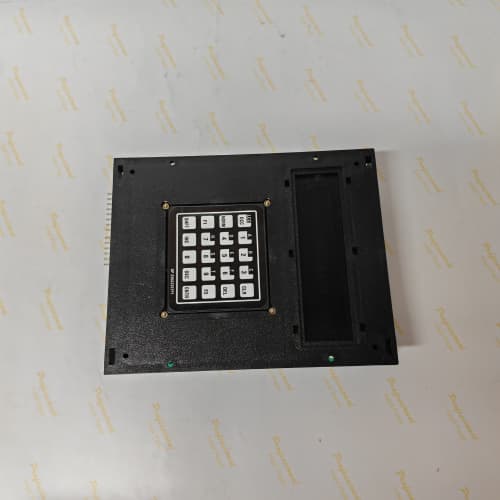
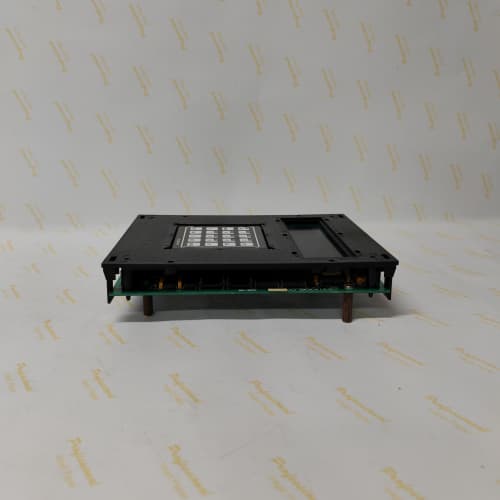
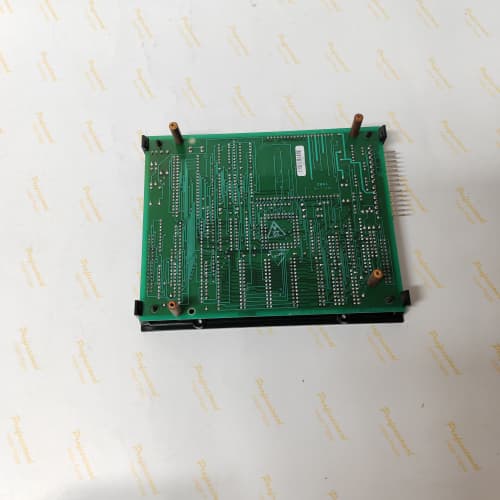
The ADM3 is where GE decided to make DC input serviceable. The GE 531X300CCHADM3 is the DC-input chassis with a key difference from the ADM1 and ADM2: the DC-DC converter is now a field-replaceable module. On earlier DC chassis, if the converter failed, you replaced the entire chassis—expensive and wasteful. On the ADM3, you slide out the old converter module and slide in a new one, just like a board. That’s a significant total cost of ownership improvement for critical plants.
The “ADM3” suffix indicates the third revision of the DC-input chassis. GE listened to field feedback: customers wanted to repair DC chassis instead of scrapping them. The new converter module (part number 531X300DCM1, if you’re curious) is a hot-swappable unit that slides into a dedicated bay with guide rails and a backplane connector. The module now has its own 50ms hold-up capacitance, a 65dB filter, and diagnostic LEDs—all contained in a sealed, potted assembly. The module’s heat dissipation is also lower (16W versus 18W on the ADM2) because of a more efficient switching topology. The chassis itself is nearly identical to the ADM2—same fans, same backplane, same dimensions. The only mechanical difference is the addition of guide rails and a retaining latch for the converter module. One caveat: the ADM3 chassis is about 1 lb heavier (22 lbs empty) because of the guide rails and the latch mechanism. Not a big deal for a rack-mounted unit, but something to note if you’re shipping it.
Key Technical Specifications
| Parameter | Value / Specification |
|---|---|
| Manufacturer | General Electric (GE) Drive Systems |
| Model Number | 531X300CCHADM3 |
| Series | 300 Series Drive Rack |
| Slot Capacity | 10 slots (accepts 210, 211, 212, 213 series boards) |
| Chassis Height | 6U (266mm / 10.5″) |
| Chassis Width | 19″ (standard rack mount) |
| Chassis Depth | 13.5″ (includes rear shroud and DC module) |
| DC Input Module | Field-replaceable cartridge (531X300DCM1) |
| Input Voltage | 24V, 48V, or 125V DC (jumper-selectable on module) |
| DC Input Range | ±20% of nominal (19-30V, 38-58V, 100-150V) |
| Hold-up Time | 50ms (at full load, after input drop) |
| Input Filter | 65dB @ 150kHz |
| Transient Suppression | 2kV differential, 4kV common (EN 61000-4-5) |
| Reverse Polarity | FET-based (0.3V drop) |
| Input Fuse | 10A slow-blow (on module, field replaceable) |
| Diagnostic LEDs | On module: PWR OK (green), WARNING (yellow), FAULT (red) |
| Module Efficiency | 84% typical (at 125V input, full load) |
| Module Dissipation | 16W (lower than ADM2’s 18W) |
| DC Outputs | 5V @ 15A, ±15V @ 3A, 24V @ 5A (through backplane) |
| Module Retention | Latch mechanism (tool-less removal) |
| Cooling Fans | 2x 92mm, 65 CFM each, 12V DC |
| Fan Connector | Molex Mini-Fit Jr. (4-pin) |
| Cable Exit | Rear shrouded cable trough (removable cover) |
| Keying | Slot-specific keying bars (pre-installed) |
| Dimensions (Overall) | 19″ x 10.5″ x 14.5″ (with rear shroud) |
| Weight | 22 lbs (10.0 kg) empty, 29 lbs with boards and module |
| Finish | Powder-coated steel (RAL 7035) |
| Operating Temp | 0° to 50°C (derate above 40°C) |
| Certification | UL 508A, CE marked, EN 61000-6-2 |
Compatible Replacement Models
✅ Drop-in Replacement:
- 531X300CCHADM3 directly replaces 531X300CCHADM2 and 531X300CCHADM1. The ADM3 chassis has the same dimensions, same slot spacing, same backplane (531X213D10ABG1), and the same mounting hole pattern. If you have an ADM1 or ADM2, you can move all your boards to the ADM3 chassis without any modifications. The DC input wiring is identical—the terminals are in the same location.
- 531X300CCHADM0 (earliest DC version): The ADM3 is a direct upgrade. The chassis is slightly heavier, but the board compatibility is unchanged. The DC module mounting is different, so you can’t move the ADM0’s fixed converter over, but you don’t need to—the ADM3 comes with its own module.
⚠️ Software Compatible (Requires Recompile):
- None. The chassis is still a passive assembly with a DC-DC converter. The converter module doesn’t communicate with the backplane—it just provides power. No firmware, no configuration. No recompile needed.
❌ Hardware Incompatible:
- 531X300CCHADM3 with AC power: Same as the ADM2—DC input only. Do not apply AC.
- 531X300CCHADM3 with a 210-series power supply: The DC module bay is not compatible with any AC power supply—different form factor, different connector. The ADM3 is strictly DC.
- 531X300CCHADM3 with a DC input voltage outside the jumper setting: The FET protection will clamp and blow the fuse if you feed 125V into a 24V setting. The module might survive, but the fuse won’t.
- 531X300CCHADM3 in a rack depth under 14.5″: Same depth as the ADM2. If your cabinet is shallow, you’ll have to remove the rear shroud—but the DC module still protrudes the same amount. The chassis depth remains 14.5″. Measure before ordering.
Frequently Asked Questions (FAQ)
Q: How do I replace the DC-DC converter module on the ADM3?
A: It’s a simple two-step process. First, turn off the DC input and wait for the capacitors to discharge (about 30 seconds—the PWR OK LED will turn off). Second, pull the latch on the module and slide it out. The module is on guide rails—it comes out smoothly. To install a new module, align it with the guide rails and push it in until the latch clicks. That’s it. No tools required. The whole process takes about 2 minutes. This is the main selling point of the ADM3 over the ADM1/ADM2—the ability to replace the power supply in the field without removing the chassis from the rack.
Q: Does the ADM3 use the same DC-DC converter module as the ADM2?
A: No. The ADM2 has a fixed converter module soldered to the chassis. The ADM3 uses a field-replaceable cartridge (part number 531X300DCM1). The two are not interchangeable. If you have an ADM2 and the converter fails, you need to replace the entire chassis. If you have an ADM3, you replace only the cartridge. That’s a significant cost difference. The cartridge itself is about half the price of a full chassis.
Q: Can I replace the module with the chassis powered off, but with the DC input still connected?
A: No. You must turn off the DC input before removing the module. The module has live DC bus capacitors that can hold charge even after the input is removed. If you try to remove it with the input connected, you risk arcing and damaging the connectors. The latch is designed to prevent removal when the module is powered (it has a mechanical interlock), but we’ve seen techs defeat the interlock and cause damage. Always power down first. The PWR OK LED turning off is your visual confirmation that the capacitors are discharged.
Q: What’s the efficiency difference between the ADM3 and the ADM2?
A: The ADM3’s module is 84% efficient at 125V input, versus 82% on the ADM2. That’s a 2% improvement, which translates to about 2W less heat at full load. The module also runs about 2°C cooler. It’s not a huge difference, but in a hot cabinet, every degree helps. The efficiency improvement comes from a newer switching controller IC that GE started using in the final production runs.
Q: The ADM3 chassis is heavier than the ADM2. Why?
A: The guide rails and the latch mechanism add about 1 lb of metal to the chassis. The backplane is the same, the fans are the same, and the sheet metal is the same gauge. The extra weight is purely from the mechanical retention hardware. It’s not a problem for rack mounting—the chassis is still within the 30 lb limit for a 19″ rack.
Q: Does the ADM3 come with a spare DC-DC converter module?
A: No. The ADM3 comes with one module installed. If you want a spare module on the shelf, you need to order it separately (part number 531X300DCM1). We recommend that for critical plants—having a spare module on hand reduces downtime from days to minutes. The module is a sealed unit; there are no field-repairable components inside it.
Q: Can I use the ADM3 in a 48V system that occasionally dips to 36V?
A: No. The ADM3’s input tolerance is ±20%, so at 48V nominal, the minimum is 38V. If your system dips to 36V, the module will fault (red LED) and shut down. You have two options: (a) use a 24V setting and a buck-boost regulator upstream, or (b) stabilize your DC bus. The hold-up time (50ms) won’t help if the voltage is below the threshold for more than that. Measure your DC bus with a recording multimeter over a typical day to see the worst-case dip. If it’s below 38V, the ADM3 isn’t the right fit.
Q: How do I test the ADM3 without installing it in a rack?
A: You can bench-test it the same way you test the AC chassis. Apply the correct DC voltage to the input terminals (L+ and L-). The PWR OK LED should turn green within 2 seconds. Measure the outputs at the backplane connector—5V on pins 1-2, +15V on pin 3, -15V on pin 4, 24V on pin 5. The outputs should be within ±2% of nominal. If the WARNING LED is yellow, the input voltage is near the low end of the tolerance. If the FAULT LED is red, check your input voltage and polarity. We run this test on every ADM3 before shipping.
Q: Can I use the ADM3 with a remote DC power supply (more than 50 feet away)?
A: Yes, but you’ll need to size the wire appropriately. At 24V and full load (11A), 10 AWG is good for up to 30 feet before voltage drop becomes a concern. At 48V (5.5A), you can go up to 60 feet with 12 AWG. At 125V (2.5A), 14 AWG works for 100 feet. The ADM3’s input terminals accept 10-14 AWG. If your remote supply is far away, consider using a higher DC voltage (48V or 125V) to reduce current and voltage drop. The ADM3 supports all three voltages, so you have that flexibility.
Q: Is there a conformal-coated version of the ADM3?
A: No. GE never combined the DC input with conformal coating. If you need DC input and harsh-environment protection, you’d have to mount the ADM3 inside a sealed NEMA 4X or IP66 enclosure. The ADM3’s DC module is potted (sealed) but the backplane and connectors are not coated. If your environment is corrosive, external enclosure protection is the only option.
Q: What’s the warranty on the DC-DC converter module?
A: The module is covered by the same warranty as the chassis—30 days on DOA units from our surplus stock. GE’s original warranty has long expired. That’s why we encourage buying a spare module and keeping it on the shelf. The module is a sealed, potted assembly with no field-serviceable parts—if it fails, you replace it. We’ve seen failure rates of about 2-3% on ADM3 modules over the last five years of field data, which is comparable to other DC-DC converters in the industry. The module’s MTBF is spec’d at 100,000 hours (about 11 years) at 25°C ambient.
ABB TP830
ABB IMMFP12
A-B 1756-L61
TEL 381-642277-4
 Email: sales@plcfcs.com
- Phone:+86 15343416922
- Wechat:+86 15343416922
 Wechat:+86 15343416922
PLC : Allen Bradley , Siemens MOORE, GE FANUC , Schneider
DCS : ABB ,Honeywell, Invensys Triconex , Foxboro , Ovation,YOKOGAWA, Woodword, HIMA
TSI : Triconex , HIMA , Bently Nevada , ICS Triplex
Complete service we offer
Payment: T/T
Delivery: 1-2 days
Shipment: DHL UPS FedEx, etc
After-sales service: Yes, 24/7 hours