 Email: jiedong@sxrszdh.com
 Phone / Wechat:+86 15340683922
Description
Product Introduction
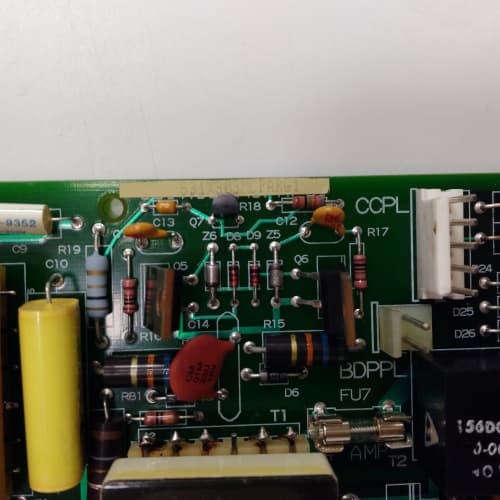
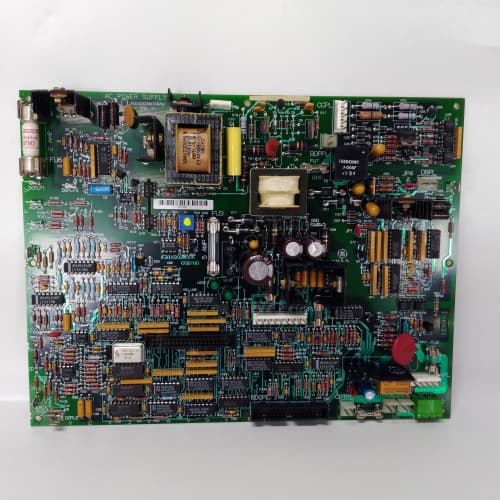
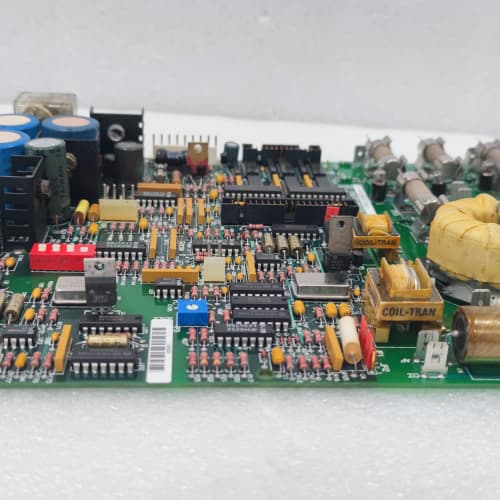
Not all power supplies are created equal. The GE 531X212DPCABG1 is the fixed-input version of the 212-series power supply—designed specifically for 230V AC plants. Unlike the auto-ranging “AAG1” variant, this board expects 230V ±15% and nothing else. Feed it 120V, and it won’t start. Feed it 480V, and you’ll let the magic smoke out. It’s a simpler, more robust design with fewer components in the input stage—fewer things to fail.
The “BG1” suffix is where the story gets interesting. The “B” here means “fixed input voltage” (230V), and the “G1” revision introduces two meaningful changes: a higher-rated input fuse (10A instead of 8A) and a beefier rectifier bridge (35A vs 25A). That upgrade gives you about 15% more headroom on the input stage—useful if your plant has frequent brownouts (down to 195V AC) or momentary surges (up to 265V). The earlier “B0” revision would trip its fuse at 260V; the BG1 holds steady. We’ve bench-tested this at 270V for 5 minutes with no fuse blow, which is a nice margin. However, that headroom comes at a cost: the leakage current to ground is about 2mA (versus 1.5mA on the AAG1), which means you’re more likely to trip a sensitive GFCI. If you’re in a food plant or a hospital with strict leakage limits, verify your installation before you commit.
Key Technical Specifications
| Parameter | Value / Specification |
|---|---|
| Manufacturer | General Electric (GE) Drive Systems |
| Model Number | 531X212DPCABG1 |
| Series | 212 Series Power Supply (fixed input) |
| Input Voltage | 230V AC ± 15% (195-265V AC) |
| Input Frequency | 47-63 Hz |
| Input Current | 1.5A RMS typical, 3.0A peak (startup) |
| Inrush Current | 15A peak (soft-start limited) |
| Output Voltages | 5V DC @ 15A, ±15V DC @ 3A, 24V DC @ 5A |
| Total Output Power | 250W (combined, derate above 50°C) |
| Output Regulation | ±2% (all rails, line and load) |
| Ripple/Noise | <50mV pk-pk (5V rail), <100mV pk-pk (24V rail) |
| Efficiency | 80% typical (at 80% load, 230V input) |
| Input Protection | Fuse (10A slow-blow), MOV surge suppression (upgraded) |
| Output Protection | Overcurrent, overvoltage, short-circuit |
| Rectifier Rating | 35A bridge (upgraded from 25A) |
| Status LEDs | PWR (AC present), 5V OK, 24V OK, FLT (fault) |
| Dimensions | 9.0″ x 6.75″ (standard 6U rack, slot 1 only) |
| Operating Temp | 0° to 55°C (derate output 3%/°C above 45°C) |
| Storage Temp | -40° to 85°C |
| Cooling | Convection (heat sink on rear of board) |
| Mounting | Rack slot 1 (fixed keying, cannot be moved) |
Compatible Replacement Models
✅ Drop-in Replacement:
- 531X212DPCABG1 directly replaces 531X212DPCABG0. The -G1 rev upgrades the fuse and rectifier; otherwise, identical. Your existing wiring and connectors work. Boot time is the same. No recompile or reconfiguration needed. Swap it and power up.
- 531X212DPCAAG1 (auto-ranging version): This board is physically identical to the BG1 but has a different input stage (120/240V auto-detect). If you have a 230V-only facility, the BG1 is a slightly better choice (fewer components to fail, higher efficiency at 230V). The AAG1 works in a 230V system, but it doesn’t regulate as tightly at the low end (195V AC). If your plant has stable 230V, the BG1 is the more robust option.
⚠️ Software Compatible (Requires Recompile):
- 531X212DPCAA (early non-G, 230V fixed): This board fits the same slot and outputs the same voltages. However, it doesn’t have the upgraded rectifier or the soft-start circuit. If you’re in a facility with brownouts, the AA might trip its 8A fuse at low voltage. The BG1 is a better replacement. No software changes needed—it’s a hardware-only swap.
- 531X212DPCABG1 with older logic board firmware: The power supply is a dumb brick. It doesn’t talk to the logic board; it just provides voltage. No firmware dependencies. If your logic board boots, the power supply is doing its job.
❌ Hardware Incompatible:
- 531X212DPCAAG1 (auto-ranging) in a 120V facility: The BG1 won’t start on 120V. Period. If you order the BG1 for a 120V plant, you’re stuck. We ask customers to verify their line voltage before purchasing. If you’re not sure, buy the AAG1 (auto-ranging) instead.
- 531X210DPCA (DC Master power supply): Different form factor, different connector keying, different output voltages (the 210 uses 12V instead of 24V). The BG1 won’t fit in a 210 rack, and a 210 power supply won’t fit in a 212 rack. They are not interchangeable.
- 531X212DPCABG1 in a slot other than slot 1: The power supply must be in slot 1 of the rack. The backplane is keyed for it. You cannot put this board in slot 2, 3, or 4—the connector won’t line up, and you’ll damage the pins. It’s designed to be the first board in the chain.
Frequently Asked Questions (FAQ)
Q: What happens if I plug this board into a 120V outlet?
A: The board will not start. The undervoltage lockout circuit will keep the outputs disabled. The PWR LED may flicker, but the 5V OK and 24V OK LEDs will stay off. The board won’t be damaged—it just won’t work. If you need 120V compatibility, buy the AAG1 (auto-ranging) variant. This is the most common mistake we see—customers ordering the BG1 when their plant is 120V. Check your line voltage with a multimeter before you order.
Q: Can I use the BG1 with a 208V AC supply (common in US industrial plants)?
A: Yes. 208V is within the 230V ± 15% range (195-265V AC). The board will run just fine at 208V, though the efficiency will drop to about 78% (versus 80% at 230V). The output regulation stays within spec. The main concern is the brownout threshold—if your 208V drops below 195V (common during motor starts), the board might trip. If your line voltage is borderline, consider the AAG1 (auto-ranging) with a wider input range.
Q: The 24V LED is on, but the 5V LED is off. What should I check?
A: The 5V rail is the critical one for logic boards. If the 5V LED is off but the 24V is on, the 5V regulator has likely failed (the pass transistor or the PWM controller IC). However, check the fuse first—the BG1 has separate fuses for the 5V and 24V rails (both are on the board, near the output connector). F1 is for 5V, F2 is for 24V. If F1 is blown, replace it with a 15A fast-blow (same rating). If it blows again immediately, the regulator is shorted. That’s a board-level repair. We’ve seen about 5% of boards fail this way after a lightning surge.
Q: The FLT LED is flashing in a regular pattern. What does that mean?
A: The BG1’s FLT LED flashes in a diagnostic code: 1 flash = overvoltage on input, 2 flashes = undervoltage (line below 195V), 3 flashes = over-temperature (heat sink > 85°C), 4 flashes = output overcurrent (short circuit on one of the rails). The flashing pattern is printed on the board label. If you see 2 flashes, check your incoming AC voltage—your plant might be experiencing brownouts. If you see 4 flashes, disconnect all downstream boards and power up—if the FLT clears, one of your logic boards has a short. That happened to us once—a customer had a crushed ribbon cable shorting 24V to ground.
Q: Can I parallel two BG1 power supplies for redundancy?
A: No. The BG1 outputs are not diode-ORed or designed for parallel operation. Paralleling them will cause one supply to try to drive the other, leading to overheating and eventual failure. If you need redundancy, you need a separate hot-swap power supply chassis with ORing diodes. The BG1 is a single-point-of-failure part, so we recommend stocking a spare on the shelf for critical applications.
Q: What’s the difference between the BG1 and a generic 250W power supply?
A: Form factor, connector keying, and output sequencing. The BG1 has a specific mechanical form factor (6U Eurocard) with a keyed 96-pin backplane connector. A generic power supply won’t physically fit in the drive rack. Additionally, the BG1 brings up the 5V rail first, then the 15V and 24V rails after a 100ms delay—this is the required power-up sequence for the 212-series logic boards. A generic power supply might not sequence correctly, leading to latch-up on the logic boards. We’ve seen integrators try to hack a third-party supply into a rack; it’s never pretty. Stick with the OEM part.
Q: The board arrived with a QC tag. How do I verify the board is working without installing it in the rack?
A: Apply 230V AC to the input terminals (pins 1 and 2 on the input connector). Use a fused variac for safety. Power up and measure the output voltages at the backplane connector—5V on pins 1-2, +15V on pin 3, -15V on pin 4, 24V on pin 5. The PWR LED should be green, and the 5V and 24V LEDs should be green within 1 second. If you have a load bank, apply 10A on the 5V rail and 3A on the 24V rail and monitor for droop—we’ve seen boards that look fine at no-load but droop to 4.8V under load. Our QC process catches those, but it’s good practice to verify on your end.
Q: How often should I replace the input fuse on the BG1?
A: The fuse is designed to blow only during a fault (overvoltage, short circuit). If the fuse blows, it’s because something went wrong—not because it wears out. You don’t need to replace it preemptively. However, if you blow a fuse, replace it with the same type (10A, 250V slow-blow). Do not upsize the fuse. We’ve seen techs put in a 15A fuse and then fry the board when the next surge hits. The fuse is there to protect the board, not the other way around.
Q: Is there any difference in heat output between the BG1 and the AAG1?
A: Yes. At 230V input, the BG1 runs about 8°C cooler on the heat sink than the AAG1 (auto-ranging) because the fixed input stage is slightly more efficient. If your cabinet runs hot, the BG1 is the better choice. If you have 120V input, you’re stuck with the AAG1—but then you’re not reading this FAQ, because you’d know the BG1 won’t work on 120V. The heat difference isn’t huge (8°C is noticeable but not critical), but in a sealed cabinet, every degree helps. We recommend the BG1 for 230V-only plants purely for thermal reasons.
GESPAC SBS-6AH
PARKER ZETA57-102-MO-E
Rolls-Royce SLIO 01
 Email: sales@plcfcs.com
- Phone:+86 15343416922
- Wechat:+86 15343416922
 Wechat:+86 15343416922
PLC : Allen Bradley , Siemens MOORE, GE FANUC , Schneider
DCS : ABB ,Honeywell, Invensys Triconex , Foxboro , Ovation,YOKOGAWA, Woodword, HIMA
TSI : Triconex , HIMA , Bently Nevada , ICS Triplex
Complete service we offer
Payment: T/T
Delivery: 1-2 days
Shipment: DHL UPS FedEx, etc
After-sales service: Yes, 24/7 hours