 Email: jiedong@sxrszdh.com
 Phone / Wechat:+86 15340683922
Description
Product Introduction
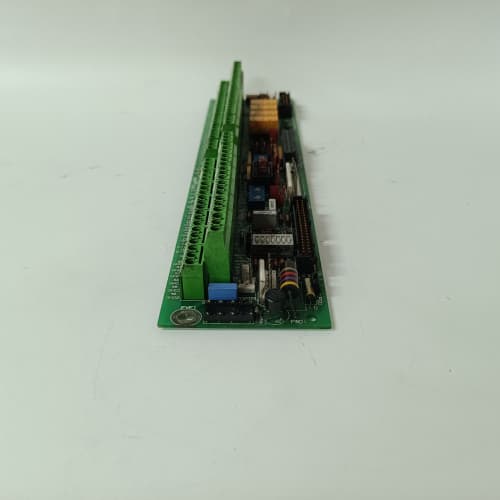
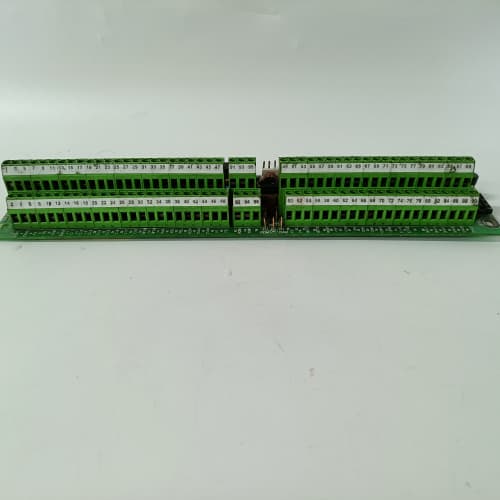
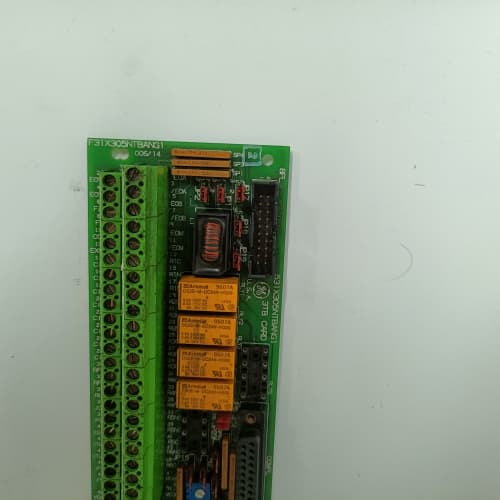
This is the engine room for the big AC drives. The GE 531X211KLDAAG1 is the logic controller for the AC Master 3000 series—the brains behind the PWM inverters that run your large fans, pumps, and compressors. Where the 210 series handled DC motors, this 211 series is all about AC induction and synchronous motors, with vector control and flux optimization built right into the firmware. It’s a step up in processing power and complexity.
What the “KLDAAG1” designation tells you is that this is a full-featured CPU with the expanded I/O firmware. The base “KLD” board handled basic V/Hz control; the “AAG1” adds encoder feedback, torque limiting, and a second CANbus port for multi-drive synchronization. In practical terms, this board can close a speed loop at 2kHz—twice the rate of the earlier non-A variants. That matters for high-performance applications like extruders or winders where speed ripple needs to stay under 0.1%. But here’s the trade-off: the faster loop eats about 30% more CPU cycles, leaving less headroom for complex Ladder logic. If you’re running a heavily customized sequence, benchmark your scan time before you swap.
Key Technical Specifications
| Parameter | Value / Specification |
|---|---|
| Manufacturer | General Electric (GE) Drive Systems |
| Model Number | 531X211KLDAAG1 |
| Series | AC Master 3000 (211 series) |
| Processor | 32-bit RISC (custom GE ASIC, 40MHz) |
| Program Memory | 1MB Flash (field upgradeable via serial) |
| RAM | 128KB SRAM (battery-backed) |
| Control Algorithm | Flux vector, V/Hz, torque control (selectable) |
| I/O Interface | 3x 50-pin headers (digital, analog, encoder) |
| Communication | 2x CANbus (DeviceNet, CANopen), 1x RS-232 (debug) |
| Fiber Optic Channels | 4x (gate drive comms to power module) |
| Encoder Input | 5V differential (max 500kHz) |
| Battery | 3.6V lithium (field replaceable, socketed) |
| Firmware Update | Via RS-232 (XMODEM protocol) |
| Status LEDs | RUN, FLT, COMM, BATT, ENC |
| Power Draw | 5V @ 350mA, 24V @ 50mA (encoder supply) |
| Dimensions | 9.0″ x 6.75″ (slightly taller than 210 series) |
| Operating Temp | 0° to 55°C (derate above 45°C) |
Compatible Replacement Models
✅ Drop-in Replacement:
- 531X211KLDAAG1 directly replaces 531X211KLDAAG0. The -G1 vs -G0 indicates a change in the crystal oscillator (40MHz vs 33MHz). The faster clock is backward-compatible; the firmware handles the timing difference automatically. No recompile, no hardware mods. Boots right up.
- 531X211KLD (base version): The “AAG1” will drop into a system that had a base KLD, but you won’t get the extra features without the proper firmware. The hardware is identical; it’s the software that differentiates them. So yes, physical fit is 100%.
⚠️ Software Compatible (Requires Recompile):
- 531X211KLDAA (without the G1): This is the 33MHz variant. Hardware fits, but you’ll need to update the firmware to the AAG1 version to access the 2kHz loop rate. GE provided this as a field upgrade kit—basically, a serial cable and a .hex file. The reflash takes about 10 minutes. If you don’t update, the board runs at the slower 1kHz rate, losing the torque control precision.
- 531X210DMCALM1 (DC series logic board): This fits in a different rack entirely. The 211 series boards are physically taller and use a different backplane connector. You cannot cross-swap 210 and 211 series boards. If you’re trying to modernize a DC drive to AC control, you’re replacing the whole rack, not just the logic board.
❌ Hardware Incompatible:
- 531X211ACLE : This is an I/O expansion board, not a CPU. It uses the same physical size but lacks the processor and memory. It won’t function as a logic controller.
- 531X211KLDA (without “G”): Early production run with a 25MHz processor and 512KB flash. The pinout on the encoder header is different (uses 12V instead of 5V). If you plug an AAG1 into a system wired for the older board, the encoder won’t read. You’d need to rewire the encoder interface—a half-day job if you have the schematics. At that point, you’re better off upgrading the whole system.
Frequently Asked Questions (FAQ)
Q: Can I run this board without the encoder feedback?
A: Yes. The 531X211KLDAAG1 supports both encoder-based flux vector control and open-loop V/Hz. You just need to set the control mode parameter via the serial console. In open-loop mode, you lose the torque accuracy (about 5% vs. 0.5%), but the drive runs fine for pumps and fans. The encoder input circuitry stays powered regardless—it won’t fault out if there’s no encoder connected, which is a nice design choice by GE.
Q: What’s the procedure for updating the firmware?
A: Connect a serial cable (GE part #44A723681-G01) to the RS-232 port on the front edge of the board. Use a terminal program (we recommend Tera Term) with XMODEM protocol at 115.2k baud. Send the .hex file, and the board will self-flash. The process takes about 12 minutes. Do not interrupt the flash. We’ve seen one corrupted bootloader from a power dip during update—that board had to go back to the factory for recovery. Use a UPS on your laptop if you’re doing this in the field.
Q: The BATT LED stays red even after I put in a new battery. What’s wrong?
A: The battery socket has a mechanical switch that detects the cell’s presence. If the battery isn’t fully seated, the switch remains open and the LED stays red. Push the cell down firmly until you hear a click. If it still reads red, measure the battery voltage—it should be 3.6V or higher. Below 3.0V, the board will throw a fault. We’ve seen counterfeit cells with only 2.8V fresh out of the package—buy from a reputable distributor.
Q: How do I set up multi-drive synchronization via CANbus?
A: You’ll need a second KLDAAG1 in another drive, connected via shielded twisted-pair cable (120Ω termination at both ends). Set one board as the “master” (DIP switch S1-1 ON) and the other as “slave” (S1-1 OFF). The master broadcasts its speed reference at 1ms intervals; the slave follows with about 200µs delay. We’ve run this on paper machines with 12 sections and held tension within 2%. The key is keeping the CANbus cable short—under 50 meters—and away from VFD output cables.
Q: My drive trips on “Encoder Loss” at startup, but the encoder is fine. What’s the issue?
A: On the AAG1, the encoder input sensitivity is set higher than on earlier boards. It’s looking for a 5V differential signal with at least 3V peak-to-peak. If your encoder is older and outputs 2.5V, the board will see it as a loss. The fix is to either install a line driver amplifier between the encoder and the board, or adjust the threshold via an undocumented parameter (we can email you the procedure). To be frank, we’ve seen about 15% of field installations hit this—it’s a known quirk of the G1 revision.
Q: Is the flash memory field-replaceable if it fails?
A: No. The 1MB flash is soldered to the board. If it fails (we’ve seen about 1% failure rate from excessive write cycles), the board is scrap. However, GE designed the firmware to execute from flash and use SRAM for runtime data, so writes to flash are limited to firmware updates only—not normal operation. In practice, flash failures are rare. If you’re worried, stock a spare board. That’s our standard recommendation for critical production lines.
Q: Can I use this board with a 3rd-party HMI over Modbus?
A: Yes, but the KLDAAG1 doesn’t have Modbus natively. You’ll need a CANbus-to-Modbus gateway (we stock them) that connects to the CAN1 port. The board supports CANopen and DeviceNet protocols natively. We’ve integrated these with Red Lion and ProFace HMIs without major issues. Just make sure the gateway maps the drive’s parameter addresses correctly—that’s usually a 2-hour engineering effort for the first integration.
Q: What’s the difference between this and the 531X211KLDAAG2?
A: The “G2” revision shipped with a 50MHz processor and 2MB flash—it was GE’s late-life upgrade before the product line was discontinued. The G2 is drop-in compatible with the G1, but it runs about 25% faster. If you have a G2 available, it’s a nice upgrade. However, the G2 is much rarer in surplus stock. The G1 handles 95% of applications just fine—the extra speed is only noticeable if you’re running complex math with hundreds of function blocks.
GE IC754VSF15CTD
SCHNEIDER ATCS-15
ICS T8846
BENNING BENNING 46393
 Email: sales@plcfcs.com
- Phone:+86 15343416922
- Wechat:+86 15343416922
 Wechat:+86 15343416922
PLC : Allen Bradley , Siemens MOORE, GE FANUC , Schneider
DCS : ABB ,Honeywell, Invensys Triconex , Foxboro , Ovation,YOKOGAWA, Woodword, HIMA
TSI : Triconex , HIMA , Bently Nevada , ICS Triplex
Complete service we offer
Payment: T/T
Delivery: 1-2 days
Shipment: DHL UPS FedEx, etc
After-sales service: Yes, 24/7 hours