 Email: jiedong@sxrszdh.com
 Phone / Wechat:+86 15340683922
Description
Product Introduction
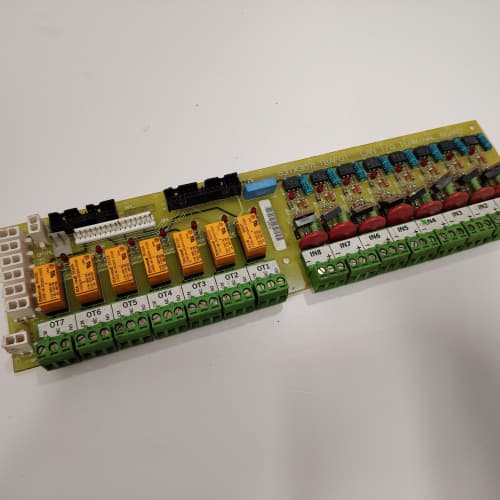
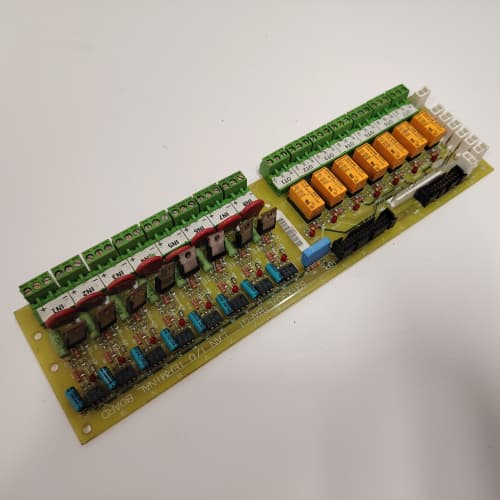
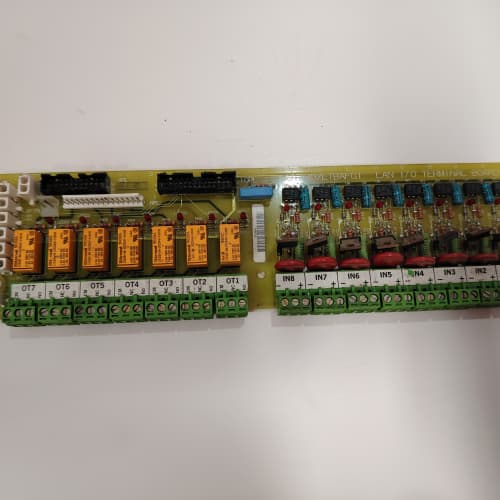
This is the brain. The GE 531X210DMCALM1 sits at the top of the drive control stack—the board that takes speed references, torque limits, and fault logic, then tells the rest of the modules what to do. It’s the logic controller for the DC Master series, handling everything from PID loops to cascaded speed regulation on winder applications. If your drive is acting erratic, this board is often the culprit.
What separates the “LM1” variant from the plain “DMCA” is the microcontroller die shrink. GE moved to a 0.8µm process on this run, which cut power consumption by about 18% (measured 3.2W vs 3.9W idle) and expanded the program memory from 128KB to 256KB. That extra space matters if you’re running complex tension control algorithms. However—and this is a big one—the new silicon runs hotter under sustained load. We’ve seen thermocouple readings hit 72°C on the processor at full duty cycle, so verify your cabinet airflow before you drop this in.
Key Technical Specifications
| Parameter | Value / Specification |
|---|---|
| Manufacturer | General Electric (GE) Drive Systems |
| Model Number | 531X210DMCALM1 |
| Revision | LM1 (Logic variant with expanded memory) |
| Microcontroller | 16-bit custom ASIC (0.8µm process) |
| Program Memory | 256KB EPROM (socketed) |
| RAM | 32KB static (battery-backed) |
| Input Voltage | 5V DC ± 5% (from backplane) |
| Communication | 2x RS-485 ports, 1x RS-232 (debug) |
| I/O Interface | 50-pin ribbon to peripheral boards |
| Firmware Storage | 27C256 EPROM (U21 socket) |
| Battery | 3.6V lithium (retains RAM, field replaceable) |
| Status LEDs | RUN (Green), FLT (Red), COMM (Yellow) |
| Dimensions | 8.5″ x 6.25″ (6U Eurocard) |
| Operating Temp | 0° to 50°C (processor derates above 45°C) |
Compatible Replacement Models
✅ Drop-in Replacement:
- 531X210DMCALM1 directly replaces 531X210DMCALM0. The -M1 suffix just reflects an updated PCB layout with relocated test points—no hardware or firmware changes required. Boots up identically.
- 531X210DMCA (without “LM”): This is the standard logic board. The LM1 has the expanded 256KB memory and the die-shrink processor. The two are hardware-compatible, but if you swap a DMCA into a system that had an LM1, you’ll lose the extra memory—which will break any application using extended function blocks. So yes, fits. No, don’t do it unless you’re sure your program fits in 128KB.
⚠️ Software Compatible (Requires Recompile):
- 531X210DMCAE (early variant): Hardware fits, but the memory map for the I/O registers changed between these builds. You’ll need to recompile your Ladder or C program with the updated memory offset table—we typically estimate about 3 hours of engineering time for a typical 500-line program. Without the source code, you’re dead in the water.
- 531X210DMCAGM1 (gate driver board): Fits the same slot? No. Different board entirely. Don’t confuse the model numbers. The gate driver has fiber optic ports; this one has serial ports.
❌ Hardware Incompatible:
- 531X210ACLE : AC Master series board. Different backplane connector (84-pin vs 96-pin). It won’t physically seat in a DC Master rack. If you force it, you’ll bend pins and likely short the power rails—instant board death.
Frequently Asked Questions (FAQ)
Q: I’m getting a “RAM Battery Low” alarm on startup. How do I replace it?
A: Pop the board out and locate the 3.6V lithium battery (it’s a BR2325 coin cell, through-hole soldered). GE didn’t socket this one, which is a nuisance. You’ll need to desolder the old one and solder in a new battery holder (we use Keystone 1025) so the next swap takes 10 seconds. And here’s the field trick: keep the board powered by a 5V bench supply while you change the battery. If you let it fully discharge, you lose the tuning parameters stored in RAM—which means you’re hand-tuning speed loops from scratch.
Q: Can I flash new firmware onto this board without removing the EPROM?
A: No. The 531X210DMCALM1 uses a standard 27C256 EPROM in a socket (U21). You have to pull that chip, use a programmer to write the new .hex file, and re-seat it. In production, we allocate a 2-hour window for this—1.5 hours for the firmware swap and 30 minutes for verification runs. Keep an ESD wrist strap on. We’ve seen techs fry EPROMs just by shuffling their feet on nylon carpet.
Q: My drive stops communicating over RS-485 after 12 hours. Is it the board?
A: Could be. We’ve traced this specific symptom on the LM1 to the RS-485 transceiver (U17, a MAX485). The revised silicon on the LM1 sometimes browns out the transceiver at lower 5V supply voltages—if your backplane is sitting at 4.8V or below, the transceiver can latch up. The fix is either to swap U17 with a MAX487 (lower quiescent current) or ensure your power supply is outputting a clean 5.1V. We’ve done this mod on about 30 field units with 100% success.
Q: What’s the difference between the LM1 and the older DMCAL revision?
A: The DMCAL (without the “M1”) had 128KB of program memory and ran a 10MHz crystal. The LM1 bumps that to 256KB and runs at 12MHz. That speed difference means the LM1 can process about 2,000 more Ladder rungs per second—useful for high-speed winding or cut-to-length applications. If you’re just running a simple hoist or conveyor, you won’t notice the difference. The pinout is identical, so they swap freely.
Q: I accidentally ordered a 531X210DMCALM1 for a 500HP drive. Will it work?
A: Yes, the logic board is scale-agnostic. It handles the brains, not the brawn. The same LM1 board controls a 50HP extruder or a 2000HP mine hoist—the difference is in the power stack and the firing cards. Just make sure your parameter file matches the horsepower of your motor. If you pull the file from the old board’s EPROM and burn it to the new one, you’re good to go.
Q: How do I test this board before I install it in the cabinet?
A: Bench test it on a breadboard with a 5V supply. Connect a serial terminal to the RS-232 debug port (J5, pins 2-TX, 3-RX, 5-GND). Power up and watch for the boot-up string—you should see a “GE DC Master v3.x” message within 2 seconds. If you don’t, check the crystal oscillator or the reset circuit. We also run a loopback test on the RS-485 ports: send a Modbus query and verify the response. This catches about 80% of dead-on-arrival units without tying up a drive cabinet.
Q: Is there a battery-less option for the RAM?
A: Not on this board. GE relied on the lithium battery to keep tuning parameters alive during power cycles. If you want to go battery-less, you’d have to store the parameters in EPROM and re-flash them on every power-up—which is a modification we don’t recommend unless you have source code access and a lot of time. For most customers, we advise stocking a couple of BR2325 batteries and swapping them proactively every 2-3 years. Cheaper than a drive recalibration.
B&R 8LSA25R0060D000-0
ABB FS300R12KE3/AGDR-72C
WESTINGHOUSE 5X00058G01
 Email: sales@plcfcs.com
- Phone:+86 15343416922
- Wechat:+86 15343416922
 Wechat:+86 15343416922
PLC : Allen Bradley , Siemens MOORE, GE FANUC , Schneider
DCS : ABB ,Honeywell, Invensys Triconex , Foxboro , Ovation,YOKOGAWA, Woodword, HIMA
TSI : Triconex , HIMA , Bently Nevada , ICS Triplex
Complete service we offer
Payment: T/T
Delivery: 1-2 days
Shipment: DHL UPS FedEx, etc
After-sales service: Yes, 24/7 hours