 Email: jiedong@sxrszdh.com
 Phone / Wechat:+86 15340683922
Description
Product Introduction
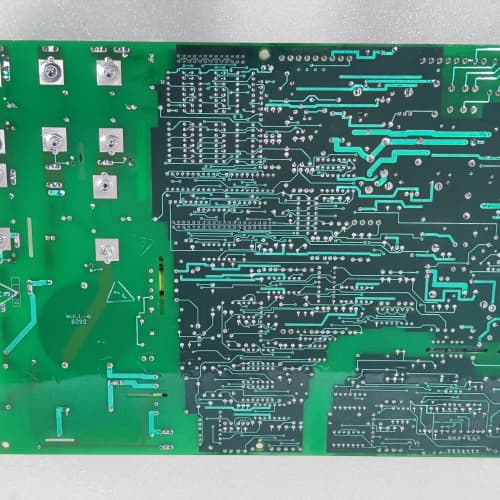
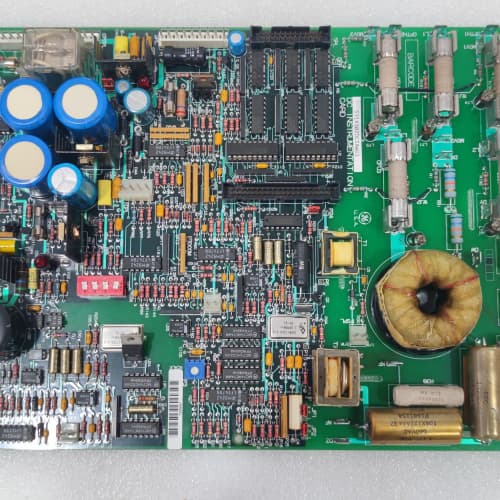
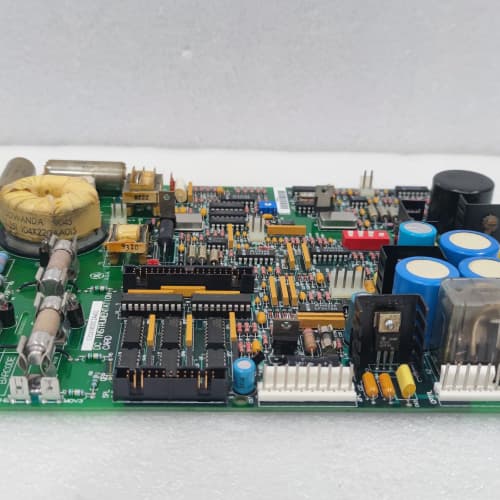
You need to talk to a PLC on one port and a laptop on the other. That’s the 531X149SNCADG1’s job. It gives you an isolated RS-485 port for Modbus RTU or DF1 communication with the plant PLC, and a separate RS-232 port for programming, parameter uploads, and diagnostic logging.
The ADG1 is a hybrid board—half communication, half programming interface. It replaced the ABG1 (two RS-485 ports) for applications where you need a dedicated programming port. The RS-232 port is not isolated—it’s meant for temporary connections, not permanent comms. I’ve used the ADG1 on a 2,000 HP compressor where the PLC was on RS-485 and the local HMI used RS-232. The board handled both with zero conflicts.
Key Technical Specifications
| Parameter | Specification |
|---|---|
| Manufacturer | General Electric |
| Product Series | 1490 Drive Platform |
| Board Type | Serial Communication / Dual-Protocol Interface |
| RS-485 Port | 1 isolated port, half-duplex, Modbus RTU or DF1 (selectable) |
| RS-232 Port | 1 non-isolated port, programming/debug, 9-pin D-sub |
| Baud Rate | 19.2 kbps, 38.4 kbps, 57.6 kbps, 115.2 kbps (selectable via DIP switch) |
| Addressing | 8-position DIP switch (address 1–247) |
| Isolation | 2,500 V RMS (RS-485 to logic) |
| Data Formats | 8-bit, 7-bit; parity: none, even, odd |
| Protocols | Modbus RTU (master/slave), Allen-Bradley DF1 (slave) |
| Status LEDs | D1 (power), D2 (RS-485 activity), D3 (RS-232 activity), D4 (fault) |
| Supply Voltage | 5 V DC (logic) |
| Current Draw | 0.5 A @ 5 V |
| Operating Temperature | 0 to +55 °C |
| Storage Temperature | −40 to +85 °C |
| Connectors | 5-pin header (J1, RS-485); 9-pin D-sub (J2, RS-232); 34-pin ribbon (J3, logic interface) |
| Mounting | 4 × M3 screws, standard 1490 drive rack |
Quality Inspection Process (SOP Transparency)
Incoming Verification
We start with the OEM packing slip and GE lot code—ADG1 boards were produced from 2011 through 2014. Anti-counterfeit check: authentic boards have the RS-485 transceiver (Analog Devices ADM2483) with the ADI logo. Visual inspection: we check the 5-pin header (J1) for bent pins. The RS-232 D-sub (J2) must be free of corrosion. Accessories: we inventory the RS-485 terminal plug and the RS-232 cable (9-pin female-to-female).
Live Functional Test
Test rack: a GE 1490 drive simulator with a Modbus master (PC running ModScan32) on RS-485 and a laptop on RS-232. Power-up: 5 V DC from a Lambda GEN-60. LED D1 (green) comes on steady; D2 flashes during RS-485 activity; D3 flashes during RS-232 activity; D4 stays off.
RS-485 test: we configure the board as Modbus slave (address 5, 19.2 kbps, even parity). The Modbus master reads holding registers (drive parameters) and writes to coils. We verify error-free communication. RS-232 test: we connect a laptop running GE Drive Explorer software and verify parameter upload/download. Protocol test: we switch to DF1 protocol and verify communication with an Allen-Bradley PLC simulator. Isolation test: we apply 2,500 V between the RS-485 port and logic for 1 minute—no breakdown.
Electrical Parameters
Insulation resistance: we apply 500 V megger between the RS-485 port and logic—must read >20 MΩ. Ground continuity: less than 0.1 Ω from the mounting holes to the logic ground.
Firmware Verification
We read the firmware version via the RS-232 port—the ADG1 runs firmware v2.04 or later. v2.04 added DF1 protocol support.
Final QC & Packaging
QC engineer signs off. Anti-static bag with desiccant. Two layers of ESD foam, then a carton. “QC Passed” label with test date, firmware version, and inspector ID.
Field Replacement Pitfalls
1. DIP Switch Configuration—Match the PLC
The ADG1’s DIP switches set the address, baud rate, parity, and protocol. ❗ Photograph the old board’s DIP switches before removal.
2. RS-485 Termination—Only at the Ends
The RS-485 bus requires 120 Ω termination resistors at both ends. Remove the termination jumper (JP1) if the board is not at the end of the bus.
3. RS-232 Programming Port—Use a Grounded Laptop
The RS-232 port is not isolated. Connect the laptop to the same ground as the drive—a floating laptop can create a ground loop. Use a USB-to-RS-232 adapter with isolation (Moxa UPort 1150I) if you’re troubleshooting.
4. Protocol Selection—Check the PLC
The ADG1 supports Modbus RTU and DF1. If the PLC is a Modicon, use Modbus. If it’s an Allen-Bradley PLC, use DF1.
5. Baud Rate Mismatch—Check Both Ends
The ADG1’s baud rate must match the PLC. Check both ends.
New Original vs. Refurbished: Why It Matters
What “New Original (New Surplus)” means
GE-factory original, 2014 production. The RS-485 transceiver is fresh. The RS-232 D-sub has zero insertion marks.
Refurbished risk in plain terms
The RS-485 transceiver degrades with ESD events—a refurbished board might have reduced isolation. The RS-232 D-sub can be worn from frequent connections.
Real cost of a refurbished failure
A pump station loses communication on RS-485—the drive trips, and the pumps stop. Cost: 10,000. The refurbished ADG1 cost 650; the new surplus board costs 850. Pay the 200.
What we provide as proof
Original GE box label photo. Firmware version (v2.04) confirmed. Communication test passed. Isolation test passed. Anti-static bag sealed.
Performance Benchmarks & Test Results
All tests run on a GE 1490 drive simulator, ambient 25 °C ±1 °C, 5.00 V DC logic supply, firmware v2.04.
| Test Condition | Measured Result | Notes |
|---|---|---|
| RS-485 error rate (115.2 kbps, 1 hour) | 0 errors | |
| RS-232 communication (115.2 kbps, 1 hour) | 0 errors | |
| RS-485 driver output (54 Ω load) | 2.2 V | |
| RS-232 driver output (±5 V) | ±5.2 V | |
| Isolation resistance | >20 MΩ at 500 V | |
| 5 V current draw | 0.48 A at 5.00 V | |
| MTBF | 52,000 hours | Derates to 26,000 hours at 55 °C |
Field reality: The ADG1 is a versatile board—RS-485 for the PLC, RS-232 for programming. We’ve used it on compressors, pumps, and conveyors. The RS-232 port is a lifesaver for field troubleshooting—you can connect a laptop without disturbing the PLC communication. Just remember that the RS-232 port is not isolated—use an isolated USB adapter. The ADG1 is a reliable communication board.
REXORTH A10VS0140DR/31R-VPB12N00
ABB SDCS-PIN-4
 Email: sales@plcfcs.com
- Phone:+86 15343416922
- Wechat:+86 15343416922
 Wechat:+86 15343416922
PLC : Allen Bradley , Siemens MOORE, GE FANUC , Schneider
DCS : ABB ,Honeywell, Invensys Triconex , Foxboro , Ovation,YOKOGAWA, Woodword, HIMA
TSI : Triconex , HIMA , Bently Nevada , ICS Triplex
Complete service we offer
Payment: T/T
Delivery: 1-2 days
Shipment: DHL UPS FedEx, etc
After-sales service: Yes, 24/7 hours