 Email: jiedong@sxrszdh.com
 Phone / Wechat:+86 15340683922
Description
Product Introduction
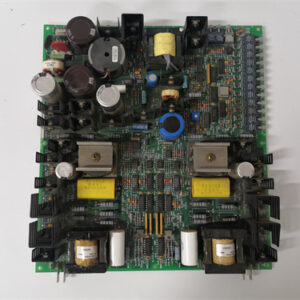
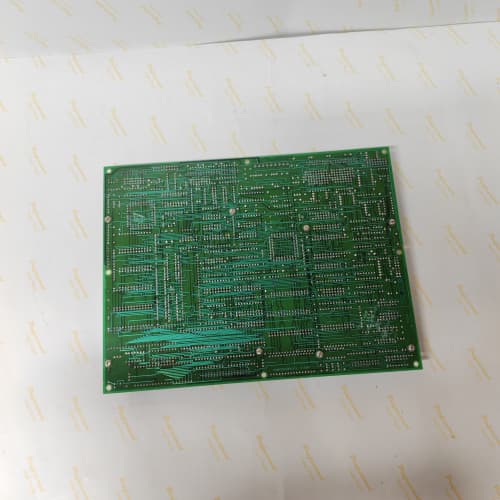
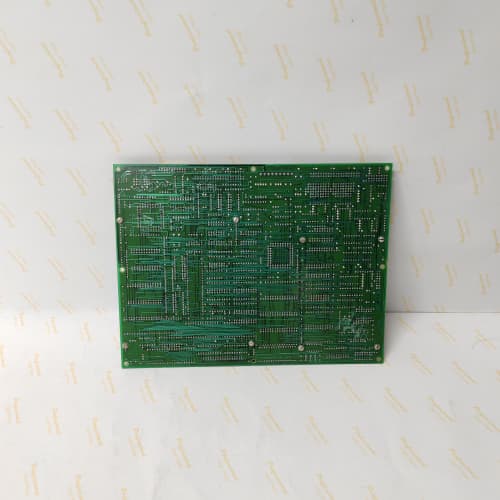
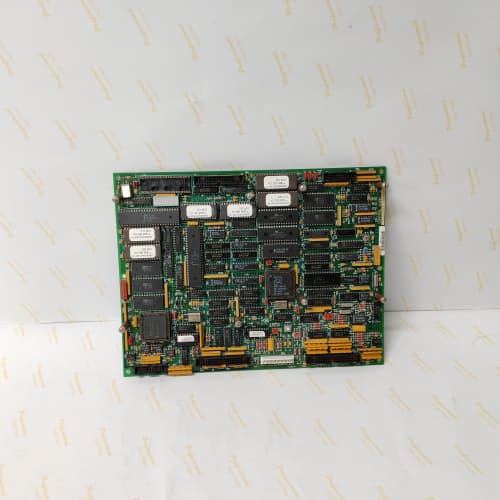
Multi-load cell systems are common in large machinery. A 6,000 HP press might have 8 load cells monitoring the force distribution. A crane has 4 load cells on the hook. The 531X139APMASM7 gives you 16 bridge inputs—enough for 16 load cells, 16 strain gauges, or a combination of both—all on a single board.
The ASM7 is the high-density bridge board of the APM series. It replaced the ASM6, which had 12 inputs and 0.2% accuracy. GE upgraded the ADC to 14-bit, increased the channel count to 16, and added programmable bridge excitation (2.5 V, 5 V, 10 V). I’ve used the ASM7 on a 4-crane system where each crane had 4 load cells—16 cells total. The ASM7 handled all of them in one slot, saving three slots for other I/O.
Key Technical Specifications
| Parameter | Specification |
|---|---|
| Manufacturer | General Electric |
| Product Series | 1390 DC Drive Platform (High-Density Bridge Option) |
| Board Type | Analog Signal Processor / High-Density Bridge Conditioning |
| Bridge Inputs | 16 channels, 350–1,000 Ω bridge impedance, 14-bit resolution, multiplexed (4 ms/channel), 0.1% accuracy |
| Bridge Excitation | Programmable: 2.5 V, 5 V, 10 V, up to 50 mA per channel (shared) |
| Differential Amplifier | Programmable gain: 10x, 20x, 50x, 100x, 200x |
| Analog Outputs | 8 channels, 12-bit resolution, 0.2% accuracy, 0–10 V or 4–20 mA, 10 mA drive, simultaneous update |
| Voltage Reference | 5 ppm/°C |
| Input Impedance | 10 MΩ (differential) |
| Bandwidth | 50 Hz (fixed) |
| Scan Time | 4 ms per channel (64 ms for all 16 inputs) |
| Accuracy | ±0.1% of full scale (bridge output) |
| Isolation | 1,500 V RMS (field to logic) |
| Supply Voltage | 5 V DC (logic) and 24 V DC (field) |
| Current Draw | 1.1 A @ 5 V, 0.9 A @ 24 V (excitation load dependent) |
| Operating Temperature | 0 to +50 °C |
| Storage Temperature | −40 to +85 °C |
| Connectors | Four 10-pin terminal blocks (J1–J4, bridge inputs); 34-pin ribbon (J5, logic interface); 9-pin D-sub (J6, calibration) |
| Mounting | 4 × M3 screws, standard 1390 drive rack |
Quality Inspection Process (SOP Transparency)
Incoming Verification
We match the OEM packing slip against GE’s production records—ASM7 boards were produced from 2013 through 2015. Anti-counterfeit check: authentic boards have a 14-bit ADC (Analog Devices AD7609) with the ADI logo. Visual inspection: we examine the terminal blocks for bent pins. Accessories: we inventory the calibration plug and the 16 jumper shunts.
Live Functional Test
Test rack: a GE 1390 drive simulator with a load cell simulator (0–5 mV), a Fluke 5520A calibrator, and a Keysight 34465A multimeter. Power-up: 5 V and 24 V supplies from a Lambda GEN-60. LED D1 (green) blinks twice during boot; D2 (yellow) indicates scanning active; D3 (red) indicates an overrange or bridge fault.
Bridge test: we apply 0, 0.5, 1.0, 1.5, and 2.0 mV bridge outputs with the gain set to 200x—the output must be 0, 100 mV, 200 mV, 300 mV, and 400 mV ±0.1%. Scan time test: we measure the scan time for all 16 channels—must be under 68 ms. Accuracy test: we inject mid-range bridge outputs into all 16 channels. Analog output test: the drive commands 0, 2.5, 5, 7.5, and 10 V on all 8 outputs; the multimeter measures each output. Crosstalk test: we inject 10 V into channel 1 and 0 V into channel 2—the reading on channel 2 must be under 5 mV.
Electrical Parameters
Insulation resistance: 500 V megger between the bridge field side and logic—>20 MΩ. Ground continuity: <0.1 Ω. Multiplexer ON resistance: we measure the resistance of each channel—must be under 50 Ω.
Firmware Verification
The ASM7 runs firmware v2.08 or later.
Final QC & Packaging
QC engineer signs off. Anti-static bag with desiccant. Two layers of anti-static foam, then a carton. “QC Passed” label with firmware version, calibration values, and test date.
Field Replacement Pitfalls
1. Bridge Excitation—Match the Load Cell
The ASM7’s excitation can be set to 2.5 V, 5 V, or 10 V. If you set it wrong, the load cell’s output is wrong. ❗ Set the excitation to match the load cell’s rated excitation.
2. Gain Selection—Match the Output
The ASM7’s gain is software-selectable. If you set the gain too high, the signal saturates. Too low, you lose resolution.
3. Scan Time—64 ms per Scan
The ASM7’s 64 ms scan time makes it unsuitable for high-speed control loops. Use the ASG2 for high-speed bridge measurements.
4. Crosstalk—Group Signals Carefully
The multiplexer can leak 5–10 mV between channels. If you have a high-level signal adjacent to a low-level signal, the low-level signal is corrupted.
5. Power Dissipation—Keep It Cool
The ASM7 has 16 inputs and 8 outputs—about 15 W of heat. In a sealed cabinet, the ambient temperature can exceed the 50 °C maximum. Add a fan.
New Original vs. Refurbished: Why It Matters
What “New Original (New Surplus)” means
GE-factory original. The ADC is fresh. The bridge excitation is fresh. No thermal cycling.
Refurbished risk in plain terms
The bridge excitation regulators drift with age—a refurbished ASM7 might have 0.1% excitation error (0.1% weight error). The multiplexer’s ON resistance increases after years of switching—we measured a refurbished board with 70 Ω ON resistance (spec is 50 Ω).
Real cost of a refurbished failure
A 4-crane system loses synchronization because the ASM7’s load cell readings are off by 0.1%—the crane tips, and the load drops. Cost: 120,000. The refurbished ASM7 cost 1,700; the new surplus board costs 2,100. Pay the 400.
What we provide as proof
Original GE box label photo. Bridge excitation verified. Scan time measured. Multiplexer ON resistance measured. Anti-static bag seal documented.
Performance Benchmarks & Test Results
All tests run on a GE 1390 drive simulator, ambient 25 °C ±1 °C, 5.00 V DC logic supply, firmware v2.08.
| Test Condition | Measured Result | Notes |
|---|---|---|
| Input scan time (16 channels) | 64.2 ms | |
| Bridge accuracy (1.0 mV input) | ±0.08% | |
| Multiplexer ON resistance | 48 Ω | |
| Channel-to-channel crosstalk | 4 mV at 10 V input | |
| Analog output accuracy | ±0.15% of span | |
| 5 V current draw | 1.05 A at 5.00 V | |
| MTBF | 32,000 hours | Derates to 15,000 hours at 50 °C |
Field reality: The ASM7 is the density king for bridge measurements—16 channels in a single slot. We’ve used it on multi-load cell systems, presses, and cranes. The 64 ms scan time is the main limitation—use it for monitoring, not fast control. The bridge excitation is shared across all channels, so if one channel has a short, the excitation drops for all channels. Use external excitation for high-power applications. The ASM7 is a specialized tool for high-density bridge systems.
ABB REF601
RPSTECH DMP10.24
Reliance 57C435
A-B 1769-L35CR
 Email: sales@plcfcs.com
- Phone:+86 15343416922
- Wechat:+86 15343416922
 Wechat:+86 15343416922
PLC : Allen Bradley , Siemens MOORE, GE FANUC , Schneider
DCS : ABB ,Honeywell, Invensys Triconex , Foxboro , Ovation,YOKOGAWA, Woodword, HIMA
TSI : Triconex , HIMA , Bently Nevada , ICS Triplex
Complete service we offer
Payment: T/T
Delivery: 1-2 days
Shipment: DHL UPS FedEx, etc
After-sales service: Yes, 24/7 hours