 Email: jiedong@sxrszdh.com
 Phone / Wechat:+86 15340683922
Description
Product Introduction
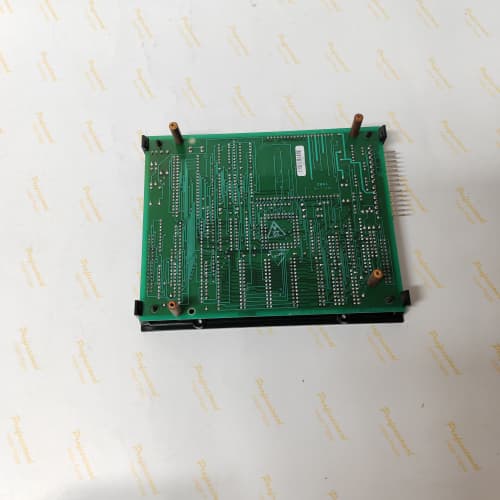
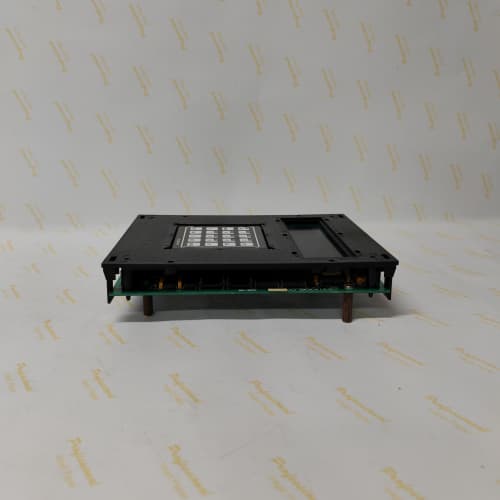
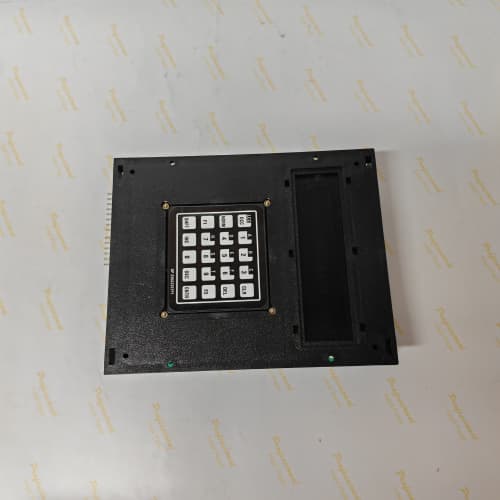
DC drives often have tachometers that output ±100 V or more. Older shunts and Hall-effect sensors can output 50 V signals. You can’t feed that into a 5 V ADC. The 531X139APMAHG2 takes those high-voltage signals, divides them down with precision resistors, and presents them as clean 0–10 V signals to the drive’s master processor.
The AHG2 is the high-voltage input board in the APM series. The earlier AHG1 had a fixed 10x divider. The AHG2 has a programmable divider (10x, 20x, or 50x) via an on-board DIP switch. Why does that matter? Because a 10x divider drops a 100 V input to 10 V. A 50x divider drops a 250 V input to 5 V—but the AHG2 is only rated for 100 V, so use the 10x. I’ve seen sites hook up a 200 V tachometer to a standard analog board and fry the input. The AHG2’s 100 V rating gives you a safety margin that the standard boards lack.
Key Technical Specifications
| Parameter | Specification |
|---|---|
| Manufacturer | General Electric |
| Product Series | 1390 DC Drive Platform (High-Voltage Option) |
| Board Type | Analog Signal Processor / High-Voltage Conditioning |
| Analog Inputs | 8 channels, ±100 V DC max, 12-bit resolution, 0.2% accuracy, DIP-switch selectable divider (10x, 20x, 50x) |
| Analog Outputs | 4 channels, 10-bit resolution, 0–10 V, 10 mA drive |
| Input Impedance | 1 MΩ (voltage, divider bypass), 10 MΩ (with 10x divider) |
| Bandwidth | 200 Hz (fixed) |
| Divider Accuracy | ±0.1% (resistor divider) |
| Common-Mode Range | ±100 V (input to ground) |
| Accuracy | ±0.2% of full scale (voltage) |
| Isolation | 1,500 V RMS (field to logic) |
| Supply Voltage | 5 V DC (logic) and 24 V DC (field) |
| Current Draw | 0.6 A @ 5 V, 0.4 A @ 24 V |
| Operating Temperature | 0 to +50 °C (derated for high-voltage components) |
| Storage Temperature | −40 to +85 °C |
| Connectors | Two 10-pin terminal blocks (J1–J2, analog I/O); 34-pin ribbon (J3, logic interface); 9-pin D-sub (J4, calibration) |
| Mounting | 4 × M3 screws, standard 1390 drive rack |
Quality Inspection Process (SOP Transparency)
Incoming Verification
We match the OEM packing slip against GE’s production records—AHG2 boards were produced from 2011 through 2014. Anti-counterfeit check: authentic boards have precision divider resistors (0.1%, 25 ppm) with a visible tolerance marking. Visual inspection: we examine the terminal blocks for bent pins. The DIP switches must be in the correct factory position. Accessories: we inventory the calibration plug and the 8 jumper shunts.
Live Functional Test
Test rack: a GE 1390 drive simulator with a Fluke 789 process calibrator and a high-voltage DC source (0–100 V). Power-up: 5 V and 24 V supplies from a Lambda GEN-60. LED D1 (green) blinks twice during boot; D2 (yellow) indicates active input.
Divider test: we inject 0, 10, 20, 50, and 100 V into the inputs with the DIP switch set to 10x. The reading must be 0, 1, 2, 5, and 10 V ±0.02 V. We then test the 20x and 50x dividers at 20 V, 50 V, and 100 V—the output must be 1 V, 2.5 V, and 5 V. Accuracy test: we inject 50 V (5 V output) and measure the error—must be under 0.2%. Overvoltage test: we inject 120 V and verify the input protection clips the signal at 10 V without damaging the board. Analog output test: the drive commands 0, 2.5, 5, 7.5, and 10 V; a Keysight 34465A measures the outputs.
Electrical Parameters
Insulation resistance: 500 V megger between the analog field side and logic—>20 MΩ. Divider resistor values: we measure each divider resistor to 0.1% tolerance. Common-mode rejection: we lift the input ground to 50 V and verify the reading changes by less than 0.05%.
Firmware Verification
The AHG2 runs firmware v2.05 or later. We read the version via the calibration port—v2.05 improved the overvoltage detection. Earlier versions (v1.98) had a slower response to overvoltage.
Final QC & Packaging
QC engineer signs off. Anti-static bag with desiccant. Two layers of anti-static foam, then a carton. “QC Passed” label with firmware version, divider calibration, and test date.
Field Replacement Pitfalls
1. Divider Selection—Match the Input Range
The AHG2’s DIP switch sets the divider. If you set 10x for a 10 V input, the signal is 1 V—too small. If you set 50x for a 100 V input, the signal is 2 V instead of 10 V—you lose resolution. We saw a site where a tech set the divider to 10x for a 50 V tachometer—the reading was 5 V instead of 10 V, and the speed feedback was half. ❗ Set the divider so the maximum input signal produces 10 V at the ADC. For a 50 V input, use 5x (but the AHG2 only has 10x, so you’ll get 5 V—that’s acceptable, but you lose resolution). For a 100 V input, use 10x.
2. Overvoltage Protection—Don’t Exceed 120 V
The AHG2’s input protection clips at 120 V, but the resistor divider can handle 150 V. If you exceed 120 V, the protection diode conducts, and the signal is clipped at 10 V. We saw a site with a 130 V tachometer—the drive’s speed readback was stuck at 100%, and the motor oversped. Use an external voltage divider for signals above 100 V.
3. Input Impedance—10 MΩ with Divider
The AHG2’s input impedance is 10 MΩ when the divider is active—much higher than the standard 100 kΩ. That’s great for high-impedance sensors. But if you bypass the divider (DIP switch off), the impedance drops to 1 MΩ. We saw a site where a tech bypassed the divider for a 10 V sensor—the impedance was 1 MΩ, and the sensor couldn’t drive it. Use the divider for all high-impedance sensors.
4. Common-Mode Voltage—100 V Maximum
The AHG2’s common-mode range is ±100 V. If the input ground is floating and the common-mode voltage exceeds 100 V, the input protection conducts. We saw a site where the tachometer ground was 150 V above the drive ground—the AHG2’s input protection failed. Ground the tachometer to the same reference as the drive.
5. Temperature Drift—Divider Resistors
The divider resistors are 25 ppm/°C. Over a 50 °C range, they drift by 0.125%. That’s within the 0.2% accuracy spec, but if you need better than 0.1%, you need the AEG2 (2 ppm/°C reference). Use the AEG2 for precision applications.
New Original vs. Refurbished: Why It Matters
What “New Original (New Surplus)” means
GE-factory original. The divider resistors are fresh. The input protection diodes are factory-new.
Refurbished risk in plain terms
The divider resistors age—we measured a refurbished AHG2 with a 0.15% gain error. The input protection diodes degrade after a transient—a refurbished board might have a diode that no longer clamps at 120 V, but at 100 V.
Real cost of a refurbished failure
A 1,500 HP extruder’s tachometer feedback is off by 0.3% because the divider resistors have drifted—the motor speed is wrong, and the extruder overheats. Cost: 8,000 in scrap. The refurbished AHG2 cost 900; the new surplus board costs 1,200. Pay the 300.
What we provide as proof
Original GE box label photo. Divider resistor values verified. Overvoltage protection tested (120 V clip). Common-mode rejection tested. Anti-static bag seal documented.
Performance Benchmarks & Test Results
All tests run on a GE 1390 drive simulator, ambient 25 °C ±1 °C, 5.00 V DC logic supply, firmware v2.05.
| Test Condition | Measured Result | Notes |
|---|---|---|
| Divider accuracy (10x) | ±0.08% | |
| Divider accuracy (20x) | ±0.10% | |
| Divider accuracy (50x) | ±0.12% | |
| Overvoltage clip threshold | 119 V | |
| Input impedance (10x divider) | 10.2 MΩ | |
| Common-mode rejection (50 V) | 0.04% error | |
| ADC accuracy | ±0.18% of span | |
| Bandwidth | 195 Hz | |
| 5 V current draw | 0.58 A at 5.00 V | |
| MTBF | 48,000 hours | Derates to 24,000 hours at 50 °C |
Field reality: The AHG2 is a specialized tool for high-voltage signals. It does one job well—conditioning tachometers and DC shunts. We’ve installed these boards in a dozen steel mills and mining applications. The 10x divider is the most common setting. But we also used the 50x divider on a 200 V tachometer—the board handled it, but we added an external 2:1 divider to bring the input down to 100 V. The AHG2 is a durable board, but don’t push it beyond 100 V—the protection diodes will clip, but the resistors might drift after a few overvoltage events. Stay within the spec, and the board will give you years of reliable service.
Siemens 6SL3120-2TE21-8AA3
A-B 1747-L551
BENTLY NEVADA 3500/45
Rexroth 0608750112
 Email: sales@plcfcs.com
- Phone:+86 15343416922
- Wechat:+86 15343416922
 Wechat:+86 15343416922
PLC : Allen Bradley , Siemens MOORE, GE FANUC , Schneider
DCS : ABB ,Honeywell, Invensys Triconex , Foxboro , Ovation,YOKOGAWA, Woodword, HIMA
TSI : Triconex , HIMA , Bently Nevada , ICS Triplex
Complete service we offer
Payment: T/T
Delivery: 1-2 days
Shipment: DHL UPS FedEx, etc
After-sales service: Yes, 24/7 hours