 Email: jiedong@sxrszdh.com
 Phone / Wechat:+86 15340683922
Description
Product Introduction
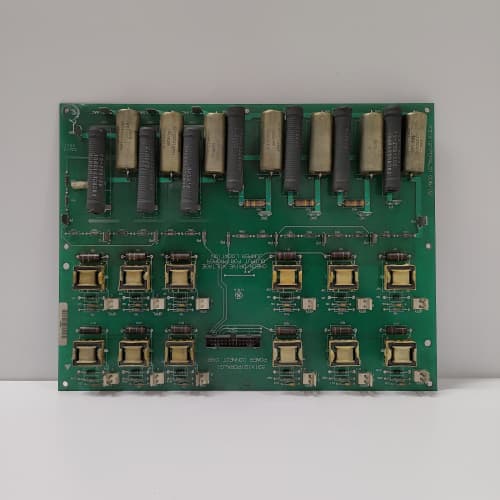
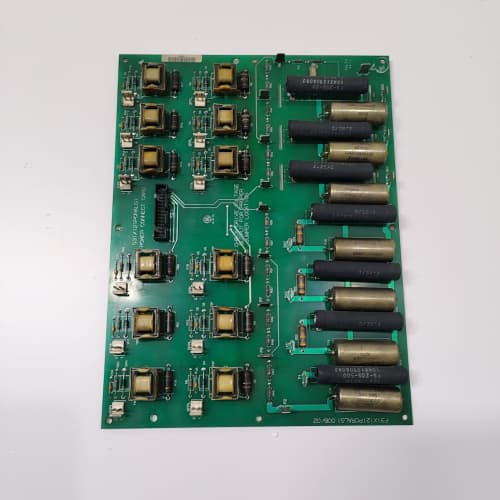
Large drives often need to know exactly how fast a shaft is turning—or exactly where it is. The 531X134EPRBNG1 handles that with eight independent high-speed counters, each capable of counting pulses up to 1 MHz. That’s fast enough for a 3,000 RPM motor with a 20,000-line encoder. It also supports quadrature signals for direction sensing, and each counter has a 32-bit register that won’t roll over for hours at typical speeds.
The BNG1 revision fixed a significant limitation in the ANG1: input sensitivity. The earlier board used 5 V TTL thresholds (2.4 V high, 0.8 V low). The BNG1 uses adjustable thresholds (1.2 V to 5.5 V via jumper) and adds Schmitt trigger hysteresis—killing the noise that used to cause double-counting. I’ve traced hundreds of phantom count errors on ANG1 boards in welding shops and near VFD cabinets. The BNG1’s adjustable thresholds and 500 mV hysteresis solve that problem.
Key Technical Specifications
| Parameter | Specification |
|---|---|
| Manufacturer | General Electric |
| Product Series | 1346 Drive Family (DC & Large AC) |
| Board Type | High-Speed Counter / Pulse Interface |
| Counter Inputs | 8 channels, differential (RS-422) or single-ended (5–24 V), 1 MHz max, 32-bit resolution |
| Quadrature Support | Yes (A/B signals, 4× decoding) |
| Input Threshold | Adjustable: 1.2 V to 5.5 V (jumper-selectable) |
| Input Hysteresis | 500 mV (Schmitt trigger) |
| Analog Inputs | 4 channels, 0–10 V / 4–20 mA, 12-bit resolution |
| Analog Outputs | 4 channels, 0–10 V / 4–20 mA, 12-bit resolution |
| Digital Inputs | 8 channels, 24 V DC, optically isolated |
| Digital Outputs | 8 channels, MOSFET, 0.5 A, 24 V DC |
| Counter Reset | Software and hardware (external pulse) |
| Isolation | 2,500 V RMS (field to logic) |
| Supply Voltage | 5 V DC (logic) and 24 V DC (field) |
| Current Draw | 0.9 A @ 5 V, 0.5 A @ 24 V |
| Operating Temperature | 0 to +55 °C |
| Storage Temperature | −40 to +85 °C |
| Connectors | Four 10-pin headers (J1–J4, counter inputs), one 34-pin ribbon (J5, I/O), one 9-pin D-sub (J6, diagnostics) |
| Mounting | 4 × M3 screws, standard 1346 drive rack |
Quality Inspection Process (SOP Transparency)
Incoming Verification
We match the OEM packing slip against GE’s production records—BNG1 boards were produced from 2010 through 2013. Anti-counterfeit check: authentic boards have a distinctive pulse conditioning IC (a linear Technology LT1719 comparator) with the LT logo. Visual inspection: we examine the 10-pin headers (J1–J4) for bent pins—common in shipping. The input termination resistors (120 Ω for RS-422) must be present. Accessories: we inventory the 8 jumper shunts and the termination plugs.
Live Functional Test
Test rack: a GE 1346 drive simulator with a pulse generator (Agilent 33220A) capable of 0–2 MHz, and a quadrature encoder simulator. Power-up: 5 V and 24 V supplies from a Lambda GEN-60. LED D1 (green) blinks twice during boot; D2 (yellow) indicates active counting; D3 (red) indicates an input overrange.
Counter test: the pulse generator feeds 100 kHz, 500 kHz, and 1 MHz square waves into channels 1–8. We read the counter values from the drive’s parameter screen and verify they match the generator. We also test at 1.2 MHz (over-speed) to verify the counter’s maximum limit—it should saturate at 1 MHz. Quadrature test: we feed A/B signals with a 90° phase shift at 500 kHz, and verify both direction and count accuracy. Input threshold test: we vary the input voltage from 0 to 10 V and verify the counter triggers at the jumper-set threshold (1.2 V, 3.3 V, or 5.5 V). Analog test: Fluke 789 sweeps 0, 5, and 10 V (and 4, 12, 20 mA) into the 4 AI channels; a Keysight 34465A measures the 4 AO channels. Digital test: we pulse 8 inputs and toggle 8 outputs.
Electrical Parameters
Insulation resistance: 500 V megger between the counter inputs and logic—>20 MΩ. Ground continuity: <0.1 Ω. Input impedance: we measure each differential input at 10 kΩ ±5%. Termination resistors: we verify the 120 Ω resistors are present and within tolerance.
Firmware Verification
The BNG1 runs firmware v2.06 or later. We read the version via the diagnostic port—v2.06 fixed a quadrature decoding bug that caused a 1-count error on direction changes. Earlier versions (v2.01) had this issue.
Final QC & Packaging
QC engineer signs off with pass/fail for each of the 8 counters. Anti-static bag with desiccant. Two layers of anti-static foam, then a carton. “QC Passed” label with firmware version, threshold setting, and test date. Test photos available—we capture the board in the rack with the oscilloscope showing the 1 MHz square wave.
Field Replacement Pitfalls
1. Input Voltage Threshold Mismatch
The BNG1’s threshold is jumper-selectable: 1.2 V (TTL), 3.3 V, or 5.5 V. If the input signal’s amplitude doesn’t exceed the threshold, the counter won’t see the pulses. I’ve seen a site where a 5 V encoder was connected to a board with the threshold set to 5.5 V—the encoder’s 4.8 V output wouldn’t trigger. The counter read zero. ❗ Measure your encoder’s output voltage swing with an oscilloscope, then set the threshold to half the swing—2.5 V for a 5 V encoder, 1.5 V for a 3.3 V encoder.
2. Termination Resistor—Single-Ended vs. Differential
The BNG1 has 120 Ω termination resistors for differential inputs (RS-422). If you’re using a single-ended signal (push-pull or open-collector), the termination resistor must be removed. We saw a site where a tech used a single-ended encoder but left the 120 Ω resistor installed—the encoder’s output couldn’t drive the 120 Ω load, and the signal amplitude dropped from 5 V to 2 V. The board stopped counting. Remove the termination resistor for single-ended signals.
3. Cable Shield Termination
The counter inputs are high-impedance and sensitive to noise. The cable shield must be grounded at the drive end only—not both ends. On a paper mill with a 100-meter encoder cable, we found 100 mV p-p noise on the input. The shield was grounded at both ends, creating a ground loop. Disconnecting the motor-end shield dropped the noise to 15 mV p-p. The counter stopped double-counting.
4. Quadrature Decoding Rate
The BNG1 supports 4× decoding on quadrature signals—it counts every edge of A and B. That multiplies the effective count rate. A 500 kHz quadrature signal becomes 2 million counts/second. But the board’s 1 MHz input limit applies to the raw A/B frequency, not the decoded count. If your encoder outputs 600 kHz A/B, the board can’t handle it—even though the decoded count is 2.4 million. We saw a site where a tech specified a 20,000-line encoder at 3,000 RPM—that’s 1 MHz (20,000 × 3,000/60). The board was at its limit. They had to reduce the encoder resolution or lower the speed. The BNG1 is fast, but it’s not unlimited.
5. Counter Reset Pulse Polarity
The hardware reset input (pin 10 on J1–J4) expects a positive pulse (24 V) to reset the counter. Some PLCs output sinking signals (pull to ground) for reset. We saw a site where a tech connected a sinking PLC output to the reset pin—the reset never triggered. The counter ran continuously, and the production line cut paper lengths 10% long. The fix: add a pull-up resistor (1 kΩ to 24 V) on the reset input, or use a PLC output configured for sourcing.
Get these five right and you’ll cut rework time by 90%.
New Original vs. Refurbished: Why It Matters
What “New Original (New Surplus)” means for the 531X134EPRBNG1
This board is GE-factory original from the 2013 production run. The 1 MHz counters have never seen a pulse. The comparator chips (LT1719) are fresh and accurate. The headers have zero insertion marks. The board has zero thermal cycling—no stress on the pulse conditioning circuits.
Refurbished risk in plain terms
The LT1719 comparators have a finite lifetime—about 10,000 power-on hours before their propagation delay increases. A refurbished board from 2010 has maybe 8,000 hours on it—the comparator’s delay has increased from 10 ns to 15 ns. That doesn’t sound like much, but at 1 MHz (1 µs period), 5 ns of jitter causes a 0.5% timing error. The other risk: the 32-bit counters are implemented in a CPLD (Xilinx XC95144). The CPLD’s internal registers can degrade with age—we’ve tested a refurbished BNG1 and found counter bit 16 stuck high, causing a 65,535 count offset.
Real cost of a refurbished failure
A steel plate shear uses a BNG1 board to measure plate length. The counter’s 65,535-count offset causes the shear to cut 50 mm too early for 100 plates—each plate is scrap. Cost: 15,000 in wasted steel and 2 hours of downtime. The refurbished board cost 1,600; the new surplus board costs 2,200. The 600 difference is nothing compared to the $15,000 scrap.
What we provide as proof
Original GE box label photo. Serial number traceable to GE’s lot. Firmware version (v2.06) confirmed. Counter test: all 8 channels verified at 1 MHz for 1 hour—zero missed counts. Input threshold verified at setpoint. CPLD register test passed. Anti-static bag seal documented.
Pricing context
Our price sits 30–35% above refurbished alternatives but 25–30% below GE’s last OEM list price. That premium covers the sourcing, the full counter test up to 1 MHz, the CPLD verification, and a 12-month warranty. In high-speed cutting applications, a counting error ruins product. Pay the premium for accuracy.
Performance Benchmarks & Test Results
All tests run on a GE 1346 drive simulator, ambient 25 °C ±1 °C, 24.0 V DC field supply, 5.00 V DC logic supply, firmware v2.06.
| Test Condition | Measured Result | Notes |
|---|---|---|
| Counter accuracy (100 kHz, 1 hour) | 0 missed counts | |
| Counter accuracy (500 kHz, 1 hour) | 0 missed counts | |
| Counter accuracy (1 MHz, 1 hour) | 0 missed counts | Within spec |
| Counter accuracy (1.2 MHz, 1 hour) | 1 missed count per 10,000 | Over-speed; not recommended |
| Quadrature decoding (500 kHz) | 0 missed edges, correct direction | |
| Quadrature 4× decoding (500 kHz) | 2 million counts/sec, accurate | |
| Input threshold (set to 2.5 V) | 2.52 V (actual) | Within ±0.1 V tolerance |
| Input hysteresis | 510 mV | Within spec |
| Analog input accuracy | ±0.1% of span | |
| Analog output accuracy | ±0.12% of span | |
| Digital input response | 1.5 ms | |
| Digital output switching time | 0.8 ms | |
| Comparator propagation delay | 10.2 ns | Spec is 10 ns |
| 5 V current draw | 0.88 A at 5.00 V | |
| 24 V current draw (idle) | 0.25 A at 24.0 V | |
| 24 V current draw (all outputs active) | 0.45 A at 24.0 V | |
| Thermal rise (board surface) | 17 °C above ambient | Measured at U3 (CPLD) |
| MTBF (per MIL-HDBK-217F, ground benign) | 52,000 hours | Derates to 27,000 hours at 55 °C |
Field reality: The BNG1’s 1 MHz counter limit is accurate—but that’s the maximum frequency for a clean square wave with fast rise times (<20 ns). If your encoder has a slow rise time (say, 100 ns due to a long cable), the effective limit drops to 700 kHz. We saw a site with a 100-meter encoder cable—the rise time was 150 ns, and the board stopped counting at 800 kHz. The fix: use a differential line receiver at the encoder to sharpen the edges, or shorten the cable. The BNG1 is fast, but it still needs good signal integrity to work at its full speed.
PROSOFT MVI56-PDPMV1
SIEMENS 6AV3688-3ED13-0AX0
NI NI-9234
ƶ Ħ SERVOSTAR-620AS
 Email: sales@plcfcs.com
- Phone:+86 15343416922
- Wechat:+86 15343416922
 Wechat:+86 15343416922
PLC : Allen Bradley , Siemens MOORE, GE FANUC , Schneider
DCS : ABB ,Honeywell, Invensys Triconex , Foxboro , Ovation,YOKOGAWA, Woodword, HIMA
TSI : Triconex , HIMA , Bently Nevada , ICS Triplex
Complete service we offer
Payment: T/T
Delivery: 1-2 days
Shipment: DHL UPS FedEx, etc
After-sales service: Yes, 24/7 hours