 Email: jiedong@sxrszdh.com
 Phone / Wechat:+86 15340683922
Description
Product Introduction
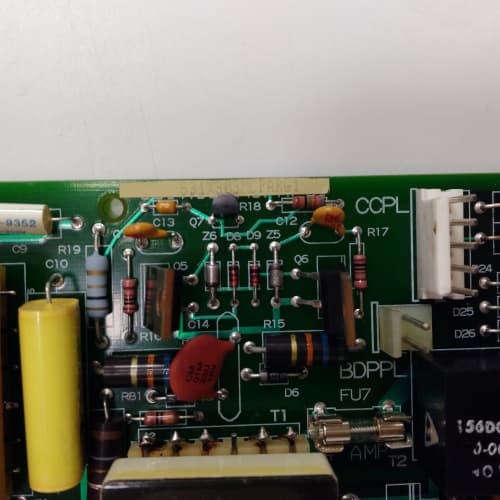
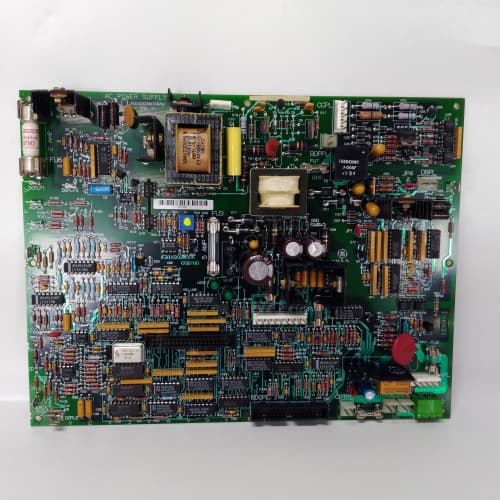
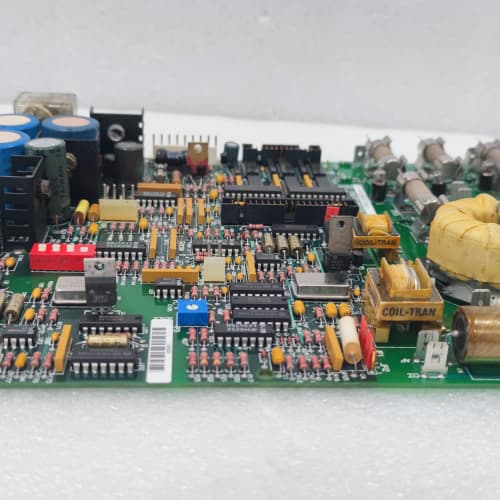
Some Mark V racks are beasts—dual CPUs, redundant communications, and a dozen high-current analog output boards all pulling from the same 24V bus. The 531X111PSHAEG1 is the power supply for those racks, delivering 800W of regulated DC to keep everything running. It’s the top-of-the-line option for the most demanding Mark V configurations.
Compared to the 531X111PSHAEG (non-1 revision), the “G1” version adds active power factor correction (upgraded from 0.95 to >0.99), a redesigned thermal path with dual fans, and extended hold-up time from 30ms to 45ms. The terminal assignment is identical—direct drop-in. No firmware changes required.
Key Technical Specifications
| Parameter | Value / Range |
|---|---|
| AC Input Voltage | 100–240 VAC ±10%, auto-ranging |
| Input Frequency | 47–63 Hz |
| Input Current (Max) | 11.0 A @ 120VAC, 5.5 A @ 240VAC |
| Power Factor | >0.99 (active PFC) |
| Inrush Current (Cold Start) | 40A peak @ 240VAC |
| DC Output Voltage | 24 VDC ±1% (fixed) |
| Output Current (Continuous) | 33.3 A (800W) |
| Output Current (Peak, 10s) | 40.0 A |
| Hold-up Time | 45 ms @ full load (from loss of AC) |
| Ripple & Noise | < 100 mV p-p (20 MHz bandwidth) |
| Efficiency | 92% typical at full load |
| Protections | Overvoltage (29V clamp), overcurrent (foldback), overtemperature (85°C), short-circuit |
| Redundancy | Parallel operation with OR-ing diodes (up to 2 units) |
| Status Indicators | DC OK (green), Fault (red), Overload (amber), Fan 1/Fan 2 (green/amber), Load share (blue) |
| Cooling | Dual forced-air fans (2 x 80mm), temperature-controlled |
| Termination | Screw-type terminal block (input) + 24-pin backplane connector (output) |
| Operating Temp | 0°C to +55°C (derate 2.5%/°C above 45°C) |
| Dimensions (W x H x D) | 280 x 120 x 85 mm (11.0 x 4.7 x 3.3 in) |
Compatible Replacement Models
| Model | Classification | Notes & Labor Estimate |
|---|---|---|
| 531X111PSHAEG1 | ✅ Drop-in Replacement | Target model. Same form factor and backplane connector. No changes. |
| 531X111PSHAEG | ✅ Drop-in Replacement | Earlier revision—0.95 PFC, 30ms hold-up, single fan. Direct swap; you get PFC, longer hold-up, and dual-fan redundancy. |
| 531X111PSHACG2 | ✅ Drop-in Replacement | 500W version (20.8A). Direct swap, but verify load—the AEG1 has more capacity. |
| 531X111PSHABG1 | ✅ Drop-in Replacement | 350W version (14.6A). Direct swap, but likely under-powered for a dense rack. |
| DS3800NPSA | ❌ Hardware Incompatible | Mark IV power supply—different form factor. Not compatible. |
Frequently Asked Questions (FAQ)
Q: What’s the main advantage of the AEG1 over the ACG2?
The AEG1 delivers 33.3A vs. the ACG2’s 20.8A—a 60% increase in capacity. It also has dual fans for redundancy (if one fan fails, the other continues running) and longer hold-up (45ms vs. 40ms). If you have a rack with 10+ high-current output boards (e.g., 531X102CCHAJM2) or multiple CPUs, the AEG1 gives you the headroom you need.
Q: What’s the total current draw of a fully loaded extreme-density Mark V rack?
A rack with two CPUs, two communications modules, and 12 high-current analog output boards can draw 25-30A. The AEG1’s 33.3A gives you about 10-15% headroom at that load. If your rack draws more than 33A, you’ll need to split the load across two racks or add a second AEG1 in parallel. We’ve seen some plants with 16 I/O boards draw 35A—the AEG1 would overload in that single-supply configuration.
Q: The Fault LED is red, but the DC OK LED is green. What’s happening?
Green DC OK means the 24V output is within spec. Red Fault indicates an internal warning—typically overtemperature (fan failure or blocked airflow) or an input voltage out of range (below 85VAC or above 265VAC). The AEG1 has dual fans—check both. If one fan fails, the other can keep the supply running, but the Fault LED will light to warn you. The AEG1’s thermal sensor triggers the fault at 80°C. If the temperature reaches 85°C, the supply will shut down.
Q: The inrush current is 40A peak. Is that a concern for my branch breaker?
40A peak for 2ms is within the tolerance of most 20A C-curve breakers. However, if you have multiple supplies in a panel (e.g., two AEG1s in separate racks), the combined inrush of 80A may trip a 30A breaker on startup. To avoid nuisance trips, use D-curve breakers (which tolerate higher inrush) or sequence the power-up of the supplies by stagerring the AC feeds. Also, consider using a soft-start module if your panel has multiple high-power supplies.
Q: The Overload LED is amber. What does that mean?
Amber Overload LED indicates the supply is drawing more than its continuous rating (33.3A). At loads between 33.3A and 40A, it’ll light amber and continue running—but the output voltage may droop (down to 22V). If the load exceeds 40A, the supply enters foldback current limiting (output drops to about 12V, and the LED flashes). Check your rack’s total load with a clamp meter on the backplane’s 24V line. If you’re consistently seeing amber, consider adding a second AEG1 in parallel.
Q: Can I run two AEG1 supplies in parallel for redundancy?
Yes—the AEG1 has internal OR-ing diodes. Connect the DC outputs together (+24V to +24V, 0V to 0V) and feed the AC inputs from separate breakers. Each supply will share the load roughly equally (within 5%). The blue “Load Share” LED will light when both supplies are contributing. If one fails, the other takes the full load. However, note: if your total rack load is 40A, a single AEG1 can’t carry it (33.3A max). In a redundant configuration, each supply should be sized for 50% of the load—for a 30A total load, two AEG1s would each carry about 15A.
Q: Can I hot-swap the AEG1 while the rack is powered?
The board supports hot-swapping when used in a redundant configuration (two supplies in parallel). In a single-supply configuration, pulling the supply will immediately shut down the entire rack—a guaranteed turbine trip. If you have redundant supplies, you can pull one—but only if the OR-ing diodes are present (they’re internal to the AEG1). Verify the DC outputs are connected together before attempting.
Q: What’s the expected lifespan of the AEG1?
The electrolytic capacitors are rated for 12,000 hours at 85°C. In a 40°C cabinet, the lifespan extends to about 18-22 years. The dual fans are each rated for 60,000 hours at 40°C (about 6.8 years). The AEG1’s dual-fan design provides redundancy—if one fan fails, the other keeps running, extending the overall system reliability. Replace both fans every 5-7 years proactively.
Q: What’s the lead time for a surplus unit?
We keep 2-4 units in stock. Domestic: 2-3 business days ground, overnight if ordered by 2 PM EST. International: 5-7 days via DHL, with customs potentially adding 1-3 days. This board is not ITAR-controlled, so we can ship to most countries without an export license. We include a GE certificate of origin and commercial invoice with every shipment. Contact us if you need expedited shipping for a critical outage.
EPRO PR6423/001-000+CON021
A-B 1756-L71
A-B 1747-L553
A-B 1756-L63
 Email: sales@plcfcs.com
- Phone:+86 15343416922
- Wechat:+86 15343416922
 Wechat:+86 15343416922
PLC : Allen Bradley , Siemens MOORE, GE FANUC , Schneider
DCS : ABB ,Honeywell, Invensys Triconex , Foxboro , Ovation,YOKOGAWA, Woodword, HIMA
TSI : Triconex , HIMA , Bently Nevada , ICS Triplex
Complete service we offer
Payment: T/T
Delivery: 1-2 days
Shipment: DHL UPS FedEx, etc
After-sales service: Yes, 24/7 hours