 Email: jiedong@sxrszdh.com
 Phone / Wechat:+86 15340683922
Description
Product Introduction
The DS3800XJBA handles thermocouple inputs—specifically, the ones that tell you how hot your turbine exhaust is. If you’re running a Frame 5, 6, or 7 gas turbine, this board is likely sitting in the Mark VIe cabinet reading the exhaust gas temperature (EGT) thermocouples that feed into your combustion monitoring and protection logic. The “XJB” designation indicates it’s the TC input variant, and the “A” suffix represents a revision with improved cold junction compensation accuracy.
Where this board differs from the analog input modules (like the XCJB or XIBA) is the front-end conditioning. Thermocouple signals are millivolt-level, so the XJBA includes high-gain amplifiers and built-in cold junction reference diodes to compensate for the terminal block temperature. It supports Type K, T, and J thermocouples—the most common in gas turbine applications. But pay attention: this is not a universal TC board. It’s fixed to those three types via resistor configuration at the factory. If you need Type S or R (commonly used in high-temp furnace applications), you’re looking at a different board entirely. Typical users are plant reliability engineers doing obsolescence spares or replacing failed channels after lightning strikes or cable faults.
Key Technical Specifications
| Parameter | Value / Specification |
|---|---|
| Part Number | DS3800XJBA |
| Product Type | Thermocouple Input Terminal Board |
| Input Channels | 8 (Differential) |
| Supported Types | Type K, Type T, Type J (Factory-configured) |
| Input Voltage Range | ±100 mV (Typical TC range) |
| Resolution | 16 bits |
| Cold Junction Compensation | Built-in, per-channel diode reference |
| Accuracy | ±0.1% of reading ±1°C (Type K, 25°C ambient) |
| Input Impedance | >10 MΩ |
| Isolation | 250 V RMS (Channel to Backplane) |
| Bus Interface | VME (Proprietary GE Mark VIe) |
| Termination | 37-pin D-Sub female (Field side) |
| Power Draw | +5V DC @ 1.3A (typical) |
| Operating Temp | 0°C to 60°C |
| CJC Accuracy | ±0.5°C over operating range |
Compatible Replacement Models
| Model | Compatibility | Notes |
|---|---|---|
| DS3800XJB | ⚠️ Software Compatible | Earlier revision without CJC improvements. Physically identical but may have cold junction drift at temperature extremes. Recommended to upgrade and re-validate. Budget 2 hours for testing. |
| DS3800XJD | ❌ Hardware Incompatible | Different TC type support (Type S/R). Also uses different gain resistors—will not scale correctly for Type K. Avoid unless you’re changing thermocouple types. |
| DS3800XCMA | ❌ Hardware Incompatible | This is an RTD input board, not TC. Uses a completely different front-end design—not interchangeable. |
Frequently Asked Questions (FAQ)
Q: Can I hot-swap the DS3800XJBA in a running system?
No. The Mark VIe backplane does not support live insertion for thermocouple input boards. You must power down the entire I/O pack before removal. We’ve seen cold junction compensation reference values get corrupted when people try to hot-plug these—the board loses its calibration offset and you get false temperature readings until a full reboot.
Q: How do you test this board before shipping?
We run a 7-step protocol specifically designed for TC boards, with cold junction compensation as the critical check:
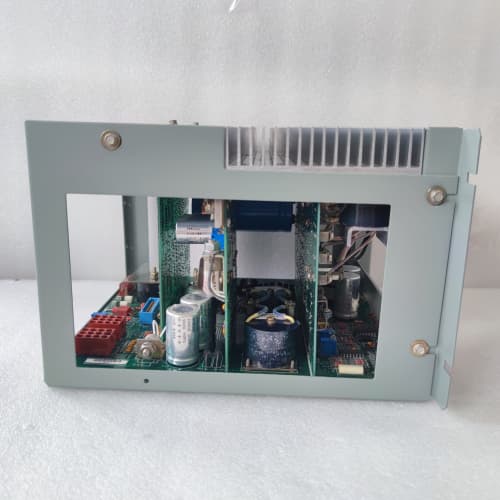
- Visual inspection: Check for cracked D-Sub connectors, burnt resistors, or swollen capacitors. Pay attention to the CJC reference diodes—those are the small glass components near the terminal block. If they’re cracked, the board is done.
- ESD check: Measure insulation resistance between channels and chassis ground—must exceed 10MΩ. TC leads are high-impedance, so any leakage affects accuracy.
- Power-up: Apply +5V DC and monitor current draw. We expect 1.3A ±10%. Above 1.5A suggests a short on the input stage.
- Communication handshake: Simulate a Mark VIe backplane connection and verify the board responds with its correct ID and configured TC type (K/T/J).
- Cold junction verification: We measure the board’s internal temperature via the CJC diodes and compare against a calibrated reference thermistor placed on the terminal block. Must match within ±0.5°C.
- TC simulation: Use a calibrated microvoltage source to inject signals representing known temperatures across each channel. We test at 0°C, 100°C, and 500°C equivalents for Type K. Accuracy must be within ±0.1% of reading ±1°C.
- 24-hour soak: Run the board at 50°C ambient with all channels simulating 100°C. We log CJC drift over time. If any channel drifts beyond ±2°C, it fails.
We put a QC Passed tag on every unit and seal it in an anti-static bag. To be transparent, about 5-8% of these boards fail the 24-hour soak due to CJC diode aging—they pass initial calibration but drift when heat-saturated. That’s why we don’t skip the long test. If you need expedited shipping, we offer that only if you accept the board based on the initial simulation without the soak—but we make you sign a waiver.
Q: Can I change the thermocouple type (K, T, J) on this board?
No. The DS3800XJBA is factory-fixed to Type K, T, and J via specific gain resistors and CJC scaling constants. There are no jumpers. If you need Type S or R (common in glass furnaces or high-temp exhaust), you’d need a different part—typically DS3800XJD or similar, though confirm with GE. Trying to recalibrate this board for a different TC type requires swapping resistors on the board—and frankly, that’s a bench job with surface-mount components, not a field fix. We don’t recommend it.
Q: I have a thermocouple failure showing an open circuit. Does the board detect that?
Yes. The XJBA includes an open-circuit detection circuit on each channel. When a TC breaks or the cable is disconnected, the board reads as over-range (typically >100 mV) and flags that channel in the controller’s diagnostic table. That said, the detection circuit is passive—it works even when the board is powered. We test this by disconnecting each channel during our simulation run to verify the fault bit sets correctly. We’ve seen some counterfeit boards omit this detection circuitry entirely, so if you’re buying from an unverified source, check that feature specifically.
Q: What’s the most common failure on this board?
Two things, both related to the sensitive front-end:
- CJC diode drift: The cold junction reference diodes are the weakest link on this board. They’re small glass diodes that age and drift over time—especially if the cabinet runs hot (above 50°C). A drifted CJC adds a constant offset to all channels. We replace these on about 30% of the boards we refurbish.
- Lightning damage: TC wires run from the turbine exhaust out to the cabinet—long cable runs that act as antennae for lightning strikes. We’ve seen boards with one or two channels completely blown out, with burnt traces visible near the terminal block. If you lose a channel to lightning, replace the board; the driver circuitry is often damaged beyond a simple component swap.
Q: Can I use extension-grade thermocouple wire with this board?
You should. The XJBA’s cold junction compensation references the terminal block temperature, so the termination point must be at the board’s connector. If you use standard copper wire between the TC and the board, you’ll introduce an error equal to the temperature difference between the TC junction and the board. GE recommends using matching thermocouple extension wire (Type KX for Type K, etc.) all the way to the 37-pin D-Sub. We’ve seen plants use standard copper and wonder why their EGT readings are 10-15°C off—the answer is thermal EMF from the dissimilar metals.
Q: How do I install this board without damaging it?
Three rules, especially for TC boards:
- Use a wrist strap: The input amplifiers are high-impedance and sensitive to ESD. We’ve seen board failures traced to handling without proper grounding. Always use a wrist strap when handling this board, and keep it in the anti-static bag until installation.
- Land the shield correctly: TC cables should be shielded and grounded at the rack side only. Grounding at both ends causes ground loops that add noise to the millivolt signals. If you’re unsure, consult GE’s wiring guide for your specific termination panel.
- Torque the D-Sub screws: This board uses 37-pin D-Sub connectors with jack screws. Tighten them to 4-5 in-lbs maximum. Over-tightening can strip the threads or crack the PCB. We’ve seen enough of those.
Q: Are there counterfeit versions of this board?
Yes, and the CJC diodes are a giveaway. Here’s what we look for:
- CJC diodes: Genuine boards use glass-passivated diodes with specific temperature curves. Counterfeits often use cheaper components or omit the CJC circuit entirely—they might just use a thermistor on the board instead of the per-channel reference diodes.
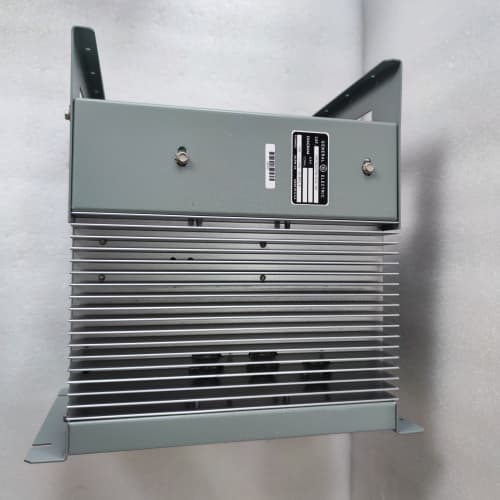
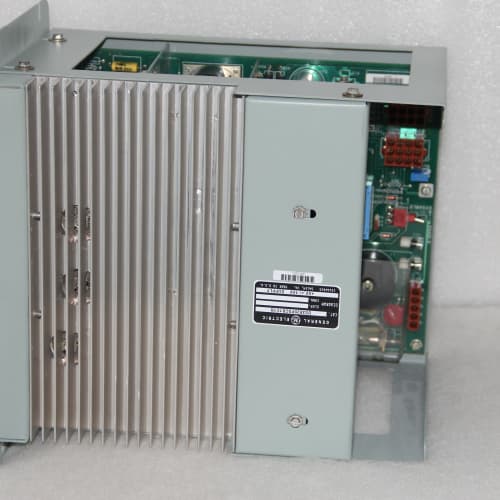
- Label: Genuine GE labels have a matte finish with a greenish barcode. Fakes are glossy and off-white.
- Component placement: The input section on genuine boards has tight component density with consistent solder joints. Fakes often have uneven component placement or hand-soldered joints.
- Weight: Genuine board weighs 225g ±5g. Counterfeits are often lighter due to skipped components.
We trace our stock to known OEM batches. If you’re buying elsewhere, demand photos of the component side and the serial sticker before purchase.
Q: What’s your warranty on this board?
We offer a 1-year warranty against functional defects on tested units. If the board fails to meet published specs within that period and hasn’t been physically damaged or miswired, we’ll replace or refund. That said, we’re not the OEM, so we can’t offer full factory support. For application questions—like why your TC readings are noisy or how to configure the CJC offset in ToolboxST—consult GE’s documentation or call their support line.
Q: What’s the lead time if I order today?
We usually carry 3-5 units in stock. If you order before 2 PM EST, we ship within 1-2 business days after testing. The 24-hour soak is the bottleneck—we won’t ship a board that hasn’t completed it. If you’re desperate and need it tomorrow, we can rush the initial testing and skip the soak, but you sign a waiver. To be frank, we don’t recommend that for TC boards. The CJC drift often doesn’t show up until the board has been powered for a few hours.
GE 8521-HC-MT
SIEMENS 6ES7014-0TP50-Z
REXORTH CSH01 .1C-PB-ENS-NNN-MEM-S2-S-NN-FW
 Email: sales@plcfcs.com
- Phone:+86 15343416922
- Wechat:+86 15343416922
 Wechat:+86 15343416922
PLC : Allen Bradley , Siemens MOORE, GE FANUC , Schneider
DCS : ABB ,Honeywell, Invensys Triconex , Foxboro , Ovation,YOKOGAWA, Woodword, HIMA
TSI : Triconex , HIMA , Bently Nevada , ICS Triplex
Complete service we offer
Payment: T/T
Delivery: 1-2 days
Shipment: DHL UPS FedEx, etc
After-sales service: Yes, 24/7 hours