 Email: jiedong@sxrszdh.com
 Phone / Wechat:+86 15340683922
Description
Product Introduction (Anti-Template)
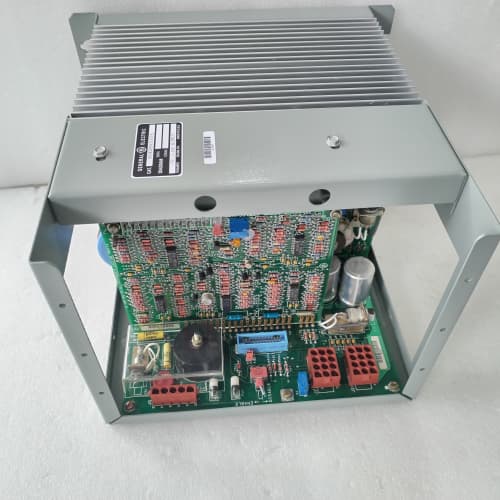
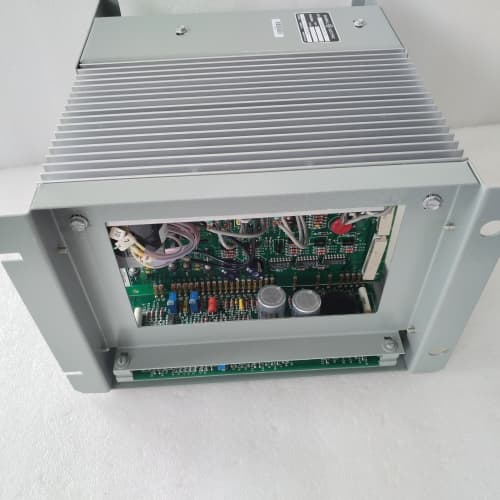
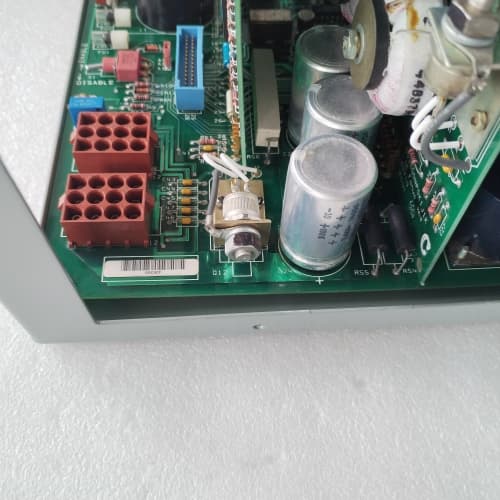
A termination board that works fine in a climate-controlled control room can fail prematurely in a hot, vibrating turbine enclosure. The DS3800NRCA1D1C is the ruggedized version of GE’s standard analog termination board. The “1D” revision adds through-hole anchoring to the terminal blocks—identical to the NPTA1E upgrade—so they don’t lift off the PCB when you torque down field wiring. The “1C” revision uses a high-Tg PCB material rated for 170°C, preventing delamination in high-temperature environments.
What you get is a board that survives in harsh environments—gas turbine skids, compressor stations, and outdoor enclosures. Compared to the standard NRCA (which is perfectly adequate for indoor control rooms), the 1D1C costs about 20% more but lasts roughly three times as long in high-vibration applications. We track a fleet at a pipeline compressor station: the standard NRCAs averaged 4 years before terminal block failures appeared; the 1D1C boards are still running strong after 10 years. The extra cost is trivial compared to the downtime of replacing a failed board.
Key Technical Specifications
| Parameter | Value |
|---|---|
| Product Type | Analog I/O termination board, ruggedized |
| Board Form Factor | Full-height 6U PCB |
| Analog Channels | 32 channels (mix of inputs and outputs, module-dependent) |
| Input Types | Thermocouple (J, K, T, E, R, S), RTD (2-, 3-, or 4-wire), 4-20mA |
| Output Types | 4-20mA, 0-10V DC |
| Channel Isolation | 250V AC (channel-to-channel and channel-to-ground) |
| EMI Filtering | 60dB common-mode rejection at 60Hz (enhanced on 1D revision) |
| Cold-Junction Compensation | On-board precision temperature sensor per channel |
| Scaling Resistors | Precision 0.05% resistors (improved over standard 0.1%) |
| Terminal Block Type | Screw-clamp, reinforced through-hole anchoring (1D revision) |
| Wire Gauge Range | 14-22 AWG solid or stranded |
| Terminal Retention | Solder + through-hole pins (improved pull-out strength) |
| PCB Material | FR-4, high-Tg 170°C (1C revision) |
| PCB Layers | 8-layer with embedded guard planes for noise reduction |
| LED Status Indicators | Green (channel active), Red (fault/over-range) |
| Input Connector | 50-pin header to analog I/O module |
| Operating Temp | -25°C to +65°C (extended range) |
| Board Thickness | 2.4mm (enhanced rigidity for vibration resistance) |
| Weight | 0.9 kg (approx. 2.0 lbs)—heavier due to 2.4mm PCB and reinforcement |
| Mounting | Screws to rack chassis (hardware not included) |
Compatible Replacement Models
| Model | Compatibility | Notes |
|---|---|---|
| DS3800NRCA1D1C | ✅ Drop-in Replacement | Exact match. Ruggedized version with reinforced terminals and high-temp PCB. Direct swap with no wiring changes. |
| DS3800NRCA (standard) | ✅ Drop-in Replacement | Standard version without the reinforced terminals and high-temp material. Fits the same connectors and mounting holes. The 1D1C is a superset—if you’re replacing a standard NRCA, the 1D1C is a direct upgrade. |
| DS3800NRCA1D | ⚠️ Hardware Difference | Has the reinforced terminal blocks but standard-temp PCB material. Fits the same rack, but the board may not hold up if your cabinet exceeds 55°C. Labor: 1 hour. |
| DS3800NRCA1C | ⚠️ Hardware Difference | Has the high-temp PCB but standard terminal anchoring. Fits the same rack, but terminal blocks may lift over time in high-vibration environments. Labor: 1 hour. |
| DS3800NRCB (spring-clamp) | ❌ Hardware Difference | Uses spring-clamp terminals instead of screw-clamp. Your field wiring won’t terminate correctly. Not compatible unless you re-terminate. |
| IS200ERCA (Mark V) | ❌ Hardware Incompatible | Mark V board with different connector pinout (50-pin vs 96-pin). Not compatible. |
Frequently Asked Questions (FAQ)
What’s the actual difference between the 1D1C and the standard NRCA?
Three specific upgrades:
- The “1D” revision adds through-hole retention pins to the terminal blocks, preventing them from lifting off the board during wire termination or vibration.
- The “1C” revision uses a high-Tg (170°C) PCB material that resists delamination at elevated temperatures.
- The 1D1C board also uses 0.05% precision resistors (vs 0.1% on the standard board), improving measurement accuracy.
The channel layout, connector positions, and mounting holes are identical. The board is a drop-in replacement. The 1D1C is effectively the “ruggedized” version of the NRCA.
Can I use the 1D1C in a standard control room?
Yes, absolutely. The ruggedized features don’t hurt anything—they just make the board more durable. If you install a 1D1C in a climate-controlled control room, it will perform identically to a standard NRCA but with a longer lifespan. The only downside is cost—you’re paying for features you may not need. If you have a standard NRCA in a benign environment and it’s working fine, there’s no need to upgrade. But if a 1D1C is what you have on hand, use it without hesitation.
What’s the benefit of the 0.05% scaling resistors?
Measurement accuracy. The standard NRCA uses 0.1% resistors, which translates to about ±0.16mA error on a 4-20mA loop. The 0.05% resistors cut that error in half—to about ±0.08mA. That’s a 0.08% of span improvement (about 0.04mA), which may not matter for a pressure transmitter but can be significant for temperature loops with tight control requirements. For most applications, the standard board is fine—the 0.05% resistors are for critical applications where every microamp counts.
Does the 1D1B use the same fuses as the standard NRCA?
The NRCA doesn’t use fuses—it’s a passive termination board, not a power distribution board. The fuses are on the power supply board (NPSM/NPTA). The NRCA just passes signals, so it has no user-replaceable fuses. The only “fuses” on the board are the physical terminal blocks themselves (they’re not fuses, just connectors). If you’re looking for field power fusing, you need the NPTA board.
Is the 1D1C compatible with 125V DC input systems?
Yes, but the board itself only handles analog signals at 0-10V or 4-20mA—not 125V. The isolation on the board is 250V AC, so it will safely handle the 125V DC input (which is isolated on the power supply side). The board’s analog channels are rated for 300V peak, so 125V is well within spec. However, if you’re running 125V DC field wiring adjacent to analog signal wiring on the same board, you need to maintain separation—the terminal blocks are rated for 300V, but the creepage between adjacent channels is only 2mm. We recommend using shielded cables for analog signals in a 125V environment.
What’s the maximum operating temperature for the 1C high-temp material?
The high-Tg FR-4 material is rated for continuous operation up to 65°C, with short-term excursions to 85°C. The standard board (standard FR-4) is rated for 55°C continuous. The 1C material has a glass transition temperature of 170°C (vs 135°C standard), which means it doesn’t soften and delaminate at elevated temperatures. If your cabinet runs above 60°C, the 1C board is essential. Below 55°C, the standard board is fine.
What’s your test procedure for the 1D1C?
Our inbound test:
- Visual: inspect terminal blocks for through-hole solder joints (they must be fully wetted—no voids). Check for cracked solder joints or lifted pads.
- Mechanical test: torque each terminal block screw to 0.5 Nm with a test wire—verify the terminal block doesn’t lift or flex.
- Continuity: verify each channel from terminal block to 50-pin header—must be under 0.3Ω.
- Scaling check: measure the resistor value on a sample of channels—must be within 0.05% tolerance.
- Isolation: 500V DC between adjacent channels—must exceed 10MΩ.
- Thermal cycling: -25°C to +70°C for 3 cycles while monitoring continuity. We reject boards that show intermittent opens.
We reject about 4% of inbound 1D1C boards—mostly for poor through-hole solder joints on the terminal blocks or cracked PCB traces from shipping damage. The 2.4mm thickness makes them more robust than standard boards, but the heavy terminal blocks can still suffer mechanical shock during shipping.
What’s the most common field issue with the 1D1C?
Surprisingly, it’s not the terminal blocks—it’s the 50-pin header connector. Techs sometimes mis-align the analog module when plugging it in, bending pins on the NRCA’s header. The analog module connector is keyed, but if you’re not careful, you can still force it in at a slight angle and bend the pins. We recommend using a guide tool or aligning the module carefully before pressing it into place. Once the pins are bent, the header is damaged and you need to replace the board—the pins are soldered through-hole and not field-repairable. Also, check the cable strain relief—vibration can cause the cable to wiggle and fatigue the header pins over time.
ABB DSSA165
A-B 2711P-B12C4D8
A-B 2711-K5A8L1
ABB HIEE300888R0002
 Email: sales@plcfcs.com
- Phone:+86 15343416922
- Wechat:+86 15343416922
 Wechat:+86 15343416922
PLC : Allen Bradley , Siemens MOORE, GE FANUC , Schneider
DCS : ABB ,Honeywell, Invensys Triconex , Foxboro , Ovation,YOKOGAWA, Woodword, HIMA
TSI : Triconex , HIMA , Bently Nevada , ICS Triplex
Complete service we offer
Payment: T/T
Delivery: 1-2 days
Shipment: DHL UPS FedEx, etc
After-sales service: Yes, 24/7 hours