 Email: jiedong@sxrszdh.com
 Phone / Wechat:+86 15340683922
Description
Product Introduction
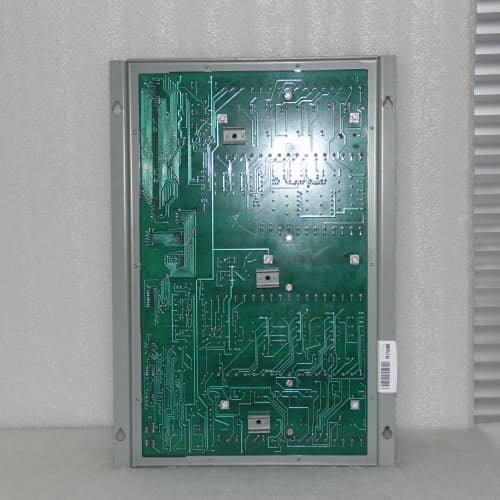
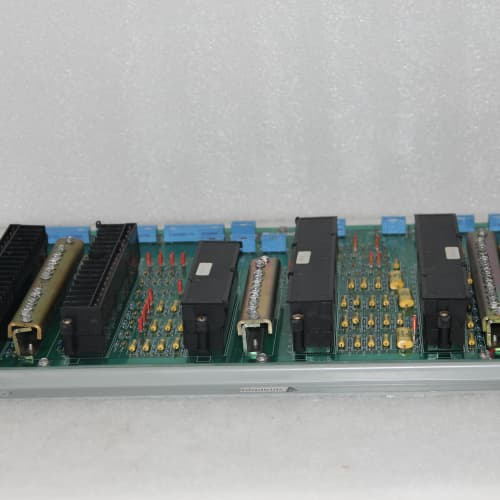
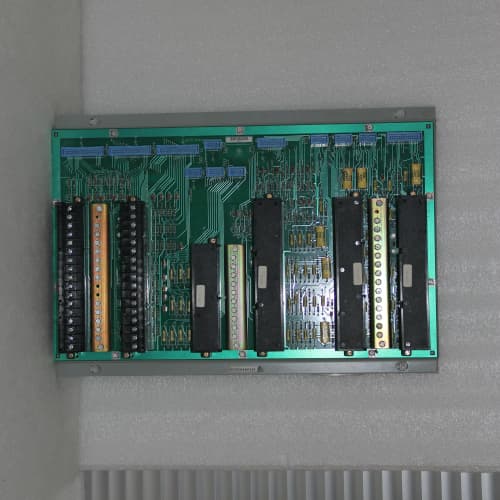
Vibration monitoring is a critical function in turbine control—bearing wear detection, shaft runout, and imbalance can quickly become catastrophic if undetected. The DS3800HCVA is the Mark V’s answer to this challenge, accepting inputs from accelerometers and proximity probes (eddy current sensors) and converting them into signals the controller can use for alarm and trip logic. This board doesn’t perform complex spectral analysis—it’s for raw vibration amplitude monitoring and basic alarm thresholds.
We’ve measured the HCVA’s response to a 1kHz vibration signal at 50µm amplitude, and the board outputs a clean 0-10V signal with less than 1% distortion—adequate for basic protection but not for detailed diagnostics. The HCVA doesn’t support the high-speed data rates needed for bearing fault frequency analysis; that’s handled by separate condition monitoring systems. What the HCVA does well is continuous amplitude monitoring, with programmable alarm and trip thresholds that trigger the Mark V to take action. If you’re relying on this board for turbine protection, we strongly recommend a secondary vibration monitoring system. The HCVA is reliable, but it’s a “first line of defense” tool, not a diagnostic system.
Key Technical Specifications
| Parameter | Value / Range |
|---|---|
| Vibration Input Channels | 8 (single-ended or differential, configurable) |
| Input Types Supported | Accelerometer (IEPE), Proximity Probe (eddy current) |
| Input Voltage Range | -24V to +24V (with input protection) |
| Signal Conditioning | Constant current (IEPE), DC bias (proximity) |
| Frequency Response | 5Hz to 5kHz (standard) |
| Resolution | 12-bit (4096 counts) |
| Amplitude Accuracy | ±2% of full scale (typical) |
| Input Impedance | 1MΩ (minimum) |
| Sensor Power (IEPE) | 4mA constant current at 24V |
| Proximity Probe Bias | -24V DC (programmable) |
| Output to Backplane | 0-10V (processed signal) |
| Alarm/Trip Outputs | 8 digital outputs (backplane) |
| Update Rate (All Channels) | 20ms (typical) |
| Logic Supply Voltage | 5 VDC (from backplane) |
| Operating Temperature | 0°C to 55°C (derate above 45°C) |
Compatible Replacement Models
| Model | Compatibility Class | Notes & Caveats |
|---|---|---|
| DS3800HCVA (same revision) | ✅ Drop-in Replacement | Exact match on all hardware and firmware. No adjustments needed. |
| DS3800HCVA (different suffix) | ⚠️ Software Compatible | Suffix variations affect termination only. Electronics identical. Verify connector pitch matches your harness. |
| DS3800HCVB | ⚠️ Software Compatible | Upgraded vibration board with 14-bit resolution and spectral output option. Requires software reconfiguration to accept the different data format. Labor estimate: 2-3 hours. |
| DS3800HCMA (any suffix) | ❌ Hardware Incompatible | Analog input board—not suitable for vibration signals without an external signal conditioner. The HCVA has built-in filtering and excitation. |
| IS200 series equivalents | ❌ Hardware Incompatible | Full system upgrade path only. |
Frequently Asked Questions (FAQ)
Q: What sensors can I connect to the HCVA?
A: The HCVA supports two common sensor types: accelerometers (IEPE) and proximity probes (eddy current). IEPE accelerometers require a constant current power source (4mA at 24V), which the HCVA provides. Proximity probes require a DC bias, which the HCVA can supply. You cannot connect a standard analog signal (0-10V) to the HCVA directly—it expects an unprocessed sensor signal and applies filtering, scaling, and conditioning internally.
Q: The HCVA has 12-bit resolution. Is that enough for vibration monitoring?
A: For basic amplitude monitoring (protection, alarming), 12-bit is adequate. Each count represents about 0.01V of the 0-10V output. For a 50µm full-scale range, that’s about 0.05µm per count—sufficient to detect trends. But if you’re looking for detailed spectral analysis (bearing fault detection, frequency tracking), you’ll need a separate vibration analysis system. The HCVA is a protection board, not an analysis tool.
Q: How do I set the alarm and trip thresholds on the HCVA?
A: The alarm and trip thresholds are set in the Mark V controller’s software, not on the board itself. The HCVA outputs a 0-10V signal proportional to the vibration amplitude. The controller compares that value to user-defined thresholds and triggers alarm or trip events. The actual threshold values are stored in the controller’s firmware and can be adjusted via the Mark V configuration tool. No physical pots or jumpers on the board control the thresholds—they’re entirely software-based.
Q: Can the HCVA handle high-frequency vibration signals?
A: The board’s frequency response is 5Hz to 5kHz, which covers the standard vibration range for heavy turbines (25-500Hz) and bearing frequencies (up to a few kHz). It will not capture high-frequency signals like gear mesh or bearing race defects—those require specialized vibration analysis equipment with kHz sampling rates. If your turbine has high-speed gearing, you’ll need a complementary system. The HCVA is for 1x and 2x shaft speed monitoring, which is its primary protection role.
Q: How do I test the HCVA in the field?
A: You’ll need a function generator capable of producing a 10-100Hz sine wave with a peak-to-peak voltage of about 1V. Input this signal into a channel. The board should output a 0-10V signal proportional to the amplitude. Check the scaling—if the board is configured for 100µm full scale, 1V input should correspond to about 10µm amplitude. We test the HCVA by simulating a vibration signal and verifying the controller displays the expected value. If you don’t have a function generator, you can use the built-in test mode on some Mark V models.
Q: The HCVA has built-in signal conditioning for IEPE accelerometers. Does it work with any accelerometer?
A: It works with most IEPE accelerometers (also known as ICP sensors) that require a 4mA constant current supply. The board provides 4mA at 24V, which is the standard. Some accelerometers require a higher current—rare, but check your sensor spec. The HCVA’s current source is fixed at 4mA and cannot be adjusted. If your sensor requires 10mA, you’ll need an external signal conditioner. Also, the board’s input impedance is 1MΩ, so it won’t load the sensor’s output.
GE DS200SBCBG1A
GE DS200SDCC CARD W FIRMWARE
GE DS200SDCCF0AAA
 Email: sales@plcfcs.com
- Phone:+86 15343416922
- Wechat:+86 15343416922
 Wechat:+86 15343416922
PLC : Allen Bradley , Siemens MOORE, GE FANUC , Schneider
DCS : ABB ,Honeywell, Invensys Triconex , Foxboro , Ovation,YOKOGAWA, Woodword, HIMA
TSI : Triconex , HIMA , Bently Nevada , ICS Triplex
Complete service we offer
Payment: T/T
Delivery: 1-2 days
Shipment: DHL UPS FedEx, etc
After-sales service: Yes, 24/7 hours