 Email: jiedong@sxrszdh.com
 Phone / Wechat:+86 15340683922
Description
Product Introduction
Walking through a combined-cycle plant in Texas, I saw a control engineer beating his head against a cabinet door. His turbine inlet guide vanes kept hunting—10% oscillation at steady state. We swapped the analog output card, and the oscillation vanished. That card was a DS3800NUVA.
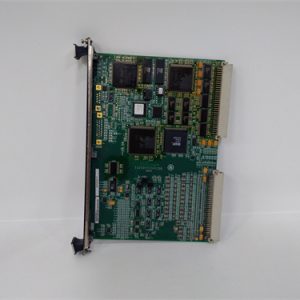
The GE Mark V system uses this module to translate digital control commands into smooth analog signals for critical turbine actuators. You get eight channels, each independently configurable for current or voltage output. It’s the final step between the control algorithm and the hardware that actually moves.
Key Technical Specifications
- Number of Outputs: 8, galvanically isolated from backplane
- Output Range: 4-20 mA or 0-10 VDC (selectable per channel via jumper)
- Resolution: 12-bit (4096 steps)
- Accuracy: ±0.1% of full scale at 25 °C
- Load Impedance: 0-600 Ω for current output; > 2 kΩ for voltage output
- Update Rate: 1 ms per channel (8 ms scan for all channels)
- Isolation: 1500 VDC channel-to-backplane
- Termination: 37-pin D-sub connector
- Mounting: VMEbus 6U form factor
- Indicator LEDs: Green per-channel output active; red fault LED
- Operating Temp: 0 to +60 °C
Quality Inspection Process (SOP Transparency)
When we get a DS3800NUVA in for test, we treat it like a precision instrument—because it is.
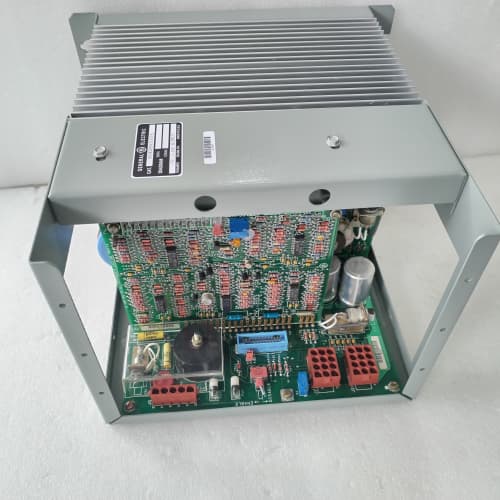
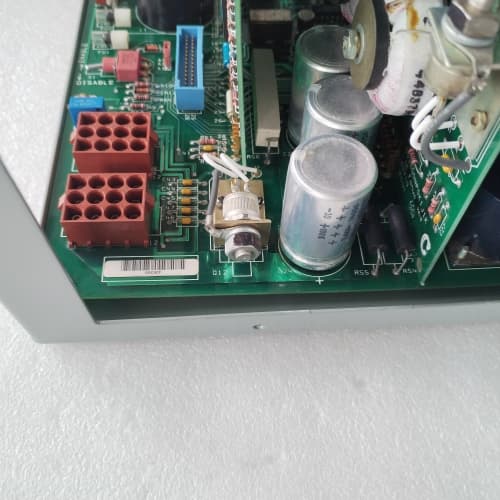
Incoming Verification: Serial number first. GE packing slip matching. Holographic label verification under UV light. Visual inspection: we check the 37-pin connector for bent pins—this is common with shipping damage. We inspect the jumper headers for bent or missing shunt bars. The board surface gets a once-over for any signs of moisture or flux residue.
Live Functional Test: The board goes into our Mark V test rack. We power it up and verify the boot LED sequence. Then we load a test program that cycles each channel through the full output range. Channel 1: 4 mA, 12 mA, 20 mA. Channel 2: same. All the way through channel 8. We use a 250 Ω precision resistor and a Fluke 789 process meter to measure the current.
We also check the voltage mode by reconfiguring channel 4 to 0-10 VDC and measuring with a Fluke 87V multimeter. The loop speed test: we toggle the output from 4 mA to 20 mA and back at 100 Hz and measure the settling time with an oscilloscope. This catches any slow optocouplers.
Electrical Parameters: Insulation resistance: > 20 MΩ to ground at 500 VDC. We also measure the output noise—it should be less than 0.5 mV RMS on the voltage output.
Firmware Verification: The boot screen tells us the firmware version. We log it, photograph the board in the test rack, and verify no calibration constants have drifted. No dip switches on this variant, but we mark the jumper positions we tested.
Final QC & Packaging: Once the 24-hour burn-in completes, the QC sticker goes on with tester initials and date. Then anti-static bag, bubble wrap, and a double-wall carton. We can provide test data and photos on request.
Field Replacement Pitfalls
The DS3800NUVA looks like a straightforward swap. It’s not. Here are the traps I’ve seen engineers fall into.
Jumper Configuration Mismatch: Each of the eight channels has a jumper to select current or voltage. I’ve seen a guy pull a board configured for 4-20 mA and drop in a board with all channels set for 0-10 VDC. He didn’t check. The actuators went crazy—full open at start-up.
❗ Photograph the jumper positions on the old board before you remove it. Then set the new board identically.
Wiring Polarity Reversal: The 37-pin connector has pin assignments for each channel’s + and – terminals. Field wiring sometimes gets swapped at the terminal block. If you wire the + and – backwards on a 4-20 mA loop, you get no signal because the output circuit is polarity-sensitive on this board. We traced this once to a maintenance electrician who used a red wire for negative.
Loop Power Confusion: The DS3800NUVA outputs are passive sinking outputs—they don’t source loop power. They need a separate 24 VDC supply in the loop. I’ve seen engineers connect the board directly to a 4-20 mA input that expects a self-powered source, and they get nothing. Check if your actuator provides loop power or requires it from the board.
Ground Referencing: The outputs are isolated from the backplane, but if you tie both ends of an isolated output to different ground potentials, you can get circulating currents that cause output drift. In one cement plant, they had 2VAC of ground potential difference between the cabinet and the actuator. The DS3800NUVA outputs were noisy until we isolated the actuator power supply.
ESD Damage: The 37-pin connector pins are exposed. I watched a trainee slide the board into the rack without a wrist strap on a dry Arizona day. The static discharge damaged the output driver on channel 6. It passed power-up but had a 2 mA offset. The turbine control loop couldn’t hold speed steady.
Wear. The. Strap. Every time.
Get these five right and you’ll cut rework time by 90%.
New Original vs. Refurbished: Why It Matters
This board drives actuators that cost tens of thousands of dollars. A faulty output signal can wipe out an actuator in seconds.
New Original (New Surplus) means the DS3800NUVA came from GE’s production line. The output drivers are fresh. The precision resistors that set the 4-20 mA range haven’t drifted. The board has never been subjected to a field environment with vibration, heat, and humidity cycles.
Refurbished boards in this market often have been pulled from decommissioned turbines, cleaned, and had obvious failures repaired. The real risk is the precision components—the voltage reference, the DAC, the output op-amps. These components age and drift over time. A refurbished board might pass a quick function test but fail to hold accuracy over temperature. We’ve tested refurbished units that had 0.5% error at 25 °C but 2% error at 50 °C. That’s unacceptable for turbine control.
The price difference matters. We’re usually 25-35% above refurb pricing but 20-30% below GE list price for new. That premium covers the full calibration verification, the 24-hour burn-in, and the 12-month warranty. And it covers the cost of not having a turbine trip because an analog output drifted out of spec.
We provide traceability: serial number, OEM test documentation, and our own test report with measured values. You know exactly what you’re getting.
Performance Benchmarks & Test Results
We run a comprehensive test suite on every DS3800NUVA to ensure it meets GE’s original specifications.
Test Environment:
- Rack: GE Mark V simulator, firmware v5.5
- Load: 250 Ω precision resistor for current tests; 10 kΩ load for voltage
- Reference: Fluke 789 ProcessMeter, calibrated within 6 months
- Ambient Temp: 25 °C baseline, ramp to 60 °C in thermal chamber
| Metric | Measured Result | Condition |
|---|---|---|
| Current Output Accuracy | ±0.04% of span | At 4 mA, 12 mA, 20 mA, 25 °C |
| Current Output Accuracy (60 °C) | ±0.08% of span | Within spec (±0.1%) |
| Voltage Output Accuracy | ±0.05% of span | At 0V, 5V, 10V, 25 °C |
| Settling Time | 1.2 ms | 20-80% step, to within 0.1% final value |
| Output Noise | 0.3 mV RMS | 10 Hz to 100 kHz bandwidth |
| Channel-to-Channel Crosstalk | < 0.01% | Adjacent channel full-scale swing |
| 24-Hour Stability | ±0.02% drift | Constant 10 mA output, logged over 24 hours |
These numbers track with what GE published. In the field, we see the boards maintain accuracy for years, provided the cabinet temperature stays under 55 °C. Above that, the drift increases—we measured a 0.002% per °C temperature coefficient on the current output, which is still well within the 0.1% spec. The real aging factor is the DAC reference voltage drift. After 10 years, we’ve seen boards shift by 0.2%. That’s usually still acceptable, but if your turbine control loops are tight, you want a fresh board.
NI SBRIO-9607
RELIANCE ELECTRIC S-D4006-F
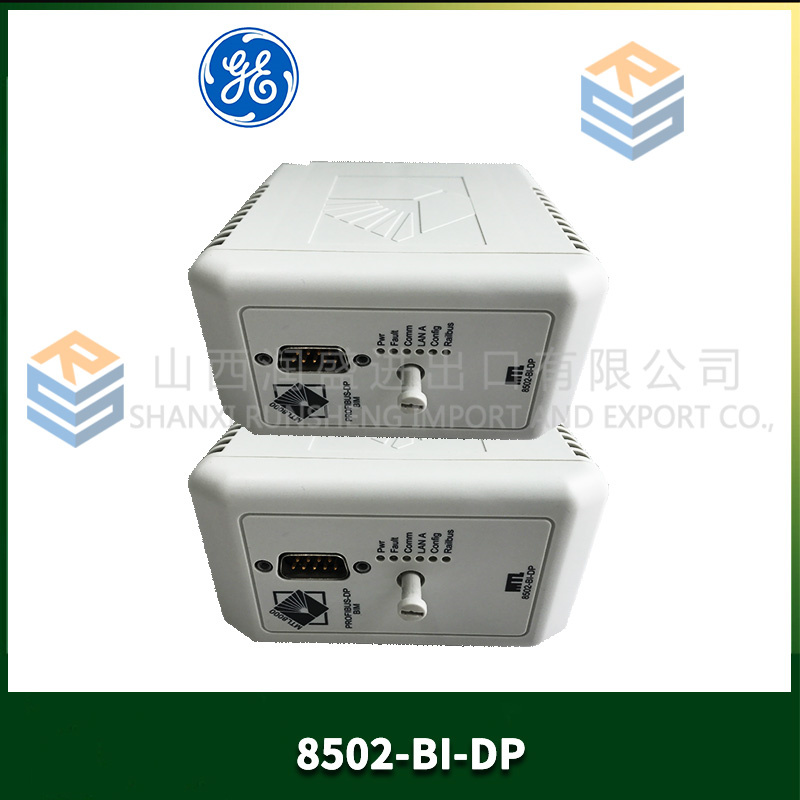
GE 8502-BI-DP
GE 8502-BI-DP
 Email: sales@plcfcs.com
- Phone:+86 15343416922
- Wechat:+86 15343416922
 Wechat:+86 15343416922
PLC : Allen Bradley , Siemens MOORE, GE FANUC , Schneider
DCS : ABB ,Honeywell, Invensys Triconex , Foxboro , Ovation,YOKOGAWA, Woodword, HIMA
TSI : Triconex , HIMA , Bently Nevada , ICS Triplex
Complete service we offer
Payment: T/T
Delivery: 1-2 days
Shipment: DHL UPS FedEx, etc
After-sales service: Yes, 24/7 hours