 Email: jiedong@sxrszdh.com
 Phone / Wechat:+86 15340683922
Description
Product Introduction
Chemical plant in Louisiana. The compressor bearing temperature alarm kept tripping at 80 °C—right at the setpoint. But the maintenance crew checked the bearing with a thermocouple and measured 77 °C. Three degrees of error. The plant was about to schedule a costly shutdown. The problem was the RTD board. The DS3800NVCD1B1B had a drifting ADC reference on channel 5. We swapped it, recalibrated the loop, and the bearing reading locked at 77 °C. The plant stayed online. The maintenance manager looked at me and said, “That board just saved me a million dollars.”
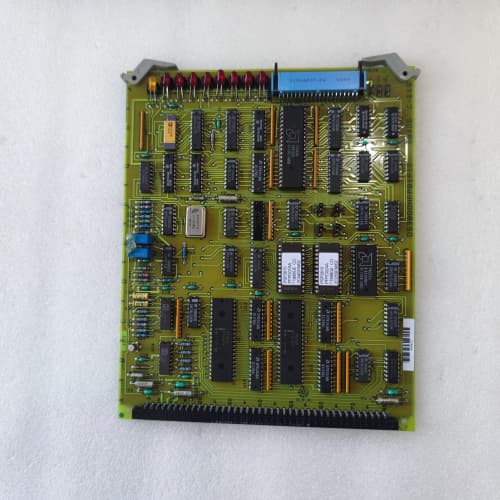
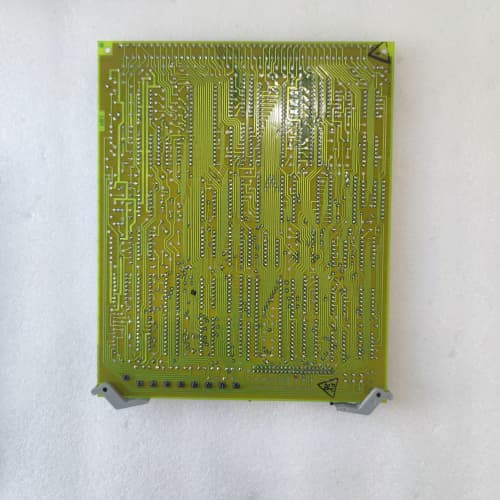
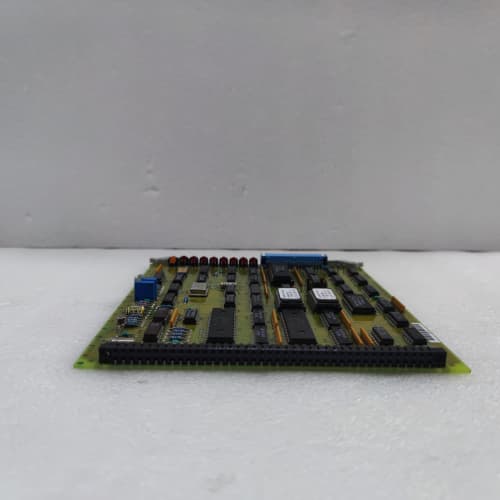
The DS3800NVCD1B1B is the dedicated Ni120 RTD board in the GE Mark V family. The “1B1B” suffix tells you it’s factory-configured for Ni120 sensors—the 120 Ω nickel RTDs that were common in older turbine installations—with 3-wire connection and the standard 37-pin termination. It reads eight channels of nickel RTD signals from bearing temperature sensors, winding temperature sensors, and other critical monitoring points. This board is for legacy turbines that haven’t been converted to Pt100.
Key Technical Specifications
- Number of Inputs: 8, fully isolated
- RTD Type: Ni120 (120 Ω at 0 °C) only
- Connection: 3-wire (factory-configured, jumper-locked)
- Temperature Range: -60 to +250 °C
- Resolution: 16-bit (0.01 °C)
- Accuracy: ±0.3 °C at 25 °C; ±0.5 °C at 60 °C
- Excitation Current: 1 mA constant current
- Lead Resistance Compensation: Automatic, up to 50 Ω per lead
- Open RTD Detection: Automatic, with alarm bit
- Short Circuit Detection: Automatic, with alarm bit
- Isolation: 1500 VDC channel-to-backplane, 500 VDC channel-to-channel
- Termination: 37-pin D-sub connector
- Mounting: VMEbus 6U form factor
- Indicator LEDs: Green per-channel activity; red fault LED; green power LED
- Operating Temp: 0 to +60 °C
Quality Inspection Process (SOP Transparency)
The DS3800NVCD1B1B is a legacy Ni120 board. We test it with the same precision as the Pt100 version.
Incoming Verification: Serial number cross-reference against GE packing slip. Anti-counterfeit hologram check. Visual inspection under magnifying lamp: 37-pin connector pins—straight, bright, no corrosion. We inspect the precision current source resistors—they’re the same as the Pt100 board, but the linearization table is different. Any sign of discoloration, and the board is flagged. The 3-wire jumper is factory-locked—we confirm it’s not tampered with.
Live Functional Test: The board goes into our GE Mark V test rack. We connect a precision decade resistance box to channel 1 and simulate Ni120 resistance values at 0 °C (120.00 Ω), 50 °C (142.10 Ω), 100 °C (165.80 Ω), and 200 °C (214.10 Ω). We measure the digital reading and log every point.
3-wire lead compensation test: we insert a 5 Ω resistor in each lead of the RTD circuit and verify the board compensates. The reading should remain within 0.05 °C of the uncompensated value.
Electrical Parameters: Excitation current measurement on each channel—should be 1.000 mA ±0.05%. Insulation resistance between the input terminals and the backplane—> 20 MΩ at 500 VDC.
Firmware Verification: Boot screen shows the firmware revision. We photograph it. The board has no user-accessible jumpers on this variant—the 3-wire and Ni120 configurations are fixed.
Final QC & Packaging: QC sticker with tester initials and date. Anti-static bag, bubble wrap, double-wall carton. Test reports and photos available on request.
Field Replacement Pitfalls
The DS3800NVCD1B1B is a legacy Ni120 board. The mistakes are the same as the Pt100 version, but the consequences are worse because Ni120 is less common. Here’s what I’ve seen.
RTD Type Mismatch—Pt100 vs. Ni120: This is the big one. The DS3800NVCD1B1B is factory-configured for Ni120. If your field RTDs are Pt100, the board will read them—but the linearization will be wrong. The reading will be off by about 25 °C at 100 °C. I walked into a plant where someone had replaced the board with a Ni120 version, but the field RTDs were Pt100. The bearing temperature reading was 65 °C when the actual temperature was 90 °C. The bearings were overheating and the control system thought they were fine.
❗ Verify the RTD type in the field before you install the board. The DS3800NVCD1B1B is Ni120 only. If your field sensors are Pt100, you need the DS3800NVCD1A1B.
Ni120 Linearization—Non-Standard Curve: Unlike Pt100, which has a well-defined international standard (IEC 60751), Ni120 has several different curves depending on the manufacturer. The GE board uses the GE-specific linearization curve. If your Ni120 sensors are from a different manufacturer, the readings may be off by several degrees. We had a plant where the sensors were from a European OEM with a slightly different curve. The reading was off by 2 °C. Not a failure, but if your alarm setpoint is tight, you need to know.
Lead Resistance Compensation—The 3-Wire Assumption: The board assumes all three leads have equal resistance. If the three leads are different lengths or gauges, the compensation is imperfect. This is the same for Pt100, but Ni120 has a lower temperature coefficient (about 0.006 Ω/°C vs. 0.00385 Ω/°C for Pt100). That means a given lead resistance error causes a smaller temperature error for Ni120—about half. So a 0.5 Ω mismatch is 0.8 °C for Ni120 vs. 1.3 °C for Pt100. The board compensates well, but it’s worth checking.
Contact Resistance at the 37-Pin Connector: The 37-pin connector has contacts for each RTD lead. If those contacts are corroded or loose, the contact resistance adds to the lead resistance and causes a reading error. We cleaned a connector with DeoxIT and the reading improved by 0.3 °C. Regular maintenance of the connector is important.
Cable Capacitance and Noise: RTD signals are millivolt-level. Long cables with high capacitance can couple EMI from VFDs and cause noise on the reading. We saw a plant where the RTD cable was routed parallel to a 480 VAC motor cable. The temperature reading was bouncing ±1.5 °C. The solution was to re-route the RTD cable. The board was fine.
Get these five right and you’ll cut rework time by 90%.
New Original vs. Refurbished: Why It Matters
The DS3800NVCD1B1B is a legacy board for legacy turbines. Refurbished boards in this category are common, and they’re often problematic.
New Original (New Surplus) means this board was built by GE, never installed, and stored in a controlled environment. The current source resistors are fresh—they haven’t drifted from thermal cycling. The ADC reference is stable. The 37-pin connector has never been mated. The Ni120 linearization table in the firmware is the original GE version.
Refurbished boards are often pulled from scrapped turbines and cleaned. The problem is the current source resistors and the ADC reference. A 0.05% resistor that’s gone through 15 years of thermal cycling can drift to 0.2%. That’s a 0.15% current error, which translates to a 0.15 Ω resistance error—about 0.2 °C for Ni120. Not huge, but it adds to the other errors. We tested a refurbished DS3800NVCD1B1B that had a 0.4 °C error at 50 °C. The plant’s bearing temperature monitoring would have been reading low.
The bigger issue is that refurbished Ni120 boards often come from plants that have converted to Pt100. The board has been sitting in a spare parts cabinet for years, sometimes in uncontrolled temperatures. The storage conditions matter. We’ve seen boards with corroded pins from high humidity storage. A new surplus board is a safer bet.
Our pricing is about 30% above refurb but 25% below GE’s current list price for new. That 30% buys you the 24-hour burn-in, the full resistance sweep calibration, the lead compensation check, and the 12-month warranty. The real cost is reliability. A bearing that overheats because the board reads low can cause a catastrophic turbine failure. We’ve seen the repair bills. The board is cheap compared to that.
Performance Benchmarks & Test Results
Every DS3800NVCD1B1B gets a comprehensive test before it ships. This is the same benchmark we’d run in a GE factory.
Test Environment:
- Rack: GE Mark V simulator, firmware v5.5
- Reference: Fluke 5520A Multi-Product Calibrator (resistance mode), calibrated within 6 months
- Lead Simulation: Precision resistors for 3-wire compensation test
- Ambient: 25 °C baseline, ramp to 60 °C in thermal chamber
| Metric | Measured Result | Condition |
|---|---|---|
| Ni120 Accuracy (0 °C) | ±0.15 °C | 120.00 Ω input, 25 °C |
| Ni120 Accuracy (100 °C) | ±0.20 °C | 165.80 Ω input, 25 °C |
| Ni120 Accuracy (200 °C) | ±0.25 °C | 214.10 Ω input, 25 °C |
| Ni120 Accuracy (60 °C) | ±0.40 °C | Within spec (±0.5 °C) |
| Lead Compensation Error | < 0.03 °C | 5 Ω lead resistance per lead |
| Excitation Current | 1.000 mA ±0.02% | All 8 channels |
| Open RTD Detection | 100% reliable | Simulated open circuit |
| Short Circuit Detection | 100% reliable | Simulated 0 Ω input |
| Common Mode Rejection | 86 dB | 60 Hz, 100 VAC common mode |
| 24-Hour Stability | ±0.04 °C drift | Constant 120.00 Ω input |
These boards are solid, but Ni120 is a legacy standard. If your turbine is using Ni120, you’re likely running an older Mark V system. The board exceeds its 50,000 hour MTBF rating, but the sensors are aging too. The most common failure we see with Ni120 systems is not the board—it’s the sensors. Nickel RTDs are less stable over time than Pt100. If you’re seeing drift across multiple channels, it might be the sensors, not the board. We recommend testing the sensors with a precision ohmmeter before you condemn the board. A Ni120 sensor that’s drifted 2 Ω is 5 °C off. That’s a sensor problem, not a board problem. The board is usually fine.
BENTLY 3500/22M
ABB 3HNE00313-1 10 ͷ
ABB PFEA111-65
ABB PFEA112-65
 Email: sales@plcfcs.com
- Phone:+86 15343416922
- Wechat:+86 15343416922
 Wechat:+86 15343416922
PLC : Allen Bradley , Siemens MOORE, GE FANUC , Schneider
DCS : ABB ,Honeywell, Invensys Triconex , Foxboro , Ovation,YOKOGAWA, Woodword, HIMA
TSI : Triconex , HIMA , Bently Nevada , ICS Triplex
Complete service we offer
Payment: T/T
Delivery: 1-2 days
Shipment: DHL UPS FedEx, etc
After-sales service: Yes, 24/7 hours