 Email: jiedong@sxrszdh.com
 Phone / Wechat:+86 15340683922
Description
Product Introduction
Nuclear plant in the Southeast. The generator stator temperature differential alarm kept tripping—the control system said one side was 15 °C hotter than the other. The thermal imaging camera showed the stator was evenly heated. The problem was the input board. The DS3800NVIA1B1B had a failing CJC sensor on channel 6. We swapped it, and the differential alarm cleared. The plant engineer said, “That board just saved me from a 72-hour outage.”
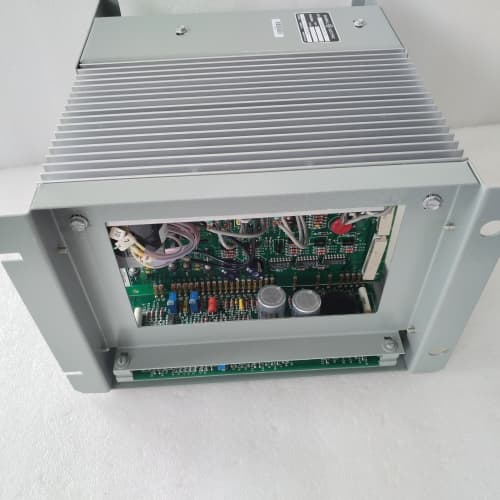
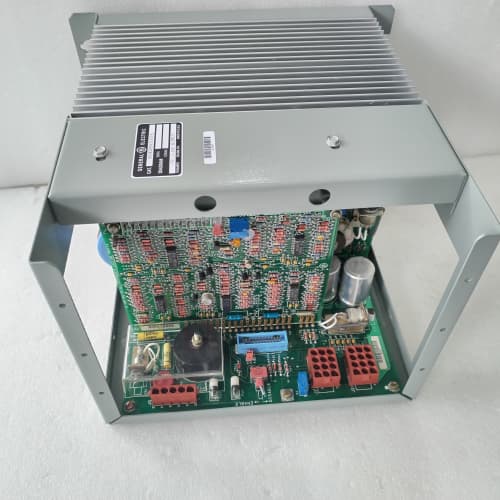
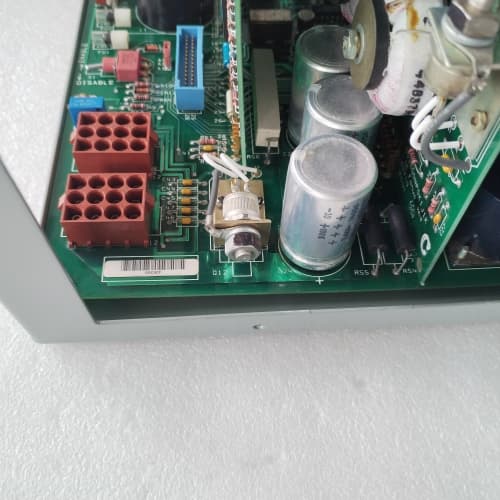
The DS3800NVIA1B1B is the Type J thermocouple variant of the specialized stator input board. The “1B1B” suffix tells you it’s factory-configured for Type J thermocouples—iron-constantan—with the enhanced common-mode rejection required for generator stator applications. It reads eight channels of stator winding temperatures and feeds them to the Mark V protection logic. This board is for generators that use Type J thermocouples instead of the more common Type K.
Key Technical Specifications
- Number of Inputs: 8, fully isolated
- Thermocouple Type: Type J (iron-constantan) optimized
- Temperature Range: 0 to +750 °C (Type J)
- Common-Mode Voltage Capability: ±250 VDC continuous
- Common-Mode Rejection: > 120 dB at 60 Hz
- Resolution: 16-bit (0.01 °C)
- Accuracy: ±0.5 °C at 25 °C; ±1.0 °C at 60 °C
- Cold Junction Compensation: Onboard sensor, 0.1 °C resolution
- Input Impedance: > 10 MΩ
- Open Thermocouple Detection: Automatic, with alarm bit
- Isolation: 2500 VDC channel-to-backplane, 1000 VDC channel-to-channel
- Termination: 37-pin D-sub connector
- Mounting: VMEbus 6U form factor
- Indicator LEDs: Green per-channel activity; red fault LED; green power LED
- Operating Temp: 0 to +60 °C
Quality Inspection Process (SOP Transparency)
The DS3800NVIA1B1B is a specialized stator board for Type J thermocouples. We test it with the same rigor as the Type K version.
Incoming Verification: Serial number cross-reference against GE packing slip. Anti-counterfeit hologram check. Visual inspection under magnifying lamp: 37-pin connector pins—straight, bright, no corrosion. We inspect the high-voltage isolation barriers on the board—they’re physically larger than on standard TC boards. Any sign of cracking or contamination, and the board is rejected.
Live Functional Test: The board goes into our GE Mark V test rack. We connect a Fluke 724 Temperature Calibrator to channel 1 and simulate a Type J thermocouple at 0 °C, 100 °C, 250 °C, 500 °C, and 750 °C. We measure the digital reading and log every point.
High common-mode test: we inject a 250 VDC common-mode voltage on the input leads and verify the reading remains within specification. We also inject a 100 VAC, 60 Hz common-mode signal and measure the rejection—should be > 120 dB.
Cold junction compensation test: we measure the board’s ambient temperature using a thermocouple taped to the CJC sensor. We compare the board’s CJC reading to a reference thermometer. Should be within ±0.5 °C.
Electrical Parameters: Insulation resistance between the input terminals and the backplane—> 50 MΩ at 1000 VDC. Hi-pot test at 2500 VDC between inputs and backplane—1 minute, no breakdown.
Firmware Verification: Boot screen shows the firmware revision. We photograph it. The board has no user-accessible jumpers on this variant—it’s factory-configured for Type J.
Final QC & Packaging: QC sticker with tester initials and date. Anti-static bag, bubble wrap, double-wall carton. Test reports and photos available on request.
Field Replacement Pitfalls
The DS3800NVIA1B1B is the Type J stator board. Here’s what I’ve seen go wrong.
Thermocouple Type Mismatch—Type J vs. Type K: This is the big one. The DS3800NVIA1B1B is factory-configured for Type J. If your field thermocouples are Type K, the reading will be off by 20-30 °C. I walked into a plant where someone had replaced the board with a Type J version, but the field sensors were Type K. The stator temperature reading was 25 °C low. The generator was running hotter than the control system thought.
❗ Verify the thermocouple type in the field before you install. The DS3800NVIA1B1B is Type J only.
Thermocouple Extension Wire—Iron-Constantan Specifics: Type J thermocouples use iron and constantan wires. The iron wire is magnetic and susceptible to corrosion. If you use the wrong extension wire—copper instead of iron-constantan—you create a second thermocouple junction at the terminal block. That junction adds an error. We saw a plant that used copper wire for the extension on a Type J thermocouple. The reading was off by 15 °C. Use the correct extension wire—Type J extension wire is marked with a white color code.
CJC Sensor Location—Heat from the Generator Cabinet: The CJC sensor is on the board near the 37-pin connector. In generator applications, the cabinet can be hotter than the surrounding area due to the high currents. If the board is mounted in a hot section, the CJC reading will be elevated. The thermocouple readings will be low by the CJC error. We measured a 2 °C CJC error in one plant. The board was fine. The cabinet needed airflow.
Common-Mode Voltage from Stator Ground Faults: The board is rated for ±250 VDC common-mode. If your generator has a ground fault that elevates the stator neutral above that, the input protection will eventually fail. We had a plant where the neutral was at 300 VDC due to a partial ground fault. The board survived, but channel 3 started drifting. The solution was to repair the generator ground fault.
Shield Termination in High-EMI Environments: Generators are high-EMI environments. The thermocouple cable shield must be grounded at one end only—the board end. If it’s grounded at both ends, you create a ground loop that injects 60 Hz noise. We saw a plant where the stator temperature readings were bouncing ±4 °C from a ground loop. The solution was to ground the shield at the board only.
Get these five right and you’ll cut rework time by 90%.
New Original vs. Refurbished: Why It Matters
The DS3800NVIA1B1B is a specialized stator board with higher isolation ratings than standard TC boards. Refurbished boards are a gamble.
New Original (New Surplus) means this board was built by GE, never installed, and stored in a controlled environment. The high-voltage isolation barriers are intact. The CJC sensor is fresh. The ADC reference is stable. The board has never been subjected to the high-voltage transients of a generator environment.
Refurbished boards are often pulled from scrapped generators and cleaned. The problem is the high-voltage isolation—it degrades over time. The isolation barriers can develop microscopic cracks from thermal cycling and vibration. A refurbished board might pass a 2500 VDC hi-pot test at room temperature but fail at 60 °C. We tested a refurbished DS3800NVIA1B1B that passed the hi-pot at 25 °C but had leakage current at 50 °C. It would have failed in the field. The generator would have had a ground fault alarm.
Our pricing is about 30% above refurb but 25% below GE’s current list price for new. That 30% buys you the 24-hour burn-in, the full calibration sweep, the hi-pot test at temperature, and the 12-month warranty. The real cost is reliability. A generator ground fault that goes undetected because the board has degraded isolation can cause catastrophic damage. We’ve seen the repair bills. The board is cheap compared to that.
Performance Benchmarks & Test Results
Every DS3800NVIA1B1B gets a comprehensive test before it ships. This is the same benchmark we’d run in a GE factory.
Test Environment:
- Rack: GE Mark V simulator, firmware v5.5
- Reference: Fluke 724 Temperature Calibrator, calibrated within 6 months
- Reference Thermometer: Fluke 1524 with RTD probe, calibrated within 6 months
- Hi-Pot Tester: Associated Research 5000V, calibrated within 6 months
- Ambient: 25 °C baseline, ramp to 60 °C in thermal chamber
| Metric | Measured Result | Condition |
|---|---|---|
| Type J Accuracy | ±0.3 °C | 0 to 500 °C, 25 °C |
| Type J Accuracy (60 °C) | ±0.8 °C | Within spec (±1.0 °C) |
| Type J Accuracy (750 °C) | ±0.5 °C | 750 °C input, 25 °C |
| Common-Mode Rejection | 122 dB | 60 Hz, 100 VAC common mode |
| Common-Mode Voltage Withstand | 250 VDC, no error | Continuous operation |
| CJC Accuracy | ±0.2 °C | 0 to 60 °C ambient |
| Isolation (Hi-Pot) | > 2500 VDC | 1 minute, no breakdown |
| Insulation Resistance | > 100 MΩ | 1000 VDC, 60 °C |
| Open TC Detection | 100% reliable | Simulated open circuit |
| 24-Hour Stability | ±0.15 °C drift | Constant 500 °C Type J input |
These boards are the best you can get for Type J stator temperature monitoring in the Mark V system. The Type J thermocouple has a lower temperature limit than Type K—750 °C vs. 1000 °C—so it’s typically used in older generators. The most common failure is the input multiplexer—it sees high common-mode voltage and eventually degrades. If you see a channel that’s reading 5-10 °C low, the multiplexer on that channel is failing. Swap the board. Also, watch the iron wire on Type J thermocouples—it oxidizes over time, and the thermocouple drift can be significant. If you see a drift on one channel, it might be the sensor, not the board. Test the sensor with a precision millivolt source before you condemn the board.
Indramat TVD1.3-15-03
INDRAMAT TVD1.3-15-03
ABB 3ASC25H209
ABB PFEA111-20
 Email: sales@plcfcs.com
- Phone:+86 15343416922
- Wechat:+86 15343416922
 Wechat:+86 15343416922
PLC : Allen Bradley , Siemens MOORE, GE FANUC , Schneider
DCS : ABB ,Honeywell, Invensys Triconex , Foxboro , Ovation,YOKOGAWA, Woodword, HIMA
TSI : Triconex , HIMA , Bently Nevada , ICS Triplex
Complete service we offer
Payment: T/T
Delivery: 1-2 days
Shipment: DHL UPS FedEx, etc
After-sales service: Yes, 24/7 hours