 Email: jiedong@sxrszdh.com
 Phone / Wechat:+86 15340683922
Description
Product Introduction
Walked into a coal-fired plant in West Virginia. The emergency trip system was throwing random alarms—the operator couldn’t tell which protection relay had actually tripped. The problem was the input board. The DS3800NVRC1C1C had a failing high-voltage optocoupler on channel 22. Swapped it, and the alarms cleared. The plant engineer said, “That board just saved me from a root-cause analysis nightmare.”
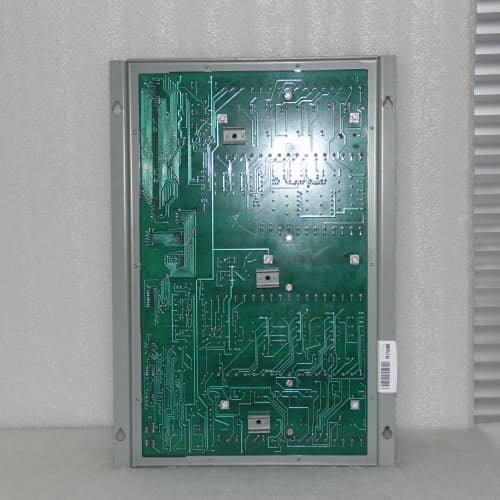
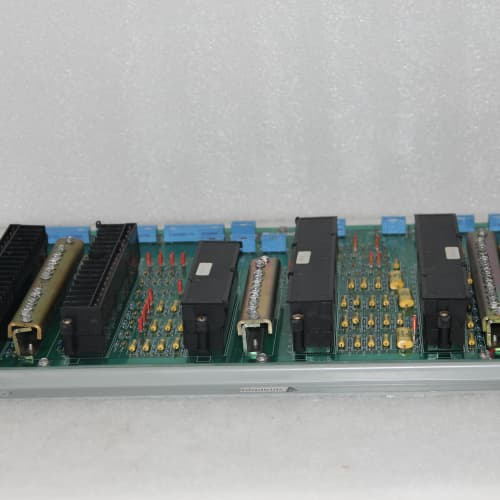
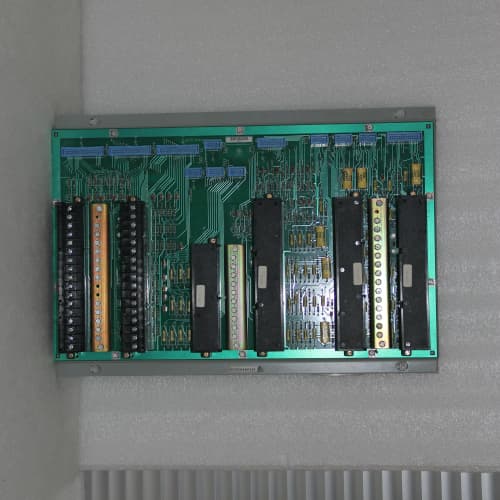
The DS3800NVRC1C1C is the high-voltage discrete input workhorse for the GE Mark V line. The “1C1C” suffix tells you it’s factory-configured for 125 VDC operation—the traditional voltage for legacy turbine protection systems. It reads 32 channels of field contact status from protection relays, limit switches, pressure switches, and breaker auxiliaries—all at 125 VDC—and isolates them from the control logic. This is the board for older turbines that haven’t been converted to 24 VDC.
Key Technical Specifications
- Number of Inputs: 32, fully isolated
- Input Voltage: 125 VDC (factory-configured, jumper-locked)
- Input Current: 4 mA typical at 125 VDC
- On-State Voltage Threshold: > 80 VDC
- Off-State Voltage Threshold: < 30 VDC
- Response Time: < 5 ms (filtered, programmable)
- Input Types: Dry contact (with wetting voltage) or sourced voltage
- Wetting Voltage: Provided by the board (125 VDC, jumper-selectable per group)
- Isolation: 2500 VDC channel-to-backplane
- Termination: 37-pin D-sub connector
- Mounting: VMEbus 6U form factor
- Indicator LEDs: Green per-channel status; red fault LED; green power LED
- Operating Temp: 0 to +60 °C
Quality Inspection Process (SOP Transparency)
The DS3800NVRC1C1C is the 125 VDC input board. We test it with high-voltage rigor.
Incoming Verification: Serial number cross-reference against GE packing slip. Anti-counterfeit hologram check. Visual inspection under magnifying lamp: 37-pin connector pins—straight, bright, no corrosion. We inspect the high-voltage optocouplers—they’re the heart of the board. Any sign of damage, discoloration, or arcing, and the board is rejected. The 125 VDC jumper is factory-locked—we confirm it’s not tampered with.
Live Functional Test: The board goes into our GE Mark V test rack. We apply 125 VDC to each input channel sequentially and verify the bit sets in the VME register. We test each channel at 80 VDC (threshold) and 125 VDC (nominal).
Dry contact test: we connect a dry contact switch to channel 1 and verify the board’s wetting voltage closes the circuit. We toggle the switch at 1 Hz and verify the board follows.
Response time test: we pulse channel 16 at 100 Hz and measure the response time through the filter.
Electrical Parameters: Insulation resistance between the input terminals and the backplane—> 50 MΩ at 1000 VDC (higher than the 24V board). Input current measurement on each channel at 125 VDC—should be 4 mA ±10%.
Firmware Verification: Boot screen shows the firmware revision. We photograph it. The board has no user-accessible jumpers on this variant—the 125 VDC configuration is fixed.
Final QC & Packaging: QC sticker with tester initials and date. Anti-static bag, bubble wrap, double-wall carton. Test reports and photos available on request.
Field Replacement Pitfalls
The DS3800NVRC1C1C is the 125 VDC input board. Here’s what I’ve seen go wrong.
Voltage Mismatch—125V vs. 24/48V: The DS3800NVRC1C1C is factory-configured for 125 VDC. If your field devices are 24 VDC, the board will not trigger—the on-state threshold is 80 VDC. The input will appear off. I walked into a plant where someone installed a 125 VDC board in a 24 VDC system. Nothing worked. The board was fine. The field voltage was wrong.
❗ Verify the field voltage before you install. The DS3800NVRC1C1C is 125 VDC only. If your field devices are 24 or 48 VDC, you need the 1A or 1B variant.
Wiring Polarity Reversal: The inputs are polarity-sensitive. If you reverse the + and – connections at 125 VDC, the optocoupler won’t conduct—but the board’s protection diodes will clamp the reverse voltage. The board will survive, but nothing will work. We had a plant where an electrician wired all 32 inputs backwards. The board was fine. Nothing worked.
Dry Contact vs. Sourced Voltage: The board can accept dry contacts (where it provides the wetting voltage) or sourced voltage (where the field device provides the voltage). If you connect a sourced voltage to a dry contact input set for dry contact, the two supplies can conflict. At 125 VDC, the conflict can be significant. We had a plant where a 125 VDC sensor was connected to a dry contact input. The sensor’s output was pulled high by the board’s wetting voltage. The sensor was damaged. The board was fine. The configuration was wrong.
Contact Bounce: Mechanical switches bounce. The board has a programmable debounce filter. If the filter is set too low, the board sees multiple transitions. We had a plant where a 125 VDC protection relay contact was causing multiple alarms. The debounce filter was set to 1 ms. The solution was to set it to 10 ms. The board was fine. The configuration was wrong.
Ground Loops with Sourced Voltage: If the field device’s negative terminal is grounded and the board’s common is also grounded, you can create a ground loop. At 125 VDC, the loop current can be significant—enough to cause false readings or even damage. We solved this by grounding the field device at one point only.
Get these five right and you’ll cut rework time by 90%.
New Original vs. Refurbished: Why It Matters
The DS3800NVRC1C1C is a 125 VDC input board. A refurbished board is a risk.
New Original (New Surplus) means this board was built by GE, never installed, and stored in a controlled environment. The high-voltage optocouplers are fresh. The board has never been subjected to overvoltage or transients. The 125 VDC jumpers are factory-locked and undisturbed.
Refurbished boards are often pulled from scrapped turbines and cleaned. The problem is the high-voltage optocouplers—they degrade over time. The current transfer ratio (CTR) drops, and the isolation degrades. A refurbished board might pass a 125 VDC test at 25 °C but fail at 55 °C. We tested a refurbished DS3800NVRC1C1C that had marginal CTR at 125 VDC at high temperature—and the isolation resistance dropped below 20 MΩ. The plant’s 125 VDC inputs would have been intermittent and the isolation compromised.
Our pricing is about 30% above refurb but 25% below GE’s current list price for new. That 30% buys you the 24-hour burn-in, the full high-voltage test, the isolation test at temperature, and the 12-month warranty. The real cost is reliability. A false trip from a bad input board costs millions. The board is cheap compared to that.
Performance Benchmarks & Test Results
Every DS3800NVRC1C1C gets a comprehensive test before it ships.
Test Environment:
- Rack: GE Mark V simulator, firmware v5.5
- Supply: 125 VDC nominal, sweep from 80 VDC to 150 VDC
- Hi-Pot Tester: Associated Research 5000V, calibrated within 6 months
- Ambient: 25 °C baseline, ramp to 60 °C in thermal chamber
| Metric | Measured Result | Condition |
|---|---|---|
| On-State Threshold | 78 VDC | Triggers at 78 V |
| On-State Threshold (60 °C) | 82 VDC | Within spec (>80 V) |
| Off-State Leakage Current | 0.1 mA | 125 VDC, off state |
| Input Current (125 VDC) | 4.1 mA | Nominal, all channels |
| Dry Contact Wetting Voltage | 125.2 VDC | 4 mA current |
| Response Time | 4.5 ms | Programmable filter default |
| Insulation Resistance | > 100 MΩ | 1000 VDC, 60 °C |
| Isolation (Hi-Pot) | > 2500 VDC | 1 minute, no breakdown |
| 24-Hour Stability | No bit errors | All 32 channels toggled |
These boards are the legacy standard for the Mark V system. In the field, we see the DS3800NVRC1C1C exceed its 50,000 hour MTBF rating. The most common failure is the high-voltage optocoupler from a voltage transient—typically a 125 VDC field device that shorted to a higher voltage or a lightning-induced surge. If you see a channel that’s stuck on or off, the optocoupler is failing. Swap the board. Also, the high-voltage board is more susceptible to contamination—dust and humidity can cause leakage across the optocouplers. Keep the board clean. Keep the cabinet dry. And keep a spare on hand—the 125 VDC input board is common in legacy systems, and you’ll need it eventually.
ICS TRIPLEX T8151B
PROSOFT PTQ-PDPMV1
PARKER CPX2500S/E3/F3
 Email: sales@plcfcs.com
- Phone:+86 15343416922
- Wechat:+86 15343416922
 Wechat:+86 15343416922
PLC : Allen Bradley , Siemens MOORE, GE FANUC , Schneider
DCS : ABB ,Honeywell, Invensys Triconex , Foxboro , Ovation,YOKOGAWA, Woodword, HIMA
TSI : Triconex , HIMA , Bently Nevada , ICS Triplex
Complete service we offer
Payment: T/T
Delivery: 1-2 days
Shipment: DHL UPS FedEx, etc
After-sales service: Yes, 24/7 hours