 Email: jiedong@sxrszdh.com
 Phone / Wechat:+86 15340683922
Description
Product Introduction
The DS3800XPER is the redundant version of GE’s Mark VIe power entry module. Unlike the XPEM and XPEN series which require external OR-ing diodes for dual battery feeds, the XPER has those diodes built-in on the board. The “R” stands for Redundant—plug in two 24V DC sources, and the board automatically picks the higher voltage, isolates the lower one, and keeps the backplane running if one feed drops. No external diode blocks, no wiring headaches. It’s a direct drop-in for the XPEM/XPEN footprint but with a different input stage and additional control logic.
Where this board shines is in high-availability applications—think critical turbine protection systems where losing the 24V supply for even a few seconds could cause a trip. The internal OR-ing diodes are Schottky-type with low forward drop (about 0.4V), so you lose very little voltage in the isolation. The board also monitors each input independently and reports their status to the controller via the backplane, giving operators early warning if one battery string is failing. That’s a useful diagnostic feature you don’t get with the external diode approach. Typical buyers are plant engineers upgrading from single-fed XPEMs to redundant configurations, or operators in regions with unstable grid power who need the extra reliability.
Key Technical Specifications
| Parameter | Value / Specification |
|---|---|
| Part Number | DS3800XPER |
| Product Type | Redundant Power Entry Module |
| Input Voltage | 24V DC nominal (18-32V DC range, per input) |
| Input Current | 10A maximum per input (20A total with both active) |
| Output Voltage | 5V DC (Backplane) |
| Output Current | 15A maximum (shared across backplane) |
| Redundancy Method | Internal Schottky OR-ing diodes (low forward drop) |
| Input Monitoring | Voltage OK per input, reported via backplane |
| Inrush Limiting | Yes, soft-start on power-up |
| Transient Protection | TVS on each input, reverse polarity protection |
| EMI Filtering | Built-in differential and common-mode filters |
| Status Monitoring | Output voltage OK, Input A OK, Input B OK, Overcurrent, Overtemperature |
| Bus Interface | VME backplane (proprietary GE Mark VIe) |
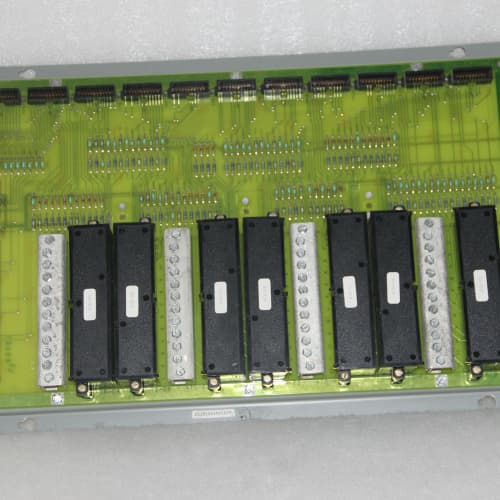
| Termination | Two separate 2-pin screw terminal blocks (Input A, Input B), Backplane connector (Output) |
| Power Draw | Self-consumption: <15W |
| Operating Temp | 0°C to 60°C |
| LED Indicators | Green (Input A OK), Green (Input B OK), Green (Output OK), Yellow (Load >80%), Red (Fault) |
Compatible Replacement Models
| Model | Compatibility | Notes |
|---|---|---|
| DS3800XPEM | ⚠️ Software Compatible | Same output capacity (10A), but without internal OR-ing. Requires external diode blocks for redundancy. Physically a drop-in but lacks the dual input monitoring. |
| DS3800XPEN | ⚠️ Software Compatible | Higher output capacity (15A) but no internal OR-ing. Same physical footprint, but external diodes needed for redundancy. |
| DS3800XPEC | ❌ Hardware Incompatible | Different input architecture (AC input). Not a direct swap. |
| IS200EPBPG1A | ❌ Hardware Incompatible | Older Mark V power board. Different form factor and backplane architecture. |
Frequently Asked Questions (FAQ)
Q: Can I hot-swap this power module?
No. The Mark VIe backplane requires power removal before installation or removal. Even though the XPER is designed for redundant inputs, the backplane itself doesn’t support live insertion. If you pull it while the rack is powered, you risk arcing on the backplane pins and potentially damaging the output stage. Power down the entire I/O pack before swapping. We’ve seen field techs try this and take out the OR-ing diodes internally—then the board can’t isolate inputs properly.
Q: How is this different from the XPEM or XPEN?
Three key differences:
- Internal OR-ing: The XPER has Schottky diodes built-in on the board for input redundancy. The XPEM and XPEN require external diode blocks. This board is literally plug-and-play for dual feeds.
- Input monitoring: The XPER reports the status of each input individually to the controller. If Input A drops to 20V but Input B is still at 24V, the board flags an alarm on Input A while continuing to operate. That’s a diagnostic feature the XPEM/XPEN don’t have.
- Capacity: The XPER is rated at 15A output (same as XPEN), which is higher than the 10A XPEM. So it’s both redundant and high-capacity.
The physical footprint and backplane connector are identical to the XPEM/XPEN, so you can upgrade without changing racks.
Q: How do the internal OR-ing diodes work?
The board has two independent input circuits, each with a Schottky diode in series with a TVS and EMI filter. Both diodes feed into a common bus capacitor. The diode with the higher input voltage conducts, and the other is reverse-biased (isolated). If one input drops or fails, the diode on that input blocks reverse current, so the other input continues to power the load.
The forward drop on the Schottky diodes is about 0.4V at 10A. So if Input A is 24.0V, the bus sees about 23.6V. That’s within the normal operating range of the downstream 5V regulator. If you’re using battery strings that are already low (18V), you might lose a bit more headroom—check your battery voltage before committing.
Q: Can I run this board with a single input?
Yes. You can connect only Input A (or Input B) and leave the other terminal unused. The board operates normally—the unused input simply stays off and doesn’t trigger any alarms. If you’re using it as a single-feed supply, though, you’re paying extra for redundancy you’re not using. You’d be better off with an XPEN in that case. The XPER is designed for dual feeds; using it with one feed is fine but doesn’t leverage its capability.
Q: How do you test this board before shipping?
We run a 7-step test with both inputs active to verify the redundancy logic:
- Visual inspection: Check for swollen capacitors, burnt FETs, cracked screw terminals. Also inspect the OR-ing diodes—they should have clear markings and no discoloration.
- ESD check: Insulation resistance between each input terminal and chassis ground must exceed 10MΩ.
- Initial power-up: Apply 24V to Input A only. Verify soft-start limits inrush to <15A. Confirm all LEDs illuminate—Input A OK, Output OK. Apply 24V to Input B and verify it also illuminates.
- Input switching test: With both inputs active, we drop Input A to 22V and verify the board continues to operate without interruption. Then we drop Input B and verify the same. We also test the reverse—adding a fault condition on one input—to confirm the alarms trigger correctly.
- No-load output: Measure the 5V DC rail unloaded. Must be within ±2% (4.9-5.1V).
- Load test: Apply a 15A resistive load to the 5V rail with both inputs active. Monitor voltage regulation (4.9-5.1V), ripple (<50mV p-p), and temperature rise (FETs must stay below 70°C).
- 24-hour soak: Run at 15A load at 50°C ambient with both inputs active. We log output voltage, temperature, and input status every hour. If voltage droops below 4.85V or temperature exceeds 75°C, it fails.
We tag every passed unit and seal it in an anti-static bag. To be frank, about 8% of these XPER boards fail the input switching test—the OR-ing diodes have a higher failure rate in this board than in the external diode approach. We replace the diodes and retest.
Q: What’s the most common failure on this board?
Three things specific to the redundant design:
- OR-ing diode burnout: The Schottky diodes are the first to go if there’s a reverse voltage condition or a surge. If one diode fails short, both inputs are connected and back-feed is possible. If one fails open, you lose that input path. We replace diodes on about 20% of the XPER boards we refurbish.
- Input cap aging: Same as other power modules—electrolytics on the input stage dry out over time. But because the XPER has two input circuits, you have twice the capacitors, so twice the potential failure points.
- TVS burnout: The transient suppression diodes on the input can short if you have frequent surges. The board still works if one TVS shorts (the other input takes over), but the protection is compromised on that channel.
Q: What does the “R” suffix mean?
The “R” in DS3800XPER stands for Redundant. Unlike the XPEM (standard) or XPEN (high capacity), the XPER includes the internal OR-ing diodes and input monitoring logic. It’s a distinct product line, not just a revision.
There’s no voltage suffix (like “1B1C”) because the XPER was only produced in 24V nominal input. If you need 48V with internal redundancy, you’d need a different part—the XPEC or a custom configuration, which are rare.
Q: Can I mix an XPER with an XPEM in the same rack?
In a simplex rack (single power module), no—you only have one slot for a power module. But in a TMR rack, you’ll have three power modules, and they can be different types as long as they’re all wired correctly. However, we don’t recommend mixing types in a TMR system—the controller firmware expects consistent hardware across the voting group. If you use two XPEN and one XPER, the monitoring logic might trip on a mismatch. Stick with the same type across all three.
Q: My 24V system has one battery string and one charger. Should I use the XPER?
If you only have one 24V source, the XPER doesn’t buy you much. The redundancy is only useful if you have two independent sources (two battery strings, two chargers, or a battery + a rectifier). If you have just one source feeding both inputs (which some people do, incorrectly), the board will work but there’s no actual redundancy—you’ve just added the failure point of the OR-ing diodes. In that case, an XPEN is a better choice.
Q: Are there counterfeit versions of this board?
Yes, and the OR-ing diodes are the weak point. Here’s what we look for:
- Diode brands: Genuine boards use known Schottky diodes (typically Vishay or STMicroelectronics) with specific current ratings. Counterfeits use off-brand diodes that can’t handle the current—they overheat during the load test.
- FET quality: Same as other power modules—counterfeits use generic FETs that fail under 15A load.
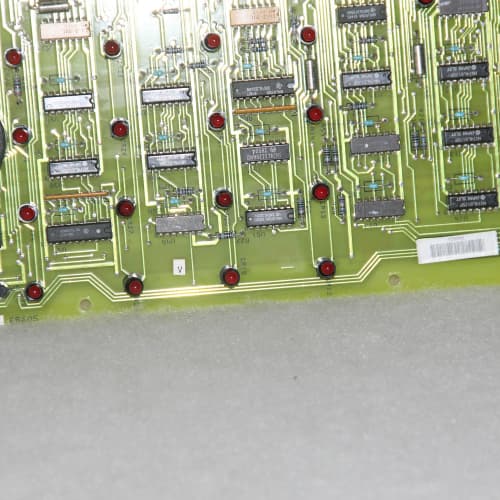
- Label: Genuine labels have a matte finish with a greenish barcode area and a serial number that follows GE’s format. Fakes are glossy and off-white.
- Weight: Genuine board weighs 340g ±10g due to the extra diodes and heat sink. Counterfeits are often lighter.
We trace our stock to decommissioned assets. If you’re buying elsewhere, demand photos of the component side and the serial sticker before purchase.
Q: What’s your warranty on this board?
We offer a 1-year warranty against functional defects. If the board fails to meet published specs within that period and hasn’t been damaged or miswired, we’ll replace or refund. For power supplies, we also cap the warranty at 30 days if you install it without testing—we can’t guarantee field damage from external surges or wiring faults.
Q: What’s the lead time?
We typically carry 2-3 units of the XPER in stock. If you order before 2 PM EST, we ship within 1-2 business days after testing. The 24-hour load test is non-negotiable—we won’t skip it. If you need expedited shipping, we can rush the initial testing (input switching + 2-hour load test) and ship next-day, but you sign a waiver acknowledging the long-term soak was skipped. For critical systems, we recommend waiting for the full test cycle—the OR-ing diodes can develop intermittent behavior after a few hours of load, and a short test won’t catch that.
ABB UAC317AEV1
ABB REF615E-G
ABB 3HAC025338-006
 Email: sales@plcfcs.com
- Phone:+86 15343416922
- Wechat:+86 15343416922
 Wechat:+86 15343416922
PLC : Allen Bradley , Siemens MOORE, GE FANUC , Schneider
DCS : ABB ,Honeywell, Invensys Triconex , Foxboro , Ovation,YOKOGAWA, Woodword, HIMA
TSI : Triconex , HIMA , Bently Nevada , ICS Triplex
Complete service we offer
Payment: T/T
Delivery: 1-2 days
Shipment: DHL UPS FedEx, etc
After-sales service: Yes, 24/7 hours