 Email: jiedong@sxrszdh.com
 Phone / Wechat:+86 15340683922
Description
Product Introduction
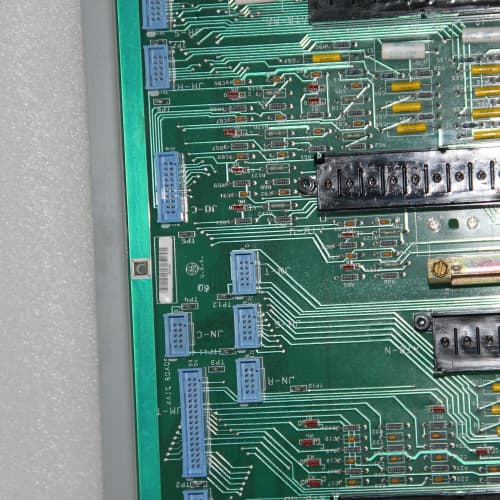
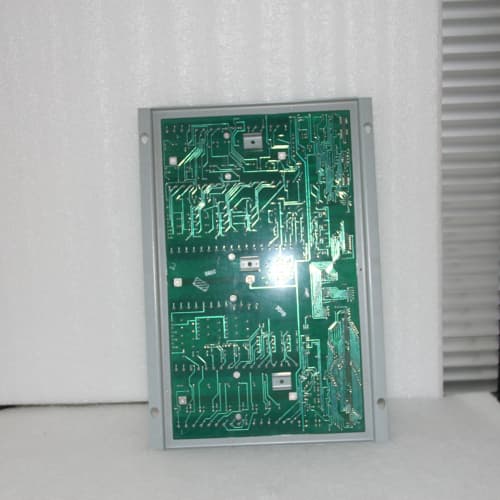
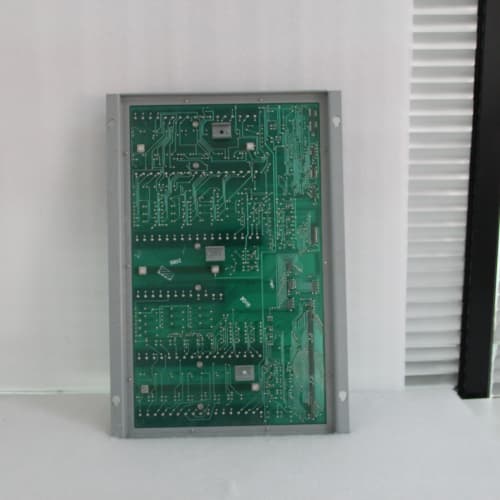
The DS3800XPEN is the higher-capacity sibling to the XPEM series—same 24V DC input, same 5V backplane output, but with a beefier output stage rated at 15A continuous instead of 10A. The “N” suffix differentiates it from the earlier “M” series, and it includes enhanced EMI filtering and better transient suppression for plants with dirty power or frequent lightning strikes in the region.
You’ll find this board in Mark VIe cabinets that are fully populated with high-draw I/O modules—think racks packed with analog output boards (1.5A each) or digital output modules that need more grunt. The higher current rating means you can run a full 12-slot rack with mixed heavy loads without worrying about tripping the overcurrent protection. If you’re doing a rack upgrade or adding new I/O to an existing cabinet, this is the board you swap in when your XPEM starts showing undervoltage alarms under load. Typical buyers are plant engineers expanding I/O capacity or replacing power supplies that have aged out.
Key Technical Specifications
| Parameter | Value / Specification |
|---|---|
| Part Number | DS3800XPEN |
| Product Type | Power Entry Module |
| Input Voltage | 24V DC nominal (18-32V DC range) |
| Input Current | 15A maximum (steady state) |
| Output Voltage | 5V DC (Backplane) |
| Output Current | 15A maximum (shared across backplane) |
| Inrush Limiting | Yes, soft-start on power-up |
| Transient Protection | Enhanced TVS array on input, reverse polarity protection |
| EMI Filtering | Built-in differential and common-mode filters |
| Status Monitoring | Output voltage OK, input power OK, overcurrent fault, overtemperature |
| Redundant Inputs | Two terminal blocks (diode-or’d externally) |
| Bus Interface | VME backplane (proprietary GE Mark VIe) |
| Termination | Screw terminals (Input), Backplane connector (Output) |
| Power Draw | Self-consumption: <15W |
| Operating Temp | 0°C to 60°C |
| LED Indicators | Green (Input OK), Green (Output OK), Yellow (Load >80%), Red (Fault) |
Compatible Replacement Models
| Model | Compatibility | Notes |
|---|---|---|
| DS3800XPEM | ⚠️ Software Compatible | Lower capacity version (10A). Direct physical drop-in but may trip if your rack draw exceeds 10A. Check your total load before swapping. |
| DS3800XPEN1C1E | ⚠️ Software Compatible | Enhanced version with specific filtering and coating. Same capacity—the suffix adds corrosion protection. |
| DS3800XPEM1A1A | ❌ Hardware Incompatible | Different input voltage configuration (48V DC). Not directly swappable—would require changing your external power source. |
| IS200EPBPG1A | ❌ Hardware Incompatible | Older Mark V power board. Different form factor and backplane architecture. |
Frequently Asked Questions (FAQ)
Q: Can I hot-swap this power module?
No. The Mark VIe backplane requires power removal before any module is installed or removed. If you pull a power module while the rack is live, you risk arcing, voltage transients, and damage to downstream I/O boards. We’ve seen field techs try this and end up with blown analog inputs. Power down the entire I/O pack.
Q: How is the XPEN different from the XPEM?
Two main upgrades:
- Output capacity: XPEM is rated at 10A continuous; the XPEN handles 15A. That extra 5A means you can run a fully populated 12-slot rack with heavy boards (output modules, digital I/O) without tripping the current limit.
- EMI filtering: The XPEN includes additional common-mode chokes and capacitors on the input stage. If your plant has large VFDs or other noise sources on the 24V DC bus, this board will reject more of that hash—which means cleaner 5V rails for your analog boards.
The physical dimensions and backplane connector are identical, so you can swap an XPEM for an XPEN as a direct upgrade. Just verify your 24V supply can handle the increased input current.
Q: How do you test this board before shipping?
Power supplies need a heavy-load test protocol—we run a 6-step validation:
- Visual inspection: Check for swollen electrolytic capacitors, burnt FETs, cracked screw terminals. Look specifically at the input EMI chokes—if they’re discolored, the board likely took a surge.
- ESD check: Insulation resistance between input terminals and chassis ground must exceed 10MΩ. Lower indicates a short on the input stage.
- Initial power-up: Apply 24V DC and verify soft-start limits inrush to <30A. We also check that all LED indicators sequence correctly.
- No-load output: Measure the 5V DC rail unloaded. Must be within ±2% (4.9-5.1V).
- Load test: Apply a 15A resistive load to the 5V rail—that’s the full rated capacity. We monitor voltage regulation (must hold at 4.9-5.1V), ripple (<50mV p-p), and temperature rise (FETs must stay below 70°C).
- 24-hour soak: Run at 15A load at 50°C ambient with all channels monitored. If voltage droops below 4.85V or temperature exceeds 75°C, it fails.
We tag every passed unit and seal it in an anti-static bag. To be frank, about 12% of these XPEN boards fail the 15A load test—the output FETs are sensitive to heat, and some can’t sustain the full rating. That’s why we don’t skip the 24-hour soak.
Q: My plant has two 24V battery strings. How do I wire redundancy?
This board has two input terminal blocks labeled “INPUT A” and “INPUT B”. But the board itself does not OR them internally—you need external Schottky diodes on each input line to prevent back-feed. The board expects the diode-ORed output to connect to the terminal block. Without external diodes, the higher voltage string will back-feed into the lower one, causing battery drain or charger confusion.
One more thing: the XPEN monitors both input voltages independently and reports them to the controller via the backplane. If one string drops, it flags an alarm. That’s a nice diagnostic feature for plant operators.
Q: What’s the most common failure on this board?
Three things, all related to the high-current output stage:
- FET burnout: The output stage uses MOSFETs that can fail short if the load is exceeded or if there’s a downstream short on the backplane. We replace FETs on about 25% of the boards we refurbish.
- Capacitor aging: Electrolytics on the 5V rail dry out over time—especially in hot cabinets. When they age, the output ripple increases, and the board can’t hold regulation under high load. We see this on units older than 8 years.
- EMI choke damage: The common-mode chokes on the input can overheat and crack if the input power is noisy (large spikes or sustained overvoltage). If the choke looks discolored or cracked, the board won’t pass our test.
Q: What does the “N” suffix mean?
On GE’s power module naming:
- XPEM: Standard capacity (10A), standard filtering
- XPEN: High capacity (15A), enhanced EMI filtering
- XPEP: Higher capacity with additional features (rare)
So the “N” designation is a distinct model, not just a revision. If you have an XPEM and you’re adding I/O, the XPEN is the logical upgrade path—same footprint, higher grunt.
Q: Can I run this board without the external EMI filter?
The board has internal filtering, but GE recommends an external DC power line filter if your plant has VFDs or large switching power supplies on the same 24V bus. Without it, you might see noise coupling into the analog I/O—especially on thermocouple boards. If you’re having noise issues, we’d suggest adding a Corcom or similar DC filter ahead of the board. That said, the XPEN has better internal filtering than the XPEM, so it might solve the problem on its own.
Q: What’s the maximum number of I/O boards this can power?
At 15A output, and assuming each I/O board draws between 1A and 1.5A on the 5V rail:
- Up to 10 analog input boards (1.2A each)
- Up to 8 analog output boards (1.5A each)
- Up to 10 digital output boards (1.3A each)
We recommend leaving 20% margin—so target 12A continuous load maximum. If you’re populating a 12-slot rack with mixed heavy boards, calculate your total draw. If it exceeds 12A, consider a second XPEN or a different power architecture.
Q: Is this board compatible with Mark VIe TMR?
Yes. In a TMR system, you’ll have three XPEN boards—one per controller section. They share the same backplane but are diode-isolated internally. If one fails, the others continue to power the backplane (provided you have external OR-ing diodes on the input). The redundancy logic works the same as the XPEM, just with higher capacity.
Q: Are there counterfeit versions of this power board?
Yes, and they fail the load test spectacularly. Here’s what we look for:
- FET brands: Genuine boards use known vendors (Infineon, ON Semi) with specific part numbers. Counterfeits use unmarked or generic FETs that can’t handle the 15A load—they either overheat or blow during testing.
- Capacitor quality: Genuine boards use high-ripple electrolytics (Nichicon, Panasonic). Fakes use cheap capacitors that bulge after a few hours at load.
- Heat sink size: The genuine board has a specific aluminum heat sink that covers the FETs. Counterfeits often use smaller or thinner heat sinks—the board runs hot and fails the temperature test.
- Label: Same as other GE boards—matte finish with greenish barcode vs. glossy off-white.
We trace our stock to decommissioned assets. If you’re buying elsewhere, demand photos of the component side and the serial sticker before purchase.
Q: What’s your warranty on this board?
We offer a 1-year warranty against functional defects. If the board fails to meet published specs within that period and hasn’t been damaged or miswired, we’ll replace or refund. For power supplies, we also cap the warranty at 30 days if you install it without testing—we can’t guarantee field damage from external surges or wiring faults.
Q: What’s the lead time?
We typically carry 2-3 units of the XPEN in stock. If you order before 2 PM EST, we ship within 1-2 business days after testing. The 24-hour load test is non-negotiable—we won’t skip it. If you need expedited shipping, we can rush the initial load test (2 hours at 15A) and ship next-day, but you sign a waiver acknowledging the long-term soak was skipped. For critical systems, we recommend waiting for the full test cycle—the FETs only show thermal drift after hours at full load.
Mitsubishi GU-D08
Allen Bradley 1797-PS2E2
GE IC693CPU374
REXROTH 0360-500-00/MF01
 Email: sales@plcfcs.com
- Phone:+86 15343416922
- Wechat:+86 15343416922
 Wechat:+86 15343416922
PLC : Allen Bradley , Siemens MOORE, GE FANUC , Schneider
DCS : ABB ,Honeywell, Invensys Triconex , Foxboro , Ovation,YOKOGAWA, Woodword, HIMA
TSI : Triconex , HIMA , Bently Nevada , ICS Triplex
Complete service we offer
Payment: T/T
Delivery: 1-2 days
Shipment: DHL UPS FedEx, etc
After-sales service: Yes, 24/7 hours