 Email: jiedong@sxrszdh.com
 Phone / Wechat:+86 15340683922
Description
Product Introduction (Anti-Template)
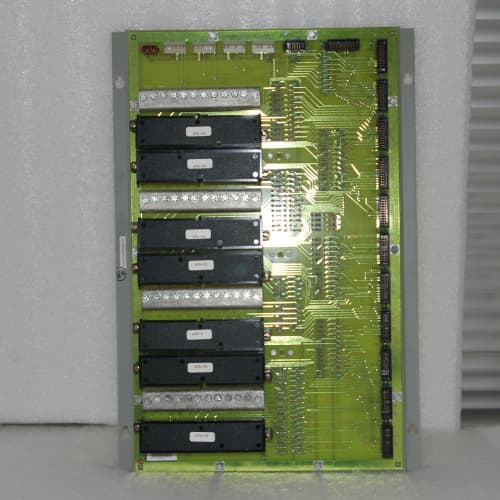
Creepage and clearance distances aren’t something most engineers think about—until a 125V bus arcs across a board and takes out three I/O cards with it. The DS3800NPSV1B1B is the high-voltage variant of GE’s Mark VIe termination board, designed specifically for plants with 125V DC battery systems. It has wider trace spacing and reinforced insulation compared to the standard 24V version. You can spot it by the yellow silkscreen warning around the input header.
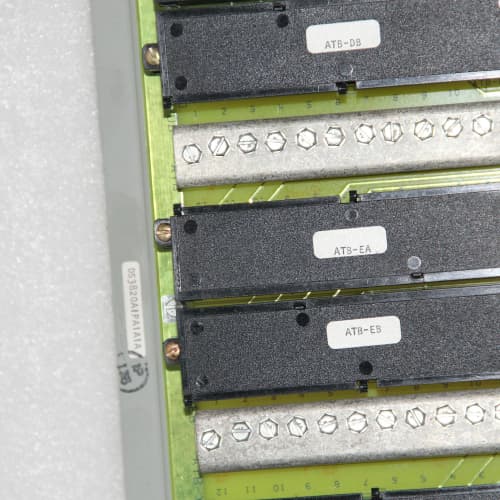
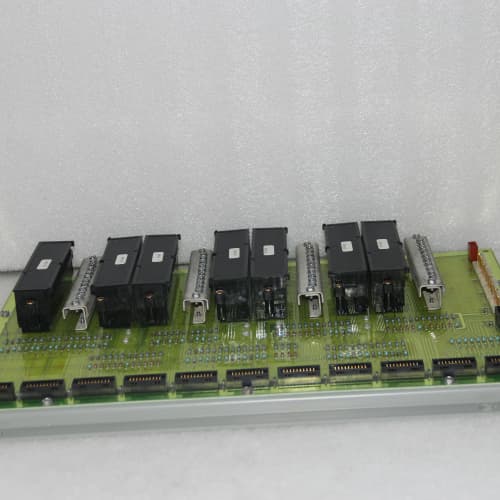
This board does the same job as the standard NPSV—distributes +5V, ±15V, and Vaux to each I/O slot—but it’s built to handle the higher input-side voltage without tracking over time. That extended creepage distance (4mm versus 2mm on the 24V version) isn’t marketing fluff; it’s the difference between a board that runs 20 years and one that fails from conductive dust buildup in 5. A paper mill in Oregon swapped out a standard NPSV that had been running on 125V (against its rating) and saw their intermittent rack resets disappear immediately. The board was clearly overstressed—carbon traces visible around the input connector.
Key Technical Specifications
| Parameter | Value |
|---|---|
| Product Type | High-voltage termination board |
| Board Form Factor | Full-height 6U PCB (matches Mark VIe rack) |
| Input Voltage | 125V DC nominal (derived from NPSM1B) |
| Input Header Type | 24-pin, keyed for high-voltage variant |
| Output Rails | +5V, +15V, -15V, plus auxiliary Vaux |
| Creepage Distance | 4mm (input-to-output)—enhanced for 125V |
| Clearance Distance | 3mm (minimum) |
| Fused Output Channels | 8 channels (one per I/O slot) |
| Fuse Type | 5x20mm cartridge, field-replaceable |
| Fuse Rating | 5A per channel standard (field-configurable) |
| LED Status Indicators | Green per rail (OK), Red per channel (fuse open) |
| Connector Type | 96-pin DIN 41612 (to backplane) |
| PCB Material | FR-4 with higher CTI rating (Class IIIa) |
| Operating Temp | 0°C to +60°C |
| Board Thickness | 2.4mm (enhanced mechanical rigidity) |
| Weight | 0.65 kg (approx. 1.4 lbs)—slightly heavier due to thicker traces |
| Mounting | Screws to rack chassis (hardware not included) |
Compatible Replacement Models
| Model | Compatibility | Notes |
|---|---|---|
| DS3800NPSV1B1B | ✅ Drop-in Replacement | Exact match. Same high-voltage-rated PCB, same fuse holders, same LED layout. Direct swap with no wiring changes. |
| DS3800NPSV (24V version) | ❌ Hardware Incompatible | Same physical dimensions and connector positions, but the 24V version lacks the extended creepage and clearance distances. Do not use the 24V board on a 125V system—arc-over risk is real, especially in humid environments. We’ve seen it happen. |
| DS3800NPSV1B (older revision) | ⚠️ Software Compatible | Earlier high-voltage board with different fuse holder clips (solder-in type instead of cartridge holders). Same creepage distances, same connector keying. The PCB mounting holes are in the same positions. Labor to swap: ~1 hour. |
| IS200EPVT (Mark V) | ❌ Hardware Incompatible | Different connector type (50-pin) and different pinout. Will not physically fit a Mark VIe backplane. Not compatible. |
| DS3800NPSM1B (power supply) | ❌ Not a Replacement | The NPSV1B1B is a distribution board, not a power supply. The NPSM1B is the power supply. You need both. |
Frequently Asked Questions (FAQ)
What’s the difference between the NPSV1B1B and the standard NPSV?
The board dimensions and connector locations are identical—they’re physically interchangeable in the rack. The difference is in the PCB design: the NPSV1B1B has wider trace spacing (4mm creepage versus 2mm), thicker copper (2oz vs 1oz), and a higher-CTI rated substrate material. The input header is also keyed differently so you can’t accidentally plug a 24V NPSM into it. If you place them side by side, you’ll notice the yellow warning box around the input connector on the 1B1B.
Can I use the NPSV1B1B on a 24V system?
Yes, but it’s overkill. The high-voltage board will work perfectly fine on 24V—the wider traces don’t hurt performance. It’s just physically larger in terms of trace real estate, but that doesn’t affect fit. However, it’s more expensive than the standard NPSV, so you’re paying for features you don’t need. If you have one on hand and need to replace a standard NPSV, it will function. Just double-check the connector keying matches your NPSM.
Why would I need a high-voltage termination board when the output rails are only 5V and 15V?
The high voltage is on the input side—between the NPSM1B power supply and the NPSV1B1B. That 125V DC bus is right there on the PCB, next to the low-voltage traces. In a dirty cabinet with conductive dust (carbon, salt, etc.), 125V can arc across standard 2mm creepage distances. The 1B1B’s 4mm creepage gives you margin. Output rails are the same low voltage—the board doesn’t boost anything, it just isolates the high-voltage input from the low-voltage distribution.
What happens if I accidentally use a standard NPSV on a 125V system?
Nothing right away—it’ll work. The problem is long-term reliability. Over time, particularly in humid or dusty environments, the 2mm creepage can break down. We’ve seen boards with visible carbon tracking between the input header pins and adjacent low-voltage traces. When that happens, the 125V bus faults to the +5V rail—which takes out every I/O card in the rack simultaneously. It’s a catastrophic failure. Don’t do it. The connector keying is different for a reason.
Does the NPSV1B1B require different fuses than the standard version?
No. The fuses are on the output (low-voltage) side, so they’re rated for the same current (5A) and voltage (250V AC/DC). The 24V and 125V versions use the same 5x20mm cartridge fuses. You can swap fuses between boards without issue. The difference is all on the input side, which doesn’t involve fuses—the main fuse is on the NPSM or the upstream panel.
I’m migrating from Mark V to Mark VIe. Can I reuse my Mark V termination board?
No. The Mark V termination board (IS200EPVT) uses a 50-pin connector and a different pinout. Even if you could force it to mate (you can’t—it’s physically different), the signal assignments are completely different. You need the NPSV1B1B for a Mark VIe high-voltage rack. To be frank, if you’re migrating to Mark VIe, you’re replacing the entire rack assembly anyway, so this is a moot point—the NPSV1B1B should come as part of the new rack.
What’s the typical failure mode on these high-voltage boards?
Two main issues:
- Fuse holder fatigue: the clips lose tension after repeated fuse swaps, causing intermittent contact. The 1B1B uses a more robust holder than earlier versions, but it’s still mechanical.
- Input connector cracking: the 24-pin header can crack if you’re rough with it—especially if you’re constantly unplugging the NPSM for maintenance. We recommend unplugging the NPSM by grasping the plastic shroud, not by pulling on the wires.
Less common: a cracked solder joint on the 96-pin backplane connector from vibration. That one’s a pain to diagnose because it’s intermittent.
How do I test an NPSV1B1B before installing it?
Our standard quick-test:
- Visual: check for dark spots around the input header (carbon tracking signs).
- Continuity: with a multimeter, verify each fused output channel has continuity from the input header to the 96-pin connector.
- Fuse check: insert a known-good 5A fuse and measure resistance across each fuse holder—should be under 0.1Ω.
- LED test: power the board with 24V (safe for testing) on a bench supply, and verify each LED illuminates when you apply power to the corresponding channel.
We don’t recommend testing with 125V on the bench unless you’re set up for it—24V is enough to verify the LEDs and circuitry.
Triconex 3511
MOTOROLA MCP750
EATON XV-440-10TVB-1-10
ABB PFEA112-20 3BSE050091R20
 Email: sales@plcfcs.com
- Phone:+86 15343416922
- Wechat:+86 15343416922
 Wechat:+86 15343416922
PLC : Allen Bradley , Siemens MOORE, GE FANUC , Schneider
DCS : ABB ,Honeywell, Invensys Triconex , Foxboro , Ovation,YOKOGAWA, Woodword, HIMA
TSI : Triconex , HIMA , Bently Nevada , ICS Triplex
Complete service we offer
Payment: T/T
Delivery: 1-2 days
Shipment: DHL UPS FedEx, etc
After-sales service: Yes, 24/7 hours