 Email: jiedong@sxrszdh.com
 Phone / Wechat:+86 15340683922
Description
Product Introduction (Anti-Template)
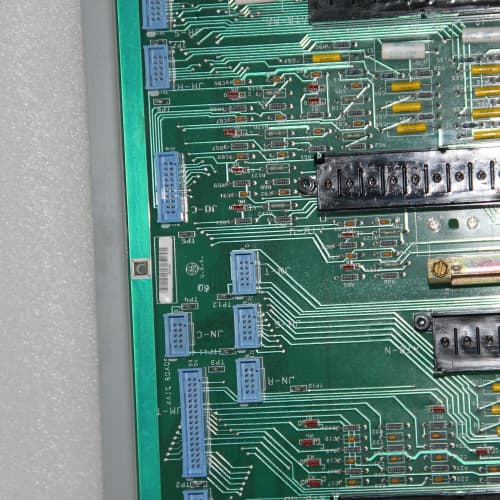
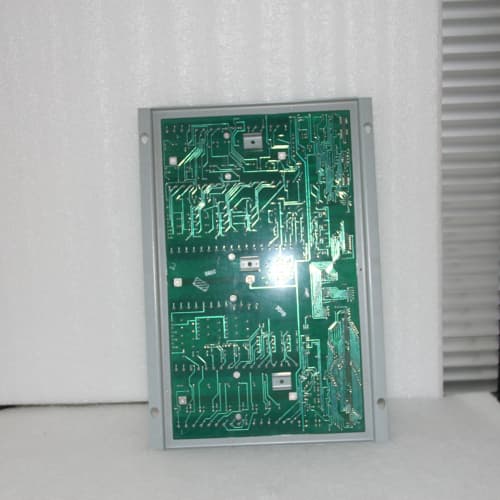
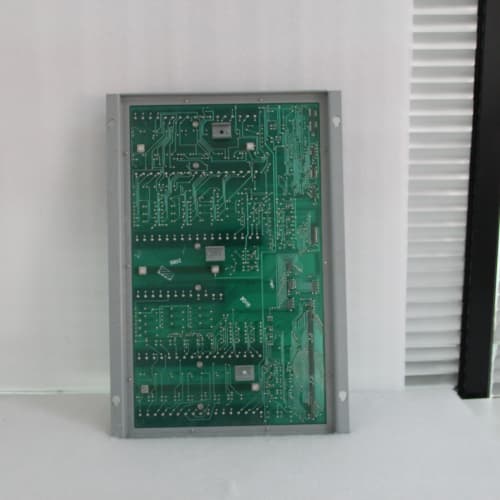
A power supply board with a cracked solder joint will take down an entire I/O rack—and you’ll spend hours chasing the wrong module. The DS3800NPSV is the termination board that sits between your NPSM power supply and the Mark VIe backplane. It distributes the +5V, +15V, and -15V rails to each slot, and it provides eight fused channels for field devices. Think of it as the power distribution “dashboard” for your rack.
What the NPSV brings to the table: individual slot fusing, clear LED status for each rail, and a standardized terminal layout that GE’s cabinet prints reference. Compared to the older Mark V termination board (IS200EPVT), the NPSV has a more robust fuse holder design—we’ve seen fewer fuse clips cracking over time. A plant in Illinois replaced a failed NPSV and had their rack back online in about 90 minutes, including the time it took to identify the board as the culprit. The board itself passes up to 250W total, so it handles a fully loaded 8-slot rack without breaking a sweat.
Key Technical Specifications
| Parameter | Value |
|---|---|
| Product Type | Power supply termination board |
| Board Form Factor | Full-height 6U PCB (matches Mark VIe rack) |
| Input Voltage | 24V DC or 125V DC (derived from NPSM) |
| Output Rails | +5V, +15V, -15V, plus auxiliary Vaux |
| Fused Output Channels | 8 channels (one per I/O slot) |
| Fuse Type | 5x20mm cartridge, field-replaceable |
| Fuse Rating | 5A per channel standard (field-configurable) |
| LED Status Indicators | Green per rail (OK), Red per channel (fuse open) |
| Connector Type | 96-pin DIN 41612 (to backplane) |
| Terminal Block | 24-pin header for NPSM interface |
| Operating Temp | 0°C to +60°C |
| Board Thickness | 2.4mm (enhanced mechanical rigidity) |
| Weight | 0.6 kg (approx. 1.3 lbs) |
| Mounting | Screws to rack chassis (hardware not included) |
Compatible Replacement Models
| Model | Compatibility | Notes |
|---|---|---|
| DS3800NPSV | ✅ Drop-in Replacement | Exact match. Same PCB layout, same fuse holders, same status LEDs. Direct swap with no wiring changes. |
| DS3800NPSV-1 | ⚠️ Software Compatible | Older revision with a different fuse holder type (clips instead of cartridge style). The PCB mounting holes are in the same positions, but the NPSM interface header is keyed differently—you may need a different ribbon cable. Labor: ~1 hour to verify cable orientation. |
| IS200EPVT (Mark V) | ❌ Hardware Incompatible | Different pinout, different connector type (50-pin instead of 96-pin). Will not physically mate with a Mark VIe backplane. |
| DS3800NPSM (power supply) | ❌ Not a Replacement | The NPSV is a distribution board, not a power supply. The NPSM is the power supply module. You need both—they serve different functions. |
Frequently Asked Questions (FAQ)
What’s the difference between the NPSV and the NPSM?
The NPSM is the power supply module—the black brick that converts the plant’s DC input (24V or 125V) into regulated rails. The NPSV is the termination board that takes those rails and distributes them to each I/O slot, with fusing per channel. Think of the NPSM as the generator and the NPSV as the circuit breaker panel. They’re both required; one doesn’t replace the other.
Can I replace an NPSV without replacing the NPSM?
Yes. The NPSV is a passive distribution board—no active components. If your fuses keep blowing or your LEDs are intermittent, the NPSV is the likely culprit. Just unplug the 24-pin ribbon from the NPSM, remove the NPSV from its standoffs, install the new board, and reconnect. We’ve done this in under 30 minutes on a live rack (with the rack powered down, of course).
What size fuses should I use in the NPSV?
It ships with 5A fuses in all eight channels. That’s suitable for most analog input cards (which draw about 1-2A) and digital output cards (which can draw up to 4A when driving relays). If you’re running high-power output cards (driving solenoids, large contactors), you might need 8A or 10A fuses. Do a load calculation before upsizing—if you blow a 5A fuse, the card might be drawing more than it should, which suggests a downstream issue, not an undersized fuse.
How do I know if the NPSV is faulty?
Common failure modes:
- One or more LED indicators stay off even with the rack powered.
- A specific I/O slot has no power, but the others work—usually a blown fuse or a cracked trace on that channel.
- Intermittent resets of the entire rack—often a cold solder joint on the 96-pin backplane connector.
If you’re getting erratic behavior across multiple slots, suspect the NPSV. Swap it with a known-good board to confirm. We’ve also seen the 24-pin header connector crack from repeated unplugging—the plastic latch breaks and the connector loses contact. Inspect that closely.
Can I hot-swap the NPSV while the rack is powered?
No. The NPSV is a passive board but it sits directly in the power path from the NPSM to the backplane. Removing it while powered will drop all rails instantly—the CPU will fault and the turbine may trip. Power down the rack, swap the board, then power back up. It’s a 15-minute procedure with a planned outage. We don’t recommend trying to pull it live.
What tools do I need to replace the NPSV?
- Phillips #2 screwdriver for the four mounting screws.
- Small flathead for the fuse holder clips (if you’re replacing fuses).
- Anti-static wrist strap—the NPSV has exposed traces that can be damaged by ESD.
- Torque driver set to 0.5 Nm for the mounting screws (don’t overtighten—you’ll crack the PCB).
That’s it. No special programming tools or software changes are required. It’s a pure hardware swap.
Does the NPSV come with the mounting screws and standoffs?
No. The board itself includes the PCB and the fuse holders. The rack chassis has the standoffs pre-installed. You’ll reuse your existing M3 screws. If yours are missing or stripped, order a small kit of M3 x 6mm pan-head screws separately. We don’t include hardware because most plants have a stock bin full of them.
I have a spare NPSM—should I buy the NPSV as a spare too?
Yes. We recommend keeping at least one spare NPSV and one spare NPSM per cabinet. The NPSV is the less expensive of the two (about 40% of the NPSM’s cost), but it fails just as often—especially in high-vibration environments where the 96-pin connector sees mechanical stress. We’ve seen plants that had a spare NPSM but no spare NPSV, and they ended up waiting 2 days for the NPSV to ship. That’s 2 days of downtime you don’t need.
What’s your quality check on surplus NPSV boards?
Our inbound test protocol:
- Visual: inspect for cracked solder joints around the 96-pin connector and the fuse holders.
- Continuity: verify every fused channel has continuity from the input header to the output pins.
- Fuse test: check that each fuse holder makes good contact (we insert a test fuse and measure resistance—must be under 0.1Ω).
- LED test: power the board on a test jig and verify all LEDs illuminate correctly.
We tag each board with a “Passed” sticker and pack it in an anti-static bag. We’ve rejected about 4% of inbound boards for issues like cracked fuse holders or bent header pins—we don’t pass those through to customers.
A-B 1756-L82E
FOXBORO P0922AG
ATLAS TC-4000-S
 Email: sales@plcfcs.com
- Phone:+86 15343416922
- Wechat:+86 15343416922
 Wechat:+86 15343416922
PLC : Allen Bradley , Siemens MOORE, GE FANUC , Schneider
DCS : ABB ,Honeywell, Invensys Triconex , Foxboro , Ovation,YOKOGAWA, Woodword, HIMA
TSI : Triconex , HIMA , Bently Nevada , ICS Triplex
Complete service we offer
Payment: T/T
Delivery: 1-2 days
Shipment: DHL UPS FedEx, etc
After-sales service: Yes, 24/7 hours