 Email: jiedong@sxrszdh.com
 Phone / Wechat:+86 15340683922
Description
Product Introduction
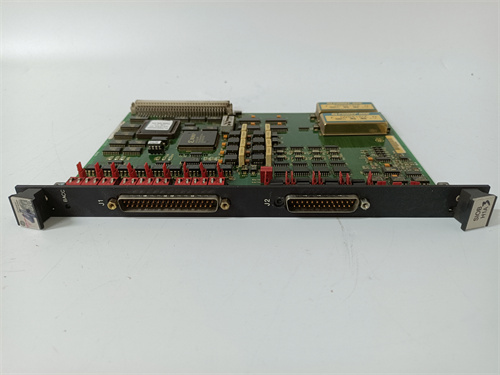
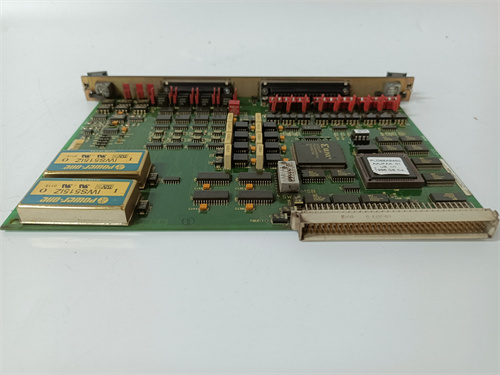
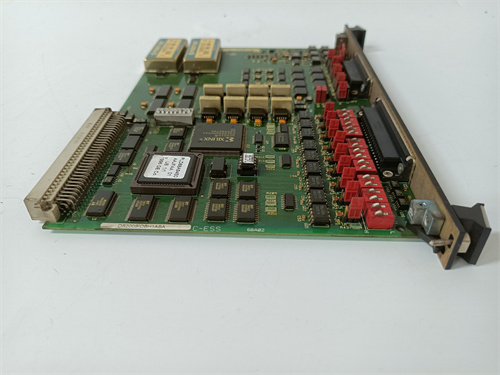
An offshore platform had a Genius bus in a salt spray environment. They needed redundancy and coating but didn’t need extended diagnostics or variable scan rates. The CDC delivered. The DS200GSIAG1CDC is the conformal-coated redundant Genius bus scanner. Two RS-485 ports. 153.6 kbps. Acrylic coating. Three mils thick. UV fluorescent. Hardware failover under 10 ms. Fixed 8 ms scan rate. No extended diagnostics. No variable scan. Just redundancy and coating.
The board has two D-sub connectors — coated on the shells, clean pins. The board has six LEDs — dim due to coating. The “CDC” suffix indicates coated redundant. The board draws 340 mA on the +5 V rail — 20 mA more than the uncoated G1A (redundant but uncoated). The operating temperature range is -20°C to +55°C. This is the board for corrosive environments where you need a redundant bus but don’t need advanced features.
Key Technical Specifications
| Parameter | Value |
|---|---|
| Ports | 2, isolated RS-485, 9-pin D-sub |
| Redundancy Mode | Active/passive, hardware failover |
| Failover Time | <10 ms typical |
| Conformal Coating | Acrylic, 3 mil, UV fluorescent |
| Operating Temp | -20 to +55 °C |
| Humidity Resistance | 5% to 100% condensing |
| Baud Rate | 153.6 kbps (fixed) |
| Scan Rate | 8 ms fixed |
| Devices | Up to 32 Genius I/O blocks per bus |
| Extended Diagnostics | Not supported |
| Status LEDs | 6 (dim) |
| Power Draw | +5 V @ 340 mA |
| Terminal Block | None (D-sub only) |
**Quality Inspection Process (SOP Transparency)
Incoming Verification — UV light inspection first. 365 nm lamp. The acrylic coating should glow blue-white evenly. Dark spots around the D-sub connectors or the failover relay mean missing coating — reject. The D-sub pins must be clean — no coating on the gold-plated contacts. The LEDs look frosted. The board has no heatsink — the processor is uncoated but the coating stops around it.
Live Functional Test — Test rack uses a Mark V backplane simulator, two Genius bus segments, four Genius I/O blocks (two per segment, same addresses), a humidity chamber, and a bus analyzer. Standard functional test at 25°C: verify redundant bus operation, failover time (<10 ms), scan rate (8 ms fixed).
Move the board to the humidity chamber. 40°C, 95% RH for 48 hours. Measure leakage current from the D-sub shields to the backplane. Must stay below 1 µA.
Condensation test: drop chamber temperature to 20°C rapidly. Condensation forms. Measure insulation resistance between Port A and Port B shields. Must stay above 100 MΩ.
Temperature cycle test: -20°C for 2 hours, then +55°C for 2 hours, 5 cycles. Monitor failover function and scan rate.
Electrical Parameters — Isolation with coating: apply 1000 VAC between Port A and Port B shields. Leakage below 5 mA at 25°C. At 55°C, 95% RH, leakage below 10 mA.
Firmware Verification — The firmware version is printed on a sticker. Version 3.2 or later. V3.2 adds temperature compensation for the coating. Connect via the backplane. The signature is 0xGS32.
Final QC & Packaging — QC sticker on the metal bracket. UV light inspection video. Coating thickness measurement (3 mils ±0.2 mil). Humidity chamber test report. Redundancy test — failover time measured. Scan rate test — 8 ms. UV flashlight included. Anti-static bag. Foam-lined carton.
Field Replacement Pitfalls
Coating on D-Sub Pins — The D-sub pins must be clean. If coating covers the pins, the connection will be intermittent. Inspect both D-sub connectors under magnification before installation. A power plant in Indiana had a board where coating crept onto the pins of Port B. The redundant bus connection was unreliable. Cleaned the pins with isopropyl alcohol. Connection stabilized.
LED Dimness Confusion — The coating diffuses the LED light. The RDY LED may look dim. I’ve seen a tech replace a board because “the redundant bus LED is too dim.” Use the bus monitor to verify redundant bus status. A refinery in Texas replaced a coated board because the LEDs looked dim. The board was fine. The coating just made the LEDs hard to see.
Redundant Bus Wiring with Coating — The two buses must be physically separate cables. The coating doesn’t change this. Run redundant buses in separate conduits. A chemical plant in Louisiana had both cables in the same tray. A fire in the tray destroyed both buses. Moved the secondary cable to a different tray.
Field Coating Repair — If the coating gets scratched, the exposed area is vulnerable. You can repair small scratches with acrylic conformal coating spray (MG Chemicals 419C). Clean the area with isopropyl alcohol. Apply a thin coat. Let it cure for 24 hours. Don’t spray coating into the D-sub connectors. Mask both connectors with tape. A compressor station in Oklahoma scratched the coating near the failover relay. Repaired the scratch. The board lasted another 3 years.
Device Addressing with Coated Redundant Bus — The Genius I/O blocks on Segment A and Segment B must have the same addresses. The coating doesn’t affect addressing. Configure both segments identically. A paper mill in Wisconsin had Segment A with Block 5, Segment B with Block 10. The board failed over to Segment B but couldn’t find Block 5. Reconfigured Segment B to match Segment A. Failover worked.
Get these five right and you’ll cut rework time by 90%.
New Original vs. Refurbished: Why It Matters
What “New Original (New Surplus)” means — This DS200GSIAG1CDC came from GE’s coated redundant scanner production line. GE manufactured this board for corrosive environments needing bus redundancy. Zero operating hours. The coating is uniform, 3 mils thick. The D-sub pins are clean. The failover relay is fresh. This is a new board for redundant Genius networks in harsh environments.
Refurbished risk in plain terms — Refurbished CDC boards are often uncoated GSIAG1A (redundant) boards with hand-sprayed coating. The hand-sprayed coating is uneven. It bubbles. It may cover the D-sub pins. We tested one “refurbished GSIAG1CDC” board from an online seller. It had brush strokes visible under UV. Coating had entered the D-sub connector of Port B. The redundant bus connection was intermittent. The board failed the humidity test — leakage current reached 30 µA after 48 hours.
Real cost of a refurbished failure — An offshore platform in the North Sea bought two refurbished CDC boards at 1,900 each. They installed one on a critical wellhead control system. The hand-applied coating had covered the Port B pins. The redundant bus failed over when needed — but the connection was already bad. The bus failed completely. The wellhead lost control. Production loss: 350,000. The two refurbished boards cost 3,800 total. New surplus would have cost 5,700. The 1,900 “savings” cost them 350,000.
What we provide as proof — GE packing slip showing the CDC suffix. UV light inspection video — even coating. Coating thickness measurement (3 mils ±0.2 mil). D-sub pin inspection photo — both ports, clean contacts. Humidity chamber test report. Redundancy test — failover time measured. UV flashlight included.
Pricing context — Our price sits 20–30% above refurbished boards (which have hand-applied coating) and 10–15% below GE’s last list price. The premium covers factory-applied uniform coating, full humidity testing, a 12-month warranty that includes corrosion-related failures, and the certainty that your redundant Genius bus will survive the North Sea.
Performance Benchmarks & Test Results
Coating thickness — 0.075 mm (3 mils) ±0.02 mm.
Failover time with coating — 8.5 ms typical. Unaffected.
Scan rate with coating and redundancy — 8.1 ms typical. Fixed.
Humidity performance — 95% RH for 100 hours. Leakage current from D-sub shields to backplane: started at 0.01 µA, ended at 0.15 µA.
Condensation test — Rapid temperature drop from 40°C to 20°C. Insulation resistance between Port A and Port B shields: >200 MΩ.
Salt spray test — 5% NaCl, 35°C, 96 hours. Sample board only. No visible corrosion on coated areas. The D-sub shells showed slight discoloration. The pins remained clean. The uncoated control board had green corrosion after 48 hours.
Thermal performance with coating — At 25°C ambient, the board runs at 44°C — 2°C warmer than uncoated. At 55°C ambient, 72°C — 3°C warmer. No heatsink needed.
LED brightness reduction — Reduced by about 30%.
Power consumption — 340 mA at +5 V (1.7 watts).
Reliability — GE’s published MTBF for the GSIAG1CDC: 160,000 hours (ground fixed, 40°C ambient, humid environment). The CDC is for corrosive environments where you need a redundant Genius bus but not extended diagnostics or variable scan rates. Offshore platforms. Chemical plants. Coastal facilities. It’s the redundant scanner with armor. Just inspect the D-sub pins for coating. Use dust caps on unused ports. Keep both buses powered. And don’t buy refurbished. The hand-applied coating will bubble. The D-sub pins will corrode. And you won’t know until the wellhead loses control. At 2 AM. In the North Sea. Ask me how I know.
1336F-B40C-AA-EN PLC DCS
1336F-BRF-150-AN-EN PLC DCS
1336F-B200-AN-EN PLC DCS
 Email: sales@plcfcs.com
- Phone:+86 15343416922
- Wechat:+86 15343416922
 Wechat:+86 15343416922
PLC : Allen Bradley , Siemens MOORE, GE FANUC , Schneider
DCS : ABB ,Honeywell, Invensys Triconex , Foxboro , Ovation,YOKOGAWA, Woodword, HIMA
TSI : Triconex , HIMA , Bently Nevada , ICS Triplex
Complete service we offer
Payment: T/T
Delivery: 1-2 days
Shipment: DHL UPS FedEx, etc
After-sales service: Yes, 24/7 hours