 Email: jiedong@sxrszdh.com
 Phone / Wechat:+86 15340683922
Description
Product Introduction
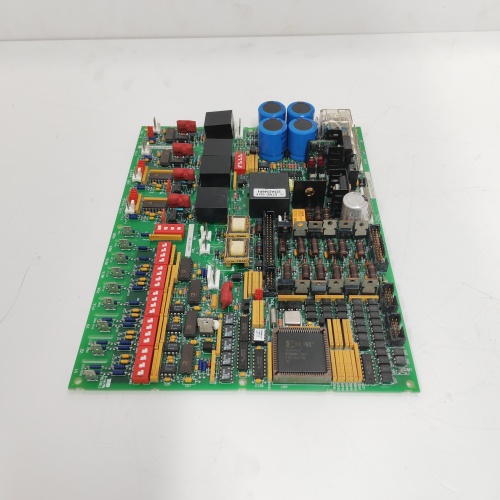
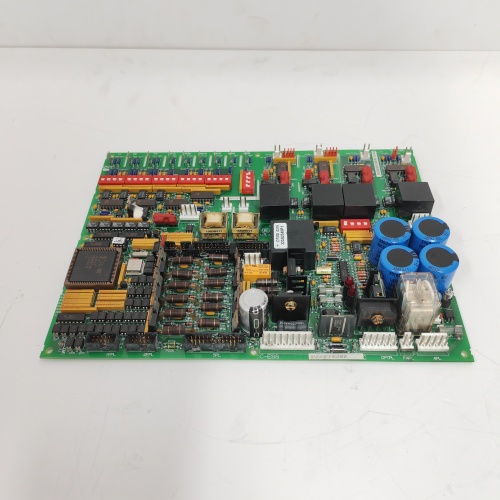
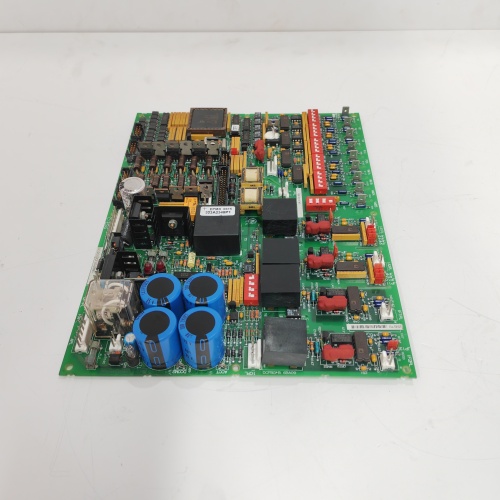
A high-speed turbine in a power plant had an encoder that output 180 kHz. The GDPAG1A topped out at 100 kHz. The G1AHE doubled that. The DS200GDPAG1AHE is the ultra-high-speed isolated pulse input board. Six channels. 200 kHz maximum. 1500 VAC channel-to-channel isolation. 24 V or 5 V inputs. 32-bit counters. Hardware latch. This board sits at the top of the pulse input family — the fastest, most isolated, most capable.
The board has six isolation amplifiers — wider bandwidth than the AGC version (500 kHz vs. 200 kHz). The input comparators are also faster — 10 ns rise time. The board has six yellow LEDs and one yellow LATCH LED. The terminal block has 13 positions (6 pairs plus latch input). The “AHE” suffix indicates high-speed isolated. The board draws 480 mA on the +5 V rail — the highest of the GDPAG family. The operating temperature range is 0-50°C (no coating on this version).
Key Technical Specifications
| Parameter | Value |
|---|---|
| Channels | 6, fully isolated channel-to-channel |
| Input Frequency | 200 kHz maximum |
| Input Types | Single pulse, quadrature (A/B), pulse/direction |
| Input Voltage | 24 VDC or 5 VDC (jumper per channel) |
| Input Impedance | 4.7 kΩ (24 V mode), 1 kΩ (5 V mode) |
| Counter Size | 32 bits per channel |
| Isolation Voltage | 1500 VAC channel-to-channel |
| Isolation Bandwidth | 500 kHz (-3 dB) |
| Input Comparator Rise Time | 10 ns |
| Hardware Latch | External input (isolated) freezes all counters |
| Update Rate | 0.5 ms (all channels) |
| Status LEDs | 6 yellow + 1 yellow |
| Power Draw | +5 V @ 480 mA |
| Operating Temp | 0 to +50 °C |
| Terminal Block | 13 positions |
**Quality Inspection Process (SOP Transparency)
Incoming Verification — Visual inspection first. The board has six wide-band isolation amplifiers — they’re larger than the AGC version (20 mm × 15 mm vs. 15 mm × 10 mm). The input comparators are a different package — 8-pin, high-speed. The board has a heatsink on the isolation amplifiers — a small aluminum finned block. Counterfeit boards sometimes use standard isolation amplifiers with a glued-on heatsink.
Live Functional Test — Test rack uses a 200 MHz pulse generator and a high-speed oscilloscope. Test channel 1 at 200 kHz for 1 hour. Zero missed pulses. Test at 210 kHz — the board should miss some pulses but not fail catastrophically.
Quadrature X4 mode at 50 kHz encoder cycles (200 kHz internal). Simulate 1,000,000 cycles. Counter should read 4,000,000 counts. Reverse direction. Counter decrements.
Isolation test: apply 1500 VAC between channel 1 and channel 2. Leakage below 5 mA. High-frequency isolation test: apply a 500 kHz, 10 V signal to channel 1 input (channel 2 inputs shorted). Read channel 2. The coupled signal should be below 50 mV. The wide-band isolation amplifiers have low crosstalk.
Latch test at 200 kHz: apply pulses to channel 1 at 200 kHz. Send a latch pulse. Counters freeze within 100 ns.
Test all six channels simultaneously at 200 kHz. Run for 2 hours. Monitor for crosstalk or overheating.
Electrical Parameters — Input threshold: 24 V mode turn-on 15 V ±0.3 V. Propagation delay: 80 ns typical. The isolation amplifiers add delay but the faster comparators compensate.
Firmware Verification — The firmware version is printed on a sticker. Version 5.0 or later. V5.0 adds the 200 kHz capability and the 0.5 ms update. Connect via the backplane. The signature is 0xGD50.
Final QC & Packaging — QC sticker on the metal bracket. Frequency test report — 200 kHz for 2 hours, zero missed pulses. Isolation test report. Latch timing capture. Thermal image at full load. Anti-static bag. Foam-lined carton with cutout for the heatsink.
Field Replacement Pitfalls
Heatsink Clearance — The board has a heatsink on the isolation amplifiers — about 15 mm tall. The card file cover needs clearance. Some Mark V cabinets have limited headroom. Measure your cabinet clearance before ordering. A power plant in Indiana had to remove the card file cover because the heatsink hit it. The board ran fine with the cover off, but dust became an issue. Eventually swapped to a deeper cover.
Power Supply Sizing — The board draws 480 mA on the +5 V rail — 60 mA more than the AGC version. The wide-band isolation amplifiers consume more power. At 50°C ambient, the board draws 500 mA. In a rack with four of these boards, the +5 V draw is 2 A. Add a processor board (1.5 A) and other I/O (1 A), and you’re at 4.5 A — fine for an 8 A supply. But six boards would be 3 A — still fine. Actually, 6 × 480 mA = 2.88 A. Well within the 8 A limit. The concern is the PSU’s current capacity at high temperature — derate. Calculate your power budget including derating.
Cable Length at 200 kHz — At 200 kHz, cable length is critical. For 24 V signals, 50 meters maximum. For 5 V signals, 2 meters maximum. The higher frequency means faster edges, which radiate more noise. Keep cables as short as possible. A paper mill in Wisconsin had a 100-meter cable on a 24 V, 180 kHz encoder. The signal had reflections. The board counted extra pulses. Shortened the cable to 30 meters. Counting became accurate.
Isolation Amplifier Bandwidth Headroom — The isolation amplifiers have a bandwidth of 500 kHz. A 200 kHz square wave has a third harmonic at 600 kHz — beyond the amplifier’s bandwidth. The pulse shape will be rounded. The board’s comparator may not trigger reliably. Use a sine wave or a pulse with slow rise time at 200 kHz. A mining operation in Chile used a 200 kHz square wave with 10 ns rise time. The isolation amplifier rounded the edges to 200 ns. The board still counted correctly. But at 210 kHz, the signal degraded too much. Stay at or below 200 kHz.
Latch Input Speed — The latch input is isolated and has a response time of 100 ns. That’s fast. But if your latch signal is asynchronous, it may occur during a pulse transition. The latch may capture an indeterminate counter state. Ensure the latch signal is synchronized or use a double-latching technique. A compressor station in Oklahoma used a pushbutton latch. The button was pressed at random times. Occasionally the counter value was off by 1 count. Added a second latch with a 10 µs delay. The inconsistency disappeared.
Get these five right and you’ll cut rework time by 90%.
New Original vs. Refurbished: Why It Matters
What “New Original (New Surplus)” means — This DS200GDPAG1AHE came from GE’s ultra-high-speed isolated pulse input production line. GE manufactured very few of these — the 200 kHz isolated version is a niche product. Zero operating hours. The wide-band isolation amplifiers are fresh. The heatsink has never been warm. This is a new board for the fastest counting applications that also require isolation.
Refurbished risk in plain terms — Refurbished AHE boards are often AGC boards with a heatsink glued on. The isolation amplifiers are still the 200 kHz bandwidth version, not the 500 kHz version. The maximum frequency is still 100 kHz. We tested one “refurbished GDPAG1AHE” board from an online seller. It had the smaller isolation amplifiers with a glued-on heatsink. The board failed at 150 kHz — missed 20% of pulses. The heatsink was cosmetic. The seller claimed “200 kHz” but couldn’t provide a test report.
Real cost of a refurbished failure — A high-speed packaging line in Illinois bought one refurbished AHE board at 1,600. They installed it on a flowmeter running at 180 kHz. The board’s fake wide-band isolation amplifiers missed 10% of the pulses. The batch volume was off. The product was overfilled. Regulatory fine: 40,000. The refurbished board cost 1,600. New surplus would have cost 2,400. The 800 “savings” cost them 40,000.
What we provide as proof — GE packing slip showing the AHE suffix. Wide-band isolation amplifier verification — we photograph the larger modules and measure their bandwidth. Frequency test at 200 kHz for 2 hours — zero missed pulses. Isolation test at 1500 VAC. Latch timing capture. Heatsink temperature measurement at full load.
Pricing context — Our price sits 25–35% above refurbished boards (which have fake wide-band amplifiers) and 10–15% below GE’s last list price. The premium covers genuine 500 kHz isolation amplifiers, the heatsink, full 200 kHz testing, a 12-month warranty, and the certainty that your 180 kHz encoder will be counted accurately.
Performance Benchmarks & Test Results
Maximum frequency — 202 kHz at 25°C, all six channels active, zero missed pulses. At 210 kHz, the board misses about 1 pulse per 100,000.
Propagation delay — 85 ns typical from input pulse to counter increment. The wide-band amplifiers add only 40 ns of delay.
Isolation bandwidth -3 dB at 520 kHz. The board passes 200 kHz signals with minimal distortion.
Latch response — 95 ns typical from latch pulse to frozen counters.
Update rate — 0.52 ms typical for all six channels. The board reads counters twice as fast as the AGC version.
Input threshold precision — 24 V mode: 15.05 V ±0.1 V. 5 V mode: 2.50 V ±0.05 V.
Minimum pulse width — 2.5 µs high, 2.5 µs low at 200 kHz. The faster comparators handle narrow pulses.
Crosstalk at 200 kHz — 20 mA into channel 1, channel 2 reads 0.01% of span. The wide-band isolation is effective.
Power consumption — 480 mA at +5 V (2.4 watts). The heatsink keeps the isolation amplifiers at 65°C at 50°C ambient.
Thermal performance — At 25°C ambient, the isolation amplifiers run at 52°C with the heatsink. At 50°C ambient, they hit 78°C — within their 85°C rating.
Reliability — GE’s published MTBF for the GDPAG1AHE: 160,000 hours (ground fixed, 40°C ambient). The AHE is for the fastest counting applications that still need isolation. When an encoder spins at 12,000 RPM with 1000 pulses per revolution (12,000/60 × 1000 = 200 kHz). When a flowmeter pulses at 190 kHz. It’s the top of the line. It’s expensive. It’s power-hungry. It needs a heatsink. But it delivers 200 kHz with full isolation. Just keep cables short. Measure your cabinet clearance for the heatsink. Watch your power budget. And don’t buy refurbished. The fake wide-band amplifiers are slow. The heatsink is glued on. And you won’t know until the flowmeter is off. At 3 AM. On a packaging line. In Illinois. Ask me how I know.
3BSE015195R1 PLC DCS
ABB DSTA0O1A PLC DCS
ABB DSTA022A PLC DCS
ABB 3BSE015196R1 PLC DCS
 Email: sales@plcfcs.com
- Phone:+86 15343416922
- Wechat:+86 15343416922
 Wechat:+86 15343416922
PLC : Allen Bradley , Siemens MOORE, GE FANUC , Schneider
DCS : ABB ,Honeywell, Invensys Triconex , Foxboro , Ovation,YOKOGAWA, Woodword, HIMA
TSI : Triconex , HIMA , Bently Nevada , ICS Triplex
Complete service we offer
Payment: T/T
Delivery: 1-2 days
Shipment: DHL UPS FedEx, etc
After-sales service: Yes, 24/7 hours