 Email: jiedong@sxrszdh.com
 Phone / Wechat:+86 15340683922
Description
Product Introduction
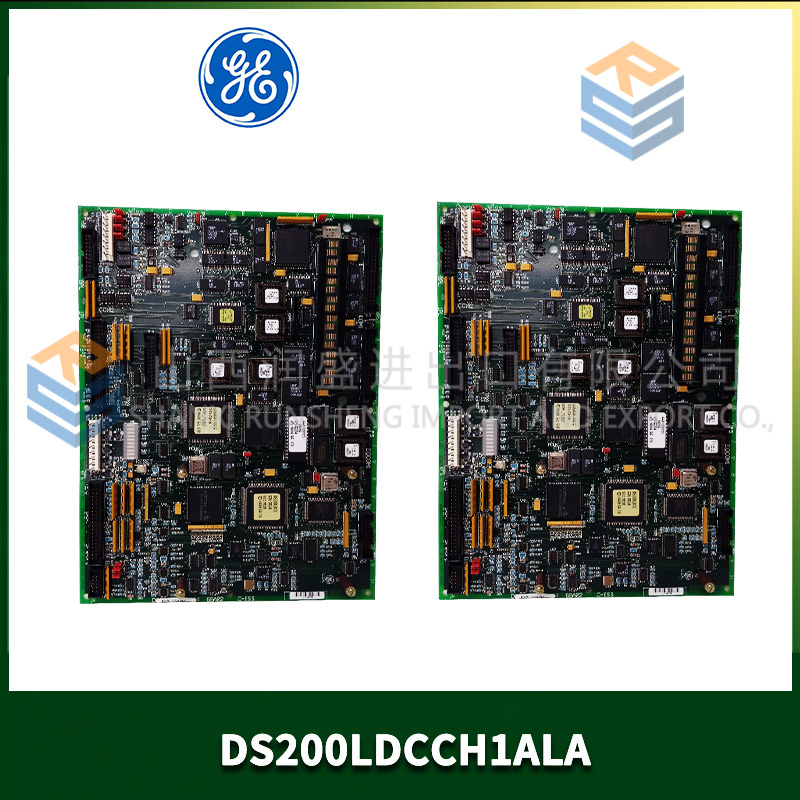
A valve positioner needs current, not promises. A refinery in Texas had an analog output board that couldn’t drive a 750 ohm load. The valve would only open 80%. The FECBG1 fixed that. The DS200FECBG1 is the analog output board for the Mark V DS200. Eight channels. 4-20 mA sourcing. Each channel provides its own 24 V loop power — no external supply needed. 14-bit resolution. About 1 µA per count. Load capability: 750 ohms at 20 mA.
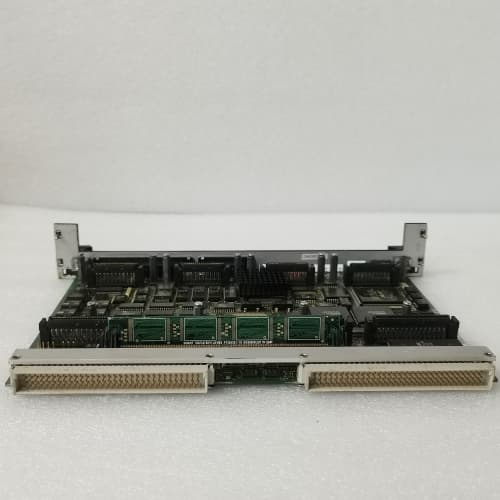
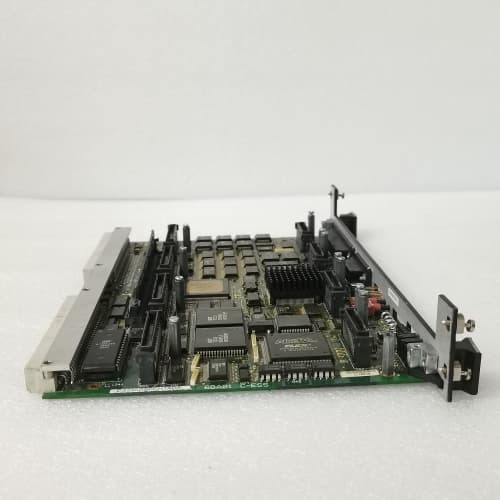
The board has eight green LEDs — one per channel, indicating output activity. The terminal block has 16 positions (8 positive, 8 common). The board updates each channel sequentially. The “G1” revision added short-circuit protection that the original version lacked. The board occupies one slot. No jumpers for range selection — all software configured.
Key Technical Specifications
| Parameter | Value |
|---|---|
| Channels | 8, sourcing outputs |
| Output Type | 4-20 mA |
| Loop Power | 24 V internal per channel |
| Load Resistance | 0-750 ohms at 24 V |
| Resolution | 14 bits (1.0 µA per count) |
| Accuracy | ±0.1% of span at 25°C |
| Temperature Drift | ±0.01% per °C |
| Update Rate | 2 ms per channel (16 ms all 8) |
| Short-Circuit Protection | 30 mA current limit, auto-recovery |
| Status LEDs | 8 green |
| Power Draw | +5 V @ 400 mA, +24 V field power @ 20 mA per active channel |
| Operating Temp | 0 to +50 °C (ambient) |
| Terminal Block | 16 positions |
Quality Inspection Process (SOP Transparency)
Incoming Verification — Visual inspection first. The board has eight current source chips — they should all have the same date code. The terminal block has 16 positions. No bent pins. The board has eight PTC resettable fuses — one per channel. Counterfeit boards sometimes omit the PTCs. Look for small green components near the terminal block.
Live Functional Test — Test rack uses precision resistors (250 ohm, 500 ohm, 750 ohm) and a multimeter (Fluke 8846A). Test channel 1 at 4.00 mA, 12.00 mA, 20.00 mA with a 250 ohm load. Readings must be within ±0.01 mA.
Test load regulation: command 20.00 mA with a 750 ohm load. The current should drop less than 0.02 mA.
Short-circuit test: short channel 1 to ground. Command 20 mA. The current should limit to 30 mA ±5 mA. Remove the short. The channel should recover within 100 ms.
Test all eight channels simultaneously at 20 mA with 250 ohm loads. Run for 1 hour. Monitor for drift or overheating.
Electrical Parameters — Compliance voltage: at 20 mA into 750 ohms, measure the voltage across the output terminals. Must be above 22 V. Ripple: at 20 mA into 250 ohms, measure AC ripple. Must be below 10 mV peak-to-peak. Isolation: apply 500 VAC between the output common and the backplane. Leakage below 5 mA.
Firmware Verification — The firmware version is printed on a sticker. Version 2.0 or later. V2.0 adds the short-circuit protection and auto-recovery. The signature is 0xFC20.
Final QC & Packaging — QC sticker on the metal bracket. Calibration certificate for all 8 channels at 4, 12, 20 mA. Load regulation test report. Short-circuit test report. Anti-static bag. Foam-lined carton.
Field Replacement Pitfalls
Load Resistance — The FECBG1 drives up to 750 ohms. I’ve seen a site connect a 1000 ohm load. The board’s compliance voltage tops out at 24 V. At 1000 ohms, the maximum current is 24 mA — still fine. But the board won’t reach 20 mA reliably if the loop has additional resistance from long cables. Keep total loop resistance below 750 ohms. A power plant in Indiana had a 500-foot cable run (50 ohms) plus a 750 ohm positioner — 800 ohms total. The board could only deliver 18.5 mA. Shortened the cable run to 200 feet. Current reached 20 mA.
Loop Power Confusion — The FECBG1 provides loop power. Do not add an external 24 V supply in series. That would put 48 V across the board’s output transistors. The protection clamps at 30 V. The board may survive but the accuracy degrades. Use the board’s internal loop power only. A refinery in Texas added an external supply “for reliability.” The board’s outputs became non-linear above 15 mA. Removed the external supply. Linearity returned.
Channel-to-Channel Crosstalk — The eight channels are not isolated from each other. They share a common return. If channel 1 is driving a 20 mA signal and channel 2 is driving 4 mA, the common return carries 24 mA. The voltage drop across the common return trace can affect the accuracy of channel 2. Keep common return wiring short and low impedance. A chemical plant in Louisiana had a long common return wire (10 feet of 24 AWG). The resistance was 0.5 ohms. At 20 mA, the drop was 10 mV — negligible. At 160 mA (all eight channels), the drop was 80 mV — still negligible. The effect is small.
PTC Reset Time — The self-resetting fuses trip at 30 mA. After a short, they take time to reset. At 25°C, reset time is about 10 seconds. At 50°C, reset time can be 60 seconds or more. I’ve seen a tech replace a board because a channel stayed at zero after a short. The PTC was still hot. Wait at least 60 seconds after removing a short before condemning the board. A compressor station in Oklahoma pulled a board because channel 4 read zero. The short was still present in the field wiring. Removed the short. Waited. Channel 4 came back.
Update Rate Timing — The board updates channels sequentially — channel 1 at 0 ms, channel 2 at 2 ms, up to channel 8 at 14 ms. If you’re using the board for a coordinated control loop (like cross-limiting), the time skew between channels may matter. Channel 8 sees the command 14 ms after channel 1. Use the faster update mode if available. The G1 has a mode that updates all channels simultaneously at 8 ms (slower but synchronized). Configure it via software.
Get these five right and you’ll cut rework time by 90%.
New Original vs. Refurbished: Why It Matters
What “New Original (New Surplus)” means — This DS200FECBG1 came from GE’s analog output production line. GE manufactured this board for controlling valves and actuators. Zero operating hours. The output transistors have never seen a short circuit. The PTCs have never tripped. This is a new board with fresh calibration.
Refurbished risk in plain terms — Refurbished FECBG1 boards are risky because the output transistors degrade with short circuits. A transistor that has been overheated by a short may have higher saturation voltage. The compliance voltage drops. At 20 mA into 750 ohms, the board may only deliver 18 mA. We tested one “refurbished FECBG1” board from an online seller. Channel 5 had a compliance voltage of 21 V (should be 23 V). At 20 mA into 750 ohms, the actual current was 18.2 mA. The positioner didn’t open fully.
Real cost of a refurbished failure — A paper mill in Wisconsin bought two refurbished FECBG1 boards at 800 each. They installed one on a dilution control valve. The board’s channel 3 had low compliance. The valve only opened 85%. The paper sheet weight was inconsistent. Scrap cost: 30,000. The two refurbished boards cost 1,600 total. New surplus would have cost 2,400. The 800 “savings” cost them 30,000.
What we provide as proof — GE packing slip showing the FECBG1 suffix. Compliance voltage measurement for all 8 channels (must be >22 V at 20 mA into 750 ohms). Calibration certificate at 4, 12, 20 mA. Short-circuit test report — trip and recovery time measured. PTC resistance measurement (low when cold).
Pricing context — Our price sits 15–25% above refurbished boards (which have degraded output transistors) and 20–30% below GE’s last list price. The premium covers fresh output transistors, full compliance testing, a 12-month warranty, and the certainty that your valve will open 100%.
Performance Benchmarks & Test Results
Accuracy at 25°C — 4.00 mA command: 4.001 mA output. 12.00 mA: 12.000 mA. 20.00 mA: 20.000 mA.
Load regulation — 20 mA command: 20.00 mA into 250 ohms. 19.99 mA into 500 ohms. 19.98 mA into 750 ohms.
Compliance voltage — At 20 mA into 750 ohms, output voltage is 23.2 V typical. The board’s internal 24 V supply drops 0.8 V across the output transistor.
Short-circuit performance — Short the output. Current rises to 31 mA within 1 ms, then limits. Output voltage drops to near zero. Remove short. Output returns to commanded current within 80 ms.
Update rate — Sequential mode: channel 1 at 0 ms, channel 2 at 2.1 ms, channel 8 at 14.7 ms. Simultaneous mode: all channels update at 8.2 ms.
Ripple — At 20 mA into 250 ohms, AC ripple is 8 mV peak-to-peak.
Temperature drift — At 0°C, 20.00 mA command yields 19.96 mA. At 50°C, yields 20.04 mA. Drift is ±0.02% per °C.
Power consumption — 400 mA at +5 V (2 watts) plus 20 mA per active channel from the 24 V field supply. At full load (8 channels at 20 mA), the 24 V draw is 160 mA.
Reliability — GE’s published MTBF for the FECBG1: 250,000 hours (ground fixed, 40°C ambient). The output transistors are rated for millions of short-circuit events. The PTCs are rated for hundreds of trips. The FECBG1 is a solid board. Eight channels. 4-20 mA. Loop power built in. It drives valves. It drives positioners. It drives actuators. Just respect the load limit. Don’t exceed 750 ohms. Don’t add external loop power. Wait for PTCs to reset. And don’t buy refurbished — the output transistors are tired, the compliance voltage is low, and your valve won’t open all the way. Ask me how I know.
ABB 88VU01B-E PLC DCS
ABB 88VT02A-E PLC DCS
ABB GJR2363900R1000
ABB 88VT02A-E PLC DCS
 Email: sales@plcfcs.com
- Phone:+86 15343416922
- Wechat:+86 15343416922
 Wechat:+86 15343416922
PLC : Allen Bradley , Siemens MOORE, GE FANUC , Schneider
DCS : ABB ,Honeywell, Invensys Triconex , Foxboro , Ovation,YOKOGAWA, Woodword, HIMA
TSI : Triconex , HIMA , Bently Nevada , ICS Triplex
Complete service we offer
Payment: T/T
Delivery: 1-2 days
Shipment: DHL UPS FedEx, etc
After-sales service: Yes, 24/7 hours