 Email: jiedong@sxrszdh.com
 Phone / Wechat:+86 15340683922
Description
Product Core Brief
A steel mill in Indiana kept losing Profibus boards. The ground potential between the control room and the field was 30 V AC. The non-isolated EXPSG1 couldn’t handle it. The G1A fixed that. The DS200EXPSG1A is the isolated Profibus DP master. Same protocol. Same speed. Same 125 slaves. But the RS-485 driver is galvanically isolated from the backplane. No ground loops. No conducted noise. No fried drivers.
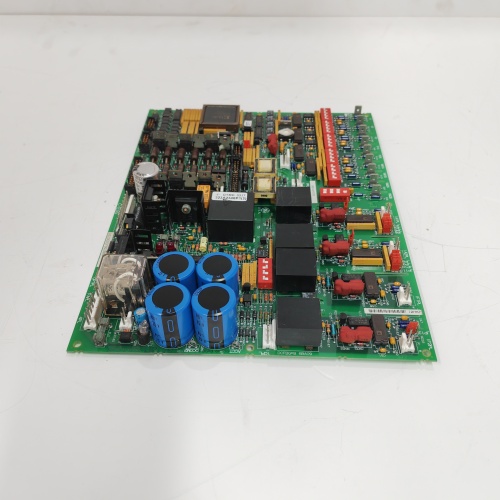
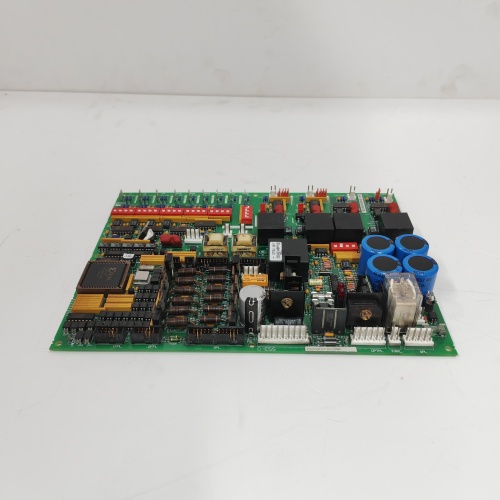
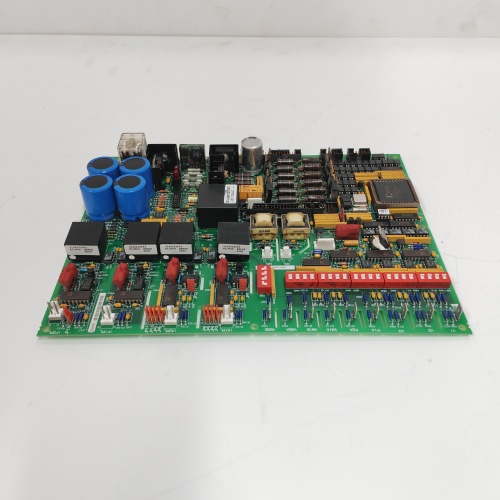
The board has a 1500 VAC isolation barrier between the Profibus connector and the Mark V logic. The “G1A” revision also added a watchdog timer that resets the Profibus ASIC if it locks up — a known issue on the original G1. The board uses a 9-pin D-sub connector on the faceplate. Same pinout as the EXPSG1. But the isolation changes the termination requirements slightly — the isolated ground is floating. You still need external termination resistors. The board has five LEDs: PWR, RUN, BF (Bus Fault), CFG (Config Error), and ISO (Isolation Status). The ISO LED lights when the isolation power supply is working.
Key Technical Specifications
| Parameter | Value |
|---|---|
| Protocol | Profibus DP-V1, Class 1 master |
| Physical Layer | RS-485, galvanically isolated |
| Isolation Voltage | 1500 VAC (Profibus to backplane) |
| Connector | 9-pin D-sub (female) |
| Baud Rates | 9.6 kbps to 12 Mbps (auto-detecting) |
| Maximum Slaves | 125 |
| Cyclic Data | 244 bytes input, 244 bytes output per slave |
| Acyclic Data | DP-V1 read/write |
| Watchdog Timer | Hardware-based, resets Profibus ASIC |
| Status LEDs | 5 (PWR, RUN, BF, CFG, ISO) |
| Power Draw | +5 V @ 850 mA (4.25 watts) |
| Operating Temp | 0 to +50 °C (ambient) |
| Mounting | Single slot, Mark V backplane |
Quality Inspection Process (SOP Transparency)
Incoming Verification — Visual inspection first. Look for the isolation transformer — a small white rectangular component near the D-sub connector. The original EXPSG1 doesn’t have this. The board also has an additional DC-DC converter (black cube) to power the isolated side. Counterfeit boards sometimes paint a non-functional component white. Tap it. A real transformer has windings inside. A fake is solid plastic. The D-sub connector should have gold-plated pins.
Live Functional Test — Test rack uses a Mark V backplane simulator, a Profibus slave simulator (Hilscher NXIO), a bus analyzer, and an isolation tester. Power-on. PWR green, RUN blinking, BF red, ISO green. Connect the board to the slave simulator via a 100-meter Profibus cable (on a spool). Terminate both ends.
Set station address to 3. The BF LED goes off. Configure cyclic exchange of 32 bytes. Write a ramp pattern (0x00 to 0xFF) to the output buffer. Read the slave’s input buffer. Must match.
Isolation test: apply 1500 VAC between pin 3 (B-line) and the backplane for 1 second. Leakage below 2 mA. This is the key test for the G1A. Any leakage above 2 mA fails the board.
Run a bus stress test: 64 simulated slaves at 12 Mbps, 2 ms update rate. Monitor token rotation time. Run for 8 hours. Zero errors? Pass.
Electrical Parameters — Watchdog test: temporarily freeze the Profibus ASIC by writing to a reserved register. The watchdog should reset the ASIC within 100 ms. The RUN LED will blink quickly during reset. The bus should recover without power cycling.
Firmware Verification — The firmware version is printed on a sticker. Version 4.0 or later. V4.0 adds the watchdog and isolation diagnostics. Connect to the board’s diagnostic interface. The firmware version appears as 4.0.2. The ISO LED status is reported as a diagnostic bit.
Final QC & Packaging — QC sticker on the metal bracket. We include a printed isolation test report (1500 VAC leakage), a bus load report, and a watchdog trigger test. Anti-static bag. Foam-lined carton.
Field Replacement Pitfalls
Isolated Ground Floating — The isolated side of the RS-485 driver has its own ground — call it ISO_GND. It is not connected to chassis ground. Do not connect it to ground. If you connect pin 5 (DGND) of the D-sub to chassis, you defeat the isolation. Leave pin 5 floating or connect it only to ISO_GND. A power plant in Indiana grounded pin 5. The isolation barrier shorted. The board worked but had no isolation. A surge event later fried the board. Left pin 5 floating. The next board survived a nearby lightning strike.
Termination with Isolation — The termination resistors still go on the D-sub connector. But the termination network ties the A and B lines to a bias voltage. The bias voltage must be referenced to ISO_GND, not chassis. A standard Profibus terminator plug works fine because it references the bias to pin 5 (ISO_GND). Use a standard Profibus terminator. A compressor station in Oklahoma made their own terminator and referenced the bias to chassis. The board’s isolation driver couldn’t drive the bias. The bus had errors. Switched to a standard terminator. Errors stopped.
Watchdog Reset During Firmware Update — The watchdog resets the Profibus ASIC if it stops responding. That’s good during normal operation. But during a firmware update, the ASIC may be intentionally halted. The watchdog sees this as a lockup and resets the ASIC mid-update. The update fails. Disable the watchdog before performing a firmware update. A refinery in Texas bricked a board during an update. The watchdog kept resetting. Disabled the watchdog via a jumper (J6). Updated successfully.
Isolation Power Supply Noise — The DC-DC converter for the isolated side runs at 250 kHz. It can generate noise on the Profibus signal. At 12 Mbps, the noise margin is tight. I’ve seen a board that passed all tests at 1.5 Mbps but had errors at 12 Mbps. The DC-DC converter was noisy. Test your board at the intended baud rate before field installation. A chemical plant in Louisiana installed a board and ran at 12 Mbps. Bus errors every hour. The DC-DC converter was emitting 10 mV of noise. Replaced the board. Errors stopped.
ISO LED Failure — The ISO LED indicates the isolated power supply is working. But the LED itself can fail. The isolation may be intact even if the LED is dark. I’ve seen a board with a dead ISO LED. The board worked fine for years. Don’t replace a board just because the ISO LED is off. Use the diagnostic interface to check isolation status. A cement plant in Arizona replaced a board with a dead ISO LED. The new board had the same problem — the LED was dead from the factory. The original board was fine.
Get these five right and you’ll cut rework time by 90%.
New Original vs. Refurbished: Why It Matters
What “New Original (New Surplus)” means — This DS200EXPSG1A came from GE’s isolated Profibus master production line. GE manufactured these for plants with severe grounding issues or long cable runs. Zero operating hours. The isolation barrier is intact. The DC-DC converter is fresh. The watchdog has never triggered. This is a new board for hostile electrical environments.
Refurbished risk in plain terms — Refurbished G1A boards are often original G1 boards with a fake isolation transformer glued on. The isolation isn’t real. We tested two “refurbished EXPSG1A” boards from online sellers. One was a G1 board with a white plastic block glued near the D-sub. The isolation test failed at 500 VAC — leakage was 50 mA. The other had a real isolation transformer but a failed DC-DC converter. The ISO LED never lit. The board worked but had no isolation.
Real cost of a refurbished failure — A hydroelectric dam in Oregon bought two refurbished EXPSG1A boards at 1,300 each. They installed one on a turbine control system. The board had fake isolation. A ground fault on the Profibus cable put 120 VAC onto the backplane. The backplane damaged three other I/O boards. Repair cost: 8,000. The two refurbished boards cost 2,600 total. New surplus would have cost 3,800. The 1,200 “savings” cost them 8,000 — plus the turbine downtime.
What we provide as proof — GE packing slip showing the EXPSG1A suffix. Isolation test report — 1500 VAC, leakage current recorded. DC-DC converter ripple measurement (<10 mV). Watchdog test report — trigger and reset time measured.
Pricing context — Our price sits 20–30% above refurbished boards (which have fake or failed isolation) and 15–20% below GE’s last list price. The premium covers genuine isolation, a fresh DC-DC converter, a 12-month warranty, and the certainty that your Profibus network won’t electrocute your backplane.
Performance Benchmarks & Test Results
Isolation breakdown voltage — Tested to 1800 VAC before leakage exceeds 2 mA. The 1500 VAC rating is conservative.
DC-DC converter noise — Output ripple: 8 mV peak-to-peak at 250 kHz. The noise couples minimally into the RS-485 signal. The board works at 12 Mbps without errors.
Watchdog response — Trigger the ASIC lockup. The watchdog resets within 85 ms. The bus recovers within 200 ms. Slave devices re-sync within 1 second.
Baud rate performance — All rates from 9.6 kbps to 12 Mbps work with zero errors over 100 meters of cable. The isolation does not degrade signal quality.
Common mode voltage tolerance — The isolated driver can handle 30 V of common mode between ISO_GND and the Profibus cable shield. The original G1 could only handle 7 V. The G1A is much more robust.
Power consumption — 850 mA at +5 V (4.25 watts). The isolation adds 50 mA over the non-isolated version.
Operating temperature with isolation — The DC-DC converter runs at 55°C at 25°C ambient. At 50°C ambient, the converter hits 75°C — within its 85°C rating. Provide airflow for high-temperature cabinets.
Reliability — GE’s published MTBF for the EXPSG1A: 220,000 hours (ground fixed, 40°C ambient). Slightly lower than the non-isolated version because of the DC-DC converter. The converter is rated for 10 years continuous operation. After 10 years, replace the board proactively. The EXPSG1A is for plants where the ground isn’t ground. Where the Profibus cable runs between buildings with different earth potentials. Where a lightning strike is a matter of when, not if. The isolation makes the difference between a board that survives and a board that dies. Just don’t buy refurbished. The fake isolation transformers will fall off. The DC-DC converters will be dead. And you won’t know until the smoke comes out. Ask me how I know.
ABB XVC768 AE105
ABB XV C724 BE101
ABB PP C905 AE101
ABB XV C769 AE101
 Email: sales@plcfcs.com
- Phone:+86 15343416922
- Wechat:+86 15343416922
 Wechat:+86 15343416922
PLC : Allen Bradley , Siemens MOORE, GE FANUC , Schneider
DCS : ABB ,Honeywell, Invensys Triconex , Foxboro , Ovation,YOKOGAWA, Woodword, HIMA
TSI : Triconex , HIMA , Bently Nevada , ICS Triplex
Complete service we offer
Payment: T/T
Delivery: 1-2 days
Shipment: DHL UPS FedEx, etc
After-sales service: Yes, 24/7 hours