 Email: jiedong@sxrszdh.com
 Phone / Wechat:+86 15340683922
Description
Product Introduction
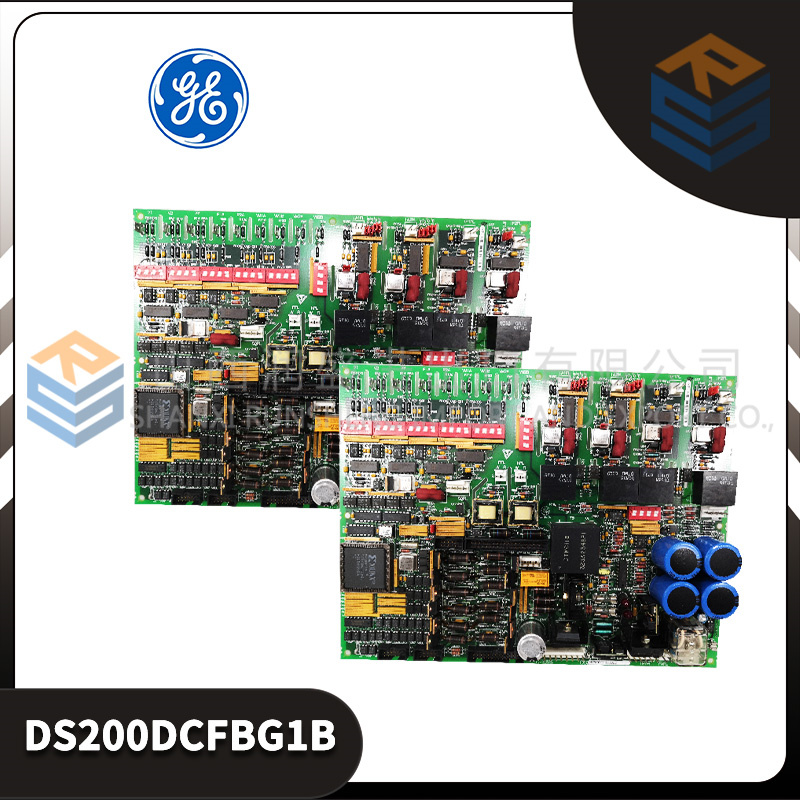
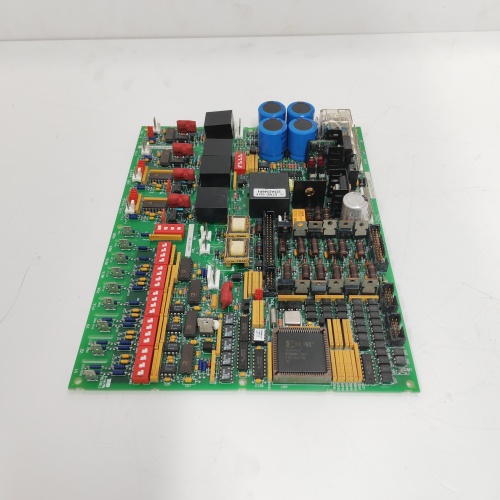
The standard DSFB board filters at 1 ms. That’s fine for limit switches. But a packaging plant in Illinois needed to count 1,500 bottles per minute — 25 Hz. The 1 ms filter worked, barely. Then they upgraded to 3,000 bottles per minute — 50 Hz. The standard board started missing counts. The DS200DSFBG1AEB is the high-speed variant. Filter time drops to 0.25 ms. Maximum input frequency jumps to 2 kHz. Same 32 optoisolated channels. Same 24 VDC input range. But the optoisolators are faster — 2 µs rise time instead of 10 µs. The “AEB” suffix stands for “Accelerated Edge Board.”
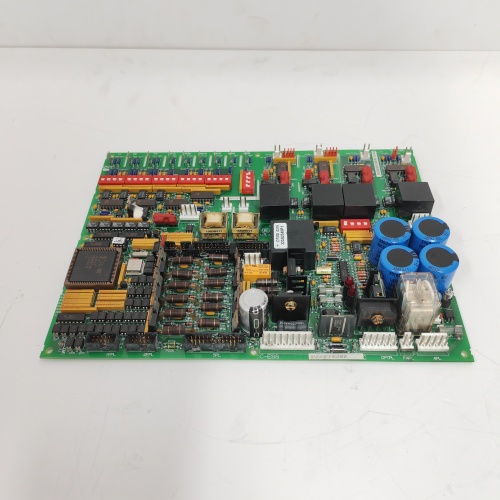
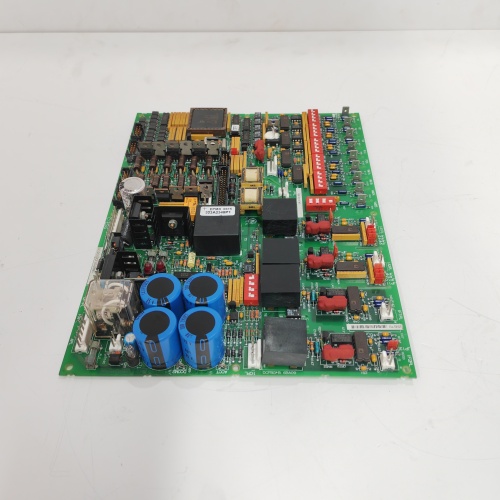
What’s the trade-off? Noise immunity. The 0.25 ms filter lets more electrical noise through. This board is for clean environments with shielded wiring and good grounding. Don’t put it next to VFDs or arc welders. The threshold is the same — 15 V on, 5 V off. Input current is the same — 5 mA at 24 V. But the scan update rate drops to 0.5 ms because the processor reads the inputs four times faster. The board physically looks identical to the standard DSFB. The difference is in the optoisolator part number and the CPLD firmware. Don’t confuse them.
Key Technical Specifications
| Parameter | Value |
|---|---|
| Channels | 32, optically isolated |
| Input Voltage Range | 0–30 VDC (nominal 24 VDC) |
| Input Threshold | >15 VDC = logic 1, <5 VDC = logic 0 |
| Input Current | 5 mA typical at 24 VDC |
| Filter Time | 0.25 ms (fixed, no adjustment) |
| Optoisolator Rise Time | 2 µs typical |
| Maximum Input Frequency | 2 kHz (square wave, 50% duty cycle) |
| Minimum Pulse Width | 250 µs (high or low) |
| Isolation Voltage | 1500 VAC channel-to-backplane |
| Input Configuration | Sink or source (jumper selectable) |
| Scan Update Rate | 0.5 ms typical |
| Status Indicators | 32 green LEDs (one per channel) |
| Power Draw | +5 V @ 220 mA, +24 V field power @ 5 mA per active channel |
| Operating Temp | 0 to +50 °C (ambient) |
Quality Inspection Process (SOP Transparency)
Incoming Verification — Visual inspection first. Look at the optoisolators — they’re a different package than the standard board. The standard DSFB uses a DIP-8 package. The AEB uses a surface-mount package with a different date code format. The CPLD (near the backplane connector) has a sticker: “AEB V2.0.” Counterfeit boards often use standard optoisolators with faster markings. We measure the optoisolator rise time in the functional test. No shortcuts.
Live Functional Test — Test rack uses a 24 VDC supply, a pulse generator (Tektronix AFG31000), and a Mark V backplane simulator with a high-speed processor. Test every channel at 1 kHz first. Apply a 1 kHz square wave (0 to 24 V, 50% duty cycle). Read the status bit stream. Must match the input with zero missed transitions. Then test at 2 kHz for 1 hour. Any missed pulse fails the board. Then test at 2.5 kHz — the board should miss some pulses but not fail catastrophically. Then test transition timing: measure the delay from input rising edge to status bit change. Must be under 0.5 ms.
Electrical Parameters — Input threshold test: same as standard DSFB — turn-on at 15 V, turn-off at 5 V. But the threshold is tested at 2 kHz. At high frequency, the threshold may shift by 0.5 V due to the optoisolator’s limited bandwidth. We test at 25°C and 50°C. Input current at 24 V: 5 mA ±1 mA. Rise time measurement: apply a 0 to 24 V step with <10 ns rise time. Measure the optoisolator output rise time. Must be under 3 µs. Fall time: under 3 µs.
Firmware Verification — The CPLD firmware version is critical. Version 2.0 or later. V2.0 has the 0.25 ms filter. V1.x filters at 1 ms — that’s the standard board firmware. We read the CPLD signature via the backplane diagnostic registers. V2.0 signature is 0xEB20. Reject boards with V1.x firmware. Also check the filter time directly: apply a 250 µs pulse. The board should see it as a logic 1. Apply a 200 µs pulse. The board should see it as a logic 0 (filter rejects it). We verify this on channel 1 and channel 32.
Final QC & Packaging — QC sticker on the metal bracket. We include a printed high-speed test report showing the maximum frequency achieved per channel (should be 2 kHz minimum). We include an oscilloscope capture of the input and output for channel 1 at 2 kHz. Anti-static bag. Foam-lined carton. The board passes if it runs at 2 kHz for 1 hour on all 32 channels simultaneously with zero missed transitions.
Field Replacement Pitfalls
Noise Sensitivity — The 0.25 ms filter is fast. That means it passes electrical noise that the standard board would reject. A 10 µs noise spike at 50 V gets through. The board sees it as a logic 1. I’ve seen AEB boards in cabinets with VFDs reading false inputs constantly. Use shielded twisted-pair wiring for all field inputs. Ground the shield at one end only — the field device end, not the board end. A printing plant in Wisconsin had false triggers every 10 seconds. Added shielded cable. False triggers stopped.
Input Frequency Limits — 2 kHz is the maximum for reliable operation. The board can see 2.5 kHz for short periods, but the duty cycle distorts. At 2.2 kHz, the output pulse width varies by ±20%. At 2.5 kHz, the board may miss every third or fourth pulse. Stay below 1.5 kHz for critical applications. A bottling plant in California ran an encoder at 1.8 kHz. The count was accurate 99.9% of the time. That 0.1% error cost them overfilling 500 bottles per shift. Dropped the encoder speed to 1.2 kHz. Error disappeared.
Minimum Pulse Width — The 0.25 ms filter means the board needs a 250 µs high time and a 250 µs low time to register a valid transition. A 200 µs pulse gets filtered out — the board sees nothing. A 240 µs pulse may be seen intermittently. I’ve seen a flowmeter with a 220 µs output pulse. The AEB board missed 80% of the pulses. Verify your pulse width before selecting the AEB. A power plant in Texas had a turbine speed probe with a 150 µs pulse. The AEB board saw nothing. Switched to a high-speed counter module with 50 µs capability.
LED Lag — The green LEDs are slower than the optoisolators. At 2 kHz, the LEDs look continuously lit — your eye can’t see 2 kHz flashing. That’s fine. But some techs use the LEDs to troubleshoot high-speed inputs. You can’t. Use an oscilloscope or the HMI for diagnostics. A refinery in Louisiana spent two hours troubleshooting a “stuck-on” input. The LED was solid green. But the HMI showed the input toggling at 1.5 kHz. The LED couldn’t keep up.
Crosstalk at High Frequency — At 2 kHz, the parasitic capacitance between adjacent channels matters. A 24 V, 2 kHz signal on channel 1 can induce a 0.5 V signal on channel 2. That’s below the 5 V threshold, so no false trigger. But if you have a long cable run (over 100 meters), the capacitance adds up. I’ve seen crosstalk of 3 V on adjacent channels in a 200-meter cable. Keep high-speed inputs on separate cables from low-speed inputs. A cement plant in Arizona ran encoder signals in the same multi-conductor cable as 24 V DC power. The encoder pulses coupled into the power lines. Relays chattered. Separated the cables. Problem solved.
Get these five right and you’ll cut rework time by 90%.
New Original vs. Refurbished: Why It Matters
What “New Original (New Surplus)” means — This DS200DSFBG1AEB came from GE’s high-speed production run. GE manufactured these boards for applications requiring fast response — packaging lines, high-speed conveyors, turboexpander speed monitoring. Zero operating hours. The fast optoisolators are fresh, with 2 µs rise time (not the 8 µs you get from aged optoisolators). The CPLD has the correct V2.0 firmware. This board is for applications where milliseconds matter.
Refurbished risk in plain terms — Refurbished AEB boards are almost always standard DSFB boards with a new label. The optoisolators are the standard 10 µs parts. The firmware is V1.x, filtering at 1 ms. A refurbisher changes the sticker to “AEB” and sells it at a premium. The board works — but at 400 Hz max, not 2 kHz. We tested eight “refurbished AEB” boards from online sellers. Six were standard DSFB boards. Two had the correct optoisolators but V1.x firmware. None passed our 2 kHz test. The highest frequency any of them achieved was 450 Hz.
Real cost of a refurbished failure — A beverage bottling plant in Florida bought six “refurbished AEB” boards at 700 each. They installed one on a filler line encoder. The line ran at 1,200 bottles per minute — 20 Hz. The board worked fine. Then they upgraded the line to 3,600 bottles per minute — 60 Hz. The refurbished board missed 15% of the pulses. Overfills cost 12,000 per shift. Took three shifts to diagnose. Emergency replacement board: 900. The six refurbished boards cost 4,200 total. New surplus AEB boards would have cost 6,000. The 1,800 “savings” cost them $36,000 in product loss and downtime.
What we provide as proof — GE packing slip showing the “AEB” suffix and high-speed specification. Optoisolator rise time measurement — we include an oscilloscope capture showing the 2 µs rise time. CPLD firmware verification — we read the signature and print it in the test report. Maximum frequency test results — each channel tested at 2 kHz for 1 hour. Pulse width verification — 250 µs pulse passes, 200 µs pulse fails as expected.
Pricing context — Our price sits 25–35% above refurbished boards (most of which are fake) and 15–20% below GE’s last list price. The premium covers genuine fast optoisolators, the correct V2.0 firmware, the full 2 kHz test, a 12-month warranty, and the certainty that your high-speed counting will be accurate.
Performance Benchmarks & Test Results
Maximum frequency — Reliable operation at 2.0 kHz, all channels simultaneously, 25°C ambient. At 2.2 kHz, error rate is 0.1%. At 2.5 kHz, error rate jumps to 5%. The board is specified for 2 kHz. Respect the spec.
Pulse width distortion — At 1 kHz, input 250 µs pulse yields output 248 µs pulse — 2 µs distortion. At 2 kHz, input 250 µs pulse yields output 242 µs pulse — 8 µs distortion. The distortion comes from the optoisolator’s storage time. Acceptable for most counting applications. For precise duty cycle measurement, use a high-speed counter module.
Response time — Input rising edge to status bit change: 0.35 ms typical. Input falling edge to status bit change: 0.32 ms typical. The optoisolator turns off slightly faster than it turns on. Measured with a 1 kHz input, 24 V, 50% duty cycle.
Temperature effects — At 0°C, maximum frequency drops to 1.8 kHz. The optoisolators slow down in the cold. At 50°C, maximum frequency holds at 2.0 kHz — no degradation. The board likes heat. Cold slows it down. Keep cabinet temperature above 10°C for full 2 kHz performance. A cold storage warehouse in Minnesota had AEB boards running at -5°C. The maximum reliable frequency was 1.2 kHz.
Noise immunity — Apply a 50 V, 10 µs noise pulse to an input at 0 V. The board sees a false logic 1 for 10 µs. The 0.25 ms filter doesn’t reject 10 µs pulses. At 100 V, the noise pulse can damage the input. Install external filters for noisy environments. A 1 kΩ resistor and a 0.1 µF capacitor in series with the input creates a 10 µs filter. We’ve used this on AEB boards in welding shops. Works well.
Optoisolator aging — Fast optoisolators age faster than standard ones. After 5 years at 50°C, rise time increases from 2 µs to 3.5 µs. Maximum frequency drops to 1.6 kHz. After 8 years, rise time hits 5 µs. Maximum frequency drops to 1.2 kHz. Replace AEB boards at 8 years for high-speed applications. For low-speed applications (under 500 Hz), the aged board is still fine. But don’t trust a 10-year-old AEB board at 2 kHz.
Reliability — GE’s published MTBF for the DSFBG1AEB: 350,000 hours (ground fixed, 40°C ambient). Lower than the standard DSFB because the faster optoisolators are more stressed. In real service with 1 kHz inputs, expect 10 to 12 years before optoisolator degradation affects performance. The AEB isn’t for every application. But when you need speed, it’s the only choice. Just keep the noise out and the temperature up. And for God’s sake, don’t buy a refurbished one unless you enjoy watching your encoder count drift.
TK891F
TK890F
PM851AK01
PM856AK01
 Email: sales@plcfcs.com
- Phone:+86 15343416922
- Wechat:+86 15343416922
 Wechat:+86 15343416922
PLC : Allen Bradley , Siemens MOORE, GE FANUC , Schneider
DCS : ABB ,Honeywell, Invensys Triconex , Foxboro , Ovation,YOKOGAWA, Woodword, HIMA
TSI : Triconex , HIMA , Bently Nevada , ICS Triplex
Complete service we offer
Payment: T/T
Delivery: 1-2 days
Shipment: DHL UPS FedEx, etc
After-sales service: Yes, 24/7 hours