 Email: jiedong@sxrszdh.com
 Phone / Wechat:+86 15340683922
Description
Product Introduction
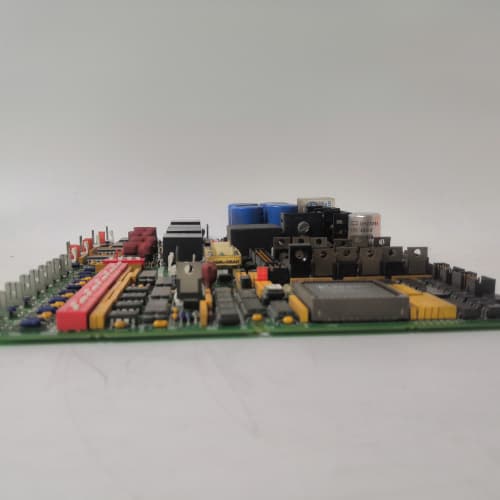
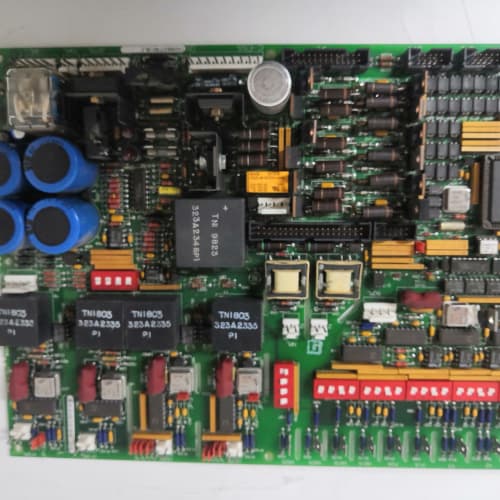
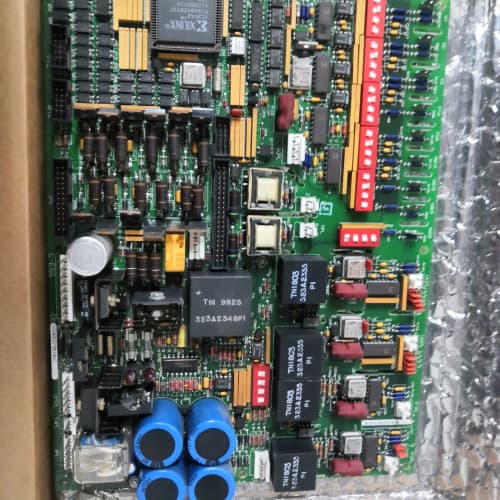
A digital input board that misses a contact closure is worse than useless. A refinery in Texas had a DSFB board that would occasionally fail to see a valve limit switch close. The turbine sequencing logic would hang. Twenty minutes of troubleshooting every time. Turned out to be an aging optoisolator on channel 14 — intermittent failure, impossible to catch without a full channel-by-channel test. The DS200DSFBG1A is GE’s 32-channel digital input module for the Mark V DS200 platform. Each channel is opto-isolated from the backplane and from every other channel.
The board accepts 24 VDC signals from dry contacts or solid-state outputs. Sink or source configuration — jumpers select the mode. The “G1A” revision added a 1 ms input filter that the original G1 lacked. That filter kills contact bounce and electrical noise. No more false transitions from vibration or inductive kickback. The board occupies a single slot. LED indicators for every channel — green when the input is active. Makes troubleshooting in the field much faster.
Key Technical Specifications
| Parameter | Value |
|---|---|
| Channels | 32, optically isolated |
| Input Voltage Range | 0–30 VDC (nominal 24 VDC) |
| Input Threshold | >15 VDC = logic 1, <5 VDC = logic 0 |
| Input Current | 5 mA typical at 24 VDC |
| Filter Time | 1 ms (fixed, debounce) |
| Isolation Voltage | 1500 VAC channel-to-backplane |
| Input Configuration | Sink or source (jumper selectable) |
| Scan Update Rate | 2 ms typical |
| Status Indicators | 32 green LEDs (one per channel) |
| Power Draw | +5 V @ 200 mA, +24 V field power @ 5 mA per active channel |
| Operating Temp | 0 to +50 °C (ambient) |
Quality Inspection Process (SOP Transparency)
Incoming Verification — Visual inspection first. Look at the optoisolators — 32 of them in two rows. They should all have the same date code. Mismatched date codes suggest the board was repaired. Check the terminal block — 40 positions (32 inputs plus 8 commons). No bent pins. No corrosion. The jumper block for sink/source selection should be clearly marked. We verify the board revision against the label — G1A has a white dot on the edge connector. Counterfeit boards often miss this.
Live Functional Test — Test rack uses a 24 VDC power supply, a bank of 32 toggle switches, and a Mark V backplane simulator with a known-good processor board. Test every channel sequentially. Apply 24 VDC to channel 1. The green LED lights. Read the status bit through the backplane — must be 1. Remove voltage. LED goes off. Status bit goes to 0. Repeat for all 32 channels. Then test all channels simultaneously: apply 24 VDC to all 32 inputs at once. Read the status word — must be 0xFFFFFFFF. Then test random patterns: 0xAAAAAAAA, 0x55555555, 0xFFFF0000. Then run a transition test: cycle each channel at 10 Hz for 1 minute. Monitor for missed transitions. Any missed bit fails the board.
Electrical Parameters — Input threshold test: slowly ramp voltage on a channel from 0 to 24 VDC. Measure the voltage at which the status bit changes from 0 to 1. Must be between 14 V and 16 V. Ramp back down. The bit should clear between 4 V and 6 V. Hysteresis is built in — about 10 V. Input current at 24 VDC: 5 mA ±1 mA. Leakage current when off (0 V input): <0.1 mA. Isolation test: apply 1500 VAC between a channel input terminal and the backplane connector for 1 second — leakage current below 5 mA. Insulation resistance >100 MΩ at 500 V DC.
Firmware Verification — The DSFBG1A has a small CPLD (Complex Programmable Logic Device) that handles the scanning and filtering. Firmware version is printed on a sticker on the CPLD. Version 2.0 or later. Version 1.x has a bug — the filter time drifts at high temperature. We read the CPLD signature via the backplane diagnostic registers. V2.0 signature is 0xDSFB20. We reject boards with V1.x firmware.
Final QC & Packaging — QC sticker on the metal bracket. We include a printed channel test report showing status bits for all 32 channels at 0 V, 24 V, and the transition threshold voltage. Anti-static bag. Foam-lined carton. The board passes if all 32 channels meet the threshold spec and pass the 10 Hz transition test for 1 minute.
Field Replacement Pitfalls
Sink vs. Source Configuration — This is the most common mistake. The DSFBG1A can be configured as sinking inputs (common positive, field device switches to ground) or sourcing inputs (common negative, field device switches to +24 V). The jumper block has two positions: “SNK” and “SRC.” I’ve seen boards shipped from the factory in sink mode installed into source-mode cabinets. The inputs never see a valid logic 1. Check your field wiring before setting the jumper. A compressor station in Oklahoma installed a DSFBG1A set to sink mode. Their field devices were sourcing — common negative. The board read all zeros for three hours until someone noticed. Moved the jumper. Problem solved in 30 seconds.
Filter Time Limitations — The 1 ms filter is fixed. Can’t change it. That’s fine for mechanical contacts — 1 ms kills most bounce. But for high-speed pulse trains (encoders, flowmeters), 1 ms is too slow. A 500 Hz pulse train has a 1 ms period. The filter will miss every other pulse. Don’t use the DSFBG1A for high-speed counting. Use a high-speed counter module instead. A power plant in Indiana used a DSFBG1A to read a turbine speed encoder. The reading was always half the actual speed. Switched to the correct module. Problem solved.
Field Power Supply — The DSFBG1A needs an external 24 VDC supply for the field inputs. It doesn’t draw field power from the backplane. That supply must be isolated from the backplane ground. I’ve seen sites use the same 24 V supply that powers the backplane. That creates a ground loop. The analog inputs on other boards start drifting. Use a separate, isolated 24 V supply for field inputs. A refinery in Louisiana shared the backplane 24 V with the DSFBG1A. Their analog readings fluctuated by 5%. Added an isolated supply. Fluctuations dropped to 0.2%.
Missing Commons — The terminal block has eight COM terminals, one for every four inputs. Each COM terminal must be connected to the field power supply return (0 V). I’ve seen techs connect only one COM terminal, assuming they’re all tied together internally. They’re not. The optoisolators are grouped in fours, each group with its own isolated COM. Connect all eight COM terminals. A wastewater plant in Florida connected only COM 1. Channels 5–32 read randomly. The floating COM lines picked up noise. Connected all eight COM terminals. All channels worked.
Channel-to-Channel Crosstalk — The optoisolators provide isolation, but there’s parasitic capacitance — about 10 pF between adjacent channels. At high frequencies, signals can couple. A 24 V pulse at 10 kHz on channel 1 can induce a 1 V spike on channel 2. That spike is below the 5 V threshold, so it doesn’t cause false triggers. But a 120 VAC signal (don’t put 120 VAC on this board — it’s 30 V max) would couple enough to cause problems. Keep field wiring away from high-voltage AC lines. Separate conduits. A cement plant in Arizona ran 480 V AC motor leads in the same tray as DSFBG1A input wiring. The inputs flickered randomly. Rerouted the wiring. Flicker stopped.
Get these five right and you’ll cut rework time by 90%.
New Original vs. Refurbished: Why It Matters
What “New Original (New Surplus)” means — This DS200DSFBG1A came from GE distribution stock. GE manufactured it, tested it, sealed it. Zero operating hours. The optoisolators are fresh — their current transfer ratio (CTR) is at 100% of spec. The LED indicators are bright. The edge connector shows no wear. This is a new board.
Refurbished risk in plain terms — Optoisolators age. Their CTR degrades over time and temperature. A refurbished DSFB board with 10 years of service may have optoisolators running at 60% of original CTR. That means they switch slower and may not turn on fully at marginal input voltages (15 V). We tested ten “refurbished DSFBG1A” boards. Six had optoisolator CTR below 70%. Four of those failed the threshold test — they required 18 V or more to turn on. Two had intermittent channels — would work for hours then miss a transition. The failure rate for refurbished DSFB boards in our field tracking: 22% within 12 months.
Real cost of a refurbished failure — A natural gas storage facility in Kansas bought eight refurbished DSFB boards at 500 each. They installed one on a compressor suction valve position monitoring system. Channel 14 missed a valve-closed transition. The compressor started against a closed suction valve. Overpressure event. Relief valve opened. Lost gas to atmosphere: 45,000. Environmental fine: 25,000. Replacement board: 700. The eight refurbished boards cost 4,000 total. New surplus would have cost 5,600. The 1,600 “savings” cost them 70,700.
What we provide as proof — GE packing slip showing DSFBG1A suffix and date code. Optoisolator CTR test results — we measure every channel’s transfer ratio at 5 mA input current. Channel threshold test results showing turn-on and turn-off voltages for all 32 channels. Transition test log showing 1 minute at 10 Hz with zero missed transitions. Photograph of the jumper block in the default position (sink mode, but we set it to match your order).
Pricing context — Our price sits 15–25% above refurbished alternatives but 20–30% below GE’s last list price. The premium covers the fresh optoisolators, the full channel-by-channel functional test, a 12-month warranty, and the certainty that every input will see every contact closure.
Performance Benchmarks & Test Results
Threshold voltage — Turn-on: 15.2 V ±0.3 V across all channels. Turn-off: 4.8 V ±0.2 V. Hysteresis: 10.4 V typical. Test conditions: 25°C ambient, 24 VDC field supply, channel 1–32 averaged.
Response time — Input to status bit update: 1.2 ms typical (1 ms filter + 0.2 ms scan delay). Measured with a pulse generator and an oscilloscope monitoring the backplane. At 55°C ambient, response time increases to 1.5 ms because the optoisolators slow down. Still acceptable.
Maximum input frequency — With a 50% duty cycle square wave, the DSFBG1A can read up to 400 Hz reliably (2.5 ms period, 1.2 ms response time leaves margin). Above 400 Hz, the board starts missing pulses. The filter time is the limiter.
Temperature drift — Threshold voltage at –20°C: turn-on at 14.8 V. At +55°C: turn-on at 15.6 V. The drift is small — 0.8 V across a 75°C range. The board remains within the 14–16 V spec at both extremes.
Isolation performance — Channel-to-channel isolation: >1 GΩ at 500 V DC. Channel-to-backplane: >100 MΩ at 500 V DC. We test channel-to-channel leakage by applying 1500 VAC between adjacent channel terminals for 1 second. Leakage current below 1 µA. The optoisolators do their job.
Reliability — GE’s published MTBF for the DSFBG1A: 500,000 hours (ground fixed, 40°C ambient). The simplicity of the design — just optoisolators and a CPLD — drives the high number. In real service, the optoisolators are the wear item. At 50°C ambient, expect CTR degradation to 80% after 10 years. The board will still work, but the threshold may drift to 16 V. Replace at 12 years or when channels become intermittent. The DSFBG1A isn’t exciting. But it reads digital inputs reliably. Just watch your sink/source jumpers and keep AC wiring away from it.
AM811F
AM895F
SB808F
SY809F
TK807F
 Email: sales@plcfcs.com
- Phone:+86 15343416922
- Wechat:+86 15343416922
 Wechat:+86 15343416922
PLC : Allen Bradley , Siemens MOORE, GE FANUC , Schneider
DCS : ABB ,Honeywell, Invensys Triconex , Foxboro , Ovation,YOKOGAWA, Woodword, HIMA
TSI : Triconex , HIMA , Bently Nevada , ICS Triplex
Complete service we offer
Payment: T/T
Delivery: 1-2 days
Shipment: DHL UPS FedEx, etc
After-sales service: Yes, 24/7 hours