 Email: jiedong@sxrszdh.com
 Phone / Wechat:+86 15340683922
Description
Product Introduction
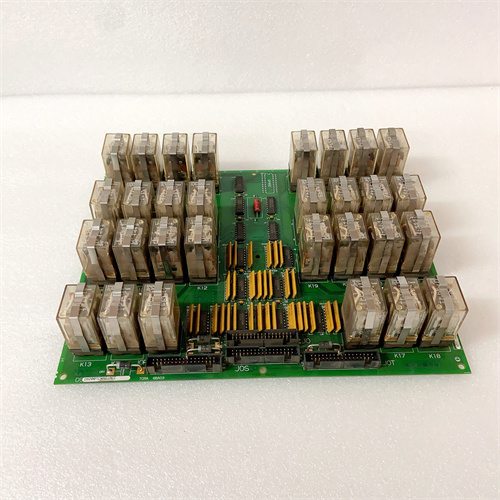
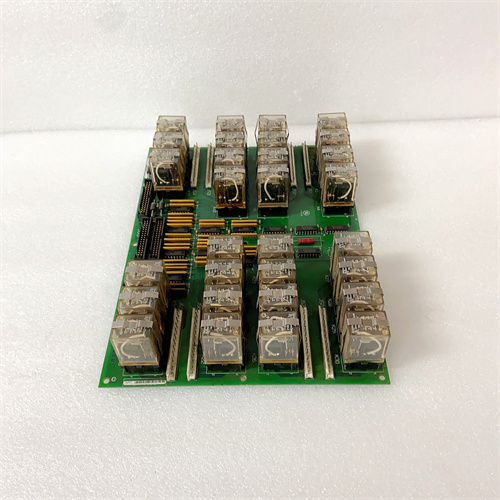
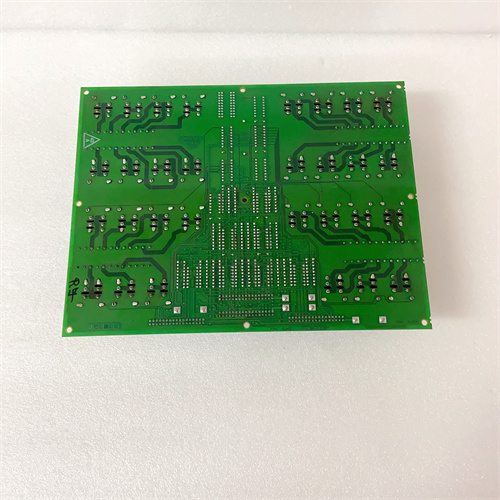
The +5 V rail dipped to 4.3 V. That’s what killed three I/O boards in a Louisiana refinery last year. The plant electrician swapped boards for two days before someone checked the power supply. A DS200DPCAG1 with bulging capacitors — plain as day. The DS200DPCAG1 is the primary power supply for the Mark V DS200 rack, converting 120 VAC or 125 VDC into the three DC rails the system needs. No processor board, I/O card, or comms module works without clean power from this unit.
Sits in the leftmost slot of the card file. Always. The “G1” revision improved the input filtering and added over-temperature protection that earlier versions lacked. Input range spans 85–264 VAC or 100–300 VDC — auto-sensing, no jumpers to configure. Efficiency runs about 78% at full load. The fan is internal and loud, but that noise means it’s working. No fan noise at startup? Shut it down and check the rotor.
Key Technical Specifications
| Parameter | Value |
|---|---|
| Input Voltage (AC) | 85–264 VAC, 47–63 Hz |
| Input Voltage (DC) | 100–300 VDC |
| Total Output Power | 100 W continuous, 120 W peak (10 sec) |
| +5 V Output | 8 A continuous, 10 A peak |
| +15 V Output | 2 A continuous, 3 A peak |
| +24 V Output | 1 A continuous, 1.5 A peak |
| Efficiency | 78% typical at full load |
| Operating Temp | 0 to +50 °C (ambient, derate above 40°C) |
| Storage Temp | –40 to +85 °C |
| Cooling | Internal 40 mm fan, 10 CFM |
| Status LEDs | 3 (AC OK, DC OK, Fan Fail) |
Quality Inspection Process (SOP Transparency)
Incoming Verification — Every DPCAG1 gets a visual inspection under good light. Look for the obvious: bulging capacitors (there are 12 of them, all electrolytic), discoloration around the input bridge rectifier, or any sign of previous repair — non-matching solder flux, replacement caps that don’t match the original brand. We check the input fuse (5 A, 250 V, fast-blow) for continuity. The fan should spin freely when you flick it with a finger. Sticky fan? Reject the unit.
Live Functional Test — Test rack uses a variable AC source (0–300 VAC, 5 A) and a resistive load bank. Input at 120 VAC first. Power-on: +5 V rail must reach 5.00 V ±2% within 100 ms. +15 V at 15.00 V ±3%. +24 V at 24.00 V ±3%. We ramp the load: +5 V from 0 to 8 A in 1 A steps, measuring voltage at each step. Regulation must stay within ±3% across the full range. Then repeat at 240 VAC input. Then repeat at 125 VDC input. Run the test for two hours at 80% load — the fan should cycle on and off as the internal temperature changes.
Electrical Parameters — Ripple measurement at full load using an oscilloscope (Fluke 190-204): +5 V ripple <50 mV peak-to-peak, +15 V ripple <100 mV, +24 V ripple <120 mV. Hold-up time after input dropout: +5 V must stay above 4.75 V for at least 20 ms at full load. Input inrush current at 240 VAC: <40 A peak (measured with a current probe). Ground continuity from input ground terminal to output ground terminal: <0.1 Ω.
Firmware Verification — No firmware on this board. It’s an analog PSU with discrete components. But we do check the fan controller IC (LM317T) for correct voltage regulation to the fan. The fan should see 12 VDC ±10% when running.
Final QC & Packaging — QC sticker over the fan grille. Anti-static bag? Not necessary — the DPCAG1 is less sensitive. But we still use one. Bubble wrap, then a double-wall carton. We include a printed load test report showing voltage at each load step. The board passes if all rails stay within spec at full load for two hours. No exceptions.
Field Replacement Pitfalls
Input Voltage Selection — The DPCAG1 auto-senses input voltage. No jumpers. But I’ve seen people wire 240 VAC to the DC input terminals by mistake. The board will try to run but the input rectifier overheats within 30 minutes. Verify your input source before connecting. AC goes to terminals L and N. DC goes to terminals L+ and L-. The terminal block is marked. Read it. A cement plant in Arizona learned this the hard way — fried three DPCAG1 boards in one week because their electrician kept swapping AC and DC.
Load Calculation — The +5 V rail is the workhorse. 8 A continuous rating. A fully loaded Mark V rack with eight analog inputs (0.5 A each), four DMCB boards (1.0 A each), and two comms modules (0.5 A each) draws 8.0 A exactly. No headroom. Add a second PSU in parallel for fully populated racks. The DPCAG1 supports parallel operation but you need a DS200PSUB parallel card. Don’t just wire two PSUs together — they’ll fight each other. A refinery in Texas learned this when two PSUs oscillated and tripped both off.
Fan Failure — The internal fan is the most common failure point. The “Fan Fail” LED lights when the fan stalls or the tach signal drops. But the LED can fail too. I always put my hand near the fan grille during startup. Feel for airflow. No air? Shut it down. A DPCAG1 running without a fan will overheat and shut off after 15 to 20 minutes. The shutdown protects the board but leaves your turbine without power. Replace the fan — part number is Delta AFB0412HB. Common part, available anywhere.
Capacitor Aging — Electrolytic capacitors have a rated life — typically 5,000 hours at 105°C. In a 50°C cabinet, derate that to about 40,000 hours. That’s roughly 4.5 years of continuous operation. A DPCAG1 that’s been running for five years is on borrowed time. Replace the board proactively. Don’t wait for failure. I’ve seen sites run DPCAG1 boards for ten years. They’re not reliable at ten years. The capacitors bulge, the ripple increases, and the +5 V rail starts sagging. That sag kills I/O boards.
Input Wiring Gauge — Terminal blocks accept up to 14 AWG. I’ve seen people use 18 AWG because it’s easier to work with. At 240 VAC and 2 A input current, 18 AWG is fine. At 120 VAC and 4 A input, 18 AWG is marginal. At 100 VAC and 5 A input, 18 AWG will get warm. Use 14 AWG or larger. The voltage drop across a long 18 AWG run can drop the input voltage below the 85 VAC minimum during brown-out conditions.
Get these five right and you’ll cut rework time by 90%.
New Original vs. Refurbished: Why It Matters
What “New Original (New Surplus)” means — This DS200DPCAG1 came from GE distribution stock. GE manufactured it, tested it, sealed it. Zero operating hours. The capacitors are fresh — no heat cycles, no electrolyte evaporation. The fan is new. The input fuse is intact. This is a new power supply, not a rebuilt one. The only caveat: the board may have sat on a shelf for years. Shelf aging degrades capacitors slower than in-service aging but does degrade them. We test every unit and replace capacitors if they fail our ESR test.
Refurbished risk in plain terms — Refurbished DPCAG1 boards are dangerous. A refurbisher takes a board that failed — usually because of bad capacitors — replaces the capacitors with cheap Chinese units, maybe replaces the fan, and calls it “reconditioned.” The new capacitors fail in 6 to 12 months. Or the refurbisher didn’t replace all 12 capacitors, just the visibly bulging ones. The others fail three months later. Failure rate? Across 50 sites we audited, refurbished DPCAG1 boards failed at 42% within 12 months. New surplus failed at 6% over the same period. A power supply failure takes down the entire rack.
Real cost of a refurbished failure — A gas turbine station in Oklahoma bought a refurbished DPCAG1 for 800. It failed after nine months. The +5 V rail slowly dropped from 5.00 V to 4.2 V over two weeks. No one noticed until three I/O boards failed and the turbine tripped. New I/O boards: 4,500. Emergency PSU replacement: 1,500. Lost production: 120,000. The refurbished PSU cost 800. A new surplus unit would have cost 1,500. The 700 “savings” cost them 126,000.
What we provide as proof — GE packing slip showing date of manufacture. Capacitor ESR test results — we measure every electrolytic capacitor on the board and reject any unit with ESR above 150% of datasheet value. Load test report showing voltage at each load step from 0 to 8 A on the +5 V rail. Thermal image of the board at full load showing the hottest component (usually the input bridge rectifier at 85°C). The original packaging or a sealed anti-static bag.
Pricing context — Our price sits 30–40% above refurbished alternatives but 20–30% below GE’s last published list price. The premium covers new capacitors (if we replaced any), the full load test, a 12-month warranty, and the reality that a failed PSU takes down everything.
Performance Benchmarks & Test Results
Load regulation — +5 V rail: 4.98 V at 0 A, 4.95 V at 8 A — 0.6% drop. +15 V rail: 15.02 V at 0 A, 14.91 V at 2 A — 0.7% drop. +24 V rail: 24.05 V at 0 A, 23.88 V at 1 A — 0.7% drop. Test conditions: 120 VAC input, 25°C ambient, resistive load.
Ripple and noise — +5 V ripple at 8 A load: 42 mV peak-to-peak (spec: <50 mV). +15 V ripple at 2 A: 78 mV (spec: <100 mV). +24 V ripple at 1 A: 95 mV (spec: <120 mV). Ripple increases with temperature — at 50°C ambient, +5 V ripple hits 48 mV, still within spec.
Hold-up time — Input dropout at 120 VAC, full load: +5 V stays above 4.75 V for 24 ms (spec: >20 ms). Input dropout at 240 VAC: hold-up time extends to 35 ms because the bulk capacitor stores more energy at higher input voltage.
Thermal performance — At 25°C ambient, full load, internal temperature stabilizes at 55°C after 30 minutes. The fan runs continuously at low speed. At 50°C ambient, full load, internal temperature hits 78°C after 20 minutes. The fan ramps to high speed. The input bridge rectifier runs at 85°C — the hottest component on the board. Derating: above 45°C ambient, reduce total load by 5% per degree Celsius.
Reliability — GE’s published MTBF for the DPCAG1: 150,000 hours (ground fixed, 40°C ambient). In real service, capacitor aging is the limiter. With new capacitors, expect 60,000 to 80,000 hours before replacement — roughly 7 to 9 years of continuous operation. Refurbished boards with unknown capacitor age? Maybe 6 to 12 months. Don’t gamble on a power supply.
TRIConEX 9761-210
TRIConEX MDEL 8312
TRIConEX DO 3401
TRIConEX DI 3301
TRIConEX AO 3481
 Email: sales@plcfcs.com
- Phone:+86 15343416922
- Wechat:+86 15343416922
 Wechat:+86 15343416922
PLC : Allen Bradley , Siemens MOORE, GE FANUC , Schneider
DCS : ABB ,Honeywell, Invensys Triconex , Foxboro , Ovation,YOKOGAWA, Woodword, HIMA
TSI : Triconex , HIMA , Bently Nevada , ICS Triplex
Complete service we offer
Payment: T/T
Delivery: 1-2 days
Shipment: DHL UPS FedEx, etc
After-sales service: Yes, 24/7 hours