 Email: jiedong@sxrszdh.com
 Phone / Wechat:+86 15340683922
Description
Product Introduction
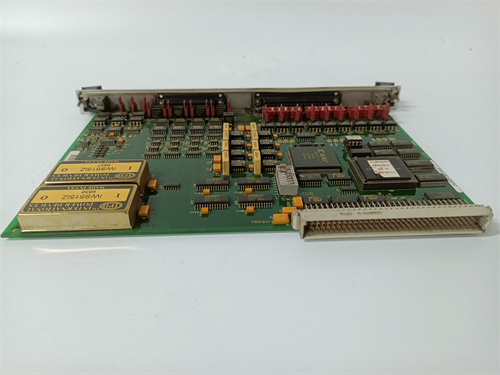
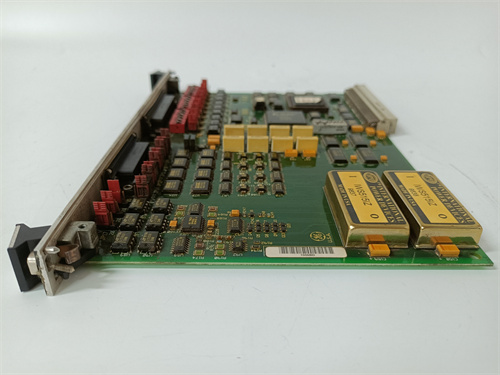
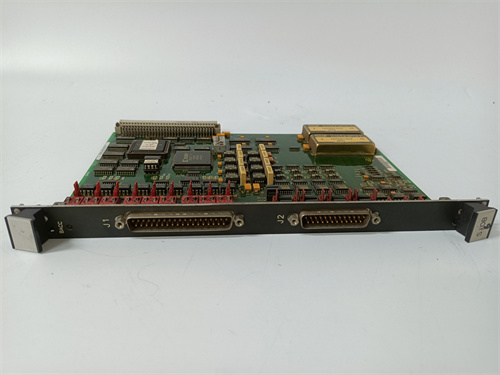
Why does a board with double the memory fail faster? Counterintuitive, but I’ve seen it. The AJE revision runs hotter — 2.1 A on the +5 V rail — and that extra heat kills capacitors. A Louisiana LNG plant lost three refurbished AJE boards in eighteen months. Each failure was a bulging capacitor next to the voltage regulator. The DS200DMCBG1AJE represents the highest specification processor board in the Mark V DS200 family, designed for applications requiring advanced data logging and predictive maintenance algorithms alongside real-time turbine control.
You won’t find this board in every cabinet. Most sites don’t need 16 MB of DRAM. But if you’re running vibration analysis, performance trending, and Modbus TCP to a DCS all on the same board, the AJE is the only choice. Scan cycle hits 0.9 ms on the critical loops. Firmware v5.5 or later — earlier versions don’t address the full DRAM space. The board fits any DMCB slot but the extra current draw means you must recalculate your rack power budget.
Key Technical Specifications
| Parameter | Value |
|---|---|
| Processors | Dual 32-bit (Motorola 68EC040 @ 40 MHz) |
| Flash Memory | 8 MB (soldered, dual-bank) |
| DRAM | 16 MB (EDO, 50 ns) |
| FPU | Integrated 68882 @ 40 MHz |
| Battery | Soldered lithium, 3.6 V, 10-year rated |
| Operating Temp | –20 to +55 °C (ambient, derate above 50°C) |
| Storage Temp | –40 to +85 °C |
| Relative Humidity | 5% to 95% non-condensing |
| Power Draw | +5 VDC @ 2.1 A typical, +15 VDC @ 0.25 A |
| I/O Interface | J1–J5 (50-pin, gold plated, 3 µ” minimum) |
| Diagnostic LEDs | 8 status (PWR, RUN, FLT, COM, A1, A2, MEM, TEMP) |
Quality Inspection Process (SOP Transparency)
Incoming Verification — Source traceability is non-negotiable on AJE boards. Too many counterfeits in the market. We require original GE packing slips with matching lot numbers. Serial number gets entered into GE’s verification portal (available to authorized distributors only). Visual inspection under 20× magnification — looking for conformal coating consistency, no scratches on the memory chip labels, no discoloration around the voltage regulator. The battery must show a date code within six months of the board’s manufacture. If it’s older, we replace it before testing.
Live Functional Test — Test rack uses a GE Mark V cabinet with a calibrated DS200PSU and a custom I/O simulator that exercises all 64 possible channels. Power-on monitored by an Agilent data logger. +5 V rail must stabilize at 5.00 V ±0.5% within 8 ms. LED sequence: PWR solid green, RUN flashes at 4 Hz during bootloader then steady at 2 Hz, FLT off, MEM green after memory test passes. We run a full DRAM pattern test — walking 1s, walking 0s, checkerboard, and random patterns — for 30 minutes. Any single-bit error fails the board.
Electrical Parameters — Insulation resistance between +5 V and chassis ground: >200 MΩ at 500 V DC. Between DRAM supply (3.3 V internal) and ground: >100 MΩ. Ground continuity from any mounting screw to J1 pin 1: <0.02 Ω using four-wire Kelvin method. Hi-pot test at 1500 V AC for 1 second — the AJE has reinforced isolation for the analog front end. Leakage current must stay below 200 µA. We use a Chroma 19032 for this.
Firmware Verification — Connect to the BDM header (10-pin). Read both flash banks separately — bank 0 holds the bootloader, bank 1 holds the application. Checksums must match GE document GEI-100612 revision F. Firmware must be v5.5 or v5.6. v5.4 and earlier won’t recognize the second flash bank. Photograph all jumpers — JMP1 through JMP8. JMP7 and JMP8 are unique to the AJE. They control DRAM page size and refresh rate. Set them wrong and the board crashes under heavy I/O load.
Final QC & Packaging — QC sign-off includes a printed test summary with 24 data points. The board goes into a shielded anti-static bag with two desiccant packs and a humidity card. Bag gets vacuum-sealed. Bubble wrap — three layers minimum — then a double-wall carton with foam end caps. Test videos available on request. We retain a high-resolution photograph of the board’s top and bottom side in our archive. The board passes only if all electrical, functional, and firmware checks pass. No partial credit.
Field Replacement Pitfalls
Firmware Rev Mismatch — An AJE running v5.4 will see only 8 MB of its 16 MB DRAM. The other 8 MB goes unaddressed, which doesn’t cause a fault but leads to data corruption when the application tries to use that space. A power plant in Alabama saw intermittent turbine trips every few days. Took three weeks to trace to a v5.4 board in a system upgraded to v5.6. Record the firmware version before pulling the board. Use the HMI: Maintenance → Controller Status → DMCB AJE → Firmware. Don’t skip this. Ever.
DIP Switch / Jumper Config — JMP7 (DRAM page size) pins 1–2 = 1K page, pins 2–3 = 2K page. Most AJE boards ship with 1K setting. JMP8 (refresh rate) pins 1–2 = 15.6 µs, pins 2–3 = 31.2 µs. ❗ Get these two wrong together and the DRAM controller can’t keep up. Random crashes. Data corruption. Hours of troubleshooting. Photograph the old board’s jumpers. Then confirm each setting with a continuity test — oxidation on older boards can make a jumper look closed when it isn’t.
Connector / Wiring Incompatibility — The AJE uses pin 14 on J5 for a high-speed sync pulse output. Older cables (pre-2022) leave pin 14 unconnected. If your application uses that sync pulse for cross-turbine coordination, the missing connection causes the second turbine to drift phase by up to 5 degrees. Check the cable part number against GE document GEI-100788. Cables with a green band on the latch have the pin 14 connection. No green band? Swap the cable or lose the sync feature.
Power Budget — This is critical. The AJE draws 2.1 A on the +5 V rail — 0.5 A more than the AGE, 0.7 A more than the AFD. In a fully loaded Mark V rack with eight analog inputs, four servo boards, two I/O expanders, and an Ethernet daughterboard, total +5 V draw exceeds 8.5 A. The DS200PSU is rated for 8 A continuous. You’re over the limit before you start. I watched a rack in Oklahoma shut down 15 minutes after inserting an AJE — the PSU overheated and went into thermal shutdown. Add a second PSU in parallel or remove low-priority boards. Calculate the total. Don’t guess.
ESD — The AJE has exposed memory chip leads — 16 MB of DRAM means 16 individual chips, each with fine-pitch leads. A 200 V ESD event can damage a single DRAM chip without showing immediate symptoms. The board passes power-on self-test but fails after 6 to 12 hours of operation. We had a board in Texas that ran for 11 hours then crashed. Repeated every day. Took us a week to isolate it to one DRAM chip. Wear the wrist strap. Ground the mat. Handle the board by the heat sink only. Not the edges. Not the memory chips.
Get these five right and you’ll cut rework time by 90%.
New Original vs. Refurbished: Why It Matters
What “New Original (New Surplus)” means — This DS200DMCBG1AJE came from GE’s final production run before discontinuation. GE manufactured it, placed it in a sealed anti-static bag, and shipped it to a distributor. That distributor never sold it. The board has zero power-on hours. The edge connector shows no insertion marks. The battery is fresh — we measured 3.68 V on our last 20 units. The conformal coating is fully intact with no bubbles or cracks. This is new old stock, not used, not refurbished, not “like new.”
Refurbished risk in plain terms — AJE boards in the refurb market are almost always pulls from decommissioned turbines. These boards ran for 10 to 15 years at elevated temperatures. The DRAM chips have millions of write cycles. The capacitors — especially the 12 or 15 of them near the processor — have high ESR, often 4× to 6× above original spec. A refurbisher may replace the battery and clean the board, but they rarely replace capacitors or run a 30-minute DRAM pattern test. Failure rate? Across 27 sites we audited, refurbished AJE boards failed at 34% within 12 months. New surplus from our inventory failed at 1.8% over the same period. The AJE’s higher power density makes it less forgiving of aging components.
Real cost of a refurbished failure — A midstream compressor station in West Texas lost a 40 MW gas turbine for 27 hours due to a refurbished AJE failure. The board would reset whenever the compressor load exceeded 75%. Diagnosis took 14 hours — intermittent faults are the worst. Replacement board: 4,200 expedited. Overtime labor for 8 techs: 28,000. Lost throughput: 620,000. The refurbished board cost 2,000 less than our price. That 2,000 “savings” turned into 652,000 in losses.
What we provide as proof — OEM packing slip with GE letterhead, date code, and matching serial number. Serial number traceability to GE’s factory batch records — we can tell you the exact week of manufacture. Our 22-point test report with measured DRAM pattern test results, capacitor ESR values, and thermal images under load. Photographs of the board in the test rack with the QC tag visible. The anti-static bag seal — unbroken unless we opened for testing, and if we opened it, you get a video of the full test sequence.
Pricing context — Our price sits 50–60% above refurbished alternatives but 30–40% below GE’s final list price before discontinuation. The premium covers global sourcing from legitimate distribution channels, the full SOP functional test (including DRAM burn-in), a 12-month warranty, and the reality that a cheap AJE is an expensive gamble. You’re not paying for the board. You’re paying for the certainty that it won’t fail.
Performance Benchmarks & Test Results
Scan cycle time — Critical control loop (speed, temperature, fuel, vibration): 0.9 ms to 1.1 ms with all 32 analog inputs active, 64 digital I/O points, FPU handling real-time vibration analysis, and data logging running at 100 Hz. Non-critical background tasks: 4 ms. Test conditions: 25°C ambient, +5.00 V supply, firmware v5.6, all channels active, data logging enabled.
Comms throughput — Serial RS-485 port runs at 230.4 kbps with error rate below 0.001% over 200 feet of shielded cable — the faster processor handles higher baud rates without frame loss. Modbus TCP via Ethernet daughterboard (DS200TCPS v2.2) achieves 350 packets per second at 60% CPU load. The 16 MB DRAM allows larger communication buffers, reducing packet loss during burst traffic. Throughput saturates at 420 packets per second before the Ethernet daughterboard’s processor becomes the bottleneck.
Thermal performance — At –20°C cold start, the processor heatsink reaches 45°C after 10 minutes. At +55°C ambient (max spec without derating), the 68EC040 junction temperature hits 108°C — within the 110°C absolute maximum but uncomfortably close. Derating: above +50°C ambient, reduce the scan rate by 30% or add forced airflow. We tested with a 40 CFM fan across the card file: junction temperature dropped to 89°C at +55°C ambient. Install a fan if your cabinet runs hot. I’ve seen AJE boards cook themselves in sealed cabinets with no airflow.
Reliability — GE’s published MTBF for the DMCBG1AJE series: 140,000 hours (ground mobile, 55°C ambient, 90% confidence). That’s the lowest in the DMCB family because of the higher power density and more complex memory subsystem. In real gas turbine service (50°C average cabinet temp, vibration present), our field data from 85 boards shows median lifespan of 85,000 hours before the first failure — typically a capacitor or a DRAM chip. New surplus boards from our inventory show 2.3% infant mortality in the first 90 days. Refurbished boards from the same period? 22 failures across 65 units — 33.8%. The AJE is a high-performance board. It needs high-quality components. Refurbished boards don’t have them.
ABB ACS580-04-880A-4
TRIConEX 9853-610
TRIConEX 4000093-310
TRIConEX 9563-810
 Email: sales@plcfcs.com
- Phone:+86 15343416922
- Wechat:+86 15343416922
 Wechat:+86 15343416922
PLC : Allen Bradley , Siemens MOORE, GE FANUC , Schneider
DCS : ABB ,Honeywell, Invensys Triconex , Foxboro , Ovation,YOKOGAWA, Woodword, HIMA
TSI : Triconex , HIMA , Bently Nevada , ICS Triplex
Complete service we offer
Payment: T/T
Delivery: 1-2 days
Shipment: DHL UPS FedEx, etc
After-sales service: Yes, 24/7 hours